

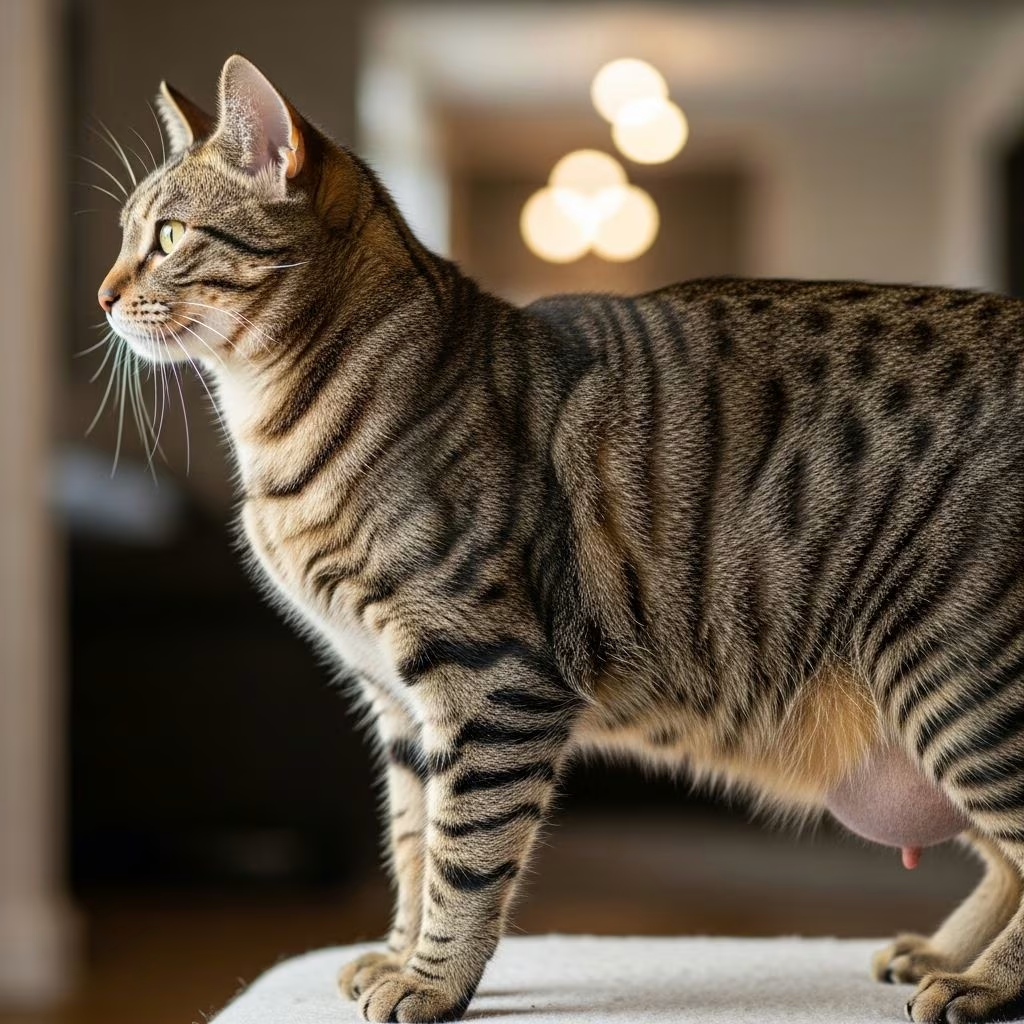
If you have observed a loose flap of skin and tissue hanging beneath your cat’s abdomen, you may have wondered whether your feline companion is overweight or experiencing a health issue. The reality is far more interesting: that sagging belly is a natural and universal feature of feline anatomy called the primordial pouch. This anatomical structure exists in every domestic cat, regardless of breed, age, or gender, and even extends to wild big cats such as lions and tigers. Understanding this fascinating aspect of your cat’s body helps pet owners appreciate the evolutionary adaptations that make cats such remarkable animals while also easing concerns about their pet’s health and appearance.
Defining the Primordial Pouch: Structure and Composition
The primordial pouch is a distinct abdominal feature consisting of a flap of loose skin and fatty tissue that hangs beneath a cat’s belly. This anatomical component extends from the ribcage down toward the hind legs and sits between the cat’s rear limbs. The pouch resembles the excess skin found on a cat’s neck, commonly referred to as the scruff, which serves a similar protective function. The composition of the primordial pouch is relatively simple: it comprises flexible skin combined with adipose (fatty) tissue that allows for significant stretching and movement without tearing or causing discomfort.
While every cat possesses this feature, the prominence and visibility of the primordial pouch vary considerably from one individual to another. Some cats have a dramatically visible pouch that swings noticeably as they walk or move, while others have a more subtle bulge that requires closer inspection to identify. This variation depends on several factors, including genetic predisposition, age, breed characteristics, and overall body composition. The pouch typically becomes more noticeable as cats reach maturity, developing prominently around six months of age. Despite these variations in appearance, the primordial pouch is a permanent anatomical feature that remains with cats throughout their entire lives and does not disappear with age or weight loss.
The Evolutionary Origins and Biological Purpose
The primordial pouch represents an evolutionary adaptation that has persisted through millions of years of feline development. Experts believe this feature developed for multiple interconnected survival purposes that were essential for wild cats and continue to benefit domesticated felines today. Understanding these functions provides insight into why this anatomical trait has been preserved across all species of cats.
Organ Protection During Physical Confrontations
One of the primary theories regarding the primordial pouch’s purpose centers on its protective function. The loose skin and fatty tissue create an additional barrier that shields vital internal organs, including the liver and other sensitive structures, during fights or rough physical encounters. When cats engage in combat with other animals, they often employ a defensive technique known as the bunny kick, wherein they use their powerful hind legs to deliver forceful strikes. The primordial pouch absorbs impact and provides cushioning that prevents sharp claws and teeth from penetrating the abdominal cavity. This protective layer significantly reduces the risk of serious injury to the cat’s internal organs during aggressive interactions.
Enhanced Flexibility and Acrobatic Capability
The excess skin of the primordial pouch contributes substantially to a cat’s remarkable flexibility and agility. When a cat runs, jumps, or twists its body, the loose abdominal skin stretches and contracts, allowing for extended movement and greater range of motion. This anatomical feature enables cats to take longer strides while running and execute higher, more powerful leaps than would be possible with a taut abdominal wall. Additionally, the flexibility provided by the pouch assists cats in performing their famous mid-air landing maneuver, allowing them to twist and rotate their bodies to land safely on their feet. For wild cats hunting prey, this flexibility translates into superior agility when chasing fast-moving animals and helps them escape from predators through evasive movements and rapid directional changes.
Accommodation for Large Meals
The elasticity of the primordial pouch serves a practical function related to feeding behaviors. In the wild, cats typically consume one large meal per day rather than grazing throughout the day as some other animals do. The expandable nature of the primordial pouch allows a cat’s abdomen to stretch significantly to accommodate a substantial meal. This feature provides wild cats with the ability to consume a significant amount of food when prey is available, ensuring adequate caloric intake even when food becomes scarce. For domestic cats, this expanded storage capacity remains functional, allowing their bellies to expand comfortably when they consume larger-than-usual meals without creating digestive discomfort or overstretching the abdominal wall.
Thermoregulation and Temperature Control
Some experts propose that the primordial pouch may contribute to temperature regulation in cats. The loose skin and fatty tissue may facilitate air circulation around the abdomen, potentially assisting in maintaining optimal body temperature. While this function is less definitively established than the protection and flexibility theories, it represents another possible evolutionary advantage that the primordial pouch may provide.
Distinguishing the Primordial Pouch from Weight Gain
One of the most common concerns among cat owners is determining whether their cat’s hanging belly represents a normal primordial pouch or indicates unhealthy weight gain. This distinction is important for maintaining your cat’s health and addressing any genuine obesity concerns. The two conditions present different characteristics that allow for differentiation.
| Characteristic | Primordial Pouch | Excess Weight |
|---|---|---|
| Location | Primarily between hind legs and lower abdomen | Distributed across entire belly and body |
| Texture | Loose, hanging skin that sways independently | Solid, firm tissue connected to body |
| Movement | Moves separately from body during walking | Moves as integrated part of body |
| Visibility When Sitting | May appear less prominent when cat sits upright | Remains prominent and visible at all angles |
| Cat’s Activity Level | Present in lean, active cats | Often accompanied by reduced mobility and lethargy |
| Firmness | Soft and easily moveable when touched | Increasingly firm and resistant to movement |
The primordial pouch is primarily localized to the area between the hind legs and extends along the lower abdomen, whereas excess weight from obesity distributes more broadly across the entire body. When you observe your cat from above, the primordial pouch should not eliminate the visible waist definition behind the rib cage. If your cat appears rounded without any visible waist, this may indicate excess weight rather than a normal pouch. Additionally, the primordial pouch in healthy cats moves independently and loosely, swaying as the cat walks, while excess weight is more firmly attached and moves as an integral part of the cat’s body. Athletic, lean cats often have noticeable primordial pouches, whereas obese cats typically show additional weight distribution throughout their frame.
Variations in Pouch Appearance Across Different Cats
The appearance and prominence of the primordial pouch varies significantly among individual cats due to multiple factors. Genetic predisposition plays a substantial role in determining pouch size and visibility, with some cat breeds and family lines naturally exhibiting more prominent pouches than others. Age influences pouch visibility, as the feature typically becomes more noticeable as cats mature. Younger kittens may have less obvious pouches that become increasingly apparent as they develop. Body composition and overall health status also affect how pronounced the pouch appears. Some cats carry more fatty tissue in the pouch, making it more visible, while others have primarily skin with minimal fatty deposits, resulting in a less prominent appearance.
Individual variation means that comparing your cat’s pouch to another cat’s pouch may not provide useful information about whether your cat is healthy or overweight. What matters is understanding your specific cat’s body condition through multiple indicators rather than focusing solely on pouch prominence.
Common Misconceptions About the Primordial Pouch
Several myths and misconceptions surround the primordial pouch, leading to unnecessary concern among cat owners. One widespread misunderstanding is that the pouch is actually part of the stomach or digestive system. In reality, the primordial pouch is an entirely separate abdominal structure unrelated to the stomach or gastrointestinal tract. Another common misconception is that only overweight or older cats possess this feature, when in fact all cats, regardless of age or weight status, have a primordial pouch from birth. Some people incorrectly believe that the primordial pouch indicates a health problem or disease, when it is actually a normal, universal anatomical feature. Additionally, some owners mistakenly think the pouch will disappear if their cat loses weight, but since the pouch is a permanent anatomical structure, it persists throughout a cat’s lifetime regardless of weight fluctuations.
The Primordial Pouch as an Evolutionary Legacy
While the functions previously discussed explain why the primordial pouch may have originally evolved, some researchers propose that the pouch might be partially explained as an evolutionary relic—a feature that persists from wild ancestors even if it no longer serves critical functions for modern domestic cats. This concept, known as a vestigial trait, suggests that although the pouch was essential for wild cats’ survival, it continues to exist in domesticated felines primarily through genetic inheritance. However, even if the pouch has become less critical for survival in the domestic environment, it continues to provide benefits such as increased flexibility during movement and protective cushioning during play.
The presence of primordial pouches in wild big cats like lions and tigers confirms that this feature is deeply embedded in feline evolution across all species and sizes. The fact that this anatomical trait has been preserved across millions of years of evolution and continues to appear in all modern cats suggests it provides sufficient evolutionary advantage to warrant its persistence.
Health Implications and Veterinary Considerations
The primordial pouch itself does not indicate or cause any health problems. However, pet owners should distinguish between a normal pouch and signs of genuine health concerns. If you notice that your cat’s abdominal area has suddenly changed in appearance, if your cat shows signs of pain or discomfort in the abdominal region, or if your cat displays other symptoms such as decreased activity, appetite changes, or behavioral alterations, consulting a veterinarian is appropriate. These signs might indicate health issues separate from the primordial pouch.
Your veterinarian can assess your cat’s overall body condition and help you determine whether your cat is maintaining a healthy weight. Regular veterinary check-ups help ensure your cat remains in optimal health while allowing you to understand your specific cat’s normal appearance and any changes that might warrant concern.
Frequently Asked Questions
Do all cats have a primordial pouch?
Yes, all cats—both male and female, domestic and wild—possess a primordial pouch from birth. The size and prominence vary, but the structure is universal across the feline species.
At what age does the primordial pouch become visible?
The primordial pouch typically becomes noticeably prominent around six months of age as cats mature, though it exists from birth.
Is the primordial pouch the same as the scruff of a cat’s neck?
While both the pouch and scruff consist of excess skin and serve protective functions, they are separate anatomical structures located in different areas of the body.
Can diet or exercise reduce the size of the primordial pouch?
The primordial pouch is a permanent anatomical feature that does not disappear with weight loss or exercise. However, maintaining a healthy weight through diet and exercise ensures the pouch remains proportionate to your cat’s body.
Should I be concerned if my cat’s primordial pouch is very prominent?
A prominent primordial pouch is not inherently concerning if your cat displays a visible waist behind the rib cage, maintains appropriate activity levels, and exhibits good overall health. Consult your veterinarian if you have concerns about your cat’s specific body condition.
Conclusion
The primordial pouch represents a fascinating example of how evolution has equipped cats with specialized anatomical features that enhance their survival capabilities and physical performance. This universal feature, present in every cat from birth, serves multiple important functions including organ protection, enhanced flexibility, and accommodation for substantial meals. Understanding the primordial pouch helps pet owners appreciate their cats’ remarkable biology while reducing unnecessary health concerns about this completely normal anatomical structure. By distinguishing between the normal primordial pouch and genuine signs of weight gain or health issues, you can ensure your feline companion receives appropriate care and maintain confidence in their health and wellbeing. The next time you observe your cat’s hanging belly, you can appreciate it as a testament to millions of years of feline evolution rather than viewing it as a cosmetic concern.
References
- Primordial Pouch in Cats: What is it and what is its function? — Sanicat. Accessed January 2026. https://www.sanicat.com/sanis-corner/articles/primordial-pouch-cat/
- Cat primordial pouch — Cats Protection. Accessed January 2026. https://www.cats.org.uk/cats-blog/why-do-cats-have-a-primordial-pouch
- What is the Cat Pouch? Understanding Its Purpose and Health Impact — Adventure Den. Accessed January 2026. https://www.adventureden.ca/what-is-the-cat-pouch-understanding-its-purpose-and-health-impact/
- What Is a Cat’s Primordial Pouch? — Hill’s Pet Nutrition. Accessed January 2026. https://www.hillspet.com/cat-care/behavior-appearance/primordial-pouch-in-cats
- The Primordial Pouch – The Belly Flap That Cats Need — Four Paws. Accessed January 2026. https://www.four-paws.org.za/our-stories/the-primordial-pouch-the-belly-flap-that-cats-need
- What Is a Cat’s Primordial Pouch? — PetMD. Accessed January 2026. https://www.petmd.com/cat/general-health/cat-primordial-pouch



