

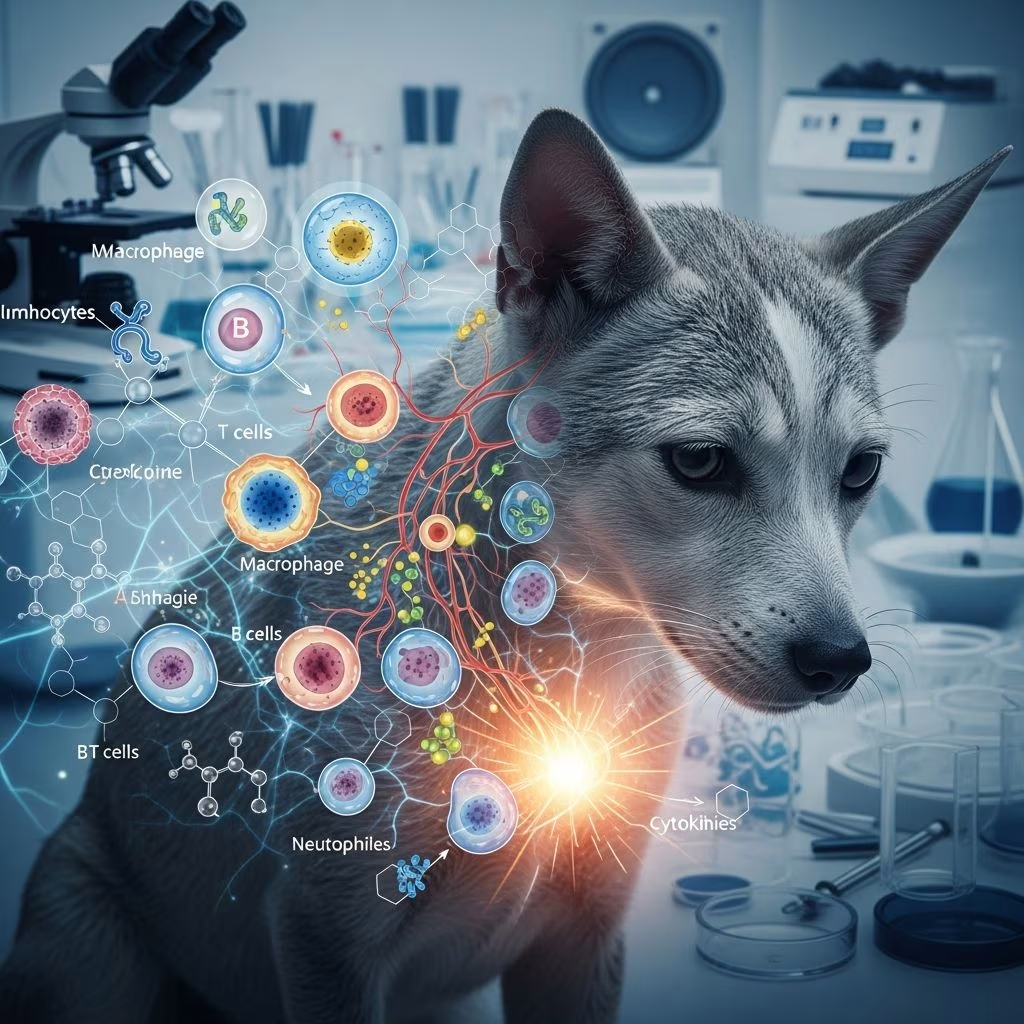
Primary immunodeficiencies represent inherited genetic flaws that compromise an animal’s innate ability to combat pathogens from birth. These conditions disrupt key components of the immune system, such as white blood cells, antibodies, or complement proteins, resulting in heightened vulnerability to infections. Unlike acquired immunodeficiencies triggered by external factors like stress or disease, primary forms are congenital and often breed-specific, demanding vigilant veterinary intervention for affected animals.
Understanding the Foundations of Animal Immunity
The immune system in animals functions through a coordinated network of humoral (antibody-based) and cell-mediated (T-cell driven) responses, bolstered by innate defenses like phagocytosis and complement activation. Primary immunodeficiencies arise from mutations impairing these pathways, typically manifesting in neonates or juveniles as maternal antibodies wane. In dogs, cats, horses, and cattle, these defects lead to recurrent bacterial, fungal, or viral infections that resist standard therapies.
Genetic underpinnings often involve single-gene mutations, such as those affecting DNA repair in lymphocytes or glycoprotein expression on immune cells. This leads to quantitative shortages (e.g., low neutrophil counts) or qualitative dysfunctions (e.g., poor chemotaxis). Early recognition is crucial, as untreated cases can culminate in chronic illness or fatality.
Key Categories of Primary Immunodeficiencies
These disorders are classified by the affected immune arm: phagocytic defects, antibody deficiencies, complement anomalies, adhesion issues, or combined failures. Each category predisposes animals to distinct infection patterns, guiding diagnostic pursuits.
Phagocytic and Neutrophil Disorders
Phagocytes, primarily neutrophils, engulf and destroy microbes. Congenital defects here include cyclic neutropenia in Grey Collies, where bone marrow fails to produce sufficient neutrophils periodically, slashing infection resistance. Other canine issues encompass opsonin shortages (proteins tagging pathogens for phagocytosis), chemotactic impairments (migration failures), and myeloperoxidase absence, all fostering persistent bacterial invasions.
- Cyclic Neutropenia: Affects Collie breeds; marked by blood count fluctuations and feverish episodes.
- Chemodectomagenesis: Rare in dogs like Dobermans, impairing bacterial killing.
Leukocyte Adhesion Deficiency (LAD)
LAD, an autosomal recessive trait, stems from missing CD18 glycoproteins on leukocytes, preventing tissue migration. Prevalent in Irish Setters and Holstein calves, it causes suppurative infections sans pus, delayed healing, fever, and cachexia. Antimicrobial responses falter due to stalled inflammation.
Complement System Impairments
Complement proteins amplify opsonization and lysis. C3 deficiency in Brittany Spaniels triggers dermatoses and pneumonias, though redundant pathways sometimes mitigate severity. C1 inhibitor deficits in dogs and pigs provoke angioedema via unchecked activation.
Antibody Production Failures (Hypogammaglobulinemia)
Selective immunoglobulin gaps include IgG subclass lacks in cattle (often asymptomatic), IgM deficits in foals (respiratory woes), and IgA shortages in Beagles, German Shepherds, and Shar-Peis. IgA-deficient dogs suffer atopic dermatitis, sinusitis, and allergies; secretion defects persist despite normal plasma cell counts.
| Breed | Deficient Immunoglobulin | Common Manifestations |
|---|---|---|
| Beagles, German Shepherds, Shar-Peis | IgA | Skin allergies, recurrent respiratory tract infections |
| Horses (foals) | IgM | Pneumonia, increased susceptibility post-colostrum fade |
| Cattle | IgG subclasses | Usually subclinical |
Combined Immunodeficiencies (CID and SCID)
Severe combined immunodeficiencies devastate both B- and T-lymphocytes due to progenitor flaws, like DNA repair enzyme defects. Arabian foals, Corgis, Basset Hounds, and Jack Russell Terriers are prone; symptoms emerge as adenoviroses, cryptosporidiosis, or pneumocystosis overwhelm the host.
Breed-Specific Vulnerabilities and Emerging Patterns
Certain lineages exhibit breed-restricted susceptibilities. German Shepherds face disseminated aspergillosis tied to IgA deficits, manifesting as pyelonephritis or discospondylitis. Persians cats show traits akin to canine LAD, while foals with delayed immunity face respiratory crises around 3-6 months.
- Dogs: Irish Setters (LAD), Grey Collies (cyclic neutropenia), Brittany Spaniels (C3).
- Horses: Arabians (SCID), select foals (IgM).
- Cattle: Holsteins (LAD), IgG subclasses.
- Cats: Persians (phagocytic issues).
Clinical Presentation and Red Flags
Juvenile animals with disproportionate infection frequency, poor treatment responses, or atypical pathogens signal immunodeficiency. Pyrexia, lethargy, weight loss, omphalophlebitis, or fungal invasions (e.g., Aspergillus in Shepherds) warrant scrutiny. Differentiate from secondary causes like malnutrition or parasites via history and persistence.
In foals, post-colostral antibody decline unmasks defects, yielding opportunistic infections. Adults rarely debut but may harbor common variable immunodeficiency (CVID).
Diagnostic Approaches for Immune Defects
Diagnosis hinges on excluding secondary immunodeficiencies, followed by targeted assays. Initiate with CBC for cytopenias, turbidity tests for total Ig, and radial immunodiffusion for specifics (IgA/M/G).
- Complete blood count and differentials.
- Serum protein electrophoresis and immunoglobulin quantification.
- Flow cytometry for lymphocyte subsets.
- Functional tests: NBT for phagocytosis, chemotaxis assays.
- Genetic screening for known mutations (e.g., SCID in Arabians).
Advanced tools include lymphocyte transformation and complement hemolytic assays. Recurrent infections in youth prompt full panels.
Management and Therapeutic Strategies
No cures exist; focus on prophylaxis and palliation. Long-term antibiotics curb opportunists, while vaccinations bolster humoral gaps—cautiously, as live agents risk overload.
- Antimicrobials: Broad-spectrum, prophylactic dosing.
- Immunoglobulin Therapy: IVIG for hypogammaglobulinemia.
- Supportive Care: Nutrition, wound management.
- Breeding Avoidance: Genetic counseling for carriers.
Bone marrow transplants succeed in LAD calves experimentally but remain impractical. Prognosis varies: mild IgA cases endure with hygiene; SCID proves fatal sans intervention.
Prevention Through Genetic Awareness
Screening carrier breeds curtails propagation. Pedigree analysis and DNA tests for loci like Arabian SCID prevent affected litters. Responsible breeding prioritizes health over aesthetics.
Frequently Asked Questions (FAQs)
What distinguishes primary from secondary immunodeficiencies?
Primary are genetic/congenital; secondary arise from infections, drugs, or stress.
Which breeds face highest risks?
Irish Setters (LAD), Arabians (SCID), German Shepherds (IgA, aspergillosis).
Can immunodeficient pets lead normal lives?
With vigilant care, many mild cases thrive; severe forms like SCID shorten lifespan.
How early do symptoms appear?
Often post-maternal immunity fade, 4-8 weeks in pups/foals.
Is testing available for at-risk breeds?
Yes, commercial genetic panels detect mutations in LAD, SCID, etc.
Future Directions in Veterinary Immunology
Gene therapy and CRISPR editing hold promise for curing monogenic defects like SCID. Enhanced diagnostics via NGS will refine breed screenings, reducing incidence. Collaborative registries track carriers, informing breeding ethics.
References
- Primary Immunodeficiencies in Animals — Merck Veterinary Manual. 2023. https://www.merckvetmanual.com/immune-system/immunologic-diseases/primary-immunodeficiencies-in-animals
- Primary immunodeficiencies of dogs and cats — PubMed (Veterinary Immunology and Immunopathology). 2010-05-15. https://pubmed.ncbi.nlm.nih.gov/20471526/
- Recognizing Rare Immune Disorders | Pet Care Partners Ep. 616 — YouTube (Pet Care Partners). 2025-07-15. https://www.youtube.com/watch?v=sgflv5kxB5Y
- Immunodeficiencies in Horses — Cornell University College of Veterinary Medicine. 2024. https://www.vet.cornell.edu/research-departments/labs/equine-immunology/immunodeficiencies-horses
- Immunodeficiency Disorders — Harrisonburg Animal Hospital (.edu-equivalent vet site). 2023. https://www.hahpets.com/articles/415741-immunodeficiency-disorders



