

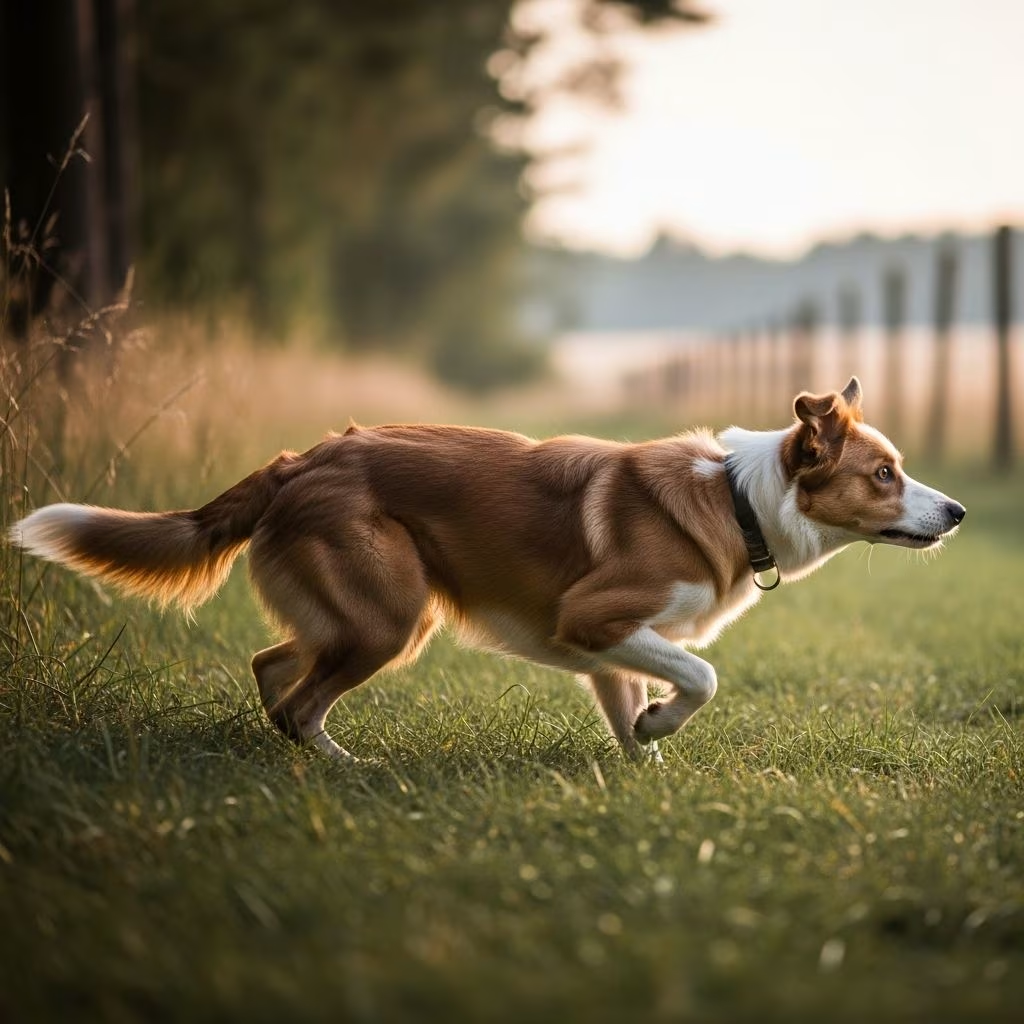
Prey drive is a natural instinct in dogs, rooted in their evolutionary history as predators and hunters. This innate behaviour sequence drives dogs to detect, pursue, and capture potential prey, manifesting in activities like chasing squirrels or playing fetch. While beneficial for working dogs, high prey drive can challenge pet owners, leading to issues like leash pulling or unsafe pursuits. Understanding and managing it ensures safer interactions with wildlife, other pets, and family members.
What is prey drive?
Prey drive refers to the motivational instinct compelling dogs to engage in a predatory sequence: orienting towards movement, stalking, chasing, grabbing, and sometimes killing. This is not aggression but a hardwired survival mechanism inherited from wolves, adapted through selective breeding in domestic dogs. According to experts at PAWS Chicago, it underlies enjoyable activities like fetch, where dogs ‘hunt’ toys, but unchecked, it triggers intense focus on real prey like cats or joggers. PetMD notes it involves heightened arousal, making dogs oblivious to surroundings, potentially causing injuries during walks.
The drive varies by individual and breed, influenced by genetics and environment. Herding breeds modify it for controlling livestock, while terriers retain strong digging and killing urges. Importantly, prey drive is normal and should be redirected, not punished, to avoid frustration or fear responses.
The stages of prey drive
Prey drive unfolds in five distinct stages, not all dogs exhibit every one with equal intensity. These phases explain why dogs fixate on moving objects:
- Orient/Search: Dog scans for movement or scent, ears perking and body tensing.
- Stalk: Low crouch, slow deliberate advance towards target, mimicking hunter stealth.
- Chase: Explosive pursuit, often ignoring commands or obstacles.
- Grab/Bite: Snatch with mouth to seize ‘prey’.
- Kill/Dissect: Shaking or biting to subdue, rare in pets but seen in high-drive breeds.
Joan Harris from PAWS Chicago emphasises that interrupting these stages through training prevents escalation. Whole Dog Journal adds that frustration from blocked stages (e.g., leashed chase) can lead to barking or spinning.
Signs your dog has a high prey drive
Dogs with elevated prey drive display predictable behaviours, often triggered by fast motion or small animals. Key indicators include:
- Intense staring or fixation on birds, squirrels, or vehicles.
- Stalking posture: crouching low, creeping forward.
- Leash lunging or pulling towards prey.
- Chasing anything moving: bikes, children, or other pets.
- Obsessive scent tracking or digging in holes.
- Difficulty redirecting attention once locked on target.
- Pouncing, grabbing, or shaking toys aggressively.
Hill’s Pet Nutrition highlights that these mimic hunting but become problematic off-leash. PrideBites notes high-drive dogs ignore surroundings, risking escapes or fights.
Breeds prone to high prey drive
Certain breeds, bred for hunting, herding, or vermin control, exhibit stronger prey drive. Here’s a table of common examples:
| Breed Group | Examples | Typical Manifestations |
|---|---|---|
| Hounds | Greyhound, Beagle, Foxhound | Chasing, scent tracking |
| Terriers | Jack Russell, Rat Terrier | Digging, killing small prey |
| Herders | Border Collie, Australian Shepherd | Chasing/heeling moving objects |
| Sighthounds | Saluki, Whippet | High-speed pursuit |
| Retrievers/Spaniels | Labrador, Cocker Spaniel | Flush and grab |
PetMD warns any dog can show it, but these breeds require proactive management. Whole Dog Journal stresses even mixed breeds may inherit traits.
Is prey drive dangerous?
While natural, unmanaged high prey drive poses risks to dogs, owners, and others. Dangers include:
- Injury to owner: Sudden lunges causing falls or shoulder strains.
- Road hazards: Bolting into traffic chasing wildlife.
- Attacks on animals: Harming cats, small dogs, or livestock.
- Human safety: Chasing joggers, cyclists, or children mistaken for prey.
- Stress behaviours: Frustration leading to anxiety, barking, or redirected aggression.
PAWS Chicago reports potential kills or injuries without intervention. AggressiveDog.com discusses ‘predatory drift’ where play escalates to chase/kill mode, especially large-small dog pairs.
How to manage high prey drive
Managing prey drive involves training, exercise, and prevention. Strategies include:
- Impulse control training: Teach ‘leave it’, ‘wait’, using high-value rewards.
- Redirect to toys: Use flirt poles, tug toys to satisfy sequence safely.
- Muzzle training: For high-risk dogs around small animals.
- Exercise outlets: High-intensity games like fetch, agility.
- Avoid triggers: Leash walks in low-distraction areas initially.
- Professional help: Trainers for severe cases.
Tug-E-Nuff recommends frustration-free outlets to preserve owner-dog bond. Whole Dog Journal offers tips: desensitzation, counter-conditioning.
Training tips for dogs with high prey drive
Effective training redirects energy positively. Step-by-step approaches:
- Build focus: Practice ‘watch me’ in calm settings, progress to distractions.
- Recall under distraction: Reward heavily for returning from mild triggers.
- Leash manners: Use front-clip harnesses, turn aways from prey.
- Channel drive: Sports like flyball, lure coursing.
- Desensitize: Controlled exposure to triggers at distance, rewarding calm.
PetMD stresses consistency prevents adrenaline spikes. Never punish, as it heightens arousal.
Prey drive vs aggression
Prey drive and aggression differ fundamentally. Prey drive targets movement for ‘hunt’, showing focus, chase without prior threat. Aggression defends via warnings (growls, snaps). Hill’s Pet clarifies strong drive looks aggressive to prey but lacks malice. PrideBites lists aggression signs: teeth baring, fear postures vs drive’s stiff excitement. AggressiveDog.com notes play can drift to predatory if arousal peaks. Misdiagnosis leads to wrong training; consult behaviourists.
Frequently Asked Questions (FAQs)
Can you train out prey drive?
No, it’s instinctual, but you can manage and redirect it effectively with consistent training.
Are high prey drive dogs bad with kids?
They can be if unmanaged; supervise, train early as running kids trigger chase.
What toys help high prey drive?
Flirt poles, tug ropes, spring poles simulate sequence safely.
Is prey drive the same as high energy?
No, energy is general activity; prey drive is specific predatory motivation.
Should I avoid adopting high prey drive breeds?
Not if prepared; match lifestyle to breed needs.
References
- Prey Drive | PAWS Chicago News — PAWS Chicago. Accessed 2026. https://www.pawschicago.org/news-resources/news-features/paws-chicago-news/paws-chicago-news-item/showarticle/prey-drive
- Prey Drive in Dogs – PetMD — PetMD. Accessed 2026. https://www.petmd.com/dog/behavior/prey-drive-dog
- Understanding Prey Drive in Dogs – Whole Dog Journal — Whole Dog Journal. Accessed 2026. https://www.whole-dog-journal.com/behavior/understanding-prey-drive-in-dogs/
- All About Your Dog’s Prey Drive and How to Manage It – PrideBites — PrideBites. Accessed 2026. https://pridebites.com/blogs/barking-post-blog/all-about-your-dogs-prey-drive-and-how-to-manage-it
- Prey Drive in Dogs: Understanding & Managing – Hill’s Pet Nutrition — Hill’s Pet Nutrition. Accessed 2026. https://www.hillspet.com/dog-care/behavior-appearance/prey-drive-in-dogs
- When Dog Play and Prey Drives Blur – Aggressive Dog — AggressiveDog.com. 2024-11-30. https://aggressivedog.com/2024/11/30/when-dog-play-and-prey-drives-blur/



