

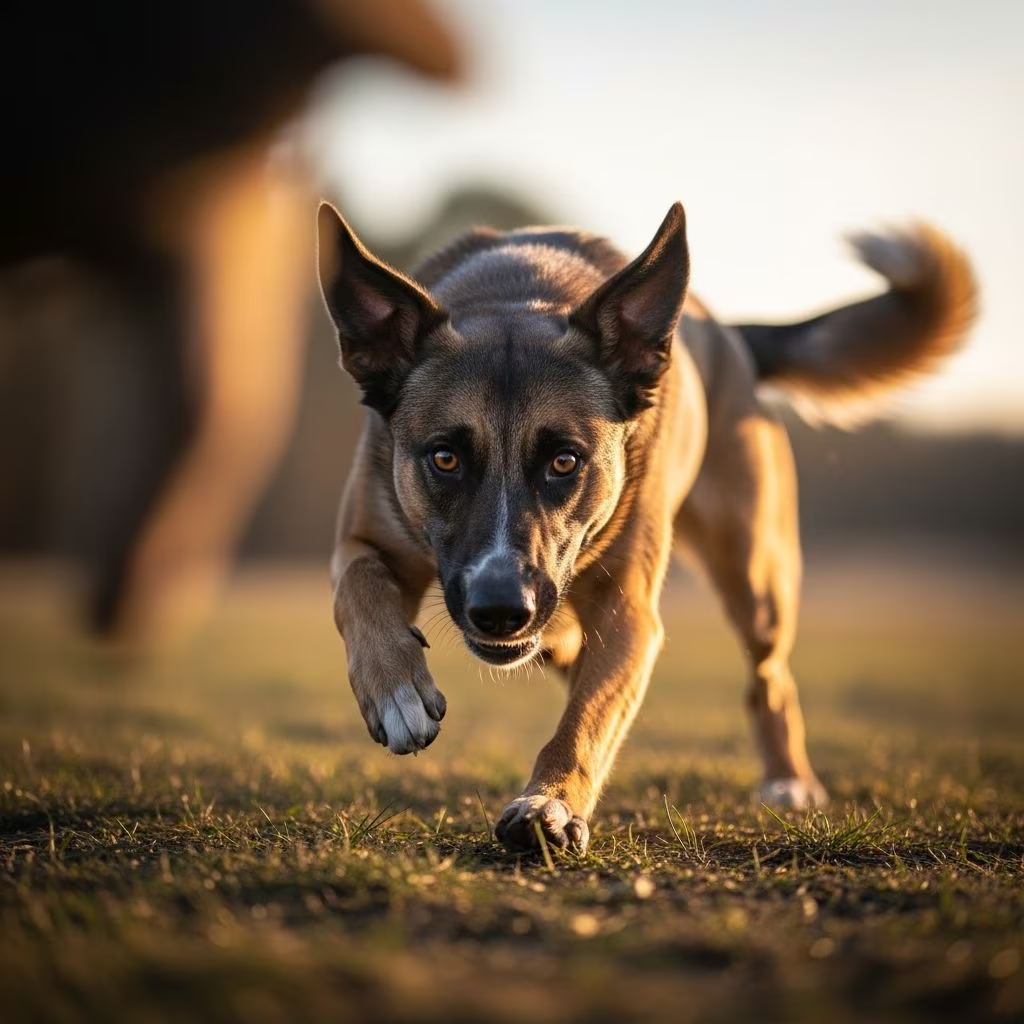
Prey drive is a genetically driven instinct in dogs, inherited from their wolf ancestors, compelling them to chase, capture, and sometimes kill moving objects or animals. This natural behavior, shaped by selective breeding for tasks like herding and hunting, varies by breed but requires management to prevent issues like poor recall or aggression toward pets.
What Is Prey Drive?
Prey drive refers to the instinctive sequence of behaviors—stalking, chasing, grabbing, biting, dissecting, and consuming—that dogs use to pursue prey. All dogs possess this trait to some degree, as it stems from their evolutionary roots in wolves, but breeding has amplified specific stages in different breeds. For instance, herding dogs like Border Collies emphasize eye-stalking and chasing, while retrievers focus on holding and carrying.
This drive is not aggression but a hardwired motivation for instinctual action, often triggered by fast-moving stimuli like squirrels, toys, or even children running. Understanding it helps owners channel the energy productively rather than suppress it, which can lead to frustration.
Why Do Dogs Have Prey Drive?
Dogs inherited prey drive from wolves, where it ensured survival through hunting. Human selective breeding intensified certain aspects for utility: herding breeds developed chase patterns to control livestock without killing, while terriers retained full sequences for vermin hunting. Genomic studies confirm this, showing herding dogs have specific haplotypes, like in the EPHB1 gene, linked to elevated chase-bite behaviors.
- Genetic Factors: Breeds like spaniels are predisposed due to hunting lineage.
- Learned Experience: Early exposure to moving objects strengthens the drive.
- Predatory Sequence: Varies by individual; some dogs fixate on chase, others on bite.
Dr. Friel-Russell notes that while innate, drives can be encouraged through play, but core genetics persist lifelong.
Signs of High Prey Drive
Dogs with strong prey drive show intense focus on movement, often ignoring commands. Common indicators include:
- Fixation on birds, squirrels, or small animals during walks.
- Chasing wheels, shadows, or toys obsessively.
- High arousal from running children or other pets.
- Pulling on leash toward stimuli.
- Difficulty recalling when prey is sighted.
These behaviors peak in working lines, where surveys link genetic markers to toy-directed chase patterns.
Breeds with High Prey Drive
Breeds selected for hunting, herding, or vermin control exhibit stronger drives. Here’s a breakdown:
| Breed Group | Examples | Key Drive Traits |
|---|---|---|
| Herding | Border Collie, Australian Shepherd | Eye-stalk, chase; minimal bite/kill. |
| Hunting/Retrievers | Labrador, Golden Retriever | Search, hold, carry; suppressed dissect. |
| Terriers | Jack Russell, Rat Terrier | Full sequence: chase, grab, kill. |
| Sighthounds | Greyhound, Whippet | High-speed chase. |
| Scenthounds | Beagle, Dachshund | Nose-driven pursuit. |
Herding breeds, with 32 AKC varieties, show working-line specific genetics for control behaviors.
Risks and Problems with Unmanaged Prey Drive
Unchecked prey drive poses risks like chasing livestock, wildlife, or traffic, and poor recall around distractions. It can blur into play issues, especially with small dogs or fearful reactions mimicking prey. High-drive dogs may ignore owners, straining relationships or leading to escapes.
- Safety Hazards: Bolting into roads or attacking small pets.
- Training Challenges: Recall fails when drive activates.
- Social Issues: Reactivity toward other animals.
Owners often feel guilty, but predisposition plus environment amplifies it unavoidably.
How to Manage and Train Prey Drive
Work with the drive using positive reinforcement, turning it into rewards for obedience. Key strategies:
- Impulse Control Games: Teach ‘leave it’ and ‘wait’ with toys simulating prey.
- Channel into Activities: Agility, flyball, or herding trials harness energy.
- High-Value Rewards: Use tug or fetch over food for drive-matched motivation.
- Desensitization: Gradual exposure to triggers with rewards for focus on handler.
- Exercise Routine: Daily mental/physical outlets reduce frustration.
Test preferences: Does your dog chase, grab, or dissect toys? Tailor training accordingly. Gundog trainers exemplify this, building drive for work while enforcing control.
Can You Reduce Prey Drive?
Innate drives can’t be eliminated but can be redirected. Early socialization (4 weeks) assesses and builds on eat/prey responses. Imprinting via positive role models helps, but genetics dominate. Avoid punishment, as it erodes trust; instead, make handler interaction more rewarding than prey.
Prey Drive vs. Aggression
Prey drive is predatory, not emotional like fear aggression. It lacks warning signals (growls) and targets movement, not status. Misinterpreting play as ‘predatory drift’ overlooks mutual enjoyment risks from size/speed mismatches.
Frequently Asked Questions (FAQs)
Is prey drive the same in all dogs?
No, it varies by breed, genetics, and experience; herding dogs chase without killing, terriers pursue fully.
Can puppies develop prey drive later?
It’s innate but strengthens with exposure; assess at 4 weeks via food/movement tests.
Is high prey drive dangerous?
Unmanaged, yes—risks include chasing hazards—but channeled, it’s ideal for sports.
How do I test my dog’s drive stage?
Observe toy play: chase focus? Grab-bite? Dissect? Matches predatory sequence.
Can training eliminate prey drive?
No, but management builds control; use it as a training reward.
Conclusion
Prey drive is a powerful, natural force in dogs, best managed through understanding, training, and outlets. By leveraging genetics and positive methods, owners foster confident, controlled companions.
References
- Genomic evidence for behavioral adaptation of herding dogs — PMC/NCBI. 2024. https://pmc.ncbi.nlm.nih.gov/articles/PMC12042896/
- What Drives Your Dog? How to Work Out Their Motivations — Kinship. 2023. https://www.kinship.com/uk/dog-behaviour/dog-drives-and-training-motivations
- Why your dog has a high prey drive (& what to do about it) — Tug-E-Nuff. 2023. https://us.tug-e-nuff.com/blogs/news/why-your-dog-has-a-high-prey-drive
- Prey Drive — PAWS Chicago. 2022. https://www.pawschicago.org/news-resources/news-features/paws-chicago-news/paws-chicago-news-item/showarticle/prey-drive
- Understanding Highly Predatory Dogs — Whole Dog Journal. 2023. https://www.whole-dog-journal.com/behavior/understanding-highly-predatory-dogs/
- When Dog Play and Prey Drives Blur — Aggressive Dog. 2024-11-30. https://aggressivedog.com/2024/11/30/when-dog-play-and-prey-drives-blur/



