

What Is Prey Drive in Dogs?
Prey drive is a natural hunting instinct deeply rooted in a dog’s genetic makeup, representing a complex mix of biological and environmental factors that drive hunting behavior. Rather than a learned behavior, it reflects evolutionary remnants from their wild ancestors. This instinct manifests as the dog’s inherent desire to engage in a chase-capture-kill sequence, which includes searching, stalking, chasing, and biting. While canine prey drive is natural, human understanding of this instinct—particularly in breeds known for high prey drive—remains limited.
The intensity of this genetic trait varies significantly among individual dogs, ranging from a mild interest in moving objects to a strong, almost uncontrollable compulsion to chase and capture anything that moves. Some dogs may show only subtle hints of the predatory sequence, while others demonstrate intense, persistent hunting behaviors that dominate their daily activities.
Understanding the Predatory Sequence
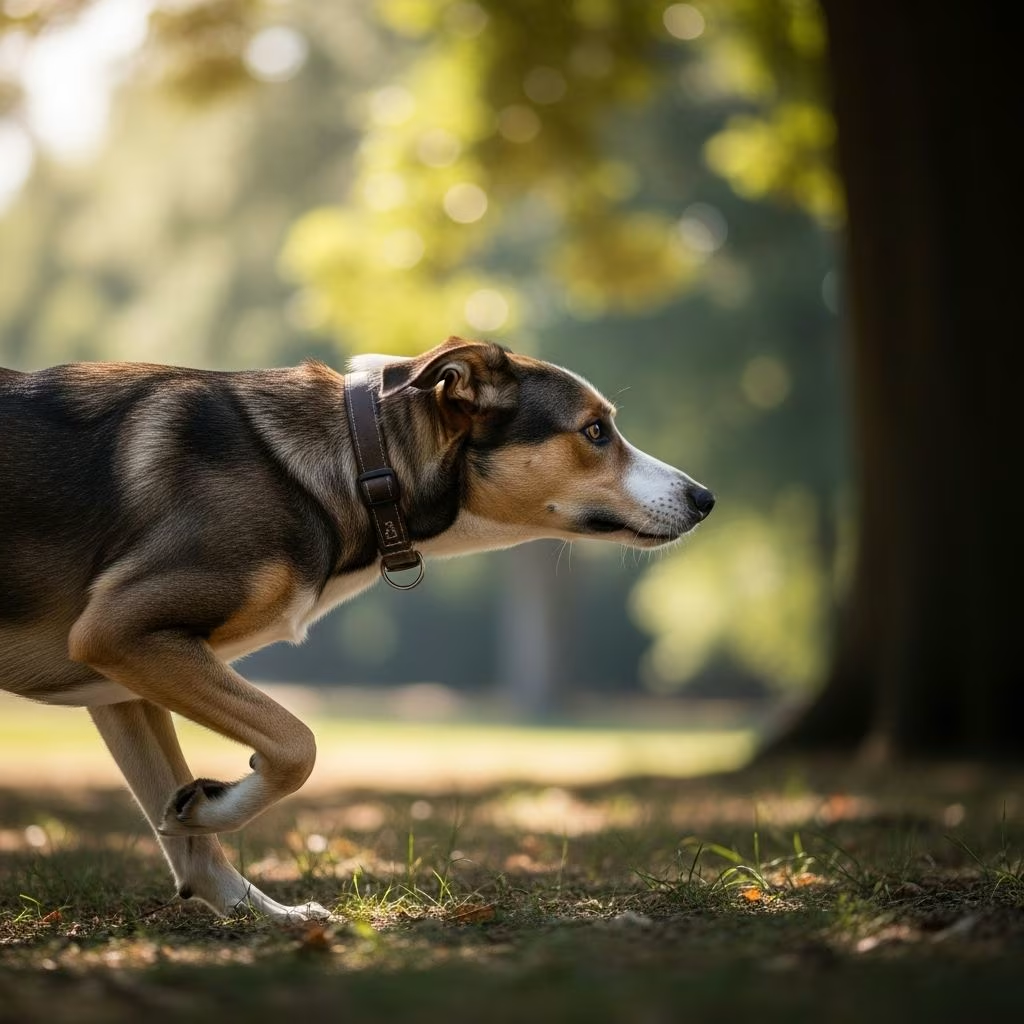
The complete prey drive sequence unfolds in distinct stages. The hunting phase begins with scenting the ground and air, tracking, and scanning the environment. This is followed by stalking, where a dog crouches low, lowers its body, and moves stealthily while observing potential prey. The chasing instinct comes next, where the dog pursues its target at high speed. Finally, the sequence culminates in biting to grab and potentially biting to kill, though in domestic dogs, these final stages often remain unfulfilled, especially during play or when the target escapes.
It’s important to recognize that engaging in predatory behavior produces a natural neurochemical high for dogs, making the experience inherently rewarding. The more opportunities a dog has to engage in these behaviors, the stronger their drive becomes, reinforcing the pattern through repetition and success.
Prey Drive Goes Beyond Chasing Squirrels
A common misconception is that high prey drive only involves pursuing small animals like squirrels. In reality, dogs with high prey drive may pursue larger animals including deer, livestock, and even horses. Their prey perception extends far beyond traditional small game.
Fast-moving objects trigger predatory responses as effectively as living animals. Bicycles, skateboards, and rapidly moving children can activate prey drive responses because dogs perceive them similarly to prey. Additionally, dogs with intense prey drive demonstrate distinct behaviors such as:
- Intense staring and fixation on moving objects
- Attempting to chase despite barriers or restraints
- Signs of frustration like whining or barking when unable to reach perceived prey
- Attempting to scale barriers or pulling aggressively on leashes
Signs Your Dog May Have High Prey Drive
While certain breeds are genetically predisposed to higher prey drive, any dog can exhibit these behaviors. Recognizing these signs helps owners manage risks effectively:
- Excessive chasing: Dogs chase anything that moves, including cars, bikes, and other animals, regardless of the danger involved
- Stalking behavior: Your dog crouches, lowers their body, and moves stealthily when observing potential prey, whether it’s a squirrel, cat, or even a small child
- Intense focus: Once locked onto prey, the dog becomes highly focused and difficult to distract with alternative commands or rewards
- Excessive vocalization: Barking and growling at moving objects indicates heightened prey drive arousal
- Pouncing and grabbing: If they catch their perceived prey, they may pounce on it and attempt to grab or shake it
- Obsessive tracking: Fixating on birds both on the ground and in flight, or obsessively tracking scents
- Digging in rodent holes: Attempting to unearth potential prey animals
- Herding behavior: Attempting to herd people or pets who are moving quickly
Why Breed Matters: Genetic Predisposition
While all dogs possess prey drive to some degree, selective breeding has amplified this instinct in certain breeds. Herding breeds, such as Border Collies and Australian Shepherds, typically exhibit a strong chase instinct. Hound breeds, including Beagles, Dachshunds, and Bloodhounds, were bred to stalk and flush out prey using their keen sense of smell. Spaniels and Retrievers were developed to pursue birds, making them naturally interested in avian prey.
Hunting and terrier breeds also possess elevated prey drive as a result of generations of selective breeding for hunting purposes. However, genetics alone don’t determine behavior—learned life experience plays an equally important role. If a dog with genetic predisposition to be interested in birds is regularly exposed to birds during daily outings, their prey drive interest naturally strengthens.
Prey Drive vs. Aggression: Key Differences
A common source of confusion for dog owners is distinguishing between prey drive and aggression. While both may appear similar externally, they differ fundamentally in motivation and objective.
| Aspect | Prey Drive | Aggression |
|---|---|---|
| Emotional Component | Instinctive, no emotional driver | Emotion-driven (fear, frustration, dominance) |
| Goal/Distance | Decrease distance to target | Increase distance from threat |
| Manageability | Easier to manage without emotional element | More challenging, requires emotional work |
| Physical Signs | Stalking, chasing, pouncing | Bared teeth, growling, lip curling, tail tucking |
Dog aggression is driven by strong emotions, such as fear or frustration, whereas prey drive is purely instinctive. Aggressive dogs desire to increase distance between themselves and the object of their aggression, using threats to protect themselves or resources. When operating under prey drive influence, dogs seek to get closer to their target. This distinction is good news for dog owners: since prey drive lacks an emotional component to overcome, it is often easier to manage than emotion-based aggression.
Can a Strong Prey Drive Lead to Behavior Problems?
While prey drive is natural and often manageable, strong prey drive can create significant challenges if not properly managed. Dogs with intense prey drive may chase anything that moves, from squirrels to cars to other pets. What begins as fun during fetch games becomes problematic during walks when your dog attempts to pursue every animal in sight.
If not managed properly, high prey drive can lead to serious behavioral issues:
- Danger to self and others: Dogs may chase traffic, attack other animals, or even harm people
- Training difficulties: Dogs become easily distracted and struggle to focus on cues and commands
- Aggression and anxiety: Frustrated prey drive can escalate to aggressive behaviors and anxiety issues
- Destructive behavior: Unmanaged prey drive frustration manifests as destructive behaviors
- Safety risks to small pets: Cats, rodents, birds, and small dogs may not be safe around a larger dog with overactive prey drive
Intense prey drive can also be problematic when it hinders a dog from engaging in everyday activities. Some dogs will perform stalking behaviors as cars pass during walks and may spin in place because they’re unable to actually give chase. This behavior remains stressful for both dog and owner, keeping the dog in an adrenaline-charged state of arousal throughout the walk. As frustration builds, high prey drive dogs become increasingly difficult to manage, and behavioral problems can develop.
Why You Need to Recognize Prey Drive
Understanding and recognizing prey drive in your dog is essential for several reasons. Dogs with high prey drive can pose dangers to themselves and others. They may chase traffic, attack other animals, or even harm people. Additionally, high prey drive makes training more challenging—dogs may be easily distracted and struggle to focus on commands, making them unreliable in critical situations.
Proper management prevents escalation. Working with prey drive rather than against it reduces frustration and behavioral issues. Owners who acknowledge their dog’s natural instincts can implement appropriate management strategies and outlets, creating safer situations for both the dog and their community.
Managing Your Dog’s Prey Drive
While you cannot eliminate prey drive—it’s hardwired into your dog’s genetics—you can manage it effectively through strategic approaches. Rather than trying to suppress prey drive entirely, successful management involves channeling it productively.
Provide appropriate outlets: Many dogs with high prey drive thrive when given legitimate predatory outlets. Games of fetch, tug-of-war, and toys designed for shaking and manipulating provide harmless ways to satisfy predatory needs. These activities give dogs the neurochemical reward they crave without harm to other animals.
Control the environment: Manage exposure to triggers when possible. Keep your dog on a secure leash during walks in areas with wildlife. Use fenced yards to prevent escape. Avoid areas known for high populations of animals that trigger your dog’s prey drive.
Training and impulse control: Work with a professional trainer to develop reliable recall and impulse control commands. Teaching your dog to focus on you rather than distractions reduces reactive chasing.
Physical and mental exercise: A well-exercised dog is less likely to obsess over prey-related activities. Provide adequate daily exercise combined with puzzle toys and scent games that engage your dog’s natural hunting instincts in controlled ways.
Frequently Asked Questions
Q: Is prey drive the same as aggression?
A: No. Prey drive is instinctive with no emotional component, while aggression is emotion-driven. Prey drive seeks to close distance with a target, while aggression seeks to increase distance. This distinction makes prey drive generally easier to manage.
Q: Can any dog have high prey drive?
A: Yes. While certain breeds are genetically predisposed to higher prey drive, any dog can exhibit prey drive behaviors. Genetics and learned experience both influence how strongly prey drive manifests.
Q: What triggers prey drive in dogs?
A: Small animals like squirrels, rabbits, and cats trigger prey drive, as do fast-moving objects like bicycles, cars, and even running children. Any rapidly moving target can activate a dog’s predatory instincts.
Q: Can I eliminate my dog’s prey drive?
A: No, prey drive is genetically hardwired and cannot be eliminated. However, you can effectively manage it through appropriate outlets like fetch, controlled environments, and training to redirect focus away from inappropriate targets.
Q: Is it dangerous for high prey drive dogs to live with small pets?
A: Dogs with very high prey drive and small pets together require careful management and supervision. Some combinations may be too risky. Consult a professional trainer or behaviorist to assess your specific situation.
References
- Understanding Prey Drive in Dogs — Whole Dog Journal. 2024. https://www.whole-dog-journal.com/behavior/understanding-prey-drive-in-dogs/
- Prey Drive in Dogs — PetMD. 2024. https://www.petmd.com/dog/behavior/prey-drive-dog
- All About Your Dog’s Prey Drive and How to Manage It — PrideBites. 2024. https://pridebites.com/blogs/barking-post-blog/all-about-your-dogs-prey-drive-and-how-to-manage-it
- Prey Drive in Dogs: Understanding & Managing — Hill’s Pet Nutrition. 2024. https://www.hillspet.com/dog-care/behavior-appearance/prey-drive-in-dogs
- Why Your Dog Has a High Prey Drive — Tug-E-Nuff. 2024. https://us.tug-e-nuff.com/blogs/news/why-your-dog-has-a-high-prey-drive
- Understanding Prey Drive in Dogs — Pet Honesty. 2023. https://www.pethonesty.com/blogs/blog/understanding-prey-drive-in-dogs



