

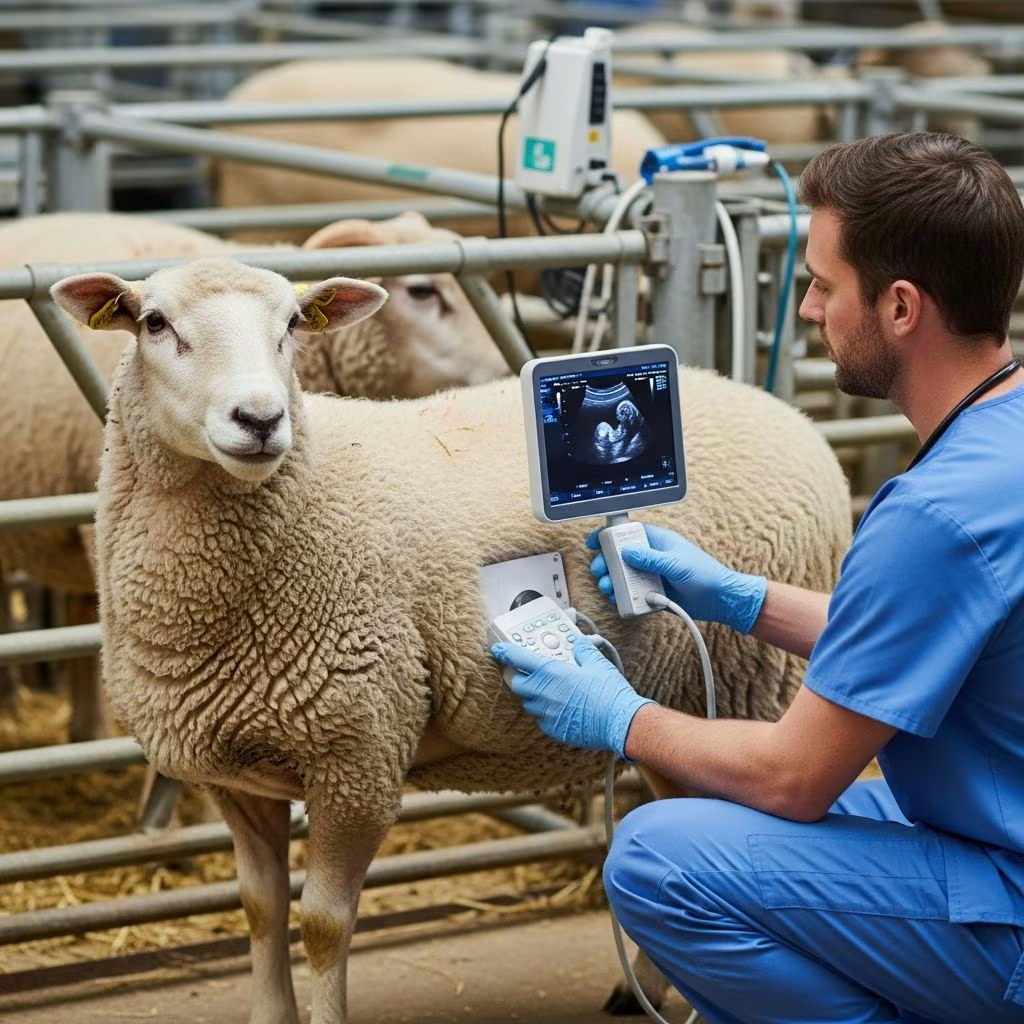
Fetal loss represents a major challenge in sheep production, often resulting in reduced litter sizes and economic setbacks for farmers. In healthy flocks, losses after pregnancy confirmation stay below 2%, but embryonic mortality can reach 30% of conceptions without visible issues at lambing. This article examines the stages, underlying factors, diagnostic approaches, and practical interventions to safeguard pregnancies and enhance lamb viability.
Stages of Pregnancy Vulnerability
Sheep gestation divides into distinct phases where losses manifest differently. Early embryonic death before day 12 typically goes unnoticed, preserving normal cycle lengths. Post-day 12 losses extend breeding cycles, leading to irregular lambing. Mid-to-late gestation sees overt abortions, mummification, or stillbirths, signaling deeper flock problems.
- Embryonic Phase (Days 1-30): High attrition rates here reduce potential litter sizes, especially in prolific breeds.
- Fetal Phase (Second/Third Trimester): Losses appear as 25-30% abortion storms from infections or toxins.
- Periparturient Period: Stillbirths and weak lambs contribute to 15-20% pre-weaning mortality.
Primary Infectious Culprits
Infections dominate abortion diagnoses, with rapid spread in unvaccinated groups causing flock-wide outbreaks. Key pathogens include bacterial, viral, and protozoal agents thriving under poor biosecurity.
| Pathogen | Symptoms | Transmission | Impact |
|---|---|---|---|
| Chlamydia abortus | Late-term abortions, weak lambs | Placental shedding, contaminated environments | Up to 30% flock losses |
| Toxoplasma gondii | Mummified fetuses, stillbirths | Cat feces in feed/water | 2-4% baseline, higher in outbreaks |
| Salmonella spp. (e.g., Abortusovis) | Abortion storms, discharge | Contaminated feed, water, wildlife | 25-30% in epidemics |
Preventive vaccination, timed before breeding, confers lifelong immunity against Chlamydia and Toxoplasma, costing roughly 50-60 pence per pregnancy. Store feed in vermin-proof bins to block cat contamination, a prime Toxoplasma vector.
Nutritional Deficiencies and Toxins
Adequate energy from pre-breeding through early gestation prevents embryonic resorption. Flushing—elevated feeding pre- and during breeding—boosts ovulation rates, while sustained nutrition in the first 45 days averts deficits more harmful than steady low intake.
- Monitor body condition scores regularly to detect energy shortfalls.
- In low-forage periods, supplement with high-quality feeds or rotate pastures.
- Avoid abrupt ration drops, which trigger pregnancy toxemia (ketosis), common in overfat or underfed ewes.
Plant toxins like locoweed induce abortions; fence off infested areas. Late-gestation undernutrition weakens lambs, elevating stillbirths to 25% of losses.
Non-Infectious Contributors
Beyond pathogens, management lapses amplify risks. Dystocia from oversized lambs in prolific breeds causes stillbirths. Hypothermia and starvation claim most early neonates, but prenatal vigor stems from maternal health.
Stress disrupts hormones and immunity; minimize handling, aggressive dogs, and deworming in early pregnancy. Trauma from poor housing or overcrowding leads to discharges or open ewes at lambing.
Diagnostic Protocols
Abortion rates over 5% demand investigation. Isolate aborting ewes, destroy fetuses/placentas, and submit samples to labs for histopathology, culture, and serology.
- Record flock history: vaccination status, nutrition logs, new introductions.
- Collect fresh tissues; refrigerate, don’t freeze.
- Test for multiples: Chlamydia, Toxoplasma, Salmonella simultaneously.
- Track patterns: timing, litter effects, neonatal signs.
Vets and producers collaborate on tailored prevention, replacing piecemeal fixes with holistic plans covering nutrition, genetics, and housing.
Proactive Management Strategies
Holistic approaches narrow scanning-to-lambing gaps, targeting 5-10% mortality benchmarks.
Nutrition Optimization
Pre-lambing (last 6 weeks) high-energy diets enhance lamb vigor and cut ewe deaths. Propylene glycol treats toxemia if caught early.
Biosecurity Essentials
- Quarantine purchases until post-lambing.
- Vaccinate per vet schedule; separate sheep from cattle carriers.
- Clean troughs daily, mains water over ponds.
Husbandry Improvements
Select maternal breeds for milk and vigor. Shed lambing aids intervention against hypothermia/starvation. Monitor for ‘hard bag’ udder issues.
Breeding and Genetic Selection
Prolific breeds suffer higher embryonic losses; balance with hardy genetics. Accredited MAFF schemes supply Chlamydia-free replacements.
Monitoring and Record-Keeping
Log scanning percentages, lambing outcomes, and losses. Body condition scoring guides adjustments. Proactive tracking bridges biology and profitability.
Frequently Asked Questions (FAQs)
What causes most sheep abortions?
Infections like Chlamydia, Toxoplasma, and Salmonella top lists, alongside nutrition gaps.
How to prevent Toxoplasma in flocks?
Vaccinate pre-breeding, vermin-proof feed storage, exclude cats.
Is embryonic loss normal?
Up to 30% occurs silently, higher in multiples; optimize early nutrition to minimize.
When to call a vet for abortions?
Over 5% rate or sudden outbreaks; submit samples promptly.
Can nutrition fix abortion outbreaks?
It prevents toxemia and supports immunity but pairs with vaccination for infections.
Advanced Interventions
For endemic issues, import vaccines under license. Predator control and weather shelters cut periparturient losses. Human vigilance at lambing saves at-risk neonates.
Implementing these yields measurable gains: higher live lambs, better weaning weights. Thoughtful planning transforms vulnerabilities into strengths.
References
- Diagnosis and control of neonatal losses in sheep — PubMed/NCBI. 1990. https://pubmed.ncbi.nlm.nih.gov/2245360/
- Understanding and Reducing Early Pregnancy Loss in Ewes — Wyoming Livestock Roundup (UW Extension). 2025-12-26. https://www.wylr.net/2025/12/26/extension-education-understanding-and-reducing-early-pregnancy-loss-in-ewes/
- Reduce Lamb Loss Fact Sheet — American Lamb Board. 2017-05-25. https://lamb-board.squarespace.com/s/ReduceLambLossLCFactSheet05252017.pdf
- Prenatal Losses in Sheep — Merck Veterinary Manual (Merck & Co.). Last updated 2023 (authoritative veterinary reference). https://www.merckvetmanual.com/management-and-nutrition/management-of-reproduction-sheep/prenatal-losses-in-sheep
- Abortion in Ewes — NADIS (UK veterinary resource). Accessed 2026. https://www.nadis.org.uk/disease-a-z/sheep/abortion-in-ewes/
- Dangers to Pregnancy in Sheep and Goats — University of Arkansas Extension (.edu). Undated (stable extension guide). https://www.uaex.uada.edu/farm-ranch/animals-forages/sheep-goats/pregnancydangers.pdf



