

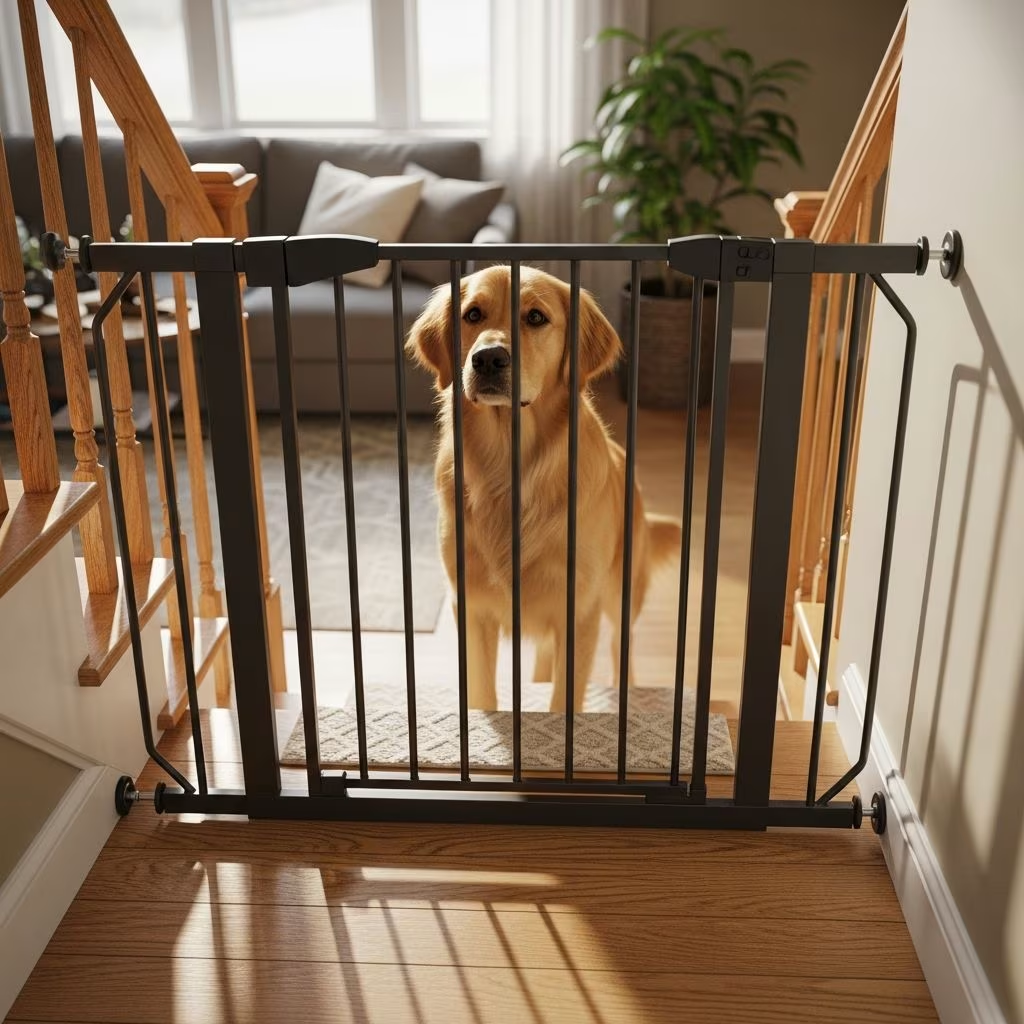
Many dog owners face the challenge of keeping their pets away from upstairs areas to maintain cleanliness, protect sleeping spaces, or ensure safety for older dogs with joint issues. Establishing clear boundaries around stairs requires patience, consistency, and a mix of training methods tailored to your dog’s age, breed, and habits. This guide outlines comprehensive approaches drawn from expert training practices, helping you create a safer home environment without frustration.
Why Restrict Stair Access for Dogs?
Dogs naturally follow their pack leaders, often trailing owners to bedrooms or upper levels. However, unrestricted access can lead to problems like shedding in private areas, especially problematic for allergy sufferers, or risks for senior dogs prone to slips on hard steps. Puppies might chew furniture upstairs, while energetic breeds could knock over items. Setting limits early prevents these issues and promotes better behavior overall.
For multi-pet households, such as those with upstairs cats, dogs may develop excitement or reactivity toward stair activity, leading to barking or lunging. Addressing this proactively maintains peace and reduces stress for everyone.
Essential Training Foundations
Before implementing restrictions, ensure your dog masters basic obedience like “sit,” “stay,” and recall. These commands form the backbone of stair-specific training. Consistency across family members is crucial—mixed signals confuse dogs and undermine progress.
- Supervise Initially: Never allow unsupervised stair access during training to prevent reinforcement of unwanted behavior.
- Use Positive Reinforcement: Reward compliance with treats, toys, or praise to build positive associations with boundaries.
- Practice Daily: Short, frequent sessions (5-10 minutes) yield better results than lengthy ones.
Physical Barriers: Your First Line of Defense
Installing gates provides an immediate, reliable block while training takes effect. Choose sturdy, pressure-mounted baby gates or expandable pet barriers tall enough (at least 36 inches for jumpers) to deter escape.
| Type | Pros | Cons | Best For |
|---|---|---|---|
| Pressure-Mounted Gate | Easy install, no drilling | May wobble on carpet | Temporary use, rentals |
| Freestanding Panel | Adjustable width, stylish | Takes floor space | Large breeds, wide stairs |
| Hardware-Mounted | Secure, permanent | Requires tools/drilling | High-energy dogs |
Position gates at the base and sometimes top of stairs. For dogs that climb over, add extensions or double-gate setups. Crates or designated rooms serve as safe zones when unsupervised, mimicking a natural den for comfort.
Verbal Command Training Techniques
Teach a clear cue like “no stairs” or “place” to signal off-limits areas. This method builds on supervision and rewards.
- Position near stairs with high-value treats ready.
- As dog approaches, firmly say the command and block with your body.
- If they retreat, immediately reward with treat and praise.
- Repeat 10-15 times daily; phase out treats as obedience solidifies.
- Use recall if they start ascending: call back, reward, then redirect to allowed area.
For rushing behaviors, practice controlled descents. Have someone at the top lure the dog up with a treat, then command “stay” at the edge while walking down backwards. Hiss or use a sharp “ah-ah” if they advance, reinforcing self-control.
Deterrent Strategies for Unsupervised Moments
When direct supervision isn’t possible, deterrents create negative associations without harm. These work best combined with training.
- Surface Textures: Lay upside-down carpet runners, aluminum foil crinkled for noise, or double-sided tape on lower steps. The unfamiliar feel discourages paw placement.
- Motion-Activated Devices: Air puffers or ultrasonic emitters startle without pain, placed near stairs.
- Scent Repellents: Citrus sprays or bitter apple on railings deter sniffing and climbing.
Rotate deterrents every few days to prevent habituation. Supervise first encounters to pair with verbal cues, then leave active when away.
Tailoring Methods to Your Dog’s Profile
Puppies Under 6 Months
Young dogs adapt quickly. Use gates from day one, crate train for naps, and lure away from stairs with toys. Their short attention spans favor short sessions.
Adult Dogs with Habits
Previously allowed upstairs? Retrain by blocking access fully for two weeks, then introduce commands. Persistence pays off; most learn in 1-4 weeks with consistency.
Senior or Arthritic Dogs
Focus on safety: soft-step treads reduce slips, ramps bypass stairs entirely. Gentle deterrents prevent painful climbs.
High-Energy Breeds
Breeds like Labs or Border Collies need outlets. Increase walks or puzzle toys downstairs to reduce stair-seeking boredom.
Addressing Reactivity and Excitement
If stairs trigger barking due to upstairs pets or routines, desensitize gradually. Start with low-value treats for calm behavior when people approach stairs, progressing to high-value rewards. Pair with a “settle” command and mat training downstairs for positive focus.
Automatic treat dispensers can reinforce staying put, making downstairs more appealing during absences.
Common Challenges and Fixes
Problem: Dog Jumps Gates
Solution: Upgrade to taller models or add visual blockers like hanging sheets.
Problem: Family Non-Compliance
Solution: Hold a household meeting; assign roles and track progress.
Problem: Regression When Alone
Solution: Install cameras to monitor, combine with rotating deterrents.
Long-Term Maintenance
Once trained, test boundaries occasionally but reinforce randomly. Fade gates over time, using commands primarily. Annual refreshers prevent backsliding, especially with life changes like new pets.
Frequently Asked Questions
Can any dog be trained to avoid stairs?
Yes, with consistency, nearly all dogs learn boundaries, though time varies by age and temperament.
How long does training take?
1-4 weeks for most, longer for entrenched habits. Patience is key.
Are deterrents safe?
Choose non-toxic, non-painful options like textures; avoid anything causing fear.
What if my dog fears stairs already?
Use motivators like treats to build confidence gradually, never force.
Best treats for training?
High-value like cheese or chicken; small pieces to avoid overfeeding.
Enhancing Downstairs Appeal
Make ground level irresistible: comfy beds, chew toys, feeding stations. Rotate enrichment to sustain interest, turning downstairs into the preferred zone.
References
- How to Train Your Dog to Not Go Upstairs — WagWalking. Accessed 2026. https://wagwalking.com/training/not-go-upstairs
- Training Dagny Not to Rush Up the Stairs — DGP Dog Behavior Videos (YouTube). Circa 2015. https://www.youtube.com/watch?v=pWrieejCn0I
- How Can I Desensitize My Pup To People Going Up The Stairs? — Dog Trick Academy Forum. Accessed 2026. https://www.dogtrickacademy.com/forum/threads/how-can-i-desensitize-my-pup-to-people-going-up-the-stairs.3967/
- Dog Afraid of the Stairs: Overcoming Fear — DogGoneProblems. Accessed 2026. https://www.doggoneproblems.com/odin-dog-wont-use-stairs/



