

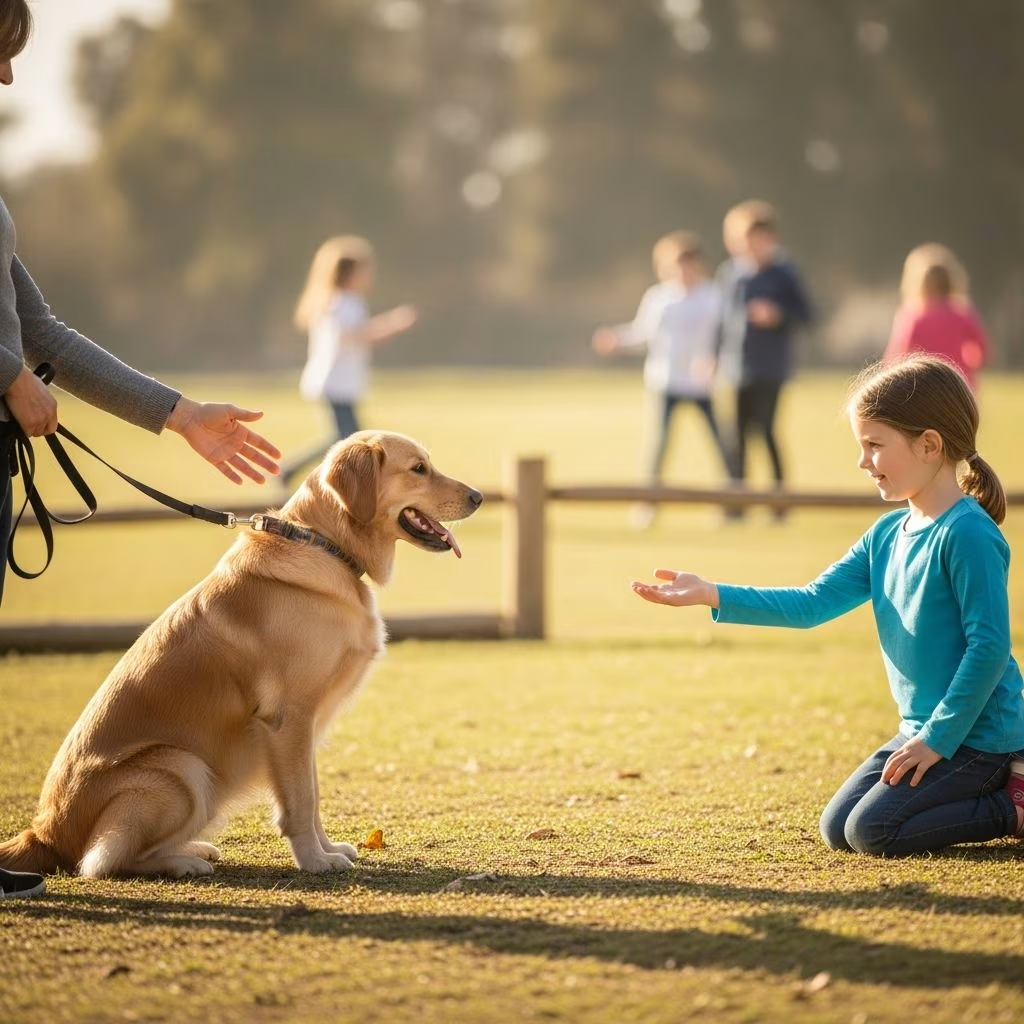
Dogs chasing children is a common issue in households with pets and kids, often stemming from natural instincts like play drive or herding tendencies. Addressing this behavior promptly ensures safety and strengthens the bond between family members. This guide outlines comprehensive approaches to manage and eliminate this problem through consistent management, training, and education.
Understanding the Roots of Chase Behavior in Dogs
Dogs may chase children due to their high energy, quick movements, and squeals, which mimic prey or trigger herding instincts in breeds like Border Collies or Australian Shepherds. This isn’t always aggression but an excited response that can escalate if reinforced. Recognizing triggers—such as running, waving arms, or sudden noises—helps in prevention.
Breeds with strong prey or herding drives are more prone, but any dog can develop this habit if play escalates unchecked. Early intervention prevents bites or injuries, prioritizing child safety while respecting the dog’s natural inclinations.
Essential Management Strategies for Immediate Safety
Management forms the foundation of resolving chase issues by preventing opportunities for the behavior to occur.
- Constant Supervision: Never leave dogs and young children unsupervised. Watch for early signs like staring, crouching, or stiffening, and intervene calmly before chasing starts.
- Designated Safe Spaces: Create barriers like baby gates or crates where the dog can relax with engaging toys, such as puzzle feeders, during high-energy child play.
- Exercise Routines: Tire out the dog with daily walks, fetch sessions, or agility games to reduce pent-up energy that fuels chasing.
These steps minimize risks while you implement training, ensuring no reinforcement of unwanted actions.
Establishing Clear Household Guidelines
Family-wide rules create predictability and reduce triggers.
| Rule | Purpose | Enforcement |
|---|---|---|
| No running or squealing near the dog without adult oversight | Prevents triggering chase instinct | Time-out from dog privileges for 24 hours |
| Dog to a safe zone before rowdy play | Allows calm transitions | Provide high-value chews like stuffed Kongs |
| No teasing or antagonizing the dog | Avoids deliberate provocation | Loss of playtime with friends involving dog |
Communicate rules clearly to all household members and visitors. Consistency reinforces boundaries, making the home safer for everyone.
Core Training Techniques to Curb Chasing
Targeted obedience training builds impulse control and response reliability.
Mastering Recall and Down Commands
Teach a rock-solid “come” and “down-stay” using high-value rewards like chicken or cheese. Practice in low-distraction areas first, gradually adding movement. A quick cue can halt a chase before it begins.
- Call dog from 5 feet away, reward heavily.
- Increase distance and add mild distractions.
- Simulate scenarios with slow child movements.
Implementing the “Leave It” Cue
This command redirects focus from exciting stimuli. Start with treats on the floor: say “leave it,” reward for ignoring. Progress to moving toys or people. Essential for disengaging from running children.
Counterconditioning for High-Drive Dogs
Pair child movements with positive outcomes. Have a child walk slowly while rewarding the dog for calm sitting or looking away. This rewires excitement to relaxation.
Sessions should be short (5-10 minutes) and frequent, always ending on success.
Empowering Children in Dog Interactions
Involving kids in training fosters mutual respect and safety awareness.
- The “Be a Tree” Method: Teach children to freeze, stand still with hands at sides or folded, and avoid eye contact or noise if a dog approaches. This removes the fun, causing the dog to lose interest.
- Hand Signals for Commands: Kids raise hands to chest to cue “sit,” rewarding with treats under supervision.
- Trade Games: Practice exchanging toys or items, directing the dog’s energy to appropriate outlets like balls.
Role-play scenarios with adults first, praising children for correct responses. This builds confidence and prevents panic.
Addressing Breed-Specific Challenges
Herding breeds like Sheepadoodles or Aussies have innate drives to chase and nip heels. Channel this into structured activities:
- Agility courses or treibball (ball herding).
- Controlled fetch with flirt poles.
- Professional herding lessons if feasible.
Avoid roughhousing that mimics prey. Instead, promote calm play like gentle petting or trick training.
Advanced Interventions and When to Seek Help
If basic methods fail, consider:
- Professional Trainers: Certified positive reinforcement experts using BAT (Behavior Adjustment Training) for reactivity.
- Veterinary Behaviorists: Rule out medical issues like anxiety or pain.
- Muzzle Training: As a safety tool during retraining, paired with positive associations.
Track progress in a journal: note triggers, responses, and improvements weekly.
Common Pitfalls and How to Avoid Them
- Punishing after the fact: Ineffective and damages trust.
- Inconsistent rules: Undermines training.
- Overlooking exercise: Leads to frustration-fueled chasing.
- Ignoring warning signs: Stalking or fixation precedes escalation.
FAQs
Why does my dog only chase certain kids?
High-pitched voices, fast runners, or clothing movement trigger stronger responses. Manage per individual.
Is chasing always dangerous?
Not aggressive but risky; nips can injure. Always prioritize prevention.
How long until training works?
Weeks to months with daily practice. Patience is key.
Can puppies outgrow this?
Without intervention, it intensifies. Train early.
What if my dog chases aggressively?
Seek professional help immediately; separate until assessed.
Long-Term Success for Family Harmony
Sustained effort transforms chase-prone dogs into reliable companions. Regular training refreshers, ample exercise, and open communication ensure lasting safety. Celebrate small wins to motivate the family.
References
- Whole Dog Journal: How To Stop the Dog from Chasing Children — Whole Dog Journal. 2023. https://www.whole-dog-journal.com/behavior/how-to-stop-the-dog-from-chasing-children/
- Managing Prey Drive Around Small Animals and Children — Stamford Dog Trainer. 2024. https://stamforddogtrainer.com/managing-prey-drive-around-small-animals-and-children/
- How To Stop Your Dog From Chasing Kids — Chet Womach (YouTube). 2014-10-01. https://www.youtube.com/watch?v=7mWzh6dBwJk
- Dog Chasing Kids — Quick and Dirty Tips. 2022. https://www.quickanddirtytips.com/qdtarchive/dog-chasing-kids/
- Training Gambini to Stop Chasing the Kids Using Counterconditioning — DGP Dog Behavior Videos (YouTube). 2023. https://www.youtube.com/watch?v=k7UmmLwU52Y
- Training a Herding Puppy To Stop Chasing the Kids Using BAT — Dog Gone Problems. 2024. https://www.doggoneproblems.com/lola-bat/



