

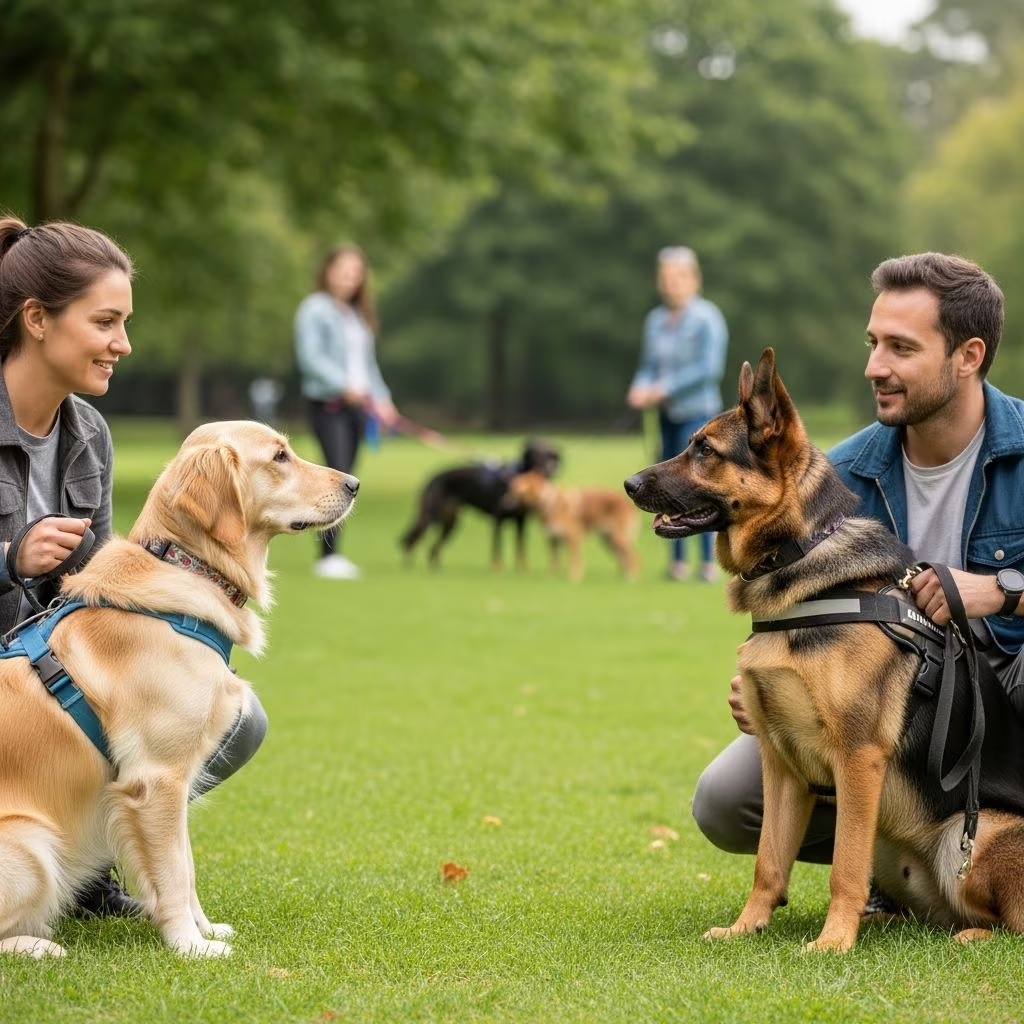
Dog bites affect millions annually, with children and service workers at highest risk. Understanding prevention reduces these incidents significantly.
Understanding Canine Communication
Dogs convey emotions through body language. Recognizing stress signals prevents escalation to bites. Key indicators include stiff posture, raised hackles, lip curling, growling, or avoidance of eye contact.
- Relaxed dog: Loose body, wagging tail, soft ears, open mouth panting.
- Stressed dog: Frozen stance, tucked tail, whale eye (whites visible), yawning excessively.
- Aggressive signals: Forward-leaning posture, bared teeth, deep growls, lunging.
Teaching family members, especially children, to identify these cues fosters safer interactions.
Safe Interaction Protocols
Approach unfamiliar dogs cautiously. Always seek owner permission before contact. Extend a closed fist for sniffing, avoiding head pats initially.
| Situation | Recommended Action | Why It Works |
|---|---|---|
| Meeting a leashed dog | Ask owner first, pet chest/shoulders | Reduces surprise, respects personal space |
| Dog in vehicle or fence | Do not pet or approach | Heightened territorial instincts |
| Child near dog | Supervise closely, teach gentle petting | Prevents accidental provocation |
Steer clear of barking or tethered dogs. Sudden movements trigger defensive responses.
Training Your Dog for Better Behavior
Responsible ownership includes training to curb aggression. Use positive reinforcement, avoid rough play like tug-of-war.
- Enroll in obedience classes focusing on recall and calm greetings.
- Implement crate training as a safe retreat space.
- Use visual cues like ‘Dog in Training’ vests in public.
- Spay/neuter to reduce hormone-driven behaviors, per veterinary advice.
Barriers such as baby gates manage interactions at home. Consistency across household members reinforces rules.
Encountering an Unknown Aggressive Dog
If approached by a hostile dog, remain calm. Do not run, as it activates chase instinct.
- Stand still, avoid direct eye contact by turning sideways.
- Cross arms over chest, speak firmly but calmly.
- Back away slowly toward safety like a vehicle or barrier.
- Use objects like jackets as shields if needed.
Command ‘sit’ or ‘stay’ authoritatively if experienced. Pepper spray targets the face briefly if essential.
Defending During an Actual Attack
When bitten, prioritize protection. Curl into a fetal position on the ground, guarding head and neck. Avoid screaming or flailing.
- Position against a wall to block rear attacks.
- Deploy barriers: purse, backpack, or coat between you and the dog.
- Seek elevated ground like car hoods for advantage.
- Lift collar high behind jaws if separating fighting dogs (for handlers).
Post-incident: Clean wounds thoroughly, seek medical care, report to authorities for rabies checks.
Protecting Your Dog from Other Dogs
Dogs can be victims too. Walk in low-traffic areas during off-peak times.
- Never let your dog approach strangers without permission.
- Use short leashes in dog-heavy zones.
- Train recall commands for quick control.
If attacked, avoid pulling apart directly; use distractions or water sprays. Veterinary follow-up is crucial.
Common Myths About Dog Aggression
Breed alone does not predict bites; individual history and training matter more. Any dog can bite if provoked. Myths lead to false security.
| Myth | Fact | Source Insight |
|---|---|---|
| Certain breeds are always dangerous | Behavior stems from experiences, not breed | AVMA data |
| Small dogs don’t bite badly | Size doesn’t reduce injury risk | General stats |
| Running stops pursuit | Triggers chase response | Safety protocols |
Role of Supervision and Education
Half of victims are children. Never leave kids unsupervised with dogs. Educate on gentle handling and space respect. National Dog Bite Prevention Week promotes awareness annually.
Service workers: Announce presence before touching dogs.
Frequently Asked Questions (FAQs)
What should I do if a loose dog approaches me?
Stay still, turn sideways, back away slowly without eye contact.
Can I pet a dog that seems friendly?
Always ask owner first; let sniff hand before touching.
How do I train my dog not to be aggressive?
Positive reinforcement, professional classes, avoid triggers.
What if my dog is attacked on a walk?
Use distractions, seek vet care immediately; walk safer routes.
Is pepper spray effective against dogs?
Yes, short-term on face, but use as last resort.
Building a Safer Community
Promote leash laws, responsible breeding, and education. Share #PreventDogBites resources. Informed actions save lives.
References
- Dog Bite Prevention Best Practices — MEL Safety Institute. 2023-07. https://melsafetyinstitute.org/wp-content/uploads/2023/07/MSI-Shift-Briefing-Dog-Bite-Prevention-Best-Practices.pdf
- Dog Bite Prevention — ASPCA. Accessed 2026. https://www.aspca.org/pet-care/dog-care/dog-bite-prevention
- What to Do When a Dog Attacks — Positively.com. Accessed 2026. https://positively.com/dog-training/article/aggression-reactivity-what-to-do-when-a-dog-attacks
- Dog Bite Prevention: Managing Behavior Issues — Best Friends Animal Society. Accessed 2026. https://bestfriends.org/pet-care-resources/dog-bite-prevention-managing-behavior-issues
- How to Protect Your Dog from Dog Bites — Emergency Vet Ann Arbor. Accessed 2026. https://emergencyvetannarbor.com/blog/how-to-protect-your-dog-from-dog-bites-and-prevent-dog-attacks/
- Dog Bite Prevention — AVMA. Accessed 2026. https://www.avma.org/resources-tools/pet-owners/dog-bite-prevention



