

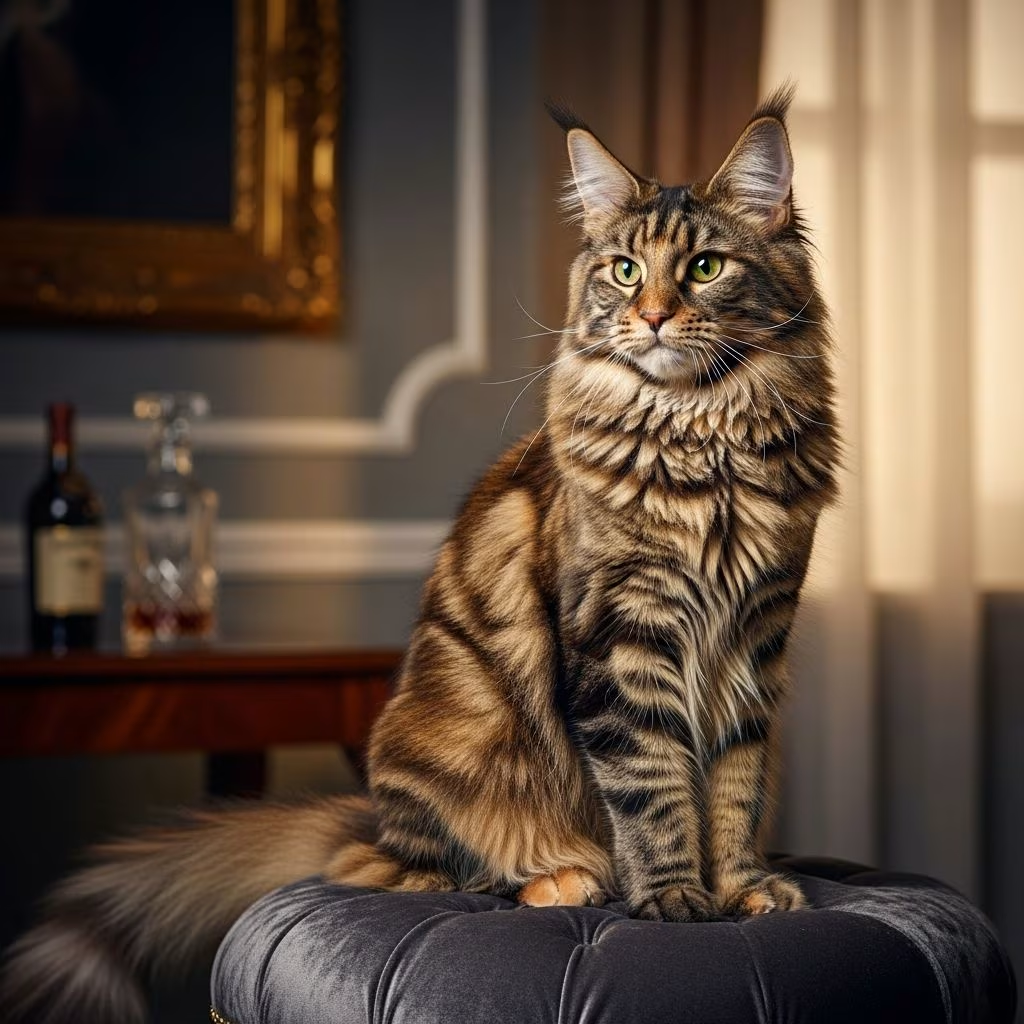
The world of feline companionship extends far beyond typical domestic cats. For those seeking extraordinary pets with distinctive characteristics, rare pedigrees, and unique genetic backgrounds, the premium cat market offers remarkable specimens. These specialized breeds command substantial investment, reflecting their scarcity, breeding complexity, and distinctive traits. Understanding what drives the valuation of luxury cat breeds provides insight into the competitive world of elite pet ownership.
The Apex of Feline Luxury: Laboratory-Engineered Hybrids
Certain cat breeds occupy the pinnacle of the premium market through deliberate genetic engineering and selective breeding programs. These creations represent significant research investment and specialized breeding knowledge, positioning them as the ultimate status symbols in pet ownership.
Ashera Cats: The Crown Jewels of Feline Breeding
The Ashera cat represents the zenith of premium feline companions, commanding prices between $15,000 and $125,000. This extraordinary valuation stems from the breed’s hybrid origin, combining genetic material from African Serval cats, Asian Leopard cats, and domestic felines. Created through laboratory manipulation in the United States, Ashera cats showcase exceptional physical attributes that justify their elite status.
Ashera cats can weigh up to 30-33 pounds, making them substantially larger than conventional domestic cats. Their distinctive appearance combines wild elegance with domestic approachability, creating a visually striking companion. The scarcity of bloodlines and the complexity of breeding protocols contribute to their astronomical pricing. Some breeders argue that certain Ashera cats are actually first-generation Savannah offspring, adding complexity to breed classification and authenticity verification.
Savannah Cats: The Exotic Alternative
As the second-most expensive cat breed globally, Savannah cats command investment levels between $1,000 and $50,000. These felines result from crossing African Serval wild cats with domestic cats, producing a breed that captures wild aesthetics within domesticated behavior.
Savannah cats exhibit distinctive physical characteristics including:
- Tall, athletic builds with elongated bodies
- Disproportionately large ears relative to head size
- Spotted or striped coat patterns
- Active, intelligent personalities requiring substantial engagement
- Generation-dependent pricing (F1 generations command premium rates)
The variation in Savannah pricing reflects their generational distance from wild ancestors. First-generation Savannahs, exhibiting stronger wild traits, command the highest premiums, while later generations offer more affordable ownership opportunities.
Specialized Heritage Breeds with Elite Credentials
Beyond hybridized laboratory creations, certain traditional breeds have developed exclusive status through centuries of selective breeding and pedigree refinement.
Bengal Cats: The Miniature Leopard Experience
Bengal cats occupy premium positioning at $5,000 to $25,000, created through strategic crossing of Asian Leopard cats and Egyptian Mau breeds. These muscular companions feature:
- Distinctive leopard-like coat patterns in brown, silver, grey, or black
- Prominent round eyes with alert expression
- Athletic, muscular physiology
- Unique water affinity unusual among domestic cat breeds
- High intelligence requiring enrichment activities
Bengal ownership appeals to individuals seeking visually exotic felines with maintained domestic temperament, justifying their premium market position.
Persian Cats: The Prestige of Antiquity
Persian cats represent one of the oldest recognized breeds, dating to the 17th century. Despite their historical longevity, premium Persians with distinguished pedigrees command $500 to $5,500, with exceptional bloodlines reaching $3,000-$5,500.
Persian aesthetic characteristics include:
- Distinctly flattened facial structure with button noses
- Abundant, thick, flowing coat requiring daily maintenance
- Round, chubby-cheeked appearance
- Calm, low-energy temperament
- Extended sleep patterns (up to 20 hours daily)
Their popularity and breed stability enable more accessible pricing compared to newly developed hybrids, though championship bloodlines remain investment-grade acquisitions.
Distinctive Morphological Variations: Hairless and Unusual Breeds
Certain breeding programs have pursued radical physical variations, creating breeds with distinctive visual and tactile characteristics that command specialized pricing structures.
Sphynx Cats: The Hairless Revolution
Sphynx cats represent one of the most visually distinctive breeds, commanding $500-$3,000 depending on lineage and breeder reputation. These hairless felines possess apparent genetic robustness, with reported minimal hereditary health complications compared to other premium breeds.
Sphynx characteristics influencing their premium positioning:
- Complete hairlessness creating distinctive aesthetic
- Weight range of 6-12 pounds with compact frames
- Ideal suitability for individuals with allergies
- Heightened temperature sensitivity requiring environmental management
- Regular bathing requirements due to skin oil accumulation
- Lifespan extending 9-15 years
The breed’s allergen advantages attract premium pricing despite specialized care requirements.
Peterbald Cats: Russian Innovation
The Peterbald, alternatively known as the Don Sphynx, represents a newer Russian hairless breed commanding $1,200-$5,000. This recent development in feline genetics offers an alternative to established Sphynx lines, with distinct genetic foundations supporting breed development.
Grand-Scale Companions: Large Premium Breeds
Size commands premium pricing in certain breed categories, with larger specimens requiring more substantial resource investment throughout their lifespan.
Maine Coon Cats: The Gentle Giants
Maine Coons represent premium large-breed pricing at $400-$1,500, with championship bloodlines exceeding standard rates. These impressive felines grow up to 40 inches in length and weigh up to 18 pounds, making them among the largest domestic cat breeds.
Maine Coon characteristics justify their elevated investment:
- Substantial size requiring spacious living environments
- Long, flowing coats with regular grooming needs
- Friendly, sociable temperaments suited to multi-pet households
- Typical lifespan of 10-15 years
- Substantial food and resource requirements
Siberian Cats: The Cold-Climate Specialists
Siberian cats command $1,200-$4,000, representing ancient breeds originally adapted to extreme climates. These large, affectionate companions exhibit Ragdoll-like personalities with substantial long-coat maintenance requirements.
Aesthetic Excellence and Breeding Prestige
Beyond genetic uniqueness, several traditional breeds command premium positioning through centuries of selective refinement and competitive breeding excellence.
Ragdoll Cats: The Social Media Darlings
Ragdoll cats occupy mid-premium positioning at $850-$2,500, primarily due to their striking visual characteristics and personality traits. These fluffy, blue-eyed companions have achieved substantial social media prominence, influencing premium valuation.
Ragdoll attributes supporting their investment cost:
- Striking azure blue eyes creating distinctive appearance
- Long, luxurious coats requiring daily brushing
- Substantial size reaching 17-21 inches in length and 20 pounds
- Affectionate, family-friendly temperaments
- Extended lifespan reaching 17 years
Scottish Fold Cats: The Unique Ear Formation
Scottish Fold cats command $1,000-$2,000, distinguished by their unusual forward-folding ears creating an owl-like appearance. This distinctive genetic variation results from a natural mutation selectively bred for aesthetic purposes, justifying premium valuation within the breed category.
Toyger Cats: The Miniature Tigers
Toyger cats represent specialized aesthetic breeding, commanding $1,500-$5,000 through deliberate selection for tiger-stripe patterning and compact physiology. These designer felines combine visual drama with manageable sizing.
Russian Blue Cats: The Emerald-Eyed Elegance
Russian Blue cats command $1,000-$1,700, reflecting their selective breeding for cold-climate adaptation and distinctive green eye coloration. Originally developed to survive harsh Russian winters, these gentle, quiet cats appeal to introverted households seeking calm companions.
Birman Cats: The Serene Companions
Birmans represent relatively accessible premium pricing at $700-$1,500, reflecting their stable bloodlines and consistent breeding standards. These playful, sweet, cuddly cats excel in multi-pet and child-inclusive households.
Investment Considerations Beyond Purchase Price
Premium cat breed acquisition represents merely the initial investment in feline companionship. Prospective owners must evaluate comprehensive ownership expenses extending throughout an animal’s lifespan:
| Expense Category | Typical Annual Range | Notes |
|---|---|---|
| Specialized Nutrition | $300-$800 | Premium breeds often require high-quality, specialized diets |
| Grooming Services | $200-$600 | Long-coated breeds require professional maintenance |
| Veterinary Care | $500-$1,500 | Genetic screening and breed-specific health monitoring |
| Environmental Management | $100-$400 | Heating, cooling, enrichment for exotic breeds |
| Insurance Coverage | $300-$600 | Protecting against expensive emergency interventions |
Understanding the Premium Valuation Hierarchy
Feline breed pricing reflects multiple intersecting factors beyond simple scarcity. Genetic engineering complexity, breeding program infrastructure, generational distance from wild ancestors, health screening protocols, and pedigree documentation contribute to premium positioning. Laboratory-engineered hybrids occupy the pricing apex due to technical breeding complexity and limited breeder availability. Traditional heritage breeds command secondary premium levels through competitive breeding excellence and pedigree prestige. Specialized morphological variations justify tertiary pricing tiers through unique care requirements and visual distinctiveness.
Prospective premium cat owners should prioritize ethical breeder selection, comprehensive health screening verification, and realistic assessment of long-term ownership responsibilities. The most expensive cats represent substantial investments meriting careful deliberation beyond initial acquisition costs.
References
- Top 5 World’s Most Expensive Cat Breeds — Petsworld. 2024. https://petsworld.in/blogs/news/top-5-world-s-most-expensive-cat-breeds
- These Five Rare Cat Breeds May Break the Bank! — EquiGroomer. 2024. https://equigroomer.com/these-five-rare-cat-breeds-may-break-the-bank/
- The 10 Most Expensive Cat Breeds — Pumpkin Pet Insurance. 2024. https://www.pumpkin.care/post/most-expensive-cat-breeds
- The 10 MOST EXPENSIVE CATS in the WORLD — Expert Animal. 2024. https://www.expertoanimal.com/



