

Pregnancy Testing in Dogs: A Comprehensive Guide
Confirming and monitoring pregnancy in dogs is essential for ensuring the health and safety of both the dam and her developing puppies. Several reliable methods exist to detect canine pregnancy, each with distinct advantages depending on the stage of gestation, accuracy requirements, and available resources. Understanding these methods helps breeders and dog owners make informed decisions about prenatal care and preparation for whelping.
The Gold Standard: Abdominal Ultrasound
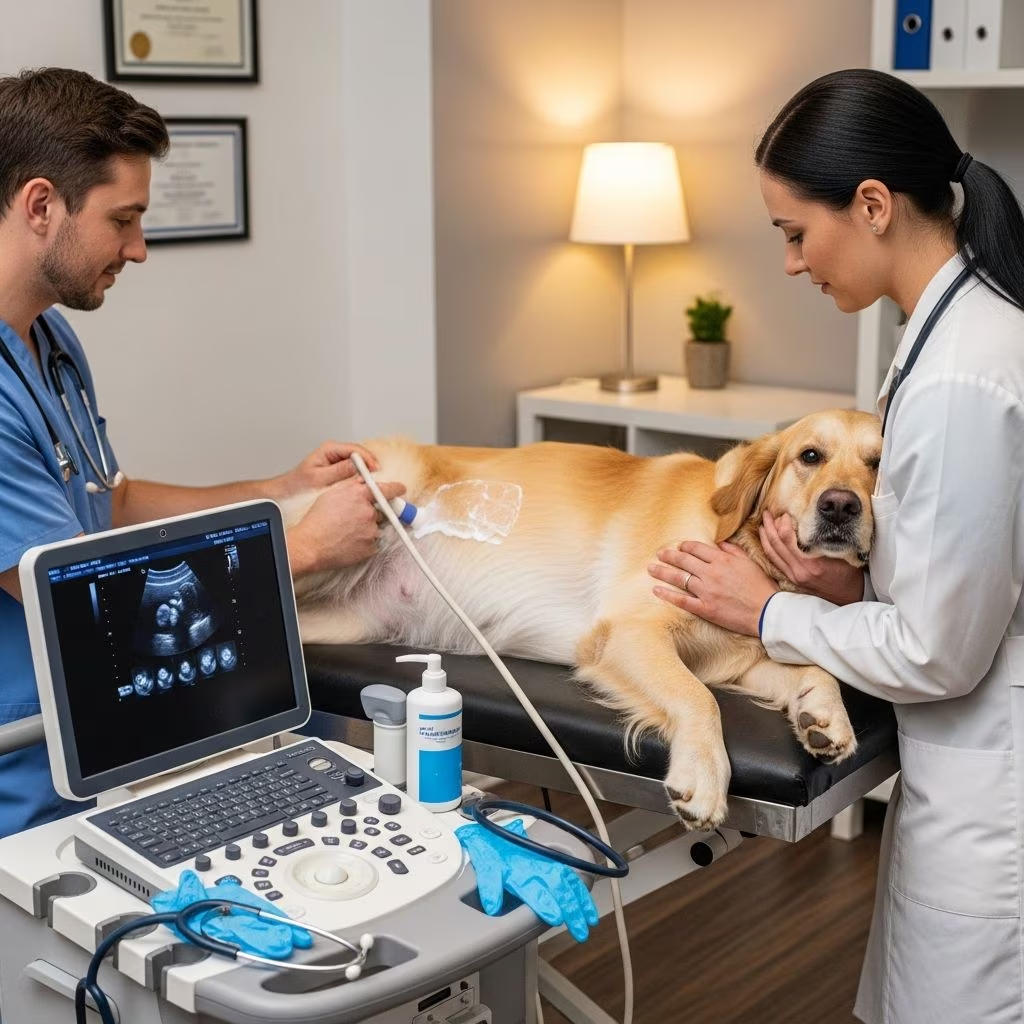
Abdominal ultrasound stands as the most reliable and versatile method for detecting and monitoring pregnancy in dogs. This non-invasive imaging technique uses sound waves to visualize the reproductive tract and developing fetuses without exposing the dog to radiation.
Developing embryos can be detected as early as three weeks post-breeding using ultrasound technology. The procedure allows veterinarians to assess fetal viability throughout the entire pregnancy, making it the gold standard for pregnancy detection. By day 30 of pregnancy, fetal heartbeats become visible in most cases, providing definitive confirmation that the pregnancy is progressing normally.
Ultrasound is particularly valuable for differentiating pregnancy from other conditions that may cause uterine distention, such as hydrometra, pyometra, or mucometra. The procedure is best performed between 25 and 35 days of gestation for optimal visualization. Additionally, ultrasonographic measurements can be used to calculate gestational age, helping owners prepare for the expected whelping date.
One significant advantage of ultrasound is that it can be performed relatively early in pregnancy, allowing owners to confirm pregnancy within weeks of breeding. The procedure is painless and requires no special preparation beyond clipping a small area of the abdomen for gel application.
Traditional Abdominal Palpation
The traditional method of detecting pregnancy in dogs is careful abdominal palpation, which involves gently pressing on the surface of the abdomen with the fingers to detect swellings in the uterus. This hands-on approach has been used for decades and remains valuable in many clinical settings.
The optimal time for performing palpation is between three and a half to five weeks of pregnancy. During this window, developing fetuses feel like small, distinct grape-like structures within the uterus. A skilled veterinarian can often detect these characteristic swellings and provide presumptive confirmation of pregnancy.
However, palpation has several limitations. Success depends heavily on the temperament and body condition of the dog, as well as the experience of the person performing the examination. Palpation is unreliable for determining the viability of fetuses and cannot provide accurate fetal counts. Obese dogs or those with poor body condition present particular challenges, as excess abdominal fat can obscure fetal structures. Additionally, the number of fetuses present and timing of the palpation significantly affect accuracy.
Radiography (X-Rays) for Late Pregnancy
Abdominal radiographs serve as a valuable diagnostic tool, particularly useful in the last trimester of gestation—approximately three weeks before whelping. X-rays become effective starting around day 45 of pregnancy, after the bony structures of the puppies have sufficiently mineralized to appear on radiographic images.
One of the primary advantages of radiography is its ability to determine the number of puppies in a litter. By visualizing the skeletal structures of each fetus, veterinarians can provide an accurate count, which is crucial information for preparation and monitoring during delivery. This count allows owners to know when whelping is complete and when to seek veterinary assistance if complications arise.
Radiographs can also help determine viability in many cases, though certain situations may present challenges. For example, the sudden death of a full-term puppy in the uterus might be difficult to detect on radiograph. Additionally, X-rays require radiation exposure, which is why this method is reserved for later pregnancy stages when the benefit of accurate fetal counting outweighs the radiation concerns.
Blood Testing and Relaxin Detection
Blood tests provide an objective method for confirming pregnancy in dogs by measuring specific hormonal levels. The most pregnancy-specific blood test involves detecting relaxin, a hormone produced by the developing placenta.
Relaxin is unique because it is produced primarily during pregnancy and does not fluctuate during regular reproductive cycles. This makes relaxin testing highly specific for confirming pregnancy. The test requires only a simple blood draw, and results can be available within hours if processed in-clinic or within a few days if sent to an external laboratory.
Relaxin testing becomes reliable approximately 26 to 30 days after breeding. Once pregnancy is established, relaxin maintains accuracy throughout gestation with minimal false positives. This method provides certainty early enough to allow for appropriate prenatal care adjustments.
While progesterone testing can provide supportive information about breeding timing and reproductive cycles, it is not pregnancy-specific, as progesterone rises during normal heat cycles regardless of pregnancy status. Therefore, progesterone alone cannot confirm pregnancy but serves as valuable contextual information when combined with other diagnostic methods.
Unreliable Signs of Pregnancy
Several physical signs are often associated with pregnancy but are not reliable indicators on their own. These include evaluation of the teats, overall weight gain, and general abdominal enlargement. While these signs may be observed in pregnant dogs, they can also occur in non-pregnant dogs due to various other conditions.
Behavioral changes may also occur but are highly variable among individual dogs. Some may show increased appetite or nesting behaviors, while others show minimal behavioral changes. These subjective signs should never be relied upon as the sole basis for pregnancy confirmation and should always be combined with objective diagnostic methods for accurate assessment.
Comparison of Pregnancy Detection Methods
| Method | Optimal Timing | Accuracy | Can Assess Viability | Can Count Fetuses | Radiation Exposure |
|---|---|---|---|---|---|
| Abdominal Palpation | 21-35 days post-breeding | Variable (experience dependent) | No | No | None |
| Ultrasound | 21-30 days post-breeding | High | Yes | Yes | None |
| Relaxin Blood Test | 26-30 days post-breeding | High | No | No | None |
| Radiographs (X-rays) | 45+ days post-breeding | High | Partial | Yes | Yes (minimal) |
Selecting the Appropriate Testing Method
The choice of pregnancy testing method should be based on several factors, including the stage of gestation, the specific information needed, the dog’s size and body condition, and available resources.
For Early Pregnancy Confirmation: Ultrasound and relaxin testing are the most appropriate choices. Ultrasound provides the added benefit of assessing fetal development, while relaxin testing offers quick confirmation with minimal stress to the dog.
For Fetal Viability Assessment: Ultrasound remains the superior choice, as it allows continuous monitoring throughout pregnancy and provides real-time visualization of fetal heartbeats and movement.
For Fetal Counting: Radiographs become the method of choice in late pregnancy, as they provide clear skeletal visualization and accurate fetal counts essential for whelping preparation.
For Comprehensive Monitoring: Many veterinarians recommend a staged approach combining multiple methods throughout pregnancy. Early ultrasound confirms pregnancy and establishes viability, while late-stage radiographs provide an accurate fetal count.
Preparation for Dog Pregnancy Testing
Minimal preparation is required for most pregnancy testing procedures. For ultrasound examinations, a small area of the abdomen may be clipped to allow better contact between the ultrasound probe and the skin. Some veterinarians may recommend a light fasting period before the procedure, though this is not always necessary.
Blood tests require only a simple blood draw, similar to routine bloodwork. Dogs should be in a calm state to facilitate the procedure. Radiographs require positioning the dog for proper imaging, sometimes under light sedation if the dog is anxious or uncooperative, though sedation is typically avoided during pregnancy unless absolutely necessary.
Before any pregnancy testing, owners should discuss their dog’s current health status, medications, and any concerns with their veterinarian. This information helps ensure appropriate test selection and timing.
Frequency and Timing of Testing
The frequency of pregnancy testing depends on the individual situation and the methods employed. Initial confirmation typically occurs once, within 3 to 5 weeks of breeding. However, some owners may opt for multiple ultrasounds throughout pregnancy to monitor fetal development and ensure continued viability.
Late-stage radiographs are generally performed only once, approximately one week before the expected whelping date. This timing allows for accurate fetal counting and preparation without unnecessary stress to the dam.
Frequently Asked Questions
Q: How soon after breeding can pregnancy be detected in dogs?
A: Pregnancy can be detected as early as 21 to 25 days after breeding using ultrasound or relaxin blood testing. However, ultrasound is most reliable between 25 and 35 days of gestation, when embryonic structures are most clearly visible.
Q: Is ultrasound safe during dog pregnancy?
A: Yes, ultrasound is completely safe during pregnancy. It uses sound waves rather than radiation and poses no risk to the developing fetuses or the dam.
Q: Can palpation accurately determine how many puppies a dog is carrying?
A: No, palpation cannot provide accurate fetal counts. Radiographs or ultrasound are necessary for determining litter size. Radiographs are particularly accurate for this purpose in late pregnancy.
Q: What does relaxin testing cost compared to other methods?
A: Relaxin testing is generally affordable and offers quick confirmation of pregnancy. Costs vary by location and veterinary clinic, but it is typically comparable to or less expensive than ultrasound.
Q: Should I be concerned if my dog’s pregnancy cannot be confirmed early?
A: Not necessarily. Some pregnancies may be difficult to confirm early due to the dog’s body condition or small litter size. A veterinarian can recommend appropriate follow-up testing at later stages of gestation.
Q: Can pregnancy testing determine if all puppies are healthy?
A: Ultrasound can assess fetal viability and detect obvious abnormalities, but it cannot guarantee the health of all puppies. Veterinary examination after birth provides more complete health assessment.
Preparing for Whelping
Accurate pregnancy testing and monitoring enable proper preparation for whelping. Knowledge of fetal count, expected due date, and fetal viability allows owners to prepare appropriate whelping facilities, arrange for veterinary support if needed, and monitor for complications during labor.
Regular monitoring through pregnancy testing ensures that any potential complications can be identified early, allowing for prompt veterinary intervention if necessary.
References
- Pregnancy Determination in Bitches and Queens — Merck Veterinary Manual. 2024. https://www.merckvetmanual.com/management-and-nutrition/management-of-reproduction-dogs-and-cats/pregnancy-determination-in-bitches-and-queens
- Pregnancy Diagnosis in the Bitch — UC Davis School of Veterinary Medicine. 2024. https://healthtopics.vetmed.ucdavis.edu/health-topics/canine/pregnancy-diagnosis-bitch
- Pregnancy Testing in the Dog — VCA Animal Hospitals. 2024. https://vcahospitals.com/know-your-pet/pregnancy-testing-in-the-dog
- Pregnancy Testing for Pets: 5 Essential Methods Explained — The Pet Vet. 2024. https://thepetvet.com/pregnancy-testing-for-pets/



