
Prednisone and Prednisolone for Dogs and Cats
Complete guide to prednisone and prednisolone use in pets: benefits, dosage, and side effects.
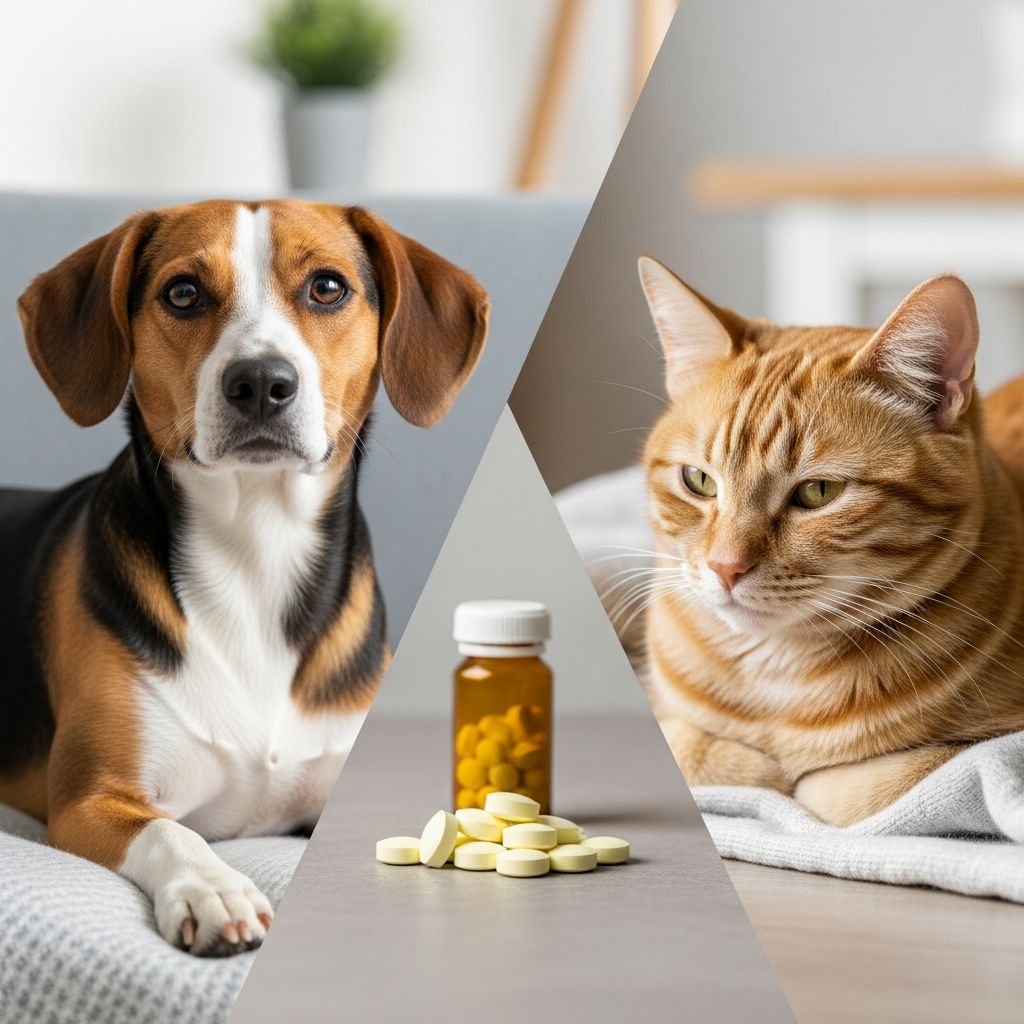
Understanding Prednisone and Prednisolone for Pets
Prednisone and prednisolone are glucocorticoids commonly prescribed by veterinarians to treat a wide range of conditions in dogs, cats, and other animals. These synthetic corticosteroids mimic the natural steroid hormones produced by an animal’s body, providing powerful anti-inflammatory and immunosuppressive effects. While some products carry FDA approval for specific animal uses, most veterinary prescriptions for these medications are considered off-label use, which is a widely accepted practice in veterinary medicine. Understanding how these medications work, their proper administration, and potential side effects is essential for pet owners whose animals require this treatment.
What Are Prednisone and Prednisolone?
Prednisone and prednisolone are both corticosteroids, but they work slightly differently in the body. Prednisone is an inactive form that must be converted to prednisolone in the liver to become effective. Prednisolone, on the other hand, is already in its active form and does not require hepatic conversion. This distinction becomes particularly important when treating animals with liver disease or compromised liver function, as prednisolone is the safer choice in these cases. Both medications are available under brand names including Prednis-Tab®, Deltasone®, Rayos®, and Pediapred®, and they are administered in various forms including tablets, liquid solutions, and injections.
Common Uses of Prednisone and Prednisolone
These corticosteroids have broad therapeutic applications in veterinary medicine due to their multiple mechanisms of action. The effectiveness of these medications varies depending on the dosage administered—lower doses primarily provide anti-inflammatory benefits, while higher doses offer more potent immunosuppressive effects.
Replacement Therapy for Addison’s Disease
One of the primary uses of prednisone and prednisolone is treating Addison’s disease, also known as hypoadrenocorticism. This condition occurs when an animal’s body does not produce adequate amounts of natural corticosteroid hormones. These medications replace the missing hormones and help restore normal bodily functions in affected pets.
Anti-Inflammatory Applications
At lower dosages, prednisone and prednisolone effectively reduce inflammation caused by various conditions. They work by decreasing the body’s inflammatory response, which helps alleviate pain and improve mobility in pets suffering from:
- Arthritis and orthopedic diseases
- Skin diseases and irritations
- Inflammatory bowel disease (IBD)
- Asthma and respiratory conditions
- Nervous system disorders
Allergic Reactions and Immune Conditions
These medications effectively control allergic symptoms in pets, whether caused by environmental factors, food allergens, or other triggers. They manage conditions such as hives, itching, and allergic dermatitis. Additionally, at higher doses, prednisone and prednisolone suppress immune system overactivity, making them valuable for treating autoimmune diseases including lupus and autoimmune hemolytic anemia (AIHA).
Cancer Treatment
Prednisolone and prednisone serve as antineoplastic agents, functioning as part of chemotherapy protocols for certain types of cancer in pets. They help manage neoplasia and work alongside other cancer treatments to improve outcomes.
Emergency and Other Applications
These medications are also used to treat life-threatening conditions including anaphylactic shock, spinal cord trauma, and various forms of shock. Their rapid anti-inflammatory and immunosuppressive actions make them invaluable in emergency veterinary care.
How Prednisone and Prednisolone Work
Prednisone and prednisolone are steroids that function as hormones, affecting nearly every cell type in an animal’s body. Their mechanism of action depends heavily on the dosage prescribed. At lower therapeutic doses, these medications reduce inflammation throughout the body and provide broad anti-inflammatory effects that help alleviate pain and discomfort. At higher doses, they suppress the immune system’s response, which can be beneficial for treating autoimmune diseases and certain malignancies. The effectiveness also depends on individual animal metabolism, liver function, and the specific condition being treated. Prednisone will typically begin working within one to two hours of administration, with noticeable improvement in symptoms occurring shortly thereafter. If your pet does not show signs of improvement within a few days of starting treatment, consult your veterinarian about potential dosage adjustments or alternative therapies.
Administration Guidelines
Forms and Routes of Administration
Prednisone and prednisolone can be administered through multiple routes depending on the clinical situation and medication availability:
- Oral tablets: The most common form for home administration
- Liquid solutions: Useful for pets that have difficulty swallowing tablets or for dose customization
- Injectable forms: Available for hospital use when oral administration is not feasible
Important Administration Instructions
Proper administration is crucial for medication effectiveness and pet safety. Always measure liquid forms carefully to ensure accurate dosing. Give this medication with food to minimize gastrointestinal upset. If your pet is on a once-daily dose schedule, timing matters: administer prednisone or prednisolone in the morning for dogs and horses, and in the evening for cats, when possible, as this aligns better with natural hormone cycles.
Discontinuation Precautions
Never stop prednisone or prednisolone therapy abruptly without veterinary guidance, as sudden cessation can trigger serious complications. These medications must be tapered slowly under veterinary supervision to allow the body to readjust to normal hormone production. Additionally, avoid using these medications in pets undergoing allergy testing within the next month unless your veterinarian specifically advises otherwise, as corticosteroids can interfere with test results.
Considerations for Different Species
Dogs
Dogs generally metabolize prednisone to prednisolone efficiently, making both forms effective and interchangeable for most situations. Your veterinarian can determine which option is most appropriate based on your dog’s specific condition and medical history.
Cats
Cats are notably less efficient at converting prednisone to prednisolone, making prednisolone the preferred choice for feline patients. Prednisolone is used in cats for treating inflammatory conditions of the respiratory and gastrointestinal systems, immune-mediated diseases, heartworm disease, allergic reactions, and as chemotherapy for certain cancers. Using prednisolone in cats ensures better bioavailability and therapeutic effectiveness.
Liver Disease Considerations
For both dogs and cats with liver disease or compromised liver function, prednisolone is the superior choice. Since it is already in its active form, prednisolone does not require hepatic conversion and does not place additional stress on a compromised liver. Animals in liver failure should receive prednisolone rather than prednisone to ensure safety and efficacy.
Precautions and Special Considerations
While prednisone and prednisolone are generally well-tolerated, certain conditions require careful monitoring or alternative considerations.
Use With Caution In:
- Pets with diabetes
- Pets with heart or vascular disease
- Pets with other types of infections
- Pets with osteoporosis
- Pets with cataracts
- Pets with high blood pressure
- Pets with kidney disease
- Young animals (as these medications can stunt growth)
Use With Extreme Caution In:
Certain conditions warrant extra vigilance when prescribing these medications. Your veterinarian will carefully evaluate the risk-benefit ratio and may recommend more frequent monitoring, dosage adjustments, or alternative treatments depending on your pet’s specific health status.
Contraindications
Prednisone and prednisolone are generally not recommended in patients with systemic fungal infections. However, treatment of Addison’s disease may be considered an exception to this rule. Additionally, these medications should be avoided during pregnancy and lactation unless the therapeutic benefits clearly outweigh the potential risks to the developing fetus or nursing offspring. Young animals require special consideration due to immune suppression risks and increased vulnerability to gastrointestinal ulcers.
Frequently Asked Questions
Q: Are prednisone and prednisolone approved by the FDA for use in pets?
A: While some products carry FDA approval for specific animal uses, most veterinary prescriptions are considered off-label use. This is a widely accepted and standard practice in veterinary medicine, as many effective medications are commonly prescribed off-label to treat various conditions in dogs, cats, and other animals.
Q: How long does it take for prednisone to work?
A: Prednisone typically begins working within one to two hours of administration. Your pet’s symptoms should start to improve shortly after. However, contact your veterinarian if you do not observe improvement within a few days of starting treatment, as dosage adjustments may be necessary.
Q: Can I give my cat prednisone instead of prednisolone?
A: While prednisone can be given to cats, prednisolone is the preferred choice because cats are less efficient at converting prednisone to its active form. Prednisolone ensures better therapeutic effectiveness and bioavailability in feline patients.
Q: What should I do if I forget to give my pet their dose?
A: If you miss a dose, give it as soon as you remember unless it is nearly time for the next scheduled dose. Never double-dose to make up for a missed dose. Contact your veterinarian if you are unsure about how to proceed.
Q: Can prednisone and prednisolone be used together with other medications?
A: Many medications can be used concurrently with prednisone or prednisolone, but some combinations require monitoring or dosage adjustments. Always inform your veterinarian about all medications and supplements your pet is taking to ensure safe concurrent use.
Q: Why must these medications be tapered rather than stopped abruptly?
A: Long-term use of corticosteroids suppresses the body’s natural production of these hormones. Abrupt cessation can cause serious complications as the adrenal glands may not immediately resume normal hormone production. Gradual tapering allows the body to safely readjust to independent hormone production.
References
- What to Know About Prednisone for Dogs — WebMD. 2024. https://www.webmd.com/pets/dogs/what-to-know-prednisone-for-dogs
- Prednisone and Prednisolone for Dogs and Cats — PetMD. 2024. https://www.petmd.com/pet-medication/prednisone-and-prednisolone-for-dogs-cats
- Prednisone in Dogs & Cats: Uses & Side Effects — VCA Animal Hospitals. 2024. https://vcahospitals.com/know-your-pet/prednisoloneprednisone
- Prednisolone and Prednisone for Dogs and Cats — Wedgewood Pet Pharmacy. 2022. https://www.wedgewood.com/medications/prednisolone-and-prednisone/
- Comparing Prednisone vs. Prednisolone for Cats & Dogs — Mixlab. 2024. https://mixlab.com/blog/prednisone-vs-prednisolone
- Prednisone (Prednisolone) For Dogs: Uses, Dosage, Side Effects — Pawlicy. 2024. https://www.pawlicy.com/blog/prednisone-for-dogs/
Similar Articles








Read full bio of Sneha Tete


