

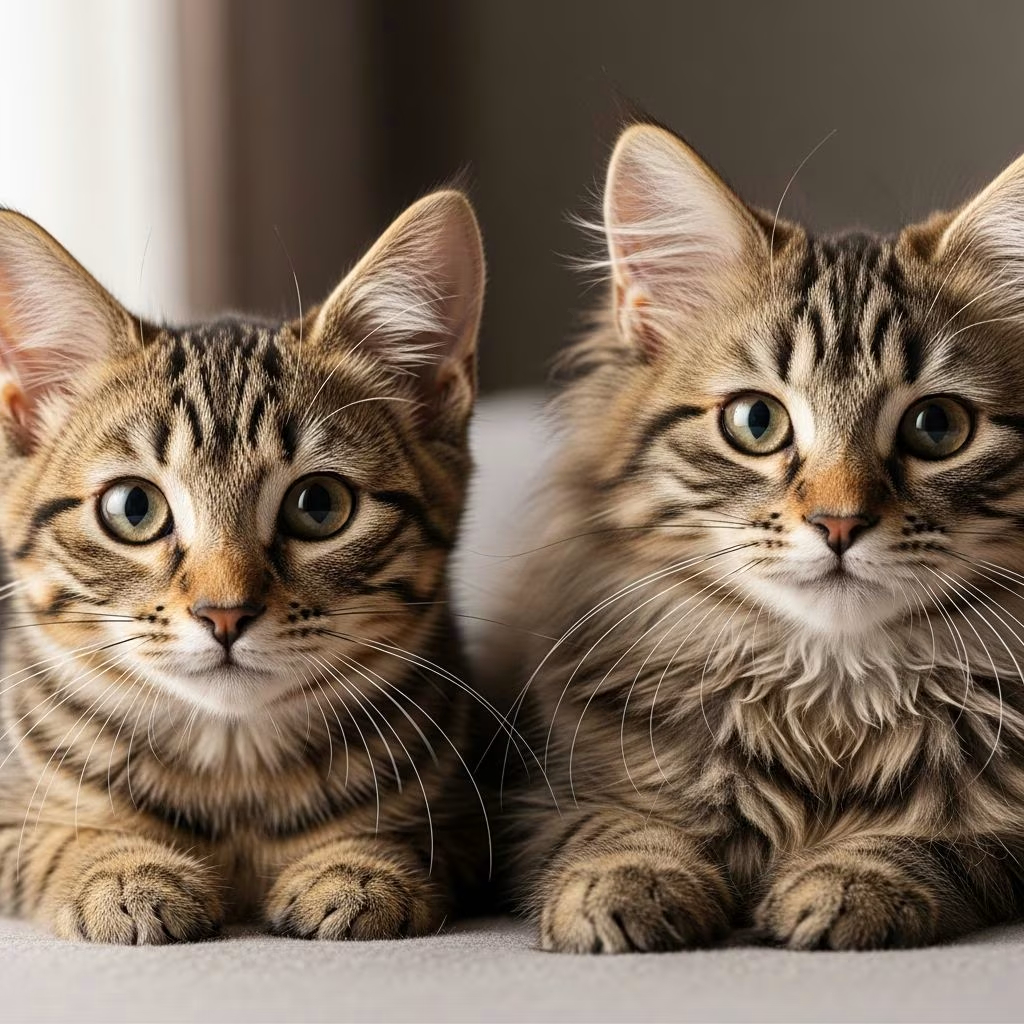
Determining whether your new kitten will mature into a sleek short-haired companion or a fluffy long-haired beauty involves observing subtle clues and understanding feline biology. Most kittens emerge with soft, downy fur that masks their adult coat type, but targeted observations and genetic knowledge can provide strong predictions by 8-12 weeks of age.
The Role of Genetics in Feline Fur Length
Coat length in cats is primarily governed by genetics, specifically mutations in the fibroblast growth factor 5 (FGF5) gene, which regulates hair growth cycles. Short hair is the dominant trait, while long hair is recessive, meaning a kitten needs two copies of the long-hair allele to express it.
Four distinct mutations (M1, M2, M3, M4) have been identified, with M1 linked to Ragdolls, M2 to Norwegian Forest Cats, M3 to Maine Coons and some Ragdolls, and M4 appearing across various long-haired breeds and mixed cats. Cats carrying one long-hair allele (heterozygous) appear short-haired but can pass the trait to offspring.
- Maternal Influence: If the mother has long hair, her kittens have a higher likelihood of inheriting it, even from a short-haired father, due to her contribution of recessive genes. Purebred long-haired mothers like Persians increase this probability significantly.
- Paternal Unknowns: In mixed-breed scenarios or strays, lacking father details complicates predictions, but maternal traits remain a key indicator.
- Genetic Testing: Veterinary labs offer DNA tests to detect these FGF5 mutations, providing definitive results early on.
Understanding these genetics empowers breeders and owners to anticipate grooming needs and potential health considerations tied to coat type.
Observing Early Physical Indicators
Beyond DNA, visual cues emerge as kittens transition from neonatal fluff to adult fur patterns, typically noticeable from 8 weeks onward. Kittens shed their baby coat between 6-12 months, revealing coarser adult hair.
| Indicator | Long-Haired Kitten Signs | Short-Haired Kitten Signs |
|---|---|---|
| Tail Appearance | Fluffy, bushy tail developing | Sleek, smooth tail |
| Ear Furnishings | Tufts on ears emerging | No tufts; clean edges |
| Paw Fur | Fur tufts between toes | Smooth paws, minimal fur |
| Fur Texture | Thick, fluffy strands | Fine, shiny, smooth coat |
| Patterns | Smoky, swirling, tortoiseshell often present | Uniform, less complex markings |
These traits are reliable because short-haired kittens lack the structural fur additions seen in long-haired ones. Fine, glossy baby fur often foreshadows short adult coats, while thicker textures hint at length.
Optimal Age for Assessment and Adoption
Wait until 10-12 weeks for clearest signs, as earlier ages show uniform fluff. Adopting at this stage allows confirmation of coat destiny while ensuring the kitten is weaned and socialized.
- 6-8 Weeks: Initial fluffiness uniform; subtle tail changes may start.
- 8-10 Weeks: Ear tufts, paw fur, tail bushiness become evident.
- 10-12 Weeks: Patterns and textures solidify predictions.
- 6-12 Months: Full shed reveals adult coat definitively.
Patience here prevents surprises in grooming routines or allergies.
Popular Breeds and Their Signature Coats
Certain breeds reliably produce long or short coats, aiding predictions when parentage is known.
- Long-Haired Breeds: Persian (dense undercoat), Maine Coon (shaggy, water-resistant), Ragdoll (silky semi-long), Norwegian Forest Cat (thick double coat).
- Short-Haired Breeds: Domestic Shorthair (sleek guard hairs), Siamese (fine, close-lying), Bengal (spotted, glossy).
- Medium Variants: Some mixed breeds or Turkish Angora show semi-long fur.
Mixed heritage amplifies variability, blending traits unpredictably.
Grooming and Care Tailored to Coat Predictions
Anticipating coat length informs care strategies from day one.
Short-Haired Kittens
These require minimal brushing—weekly with a rubber curry to distribute oils and reduce shedding. Bathe rarely; focus on nail trims and ear cleaning.
Long-Haired Kittens
Daily brushing prevents mats, especially around ruff, belly, and britches. Use wide-tooth combs and de-shedding tools. Introduce grooming early to build tolerance.
Both benefit from high-quality diets supporting skin health, but long-haired cats need omega fatty acids for coat shine.
Health Implications of Coat Types
Long coats predispose to matting, skin infections, and heat sensitivity, necessitating vigilant grooming. Short coats shed more visibly but trap less debris. Monitor for breed-specific issues: Persians face brachycephalic breathing challenges alongside fur maintenance.
Common Myths About Kitten Coats
- Myth: All fluffy kittens become long-haired. Fact: Baby fur is fluffy regardless; adult traits emerge later.
- Myth: Diet alters coat length. Fact: Genetics dominate; nutrition affects quality only.
- Myth: Early clipping predicts shortness. Fact: Clipping is cosmetic, not genetic.
Frequently Asked Questions (FAQs)
Can a short-haired mother produce long-haired kittens?
Yes, if she carries recessive long-hair genes and mates with a carrier or long-haired male.
At what exact week do signs appear?
Around 8 weeks for initial clues, clearer by 10-12 weeks.
Is genetic testing worth it for pets?
Ideal for breeders; for pets, visual cues suffice unless breeding planned.
Do mixed breeds always have short hair?
No, recessive genes can surface, producing long-haired mixes.
How does shedding affect predictions?
The 6-12 month shed confirms adult coat as coarser fur replaces baby down.
Practical Steps for New Owners
- Gather parental info from breeders or shelters.
- Monitor weekly from 6 weeks: photo log tail, ears, paws.
- Consult vets for growth checks or DNA if uncertain.
- Prepare grooming kits based on predictions.
- Join cat forums for breed-specific advice (observe, don’t cite casually).
These steps ensure you’re equipped regardless of outcome.
References
- Will My Kitten Be Short or Longhaired? Genetics & Physical Traits — Catster. 2023. https://www.catster.com/lifestyle/will-my-kitten-be-short-or-longhaired/
- How To Tell If A Kitten Will Be Long-Haired? — LearnToDIY360 (YouTube). 2025-01-16. https://www.youtube.com/watch?v=qrsQlenq_IM
- Long Hair – Cat — Veterinary Genetics Laboratory, UC Davis. Accessed 2026. https://vgl.ucdavis.edu/test/long-hair-cat
- Hair: The Long and Short of It (Part 1) — National Kitten Coalition. Accessed 2026. https://kittencoalition.org/hair-the-long-and-short-of-it/



