

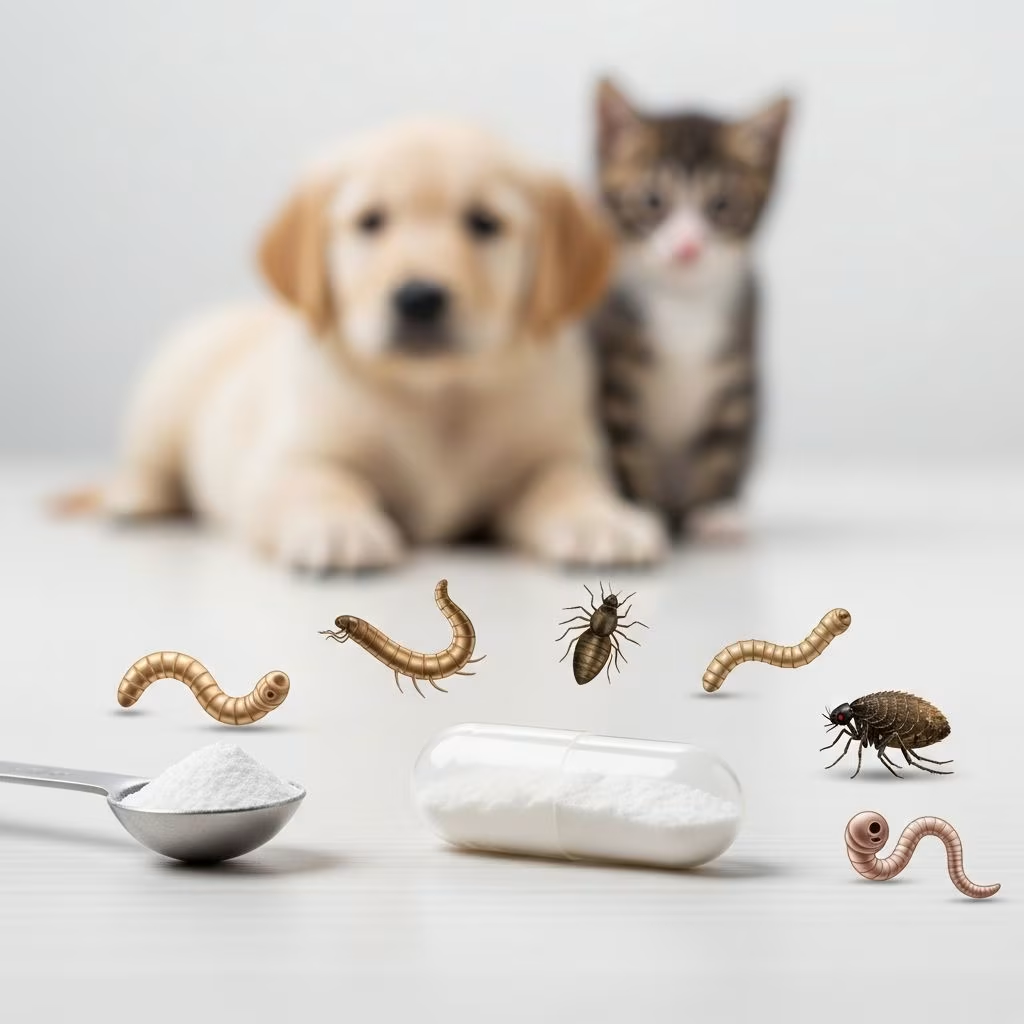
Praziquantel is an antiparasitic dewormer widely used in veterinary medicine to treat various parasite infections in pets. This medication has become a cornerstone of parasitic management for cats, dogs, small mammals, birds, reptiles, and large animals. Understanding how praziquantel works, when it should be used, and what to expect during treatment is essential for pet owners seeking to maintain their animals’ health and well-being.
What Is Praziquantel?
Praziquantel is a medication classified as an anthelmintic, meaning it is specifically designed to eliminate parasitic worm infections. The drug is known by various brand names, including Biltricide, Droncit Plus, Praquantel, Prasikon, Prazite, Prozitel, Sincerck, Teniken, Virbantel, Waycital, Zifartel, and Zimecterin Gold Paste. Praziquantel works by targeting parasites that inhabit the gastrointestinal tract and other tissues within the body.
This medication is most commonly used to treat tapeworm infections, which are among the most prevalent parasitic conditions in companion animals. However, praziquantel’s effectiveness extends beyond tapeworms, making it a broad-spectrum antiparasitic agent suitable for treating multiple types of parasitic infections.
Parasite Types Treated by Praziquantel
Praziquantel effectively treats infections caused by various parasitic organisms. The medication is particularly renowned for its efficacy against tapeworms, including species that commonly affect domestic pets:
- Dipylidium caninum (common tapeworm in dogs and cats)
- Taenia taeniaeformis (tapeworm affecting cats)
- Taenia pisiformis (tapeworm affecting dogs)
- Echinococcus species (dangerous tapeworms with zoonotic potential)
- Diphyllobothrium species (fish tapeworms)
- Spirometra species (pseudophyllidean tapeworms)
- Joyeuxiella species (less common but treatable parasites)
In addition to tapeworms, praziquantel is often combined with other antiparasitic medications to provide broader spectrum coverage against roundworms and other intestinal parasites.
How Praziquantel Works
Praziquantel operates through a multifaceted mechanism of action that makes it highly effective against parasitic infections. The medication affects parasites in several ways simultaneously, disrupting their ability to survive within the host animal’s body.
Mechanism of Action
The primary action of praziquantel involves disrupting the neuromuscular coordination of parasitic worms. The drug affects the motility and proper functioning of the parasite’s sucking organs, particularly in flatworms such as tapeworms. This disruption induces paralysis of the parasite, preventing it from maintaining its grip on the intestinal wall and leading to its expulsion from the body.
Beyond neuromuscular effects, praziquantel also targets the structural integrity of the parasite itself. The medication affects the phospholipids and proteins that comprise the parasite’s tegument, or outer covering. This damage results in excessive loss of calcium and glucose from the parasite, further compromising its ability to survive.
Absorption and Distribution
When administered orally, praziquantel is rapidly and almost completely absorbed from the gastrointestinal tract. In dogs, maximum blood levels are reached within 30 to 120 minutes after administration, allowing for quick therapeutic action. The drug is distributed throughout all organs and passes into bile, which is particularly advantageous for reaching parasites located in various tissues including the musculature, brain, peritoneal cavity, bile ducts, and intestines.
Metabolism and Elimination
Praziquantel is rapidly metabolized by the liver into inactive forms, ensuring the body can efficiently eliminate the medication. Only trace amounts (approximately 0.3% in dogs) of the non-metabolized dose are excreted through urine and feces. The rapid metabolism and minimal systemic accumulation contribute to the medication’s favorable safety profile when used as directed.
Administration and Dosage
Proper administration of praziquantel is crucial for ensuring its effectiveness and safety. The medication can be administered through multiple routes, and specific dosing guidelines should always be followed based on the animal’s weight and the type of infection being treated.
Forms and Routes of Administration
Praziquantel is available in several formulations to accommodate different animals and treatment preferences:
- Oral tablets: The most common form, typically given by mouth
- Injectable formulations: Administered in hospital or clinical settings
- Combination products: Often paired with other antiparasitic agents for broader coverage
- Medicated feeding stuff: Available for certain species such as sea bream in aquaculture settings
Dosing Guidelines
For dogs, the typical dose is one tablet for every 20 kilograms of body weight per day, administered orally. For cats, the dosage is approximately one-quarter tablet for every 5 kilograms of body weight per day. This standard dosage is equivalent to 5 mg/kg/day. The total calculated dose should be administered as a single dose, and treatment should be repeated after 15 days to ensure complete elimination of parasites.
Different parasitic infections may require alternative dosing schedules. For certain tapeworm species like Diphyllobothrium, a dose of 7.5 mg/kg for 2 consecutive days may be necessary, with higher doses up to 35 mg/kg potentially required for stubborn infections.
How to Administer Praziquantel
Tablets can be given with or without food, but it is important not to fast your pet when administering the medication. For pets that have difficulty swallowing tablets, the tablet can be crushed and mixed with food. However, pet owners must ensure that their pet swallows the entire dose to achieve therapeutic efficacy.
If your pet vomits shortly after receiving the medication, contact your veterinarian immediately for instructions on whether to re-administer the dose. Veterinarians may also administer praziquantel by injection in hospital or clinic settings when oral administration is not feasible or appropriate.
Potential Side Effects
While praziquantel is generally well-tolerated in most animals, side effects can occur, particularly in certain species or with higher doses.
Side Effects in Dogs
Dogs may experience the following side effects when treated with praziquantel:
- Lack of appetite or reduced food intake
- Vomiting
- Diarrhea
- Tiredness or lethargy
These side effects are typically mild and transient, resolving as the medication is metabolized and eliminated from the body.
Side Effects in Cats
Cats generally tolerate praziquantel very well, with side effects occurring in less than 2% of treated animals. When side effects do occur, they may include:
- Drooling or excessive salivation
- Diarrhea
Side Effects Following Injection
When praziquantel is administered by injection, additional side effects may be observed:
- Pain at the injection site
- Vomiting
- Diarrhea
- Sleepiness
- Drooling
- Decreased appetite
- Staggering while walking
Hypersensitivity Reactions
Hypersensitivity reactions can occur secondary to the release of antigens following parasite death. This complication is particularly likely when the medication is administered in high doses to animals with heavy parasite burdens. Pet owners should monitor their pets closely for signs of allergic reaction during and after treatment.
Duration of Effect and Metabolism
Praziquantel is a moderate-acting medication that typically stops working within a few days of administration. However, the duration of effect may be prolonged in pets with liver or kidney disease, as these organs are responsible for metabolizing and eliminating the medication.
The liver is the primary site of inactivation, rapidly converting praziquantel to inactive metabolites. This rapid metabolism ensures that the medication does not accumulate in the body with repeated doses, making it suitable for periodic treatment protocols.
Contraindications and Precautions
Although praziquantel is safe for most animals, certain precautions should be observed to ensure optimal safety and efficacy.
When Not to Use Praziquantel
Praziquantel should not be administered to weakened animals or those experiencing intense stress, as their compromised immune systems may be unable to handle the inflammatory response triggered by rapid parasite death.
Additionally, praziquantel should not be used to treat worm infections affecting the eyes, as the medication’s mechanism of action and distribution may lead to complications if parasites are present in ocular tissues.
Interrupting the Parasite Life Cycle
To ensure the effectiveness of praziquantel treatment, it is essential to interrupt the parasite life cycle. Fleas and lice act as intermediate hosts for many internal parasites, so applying flea and lice treatments to the animal and the environment is strongly recommended alongside praziquantel therapy.
Preventive Use and Long-Term Management
Beyond treating active infections, praziquantel can be used preventively in high-risk animals. For dogs at risk of Taenia infections, preventive treatment at the approved dosage every 3 to 6 months can reduce infection rates.
In regions where Echinococcus granulosus is a concern, dogs at risk of ingesting internal organs of infected ruminants can be treated every 6 weeks to prevent shedding of parasite eggs into the environment. For Echinococcus multilocularis, even more frequent dosing every 4 weeks may be recommended in high-risk areas to eliminate the public health concern.
Frequently Asked Questions About Praziquantel
Q: Can praziquantel be given with food?
A: Yes, praziquantel can be given with or without food. However, your pet should not be fasted when you administer this medication. The tablet can be crushed and mixed with food if your pet has difficulty swallowing it whole.
Q: How long does it take for praziquantel to work?
A: In dogs, maximum blood levels of praziquantel are reached within 30 to 120 minutes after administration. The medication begins working relatively quickly, though complete elimination of parasites may take several days.
Q: Is praziquantel safe for kittens and puppies?
A: Praziquantel is generally safe for young animals, but dosing must be carefully calculated based on weight. Consult your veterinarian for appropriate dosing for young or small animals.
Q: What should I do if my pet vomits after taking praziquantel?
A: If your pet vomits shortly after receiving praziquantel, contact your veterinarian immediately for instructions. Do not re-administer the dose without professional guidance, as your veterinarian needs to determine whether the full dose was absorbed.
Q: Can praziquantel be used in combination with other medications?
A: Yes, praziquantel is commonly used in combination with other antiparasitic medications to provide broader spectrum coverage against multiple parasite types. Always inform your veterinarian of all medications your pet is taking.
Q: How often does my pet need praziquantel treatment?
A: For most acute infections, treatment is repeated after 15 days. For preventive purposes in high-risk animals, treatment frequency may range from every 3 weeks to every 6 months depending on the specific parasite and risk level in your region.
Q: Are there any drug interactions I should know about?
A: While praziquantel has a favorable safety profile, always inform your veterinarian about all medications and supplements your pet is receiving to ensure there are no potential interactions.
References
- Praziquantel Richmond Product Information — Richmond Vet Pharma. 2024. https://richmondvet.com.ar/en/producto/praziquantel/
- Praziquantel — Wikipedia. 2025. https://en.wikipedia.org/wiki/Praziquantel
- Praziquantel for Pets — VCA Animal Hospitals. 2024. https://vcahospitals.com/know-your-pet/praziquantel
- Tapeworms in Dogs and Cats – Digestive System — Merck Veterinary Manual. 2024. https://www.merckvetmanual.com/digestive-system/gastrointestinal-parasites-of-small-animals/tapeworms-in-dogs-and-cats
- Praziquantel: Uses, Interactions, Mechanism of Action — DrugBank. 2024. https://go.drugbank.com/drugs/DB01058
- Praziquantel — LiverTox, National Center for Biotechnology Information, U.S. National Library of Medicine. 2023. https://www.ncbi.nlm.nih.gov/books/NBK548916/



