

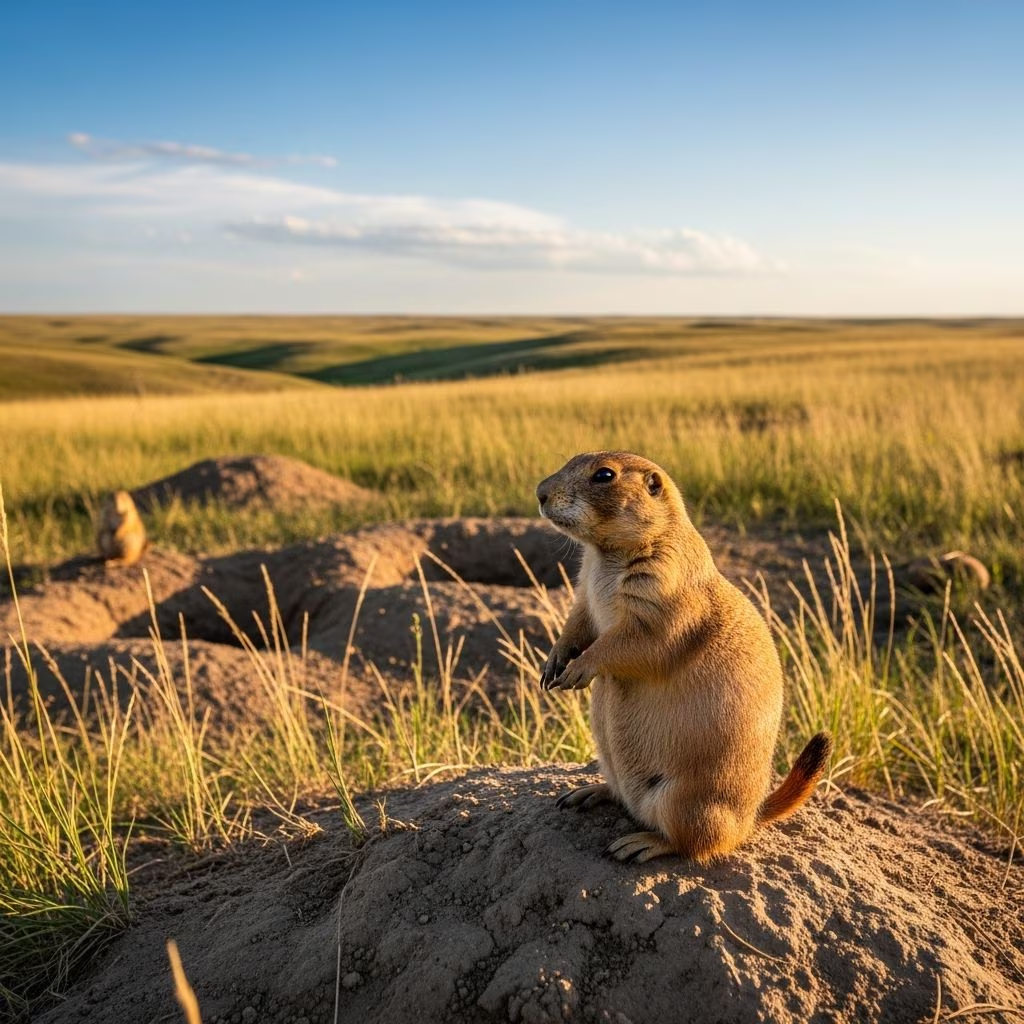
Prairie dogs represent one of North America’s most misunderstood and undervalued wildlife species. Despite their small stature, these burrowing rodents play an outsized role in maintaining the health and diversity of grassland ecosystems across the continent. Once numbering in the hundreds of millions, prairie dog populations have declined by more than 95% over the past century, taking with them the ecological functions that countless other species depend upon for survival. Understanding the conservation challenges facing prairie dogs and implementing science-based management approaches are essential steps toward restoring the vibrant grassland ecosystems that once dominated central North America.
The Ecological Powerhouse: Why Prairie Dogs Matter
Prairie dogs function as what ecologists call a keystone species, meaning their presence disproportionately influences the structure and function of entire ecosystems. Their impact extends far beyond their own survival—supporting approximately 150 other vertebrate species that depend directly on prairie dog colonies for food, shelter, and habitat. This relationship reveals why conservation efforts focused on prairie dogs generate substantial ecological returns.
The underground architecture created by prairie dog colonies fundamentally reshapes the landscape. Their burrows, which extend up to seven feet deep and 16 feet long with multiple volcano-shaped entrances, create specialized microhabitats. These underground networks provide refuge for diverse species including burrowing owls, swift foxes, and critically endangered black-footed ferrets, which prey primarily on prairie dogs. Species like the mountain plover, which is rare and threatened, depend on the open grassland conditions that prairie dogs maintain through their grazing and vegetation management activities.
Beyond providing direct habitat, prairie dogs enhance soil quality through their constant burrowing and foraging activities. Their disturbance of the soil surface increases aeration and incorporates organic matter, improving nutrient cycling and water infiltration. As prairie dog colonies become established and flourish, floral diversity increases, creating what researchers describe as “grassland oases” that attract pollinators, nesting birds, and foraging wildlife. The ecosystem benefits multiply across multiple trophic levels, demonstrating why protecting prairie dogs represents an efficient conservation investment.
Historical Decline and Modern Status
The reduction in prairie dog populations represents one of North America’s most dramatic wildlife collapses. Historically, black-tailed prairie dogs occupied between 80 to 104 million acres across the grasslands stretching from Canada to Mexico. This vast distribution supported thriving populations within a landscape that once rivaled Africa’s Serengeti in species abundance and diversity, featuring millions of bison, pronghorn, elk, wolves, grizzly bears, and grassland birds.
Multiple interconnected factors drove this collapse. Agricultural expansion beginning in the late 1800s converted grasslands to cropland, directly eliminating prairie dog habitat. The early 1900s witnessed an intensive government-led eradication campaign targeting prairie dogs viewed as competitors with livestock for forage. Large-scale poisoning programs decimated populations across their range. Additionally, sylvatic plague—a non-native disease introduced from Asia—introduced a persistent population suppressor that continues affecting colonies today.
Current estimates place black-tailed prairie dog populations at approximately 2.4 million acres of occupied habitat across 11 states, representing a 97% reduction from historical levels. Despite this dramatic decline, recent trends offer cautious optimism. The occupied habitat has increased significantly since reaching its lowest point of 364,000 acres in 1961, suggesting that recent conservation efforts and reduced poisoning practices are producing measurable results.
Understanding Current Threats and Pressures
While prairie dog populations have stabilized in some regions, multiple contemporary threats continue to challenge conservation objectives. Habitat conversion remains the primary pressure, as agricultural development, urbanization, and energy development continue fragmenting remaining grasslands within the prairie dog’s historical range. With 283 million acres of rangeland theoretically available, the issue is not absolute habitat shortage but rather the fragmentation and quality of existing grasslands combined with ongoing land use pressures.
Sylvatic plague represents a persistent biological threat with no simple solution. This disease, maintained in wild rodent populations, can devastate prairie dog colonies despite their population’s overall increasing trajectory. Climate change introduces additional uncertainty, altering precipitation patterns, vegetation composition, and seasonal timing in ways that may reduce habitat suitability in some regions while potentially creating opportunities in others.
Human attitudes toward prairie dogs compound these biological and physical challenges. Many ranchers and landowners view prairie dogs as agricultural pests competing with livestock. Some property owners tolerate poisoning programs that, while effective at reducing local populations short-term, often demonstrate counterintuitive results—colonies increase by 30% annually following poisoning and may surge 70% after incomplete elimination efforts.
Science-Based Conservation Strategies
Modern prairie dog conservation employs multiple complementary approaches grounded in ecological research and field experience. Researchers at Colorado State University have developed spatial prioritization tools identifying landscapes with the highest conservation potential, considering ecological factors, climate resilience, land use patterns, political feasibility, and community attitudes. This comprehensive approach recognizes that successful conservation requires not just ecological viability but also social license and economic feasibility.
Active management techniques include vaccination programs and targeted pesticide applications for flea control, reducing plague transmission while maintaining viable populations. Protecting existing colonies through habitat preservation and reducing poisoning intensity allows populations to recover naturally. Establishing new populations in plague-free habitats with suitable grassland conditions helps distribute conservation risk across multiple locations.
Collaborative stakeholder engagement represents a critical conservation component. Successful programs build relationships with ranchers, land trusts, agency biologists, conservation groups, and local communities. This approach acknowledges that most prairie dog habitat occurs on private or working lands, making landowner cooperation essential. Educational initiatives help shift perceptions by highlighting prairie dogs’ ecological value and demonstrating compatible land use practices.
Multi-Species Ecosystem Recovery Through Prairie Dog Protection
Prairie dog conservation generates cascading ecological benefits extending across multiple species and ecological functions. Protection efforts simultaneously support black-footed ferrets, one of North America’s most endangered carnivores, which depend almost exclusively on prairie dogs for food. Grassland birds experiencing a 50% population decline benefit from the vegetation structure prairie dogs maintain. Bison, pronghorn, and other grassland herbivores gain forage and habitat access in prairie dog-managed grasslands.
This multi-species dimension explains why conservation biologists emphasize prairie dog recovery. Focusing conservation resources on prairie dogs delivers what researchers call a “big bang for the buck”—when prairie dogs are protected or reintroduced, entire ecosystems revitalize with the return of foxes, eagles, rabbits, and abundant birds and insects. This efficiency contrasts with species-by-species conservation approaches requiring separate management programs for each threatened organism.
Regional Conservation Priorities and Implementation
Conservation efforts now employ geospatial analysis to identify priority regions combining high ecological importance with implementation feasibility. Interactive mapping tools developed by researchers identify the top 10% and top 30% of landscape areas with highest conservation potential for prairie dog ecosystems, spanning Arizona, Colorado, Kansas, Montana, Nebraska, New Mexico, North Dakota, Oklahoma, South Dakota, Texas, and Wyoming.
Beyond black-tailed prairie dogs, other species warrant specific attention. Gunnison’s prairie dogs, occurring in montane habitats of central and southern Colorado and north-central New Mexico, have experienced similar population declines. Utah and Mexican prairie dogs face even more severe pressures, with Utah prairie dogs listed as threatened and Mexican prairie dogs as endangered under the Endangered Species Act.
Implementation capacity remains a limiting factor. Research teams actively pursue large grants to fund conservation programs in priority regions while strengthening partnerships with local stakeholders. State wildlife agencies in Colorado and other western states have adopted management goals targeting specific acreage recovery targets, though some face challenges in implementation due to funding limitations and conflicting land use priorities.
The Role of Public Education and Community Support
Shifting public perception represents an underappreciated but essential conservation component. Many people view prairie dogs primarily as agricultural pests rather than ecological lynchpins. Educational programs highlighting their keystone species status, demonstrating their compatibility with livestock operations, and emphasizing their role in supporting endangered species help build broader conservation support.
Zoos and wildlife centers contribute to conservation through captive population management, providing insurance against extinction while supporting reintroduction initiatives. Public education at these institutions helps visitors appreciate prairie dogs’ ecological significance and understand conservation challenges. Community-based monitoring programs can engage citizens in population surveys, increasing both data collection capacity and conservation awareness.
Looking Forward: Integration and Adaptation
The future of prairie dog conservation depends on integrating ecological science, economic considerations, and social values. Climate change adaptation planning must incorporate projected shifts in grassland suitability, potentially requiring population translocation to maintain viable distributions. Adaptive management approaches that monitor outcomes and adjust strategies based on results will prove increasingly important as environmental conditions shift.
Success requires sustained commitment across multiple decades. Prairie dog population recovery is not measured in years but in decades of consistent protection, active management, and stakeholder engagement. The convergence of conservation science, policy support, and community acceptance creates conditions for meaningful ecosystem restoration across North America’s grasslands.
Key Conservation Actions Summary
- Habitat Protection: Preserve existing prairie dog colonies and restore degraded grasslands in priority conservation areas identified through spatial analysis.
- Disease Management: Implement vaccination and flea control programs to reduce plague transmission while maintaining population viability.
- Reduced Persecution: Limit lethal control programs and shift management toward coexistence approaches that reduce conflicts with agricultural operations.
- Stakeholder Collaboration: Build partnerships with ranchers, landowners, and conservation organizations to ensure conservation feasibility and social support.
- Public Education: Increase awareness of prairie dogs’ ecological importance and their role in supporting endangered species recovery.
- Research Support: Fund ongoing population monitoring, disease research, and adaptive management evaluations to guide conservation decisions.
- Multi-Species Integration: Coordinate prairie dog conservation with management programs for dependent species like black-footed ferrets and grassland birds.
Frequently Asked Questions
Are prairie dogs endangered species?
Black-tailed prairie dogs are not federally listed as endangered, though their populations have declined over 95% from historical levels. Utah and Mexican prairie dog species have greater protection status, listed as threatened and endangered respectively. Despite not holding federal endangered status, black-tailed prairie dogs remain conservation priorities due to their ecosystem importance.
Why do prairie dogs have “towns”?
Prairie dog colonies are called “towns” because they function as complex societies with underground infrastructure supporting numerous animals beyond prairie dogs themselves. Their burrow systems create habitat for burrowing owls, ferrets, and other species, while their vegetation management benefits ground-nesting birds and grassland mammals.
What is sylvatic plague and how does it affect prairie dogs?
Sylvatic plague is a non-native disease from Asia that affects wild rodent populations, including prairie dogs. While persistent, it does not prevent population recovery when combined with other conservation measures. Management includes vaccination programs and targeted pesticide applications for flea control.
How can ranchers and prairie dog conservation coexist?
Coexistence is possible through collaborative approaches that address rancher concerns while maintaining viable prairie dog populations. Land trusts, conservation easements, and compensation programs can support ranchers maintaining prairie dog habitat. Research demonstrates that prairie dogs can coexist with livestock operations through careful management.
What species depend on prairie dogs for survival?
Approximately 150 vertebrate species depend directly or indirectly on prairie dogs, including burrowing owls, swift foxes, black-footed ferrets, mountain plovers, bison, pronghorn, and numerous grassland birds. Many of these species lack alternative habitat options, making prairie dog recovery essential for their survival.
References
- Protecting the Plains: Conserving prairie dogs will revitalize North American Grasslands — Colorado State University Warner College of Natural Resources. https://warnercnr.source.colostate.edu/protecting-the-plains/
- Endangered Species Act Protection for the Black-tailed Prairie Dog Not Warranted — U.S. Fish and Wildlife Service. 2009. https://www.fws.gov/press-release/2009-12/endangered-species-act-protection-black-tailed-prairie-dog-not-warranted
- Prairie Dogs — U.S. Department of Agriculture APHIS. https://www.aphis.usda.gov/sites/default/files/prairie-dogs.pdf
- FAQs About Prairie Dogs and their Conservation — Animal Wellness Action. https://animalwellnessaction.org/faqs-about-prairie-dogs-and-their-conservation/
- Prairie Dog — Defenders of Wildlife. https://defenders.org/wildlife/prairie-dog
- Prairie Dogs — Colorado Parks and Wildlife. https://cpw.state.co.us/species/prairie-dogs
- Prairie Dogs of the Southwest – Status — U.S. National Park Service. https://www.nps.gov/articles/prairie-dogs-status.htm



