

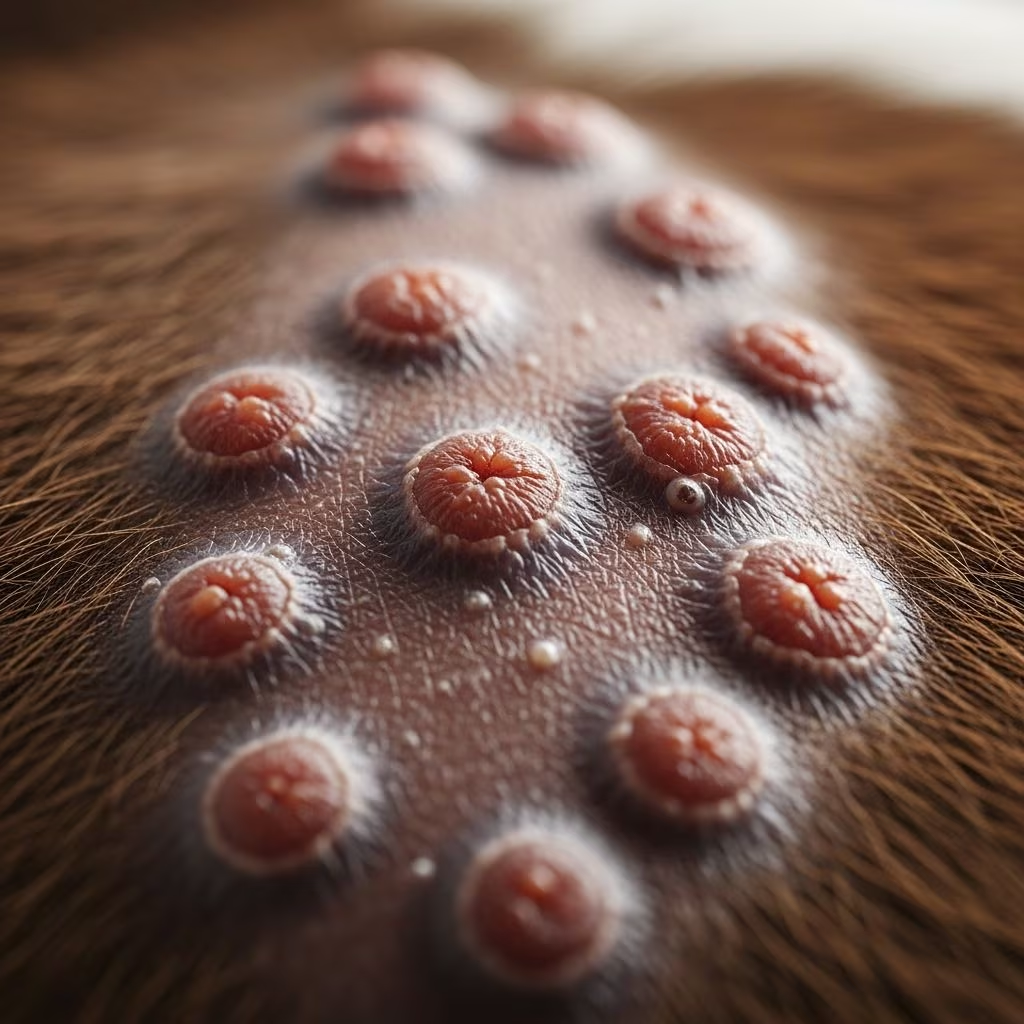
Poxviruses represent a diverse group of DNA viruses that cause significant skin and mucosal diseases in a wide array of animal species, including mammals, birds, and reptiles. These pathogens are enveloped, brick-shaped viruses belonging to the family Poxviridae, known for inducing proliferative lesions, papules, and scabs that can lead to secondary infections or systemic illness. While many infections are self-limiting, certain strains pose zoonotic threats, potentially transmitting to humans through direct contact with lesions or contaminated materials. Understanding the epidemiology, clinical manifestations, and control measures is crucial for veterinarians managing affected populations.
Classification and Major Types Affecting Animals
Poxviruses are categorized into genera such as Orthopoxvirus, Parapoxvirus, Capripoxvirus, and Avipoxvirus, each with host preferences but overlapping capabilities. Orthopoxviruses like cowpox and monkeypox affect mammals broadly, while parapoxviruses such as orf and pseudocowpox target ruminants. Capripoxviruses cause sheeppox and goatpox, and avipoxviruses dominate in avian species. These distinctions guide diagnosis and response strategies, as clinical overlap exists across genera.
- Orthopoxviruses: Include cowpox (cats, rodents, cattle), monkeypox (rodents, primates, pets).
- Parapoxviruses: Orf (sheep/goats), bovine papular stomatitis, pseudocowpox (cattle).
- Capripoxviruses: Sheeppox, goatpox (small ruminants).
- Avipoxviruses: Fowlpox, canarypox, psittacinepox (birds).
Epidemiology and Transmission Dynamics
Poxviruses spread primarily through direct contact with infected animals, fomites, or mechanical vectors like insects. In livestock, outbreaks occur via aerosol in confined spaces or wounds from milking/handling. Companion animals acquire infections from wildlife reservoirs, such as rodents harboring cowpox. Zoonotic parapoxviruses like orf transmit via abrasions during shearing or lambing. Environmental persistence on scabs aids indirect spread. Endemic in regions with naive populations, outbreaks peak seasonally with vector activity or animal movements.
In companion animals, cowpox emerges sporadically in Europe, linked to rodent hunting by cats. Monkeypox, historically African, has globalized via pet trade. Avian poxviruses thrive in wild bird flocks, spilling into poultry and pets.
Clinical Manifestations Across Species
Mammalian Infections
In cattle, parapoxviruses manifest as teat lesions in pseudocowpox (milking cows) or oral papules/erosions in bovine papular stomatitis (young calves), causing pain, reduced milk yield, and esophagitis. Cowpox presents similarly but with broader distribution, occasionally systemic.
Small ruminants suffer orf (contagious ecthyma) with proliferative lip/scrotal lesions, progressing to scabs; severe cases involve mastitis or generalized disease in kids/lambs. Sheeppox/goatpox induce fever, respiratory signs, and multifocal skin nodules, with high mortality in naive herds.
Cats exhibit cowpox as multifocal ulcerated nodules on head, limbs, or trunk, viremia leading to pneumonia or laryngeal edema in severe cases. Dogs rarely show signs, but rats/monkeys can be reservoirs.
Avian Poxvirus Disease
Birds develop diphtheritic (mucosal plaques in mouth/trachea) or cutaneous (wart-like eyelid/wattles lesions) forms. Young psittacines and passerines face higher morbidity from secondary bacterial invasion or respiratory obstruction. Species-specific variants like mynahpox confirm host adaptation.
| Species | Common Poxvirus | Key Lesions | Severity |
|---|---|---|---|
| Cattle | Pseudocowpox | Teat/udder papules | Mild |
| Sheep/Goats | Orf | Lip/scrotum scabs | Moderate |
| Cats | Cowpox | Skin nodules, pneumonia | Variable |
| Birds | Avipoxvirus | Eyelid plaques, diphtheria | High in young |
Pathogenesis and Immune Response
Following inoculation via skin abrasions or mucosa, poxviruses replicate locally, inducing epidermal hyperplasia and immune evasion via cytokine mimics. Viremia disseminates virus, forming secondary lesions. Host immunity involves neutralizing antibodies appearing 2-4 weeks post-infection, conferring lifelong protection in survivors. Immunosuppressed animals (e.g., FIV+ cats) face fatal generalized disease.
In birds, mosquito bites facilitate entry, with juvenile susceptibility tied to immature immunity.
Diagnostic Approaches
Presumptive diagnosis relies on characteristic lesions: umbilicated papules progressing to scabs. Confirmation uses electron microscopy for brick-shaped virions, PCR for genus/species identification, histopathology (eosinophilic inclusions), or serology (paired sera for seroconversion).
Avian biopsies risk spreading virus, so clinical context guides initial suspicion. Differentiate from bacterial dermatitis, tumors, or herpes via PCR, as parapoxviruses like orf and pseudocowpox are histologically similar.
Treatment Strategies
Supportive care dominates: wound cleaning, antibiotics for secondary bacteria, fluids/nutrition. Avoid corticosteroids, exacerbating viremia. Antivirals like cidofovir show promise experimentally in orthopoxviruses but lack routine veterinary approval. In cats with pneumonia, interferon-omega aided recovery anecdotally.
Most resolve in 4-8 weeks; prognosis worsens with systemic involvement or immunosuppression.
Prevention and Control Measures
Vaccines exist for fowlpox, sheeppox/goatpox (live attenuated), and orf (scab-based). Biosecurity prevents spread: quarantine, insect control, hygiene. Isolate cases, dispose scabs safely. Zoonotic awareness mandates gloves during handling.
For monkeypox, CDC criteria include rash plus epidemiology or PCR confirmation; report suspected cases.
Zoonotic Risks and Public Health Implications
Parapoxviruses (orf, milker’s nodules) cause self-limiting human papules; orthopoxviruses like cowpox/monkeypox risk eczema vaccinatum in atopics. Early recognition curbs transmission from pets/livestock.
FAQs
What are the first signs of poxvirus in cats?
Skin nodules on head/paws, progressing to ulcers; watch for respiratory distress.
Can birds recover from avian pox?
Yes, cutaneous forms often heal; diphtheritic needs supportive care to avoid suffocation.
How to differentiate orf from sheeppox?
Orf is localized skin; sheeppox systemic with fever/lung signs. PCR confirms.
Is monkeypox a threat to pets?
Possible in rodents/pets; quarantine exposed animals per CDC guidelines.
Are poxviruses treatable with antibiotics?
No, viral; antibiotics only for secondary infections.
Emerging Concerns and Research Directions
Climate change may boost vector activity, expanding ranges. Bioterrorism preparedness antivirals (ST-246) warrant veterinary trials. Rapid point-of-care diagnostics are needed for zoonoses.
This overview equips practitioners to mitigate poxvirus impacts effectively.
References
- Zoonotic Poxviruses Associated with Companion Animals — PMC/NCBI. 2015-07-22. https://pmc.ncbi.nlm.nih.gov/articles/PMC4513476/
- Veterinary Guidance for Monkeypox — CDC. 2024. https://www.cdc.gov/monkeypox/hcp/veterinary/index.html
- GUIDELINE for Poxvirus infections in cats — ABCD cats & vets. 2023. https://www.abcdcatsvets.org/guideline-for-poxvirus-infections-in-cats/
- Pox Virus Infection in Birds — VCA Animal Hospitals. 2023. https://vcahospitals.com/know-your-pet/pox-virus-infection-in-birds
- Pox Diseases in Animals — MSD Veterinary Manual. 2024. https://www.msdvetmanual.com/integumentary-system/pox-diseases/pox-diseases-in-animals
- Pox viruses (other than those listed by the OIE) — WOAH. 2022. https://www.woah.org/app/uploads/2022/02/pox-viruses-other-than-those-listed-by-the-oieinfection-with.pdf



