
Poultry Nutrition Essentials: Complete Guide For 2025
Master the key nutrients chickens, turkeys, and other birds need for optimal growth, egg production, and health in modern farming.
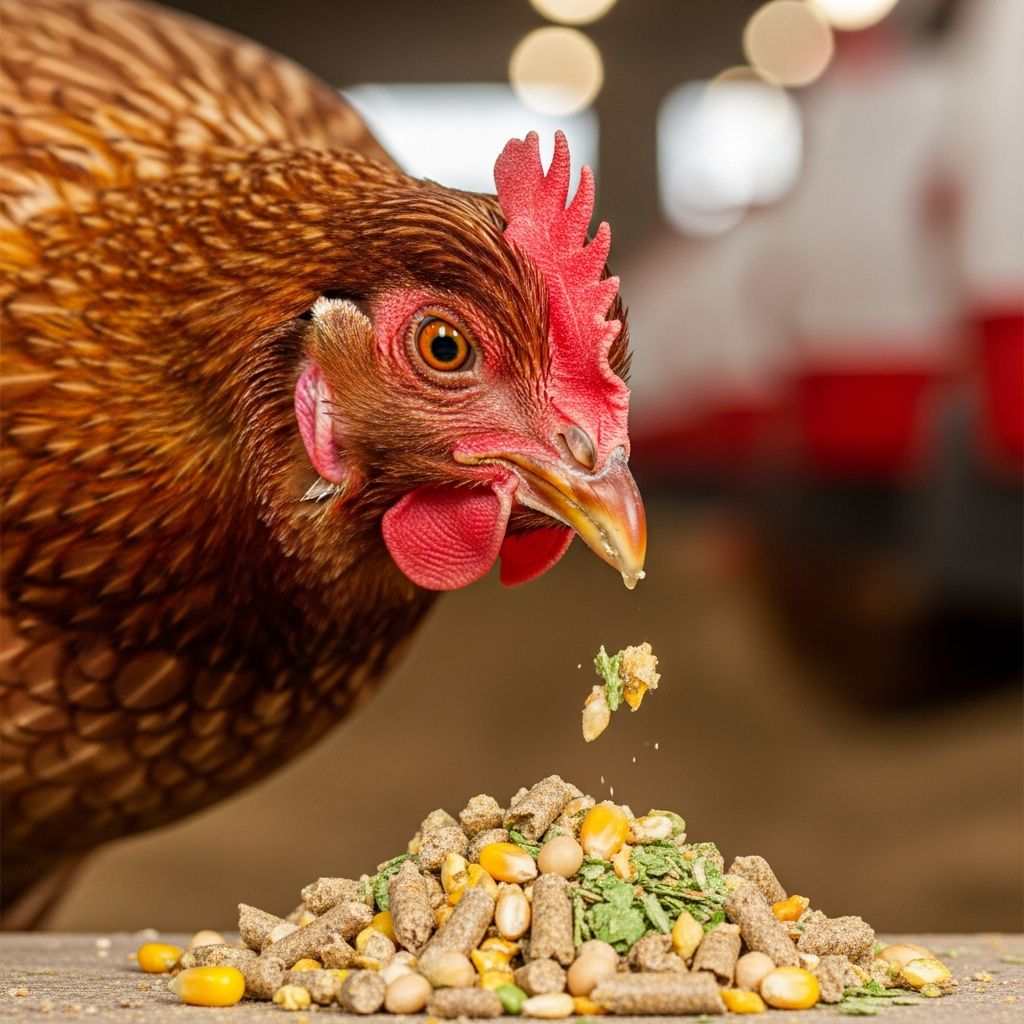
Poultry farming thrives when birds receive balanced diets tailored to their species, age, and production goals. At minimum, chickens, turkeys, and other domestic fowl need dozens of nutrients including energy sources, amino acids, fats, minerals, and vitamins to support growth, reproduction, and immunity. Deficiencies lead to poor performance, while excesses waste resources and harm health.
Core Components of a Balanced Poultry Diet
A well-formulated ration provides energy primarily from carbohydrates in grains like corn and wheat, alongside proteins for tissue building, essential fats for membrane health, and precise mineral-vitamin blends. Poultry cannot store excess energy efficiently, so daily intake must match needs. Factors like breed, environment, and disease status influence requirements.
- Energy sources: Grains supply glucose for metabolism; fats boost calorie density.
- Proteins: Broken into amino acids for muscle and feather development.
- Minerals and vitamins: Enable enzyme functions, bone strength, and antioxidant protection.
Energy Demands Across Poultry Life Stages
Energy, measured in metabolizable energy (ME) units, fuels all activities from hatching to laying. Broilers need high-energy starter feeds around 3,200 kcal/kg for rapid growth in the first weeks, tapering as they mature. Layers require steady 2,800 kcal/kg to sustain egg output without fattening.
| Stage | Broilers (kcal ME/kg) | Layers (kcal ME/kg) | Turkeys (kcal ME/kg) |
|---|---|---|---|
| Starter (0-3 weeks) | 3,200 | 2,800 | 2,800 |
| Grower (3-6 weeks) | 3,200 | 2,800 | 2,800 |
| Finisher/Breeder | 3,200 | 2,800 | 2,800 |
Hot climates reduce intake, demanding denser feeds; cold boosts needs by 10-20% for thermoregulation.
Protein and Amino Acid Profiles
Proteins supply indispensable amino acids like lysine, methionine, and arginine, which birds synthesize poorly. Starter diets hit 23% crude protein for chicks, dropping to 18% in finishers. Lysine at 1.3% supports broilers initially, while methionine plus cystine (0.5-1%) aids feathering.
Plant sources dominate: soybean meal provides balanced profiles, supplemented by corn gluten for methionine. Animal byproducts like fishmeal add quality but limited to avoid off-flavors.
| Poultry Type | Starter Protein (%) | Grower Protein (%) | Lysine (%) | Met+Cys (%) |
|---|---|---|---|---|
| Broilers | 22-23 | 20 | 1.30 | 0.50-1.0 |
| Layers | 18 | 17 | 0.90 | 0.70 |
| Turkeys (Male) | 26-28 | 20 | 1.5 | 1.0 |
Imbalances cause leg issues or slow gains; precision mixing prevents this.
Fats and Essential Fatty Acids
Fats enhance palatability and energy, with linoleic acid (1% minimum) essential for reproduction and skin integrity—poultry cannot convert other fats to it. Sources include vegetable oils; excess fats risk fatty livers in layers.
- Boosts feed efficiency by 5-10% in broilers.
- Critical for vitamin absorption.
- 1% linoleic acid prevents egg production drops.
Macrominerals for Structural Health
Calcium (Ca), phosphorus (P), and others form bones and eggshells. Layers need 3.5-4.5% Ca for shell quality, peaking at 2.75% in breeders. Available P (0.3-0.45%) pairs with Ca at 2:1 ratio to avoid rickets.
Sodium (0.15-0.2%) and chlorine maintain electrolytes; potassium from greens suffices usually.
| Mineral | Broiler Starter (%) | Layer (%) | Function |
|---|---|---|---|
| Calcium | 1.0 | 4.0 | Bone, eggshell |
| Avail. Phosphorus | 0.45 | 0.30 | Energy transfer |
| Sodium | 0.15 | 0.15 | Fluid balance |
Oversupply binds nutrients; phytase enzymes unlock plant-bound P.
Microminerals: Trace but Vital
Zinc, manganese, selenium, copper, iodine, and iron drive enzymes despite microgram needs. Selenium (0.2 mg/kg) pairs with vitamin E against oxidative stress. Iodine fuels thyroid for metabolism; deficiencies stunt growth.
- Manganese: Bone, reproduction.
- Zinc: Immunity, feathers.
- Selenium: Antioxidant, immunity.
Overdosing toxifies; chelated forms improve uptake.
Fat-Soluble Vitamins: Storage and Stability
Vitamins A, D3, E, K accumulate in fat. A (2,500-10,000 IU/kg) protects epithelia; D3 (400-2,000 IU) calcifies bones. E (tocopherols) neutralizes free radicals with selenium; K aids clotting.
Deficiency signs: rickets (D), hemorrhages (K), encephalomalacia (E).
Water-Soluble Vitamins: Daily Renewal
B-complex and choline flush quickly, demanding steady supply. Riboflavin (4-6 mg/kg) prevents curled toes; niacin (30-70 mg) averts pellagra. Pantothenic acid (10-15 mg) supports nerves; B12 from microbial sources in broilers.
| Vitamin | Broiler (mg/kg) | Deficiency Symptoms |
|---|---|---|
| Riboflavin | 4 | Curled toe paralysis |
| Niacin | 55 | Poor growth, dermatitis |
| Pantothenic Acid | 11 | Edema, skin lesions |
| Vitamin B12 | 0.01 | Anemia, perosis |
Stress (heat, crowding) triples needs; C synthesis covers basal but supplements aid.
Tailoring Diets by Species and Purpose
Broilers prioritize gain: high protein/energy early. Layers balance Ca/protein for output. Turkeys, especially males, demand more protein (28% starter). Breeders need glycine+serine for eggs. Backyard flocks blend commercial feeds with scraps cautiously.
- Monitor body weight, feed conversion (2-3:1 ideal for broilers).
- Phase feeds every 2-4 weeks.
- Adjust for mycotoxins or poor ingredients.
Feed Formulation Strategies
Least-cost models use NRC tables, factoring digestibility[10]. Additives like enzymes cut waste; probiotics enhance gut health. Biofuel byproducts (DDGS) supply energy but need balancing.
Water quality matters: 2-3x feed intake volume, clean to prevent disease.
Common Pitfalls and Solutions
Salt toxicity from oversalted mash; wet litter signals Ca/P imbalance. Heat stress curbs appetite—offer mashes, electrolytes. Test feeds quarterly for nutrients/mycotoxins.
FAQs
What is the minimum protein for broiler chicks?
Around 22-23% in starter phase for 0-3 weeks.
Why add linoleic acid to poultry feed?
It’s essential for reproduction and cell membranes; 1% minimum.
How much calcium do laying hens need?
3.5-4.5% to form strong eggshells.
Can backyard chickens eat kitchen scraps?
Yes, sparingly; balance with complete feed to meet all nutrients.
What vitamins prevent poultry stress?
B-vitamins, C, and E; supplement during heat or transport.
References
- Nutritional Requirements of Poultry — Merck Veterinary Manual. 2023. https://www.merckvetmanual.com/poultry/nutrition-and-management-poultry/nutritional-requirements-of-poultry
- Nutrient Requirements of Poultry: 10th Revised Edition — National Academies of Sciences, Engineering, and Medicine. 2025. https://www.nationalacademies.org/projects/DELS-BANR-15-01
- Nutrition for the Backyard Flock — University of Georgia Cooperative Extension. 2023. https://fieldreport.caes.uga.edu/publications/C954/nutrition-for-the-backyard-flock/
- Basic Poultry Nutrition — Poultry Extension. 2024. https://poultry.extension.org/articles/feeds-and-feeding-of-poultry/basic-poultry-nutrition/
- New Poultry Optimum Vitamin Nutrition Guidelines 2022 — DSM-Firmenich. 2022. https://www.dsm-firmenich.com/anh/en_NA/news/articles/new-poultry-optimum-vitamin-nutrition-guidelines-2022.html
Similar Articles








Read full bio of Sneha Tete


