
Poultry Breast Lesions: Burns and Buttons
Essential guide to identifying, preventing, and treating breast burns and buttons in chickens and turkeys for optimal flock welfare.
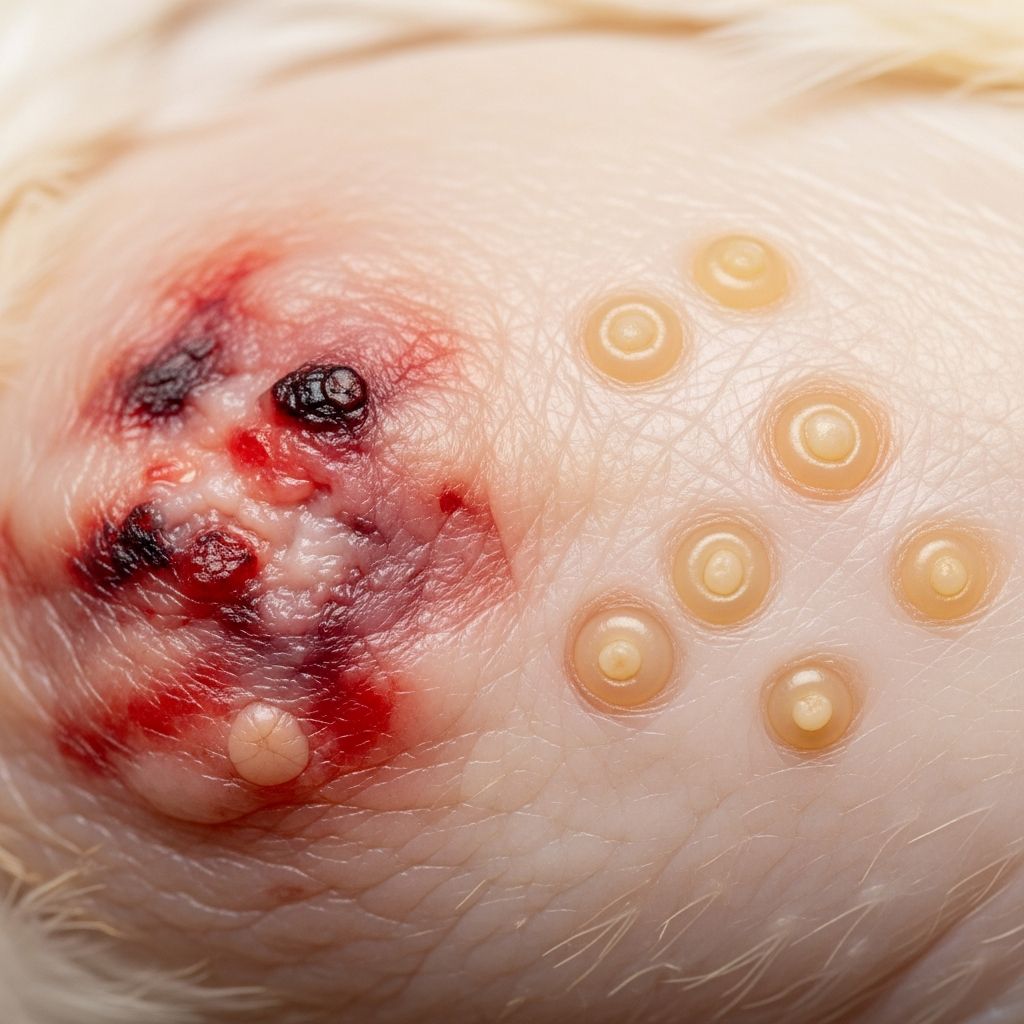
Breast burns in chickens and breast buttons in turkeys represent significant welfare and production challenges in poultry farming. These conditions manifest as hardened, crusted areas on the breast skin, often resulting from environmental irritants and poor management practices. Understanding their development, impact, and control measures is crucial for flock health.
Understanding the Nature of Breast Lesions
These lesions typically appear on the ventral keel area where birds rest. In chickens, breast burns feature a tough crust overlying necrotic tissue and inflamed subcutaneous layers. Turkeys develop similar breast buttons, distinguished by their button-like protrusion. Both start subtly but progress to severe damage if unchecked.
The pathology involves initial epidermal disruption, leading to chronic inflammation. Unlike blisters filled with fluid, these have solid cores of dead tissue, making them distinct yet related to other contact dermatoses like foot pad dermatitis.
Primary Causes and Risk Factors
Environmental factors dominate the etiology. Prolonged exposure to damp litter laden with ammonia from uric acid breakdown initiates chemical irritation. Wet bedding, common in high-density housing, exacerbates this by keeping skin moist and vulnerable.
- Ammonia buildup: Decomposing manure releases gases that burn delicate skin during resting.
- Wet litter conditions: High moisture from leaks, poor ventilation, or excessive drinking promotes bacterial growth and toxin accumulation.
- Stocking density: Overcrowding increases fecal moisture and limits movement, forcing more sitting time.
- Bird factors: Fast-growing broilers and heavy turkeys exert greater pressure on the keel, worsening lesions.
Dietary influences include high soybean meal levels, which produce wetter droppings due to indigestible oligosaccharides like stachyose, heightening dermatitis risk.
Clinical Signs and Progression
Early stages show mild erythema and skin thickening. Advanced cases reveal dark scabs, ulceration, and subcutaneous involvement. Affected birds sit more, potentially leading to secondary keel bone issues or infections with bacteria like Staphylococcus aureus.
| Stage | Chickens (Breast Burns) | Turkeys (Breast Buttons) |
|---|---|---|
| Early | Slight discoloration, superficial irritation | Small hardened nodule forming |
| Moderate | Crust formation, mild inflammation | Protruding button with crust |
| Severe | Deep necrosis, possible infection | Ulcerated core, chronic swelling |
Symptoms include reduced activity, poorer feed intake, and weight gain impacts, signaling welfare compromise.
Diagnosis in Field Settings
Veterinarians diagnose via visual inspection and lesion scoring. Tools like visual analog scales assess severity: score 0 for normal skin, up to 3 for extensive inflammation or necrosis. Differentiate from breast blisters (fluid-filled) or gangrenous dermatitis (rapidly fatal with Clostridium).[10]
Histology confirms chemical burn origins, showing epidermal sloughing and dermal fibrosis. Culture swabs detect secondary invaders if pus present.
Prevention Strategies for Healthy Flocks
Proactive management targets litter quality and housing. Optimal practices include:
- Litter maintenance: Use absorbent materials like pine shavings; turn weekly to aerate and dry.
- Ventilation optimization: Ensure airflow reduces humidity below 50% and ammonia under 20 ppm.
- Stocking control: Maintain 34-40 kg/m² for broilers to allow natural behaviors.
- Diet adjustments: Balance protein sources to minimize wet feces; add enzymes for better digestion.
- Flooring innovations: Novel coverings like positive pressure pads show promise in reducing contact dermatitis flock-wide.
Regular monitoring via walk-throughs catches issues early. High body weight breeds benefit from exercise encouragement through perch access.
Treatment Protocols for Affected Birds
Isolate lesioned individuals to prevent spread and stress. Core steps:
- Cleanse with cool saline or water flushes to remove debris.
- Apply silver sulfadiazine or similar antibacterial creams.
- Use hydroactive dressings on clean wounds to promote granulation.
- Debride daily; culture for antibiotics if infected (e.g., against E. coli or Staph).
Supportive care involves warmth, easy feed access, and vet consultation. Flock-level remedies like late-stage flooring changes can heal groups. Avoid over-reliance on antibiotics to curb resistance.
Economic and Welfare Implications
Lesions cause carcass downgrades, trimming losses, and condemnations, hitting profitability. Severe cases link to 50% prevalence in heavy broilers, correlating with growth setbacks and lameness. Welfare standards flag these as pain indicators, influencing certifications.
Prevention yields returns: better litter cuts dermatitis by reducing moisture-chemical interactions. Track via scoring to benchmark improvements.
Related Conditions in Poultry
Breast burns/buttons interconnect with footpad dermatitis and hock burns. Lame birds from foot lesions sit more, pressuring breasts. All stem from litter woes, demanding holistic management.
Gangrenous dermatitis differs, entering via scratches with Clostridium, causing swift death—not chemical origins.
Best Practices Table
| Management Area | Recommendation | Expected Benefit |
|---|---|---|
| Litter | Deep, dry bedding; weekly tilling | Lowers ammonia, moisture |
| Density | <40 kg/m² | Reduces sitting pressure |
| Ventilation | Continuous fresh air | Prevents gas buildup |
| Diet | Low-soy, enzyme-supplemented | Drier droppings |
| Monitoring | Weekly scoring | Early intervention |
Frequently Asked Questions (FAQs)
What distinguishes breast burns from breast blisters?
Burns have hard crusts and necrotic cores; blisters are fluid-filled bursitis from trauma.[10]
Can breast buttons resolve without treatment?
Mild cases may, but severe ones risk infection and need intervention.
How does litter moisture cause these issues?
Wet litter harbors ammonia and bacteria, irritating skin on contact.
Are antibiotics always required?
No, only for infected wounds; prioritize cleaning and environment.
What breeds are most at risk?
Fast-growing broilers and heavy turkeys due to weight and resting habits.
Advanced Management Insights
Research highlights flooring trials: preventative padded surfaces from day one slash scores across feet, hocks, breasts. Gait improves, plumage stays cleaner—key welfare metrics.
Nutritional tweaks counter soybean effects: raffinose reduction via processing or alternatives like peas aids dry litter. Integrate with biosecurity to block pathogens.
Farm audits should quantify lesions pre-slaughter. Targets: under 10% mild cases, zero severe. Data drives tweaks, ensuring compliance with schemes like EU welfare directives.
References
- Breast Burns and Breast Buttons in Poultry — Merck Veterinary Manual. 2023. https://www.merckvetmanual.com/poultry/miscellaneous-conditions-of-poultry/breast-burns-and-breast-buttons-in-poultry
- Burns in Chickens: Signs, Treatment & Prevention — PoultryDVM. 2025-02-01. https://poultrydvm.com/condition/burns
- Foot pad dermatitis and breast blisters in poultry — Poultry Innovation Partnership. 2023. https://poultryinnovationpartnership.ca/foot-pad-dermatitis-and-breast-blisters-in-poultry/
- Tips to Reduce Dermatitis in Broilers — The Poultry Site. 2022. https://www.thepoultrysite.com/articles/tips-to-reduce-dermatitis-in-broilers
- Understanding and Managing Breast Blisters in Chickens — YouTube (Poultry Health Channel). 2024. https://www.youtube.com/watch?v=nj4JG4yNbRw
- Breast Blister in Chickens — PoultryDVM. 2025-02-01. https://poultrydvm.com/condition/breast-blister
- Remedying Contact Dermatitis in Broiler Chickens with Novel Flooring Treatments — PMC (Peer-reviewed). 2020-10-15. https://pmc.ncbi.nlm.nih.gov/articles/PMC7599451/
Similar Articles








Read full bio of Sneha Tete


