
Potbellied Pigs: Traits and Care Essentials
Discover the unique physical features, size variations, and lifelong care needs of potbellied pigs as exceptional companion animals.
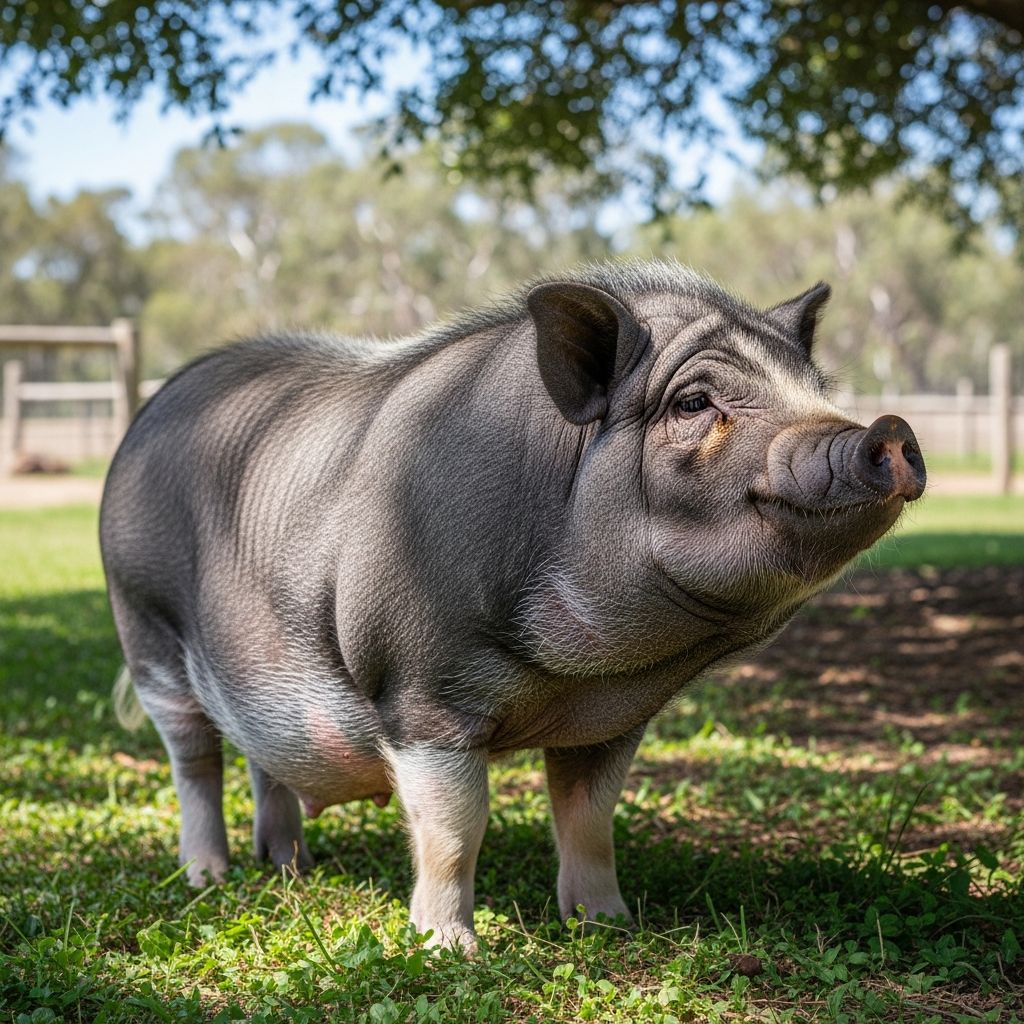
Potbellied pigs, often recognized for their compact builds and endearing features, represent a diminutive breed distinct from standard farm swine. Originating primarily from Vietnam, these animals have gained popularity as household companions due to their manageable size and sociable nature. Understanding their physical attributes, developmental stages, and maintenance needs is crucial for prospective owners to foster healthy, thriving pets.
Origins and Breed Background
These pigs trace their roots to Vietnam, where selective breeding in the mid-20th century produced smaller variants of traditional swine. Imported to Western countries starting in the 1980s, they quickly became favored for pet ownership. Unlike commercial hogs that can surpass 1,000 pounds, potbellied pigs typically max out at much lower weights, making them suitable for domestic settings. Their development emphasized traits like a lowered belly and sturdy frame, adaptations suited to scavenging lifestyles in native habitats.
Distinctive Physical Features
Potbellied pigs exhibit several hallmark traits that set them apart visually and structurally. Their heads feature a short to medium-length snout, often wrinkled, paired with small, upright ears that remain perky. Prominent jowls frame the face, contributing to a robust appearance relative to the head size, while a compact neck supports this structure.
The body showcases a signature swayed back and a prominent, rounded abdomen that gives the breed its name. This potbelly is a genetic characteristic, not solely indicative of overeating, though diet influences its prominence. Legs are notably short compared to the torso, promoting a low-slung posture, and the tail extends straight, sometimes ending in a tufted switch. Skin tends to be sparsely haired, revealing pigmentation that aids in sun protection, with black being the predominant hue.
- Snout: Wrinkled and upturned for rooting.
- Ears: Small and erect for alertness.
- Jowls: Large and sagging, enhancing expressiveness.
- Back: Swayed, accentuating the belly.
- Tail: Straight with occasional switch.
Size, Weight, and Growth Patterns
Mature potbellied pigs measure approximately 14 to 26 inches at the shoulder, with lengths around 3 feet. Weights vary widely by genetics, diet, and exercise, ranging from 70 to 250 pounds in adulthood, though 100-175 pounds is common for healthy specimens. Newborns start at just ounces to a pound, experiencing rapid growth in the first year before plateauing around 3-5 years of age.
Owners must account for individual variation; some lines remain slimmer, while others naturally plump up with fuller jowls and bellies. Overfeeding can push weights beyond genetic norms, leading to health issues, whereas proper management keeps them agile.
| Life Stage | Average Height (inches) | Average Weight (lbs) |
|---|---|---|
| Newborn | 6-8 | 0.5-1 |
| 1 Year | 12-18 | 50-100 |
| Adult (3-5 years) | 14-26 | 100-200 |
Color Variations and Coat Details
While solid black dominates, especially in traditional Vietnamese strains, variations include gray, white, pink, and spotted patterns. White markings may appear on the snout, feet, head, or tail. The coat is minimal, with thin to medium hair coverage that sheds seasonally, often in summer. This sparse fur necessitates mud wallowing for skin protection against sun and insects, countering their reputation for messiness—they are inherently clean if provided space.
Lifespan and Longevity Factors
With optimal care, potbellied pigs live 12-20 years, commonly 10-15 in pets. Factors like obesity shorten this, causing joint strain, breathing difficulties, and reduced mobility. Conversely, balanced nutrition, exercise, and veterinary oversight promote extended vitality. Maturity at 3-4 years means commitment spans decades.
Health Considerations and Common Issues
Obesity tops health concerns, stemming from their omnivorous appetite and large digestive capacity. Monitoring intake prevents this; visible ribs indicate underweight, while fat-folded eyes signal excess. Other issues include sunburn sensitivity due to light hair, tusks in both sexes (larger in males), and occasional arthritis from conformational traits.
Regular check-ups address dental wear from rooting, respiratory vulnerabilities in heavyset individuals, and skin conditions. Exercise via rooting areas or walks maintains fitness.
Daily Care and Nutrition Guidelines
These opportunistic eaters thrive on vegetarian diets: commercial pellets, vegetables, hay, and bran. Avoid overfeeding; portion control mimics wild scavenging. Fresh water and foraging opportunities engage their intelligence. Indoor living works with outdoor access for wallowing and exercise.
- Pellets formulated for mini pigs.
- Leafy greens and root veggies.
- Hay for fiber and dental health.
- Limit fruits and treats to prevent sugar spikes.
Behavior and Temperament Insights
Highly intelligent, potbellied pigs excel in training, responding to clickers like dogs. They vocalize diversely—oinks, squeals, whines—and mothers “sing” to young. Social bonds form strongly with humans, though stubbornness requires consistency. Poor vision offsets keen smell and hearing; they root exploratively.
Housing and Enrichment Needs
Secure fencing prevents escapes, as they are strong diggers. Indoor setups suit with bedding; outdoors demand shade, mud pits, and shelters. Enrichment via toys, puzzles, and social time combats boredom-induced mischief.
Reproduction and Family Dynamics
Gestation lasts 114 days, yielding 5-12 piglets weaned at 6-8 weeks. Critical early care ensures survival; adults reach full size post-year one. Breeding demands experience to manage litters humanely.
Fun Facts About Potbellied Pigs
- Scientific name: Sus scrofa domesticus.
- Least Concern conservation status.
- Root with snouts for sensory exploration.
- Black skin pigmentation shields from UV.
- Trainable for tricks and potty habits.
Frequently Asked Questions (FAQs)
Do potbellied pigs make good indoor pets?
Yes, they adapt well indoors with training and space, staying cleaner than perceived if litter-trained.
How do I prevent obesity in my potbellied pig?
Feed measured portions of low-calorie feed, encourage daily exercise, and consult vets for weight checks.
What is the average lifespan of a potbellied pig?
12-20 years with proper care, though obesity can reduce it significantly.
Are potbellied pigs friendly with children?
Generally yes, due to their placid temperament, but supervise interactions given their size.
Do they need special veterinary care?
Yes, seek pig-savvy vets for vaccinations, tusks, and obesity management.
References
- Merck Veterinary Manual: Description and Physical Characteristics of Potbellied Pigs — Merck & Co. 2023. https://www.merckvetmanual.com/all-other-pets/potbellied-pigs/description-and-physical-characteristics-of-potbellied-pigs
- Vietnamese Pot-bellied Pig — Wikipedia. 2023. https://en.wikipedia.org/wiki/Vietnamese_Pot-bellied
- Pot Bellied Pig — City of Roswell, NM (.gov). 2023. https://www.roswell-nm.gov/1466/Pot-Bellied-Pig
- Potbellied Pig Fact Sheet — Cumberland Animal Sanctuary. 2019. https://casanctuary.org/wp-content/uploads/2019/01/Potbellied-Pig-Fact-Sheet.pdf
- Pot Belly Pigs — Exotic Pet Vet. 2023. http://www.exoticpetvet.com/pot-belly-pigs.html
Similar Articles








Read full bio of Sneha Tete


