
Undefined Potbellied Pig Reproduction: Expert Guide
Master the essentials of breeding, gestation, and newborn care for healthy potbellied pigs in pet settings.
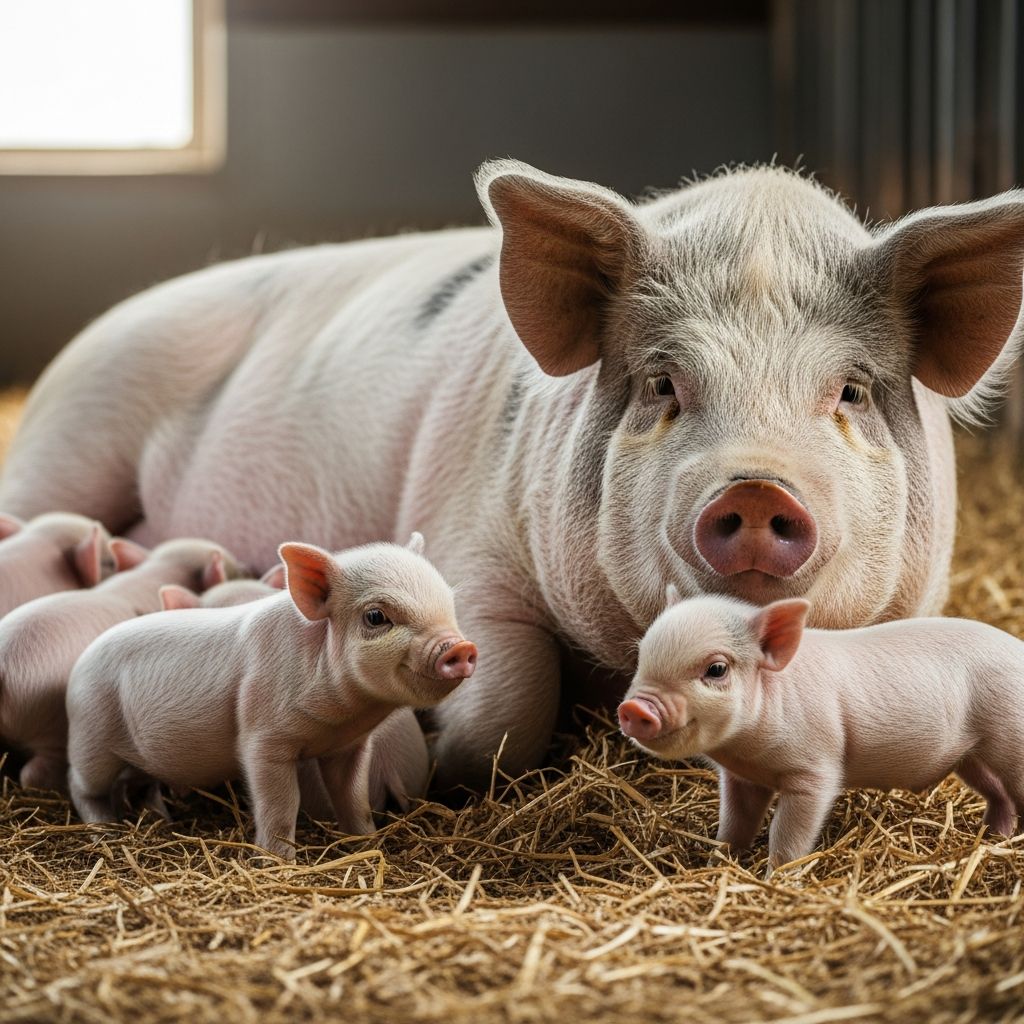
Potbellied pigs, popular as affectionate pets, reach sexual maturity quickly, often by 3-4 months, leading to frequent breeding opportunities if not managed. Responsible reproduction involves understanding heat cycles, gestation, farrowing, and post-birth care to ensure sow and piglet health while avoiding population explosions common in unmanaged groups.
Understanding Sexual Maturity in Potbellied Pigs
These miniature swine exhibit rapid development, with females (gilts or sows) showing first estrus signs around 3 months and boars becoming fertile shortly after. This early puberty demands vigilant separation of intact males and females to prevent unintended litters, as breeding can commence as young as 4 months.
- Females: Puberty at 3-4 months; estrous cycle every 21 days (range 18-24 days).
- Males: Breeding readiness by 4 months; exhibit strong mounting behaviors.
- Key risk: Unsupervised groups lead to rapid population growth, straining resources and welfare.
Owners should consider sterilization for non-breeding pets: sows at 4-6 months, boars ideally at 10 days or 4-6 months under anesthesia. Even without boars, intact sows may lose house training during heat.
Recognizing and Managing Heat Cycles
Estrus, or “heat,” lasts 24-48 hours, intensified by boar proximity via scent, sound, or sight. Sows display restlessness, vulvar swelling, and the “standing reflex”—freezing when pressure is applied to the rump.
| Sign | Description | Duration/Timing |
|---|---|---|
| Restlessness | Pacing, vocalizing, reduced appetite | Builds 1-2 days pre-estrus |
| Vulvar Changes | Swelling, redness, mucus discharge | Peak during standing heat |
| Standing Reflex | Immobility on rump pressure | Optimal mating window: 12-24 hours post-onset |
| Boar Response | Sow seeks boar, allows mounting | 24-36 hours total estrus |
Without a boar, detection relies on observation; cycles recur reliably every 21 days. Post-weaning, sows may cycle in 3-7 days.
Breeding Methods: Natural and Artificial
For intended breeding, introduce the sow to the boar daily during expected heat, allowing 20+ minutes interaction. Confirm standing heat before mating, which lasts 10-20 minutes. Repeat the next day for best conception. Avoid familiar boars; separate 2 weeks pre-estrus and reintroduce.
Artificial insemination (AI) requires semen ordered at heat onset, with inseminations 12 hours apart (first 12-24 hours post-standing). Veterinary oversight ensures success; stress avoidance for 28 days post-breeding boosts outcomes.
- Success tips: Patience during mating; ultrasound pregnancy check at 24 days.
- Warnings: Rushed processes fail; consult vets for issues.
Pregnancy Duration and Monitoring
Gestation averages 114-115 days (3 months, 3 weeks, 3 days; range 112-120), with first-time sows potentially early. Litters average 5-12 piglets, up to 20 in multiparous sows.
Monitor via ultrasound/radiography for viability and count mid-gestation. Avoid stressors; confirm no return to heat at 21 days. Pre-farrowing signs: nesting, colostrum leakage, anxiety—birth imminent within 24 hours.
Preparing for Farrowing
Designate a clean, quiet farrowing area with fresh bedding (hay/straw for nesting). Provide a warm creep zone (29-30°C initially, reducing to 21°C over 7 days) to prevent chilling and sow overlay.
Sows farrow rapidly: piglets every 15 minutes, sometimes in rushes. Presentations (front/tail-first) rarely cause issues due to small neonate size; intervene only if prolonged (>1 hour labor) via vet.
Pre-Farrowing Checklist
- Clean enclosure, ample hay/water.
- Creep area: 30°C heat lamp/lamp.
- Monitor sow 24/7 near due date.
- Neonatal supplies: towels, iodine for navels, milk replacer standby.
- Vet contact ready for dystocia.
Newborn Piglet Care Essentials
Piglets must nurse colostrum within hours for immunity. Ensure warmth; sows with good nests suffice, but supplemental heat minimizes risks. Vietnamese breeds show strong maternal instinct, rarely interfering with care.
Wean at 6-8 weeks (or self-wean to 12 weeks), monitoring sow condition to prevent calcium/weight loss. Post-weaning heat returns swiftly.
Health Considerations in Reproduction
Early breeding risks stunted growth; wait until 6 months for optimal sow size. Common issues: reproductive tract infections, agalactia—vet checks essential. Sterilization prevents cancers, pyometra. Nutrition: High calcium pre-farrowing, lactation support.
For pet owners, ethical breeding prioritizes welfare over numbers; many advocate spay/neuter to curb overpopulation.
FAQ: Potbellied Pig Reproduction
What is the gestation period for potbellied pigs?
Average 114 days (112-120 range).
At what age can potbellied pigs breed?
As early as 3-4 months; ethical breeding delays to 6 months.
How do I know if my sow is in heat?
Look for vulvar swelling, standing reflex, restlessness.
How many piglets in a litter?
5-12 typical; first litters smaller.
Should I breed my pet potbellied pig?
Only with preparation; spay/neuter recommended for most pets to avoid welfare issues.
What temperature for newborn piglets?
29-30°C first week, taper to 21°C.
Successful potbellied pig reproduction hinges on knowledge, timing, and veterinary partnership, fostering healthy families without overwhelming households.
References
- Reproduction – petpigs — Carrs Consulting. Accessed 2026. https://www.carrsconsulting.com/thepig/petpig/petpignotes/reproduction.htm
- Breeding – petpigprimarycare — Pressbooks.pub. Accessed 2026. https://pressbooks.pub/weber/chapter/breeding/
- Vietnamese pigs. Description of the breed, breeding, maintenance and care — Genetic.by. Accessed 2026. https://genetic.by/en/vietnamese-pigs-description-of-the-breed-breeding-maintenance-and-care
- Pot Belly Pig Breeding — YouTube (LafeberVet-related channel). 2026 access. https://www.youtube.com/watch?v=kl-Ez_PSWI4
- Reproduction of Miniature Pet Pigs — Merck Veterinary Manual. Accessed 2026. https://www.merckvetmanual.com/exotic-and-laboratory-animals/miniature-pet-pigs/reproduction-of-miniature-pet-pigs
- Basic Information Sheet: Miniature Pig — LafeberVet. Accessed 2026. https://lafeber.com/vet/basic-information-sheet-miniature-pig/
Similar Articles








Read full bio of Sneha Tete


