

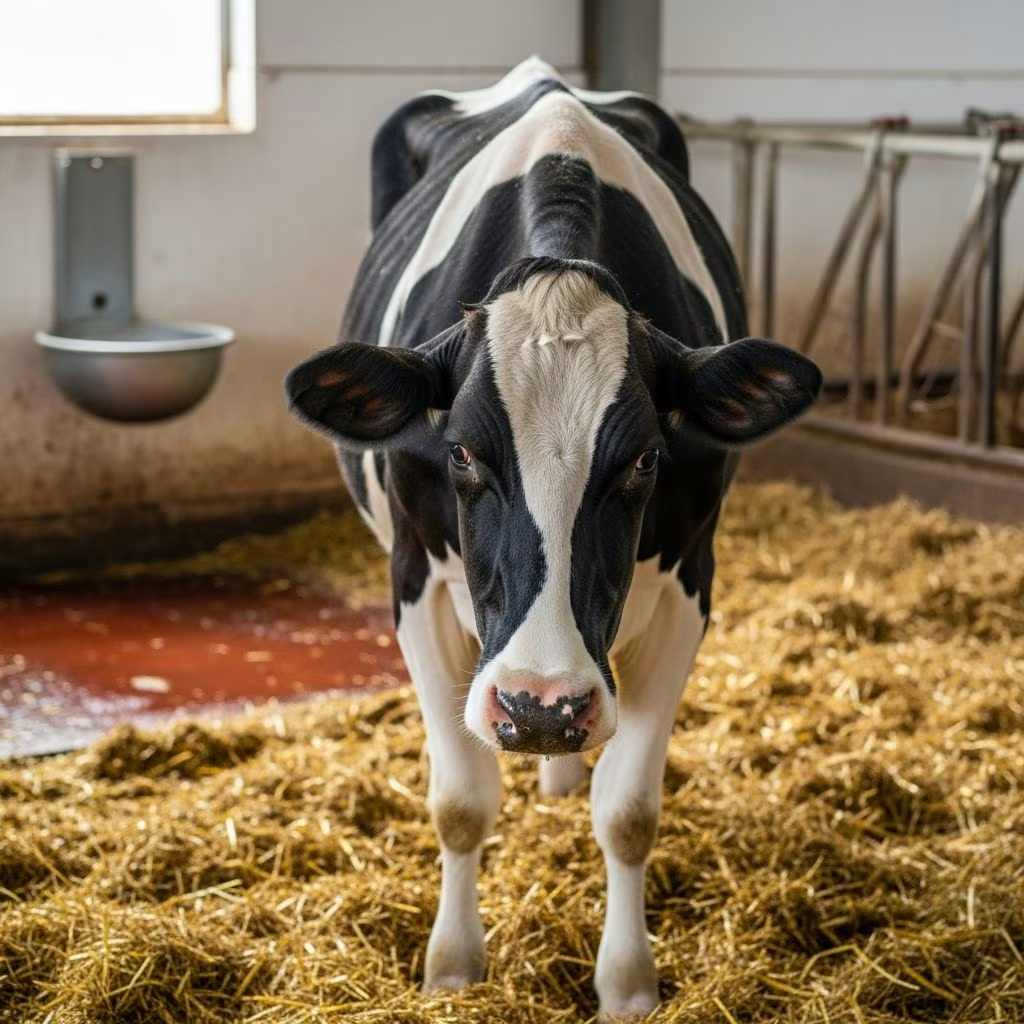
Postparturient hemoglobinuria represents one of the most significant metabolic complications affecting dairy cattle during the transition from pregnancy to lactation. This condition emerges as a direct consequence of severe phosphorus depletion, manifesting through the breakdown of red blood cells and the subsequent appearance of hemoglobin in the urine. The disorder predominantly affects high-producing dairy cows during the critical first weeks following parturition, a period characterized by dramatic shifts in metabolic demand and nutrient partitioning. Understanding the pathophysiology, clinical presentation, and management strategies for this condition is essential for maintaining herd health and productivity.
The Metabolic Foundation: Phosphorus Requirements in Transition Dairy Cows
Phosphorus occupies a central role in bovine metabolism, serving as a fundamental component of energy transfer, cellular signaling, and structural integrity. During the transition period—extending from the final trimester of pregnancy through the initial weeks of lactation—phosphorus demands escalate dramatically compared to earlier production phases. The fetus itself accumulates substantial quantities of phosphorus throughout gestation, with accretion rates increasing from approximately 1.9 grams daily at 190 days of gestation to 5.4 grams daily by 280 days of gestation. This escalation coincides with the cow’s own physiological preparations for the metabolic demands of milk synthesis.
The initiation of lactation introduces an additional and immediate phosphorus drain. Bovine milk contains approximately 0.9 to 1.0 grams of phosphorus per kilogram, meaning that a cow producing 30 to 40 kilograms of milk daily secretes nearly 27 to 40 grams of phosphorus through the mammary gland alone. For high-yielding dairy cows, this represents a substantial daily loss that can rapidly deplete bodily phosphorus reserves if dietary intake fails to match these extraordinary secretory demands.
Understanding Hemoglobinuria: When Red Blood Cells Fail
Hemoglobinuria describes the pathological presence of hemoglobin in urine, a condition arising from the rupture of red blood cells and the subsequent filtration of released hemoglobin through the renal system. In the context of postparturient complications, hemoglobinuria develops secondarily to the metabolic consequences of severe hypophosphatemia. Phosphorus exists as a critical component of adenosine triphosphate (ATP), the universal energy currency within cells. When circulating phosphate concentrations plummet, the capacity of cells to generate and maintain ATP becomes severely compromised.
Red blood cells, despite their apparent simplicity, maintain intricate ionic gradients and execute continuous ATP-dependent membrane pumping mechanisms to preserve their integrity and lifespan. The sodium-potassium pump and other active transport systems depend absolutely upon adequate ATP availability. When phosphorus deficiency prevents ATP synthesis, these critical maintenance mechanisms fail, leading to cellular swelling, osmotic stress, and ultimately hemolysis—the rupture of erythrocyte membranes. The hemoglobin released from these lysed cells enters the bloodstream, exceeds the renal threshold for reabsorption, and appears in the urine as hemoglobinuria.
Epidemiology and Risk Factors in the Periparturient Period
Research examining large cohorts of dairy cattle reveals striking patterns in the prevalence of phosphorus depletion during critical production windows. In one comprehensive metabolic profiling study encompassing over 7,000 dairy cows, hypophosphatemia (defined as plasma inorganic phosphate concentrations below 3.9 mg/dL) occurred in 71 percent of healthy fresh cows on the first day of lactation, declining to 21 percent by day three and 10 percent by day five. These findings underscore the nearly universal nature of transient phosphorus depletion in early lactation, though the severity varies considerably among individuals.
The incidence of clinically manifest postparturient hemoglobinuria appears considerably lower than subclinical hypophosphatemia, yet remains economically significant on affected farms. In experimental studies examining phosphorus-deficient feeding regimens during the transition period, approximately 17 percent of cows receiving inadequate phosphorus developed postparturient hemoglobinuria, whereas control animals receiving adequate phosphorus supplementation experienced no such complications. This discrepancy between the prevalence of hypophosphatemia and the manifestation of overt hemoglobinuria suggests that while phosphorus depletion is nearly universal, additional factors modulate individual susceptibility to severe clinical disease.
Clinical Manifestations and Associated Complications
The clinical presentation of postparturient hemoglobinuria encompasses both the direct consequences of hemolysis and the broader metabolic dysfunction accompanying severe phosphorus depletion. The most characteristic finding is hemoglobinuria itself—the appearance of red or brown-tinged urine that may be observed during routine milking or standing in stalls. This discoloration results from the high concentration of hemoglobin and myoglobin-derived pigments filtered by the kidneys.
Beyond hemoglobinuria, affected cows frequently demonstrate a constellation of clinical signs reflecting the underlying metabolic derangement:
- Reduced appetite and feed intake, exacerbating the negative energy balance characteristic of early lactation
- Decreased milk production despite the metabolic stimulus of lactation
- General weakness and lethargy, reflecting the energy deficit imposed by insufficient ATP synthesis in muscle and nerve tissues
- Anemia resulting from the loss of functional red blood cells through hemolysis
- Incoordination and neurological signs in severe cases, reflecting phosphorus depletion in the nervous system
- Impaired reproductive performance, including delayed return to estrus and reduced conception rates
- Increased susceptibility to secondary bacterial infections, including mastitis and metritis, as immune function deteriorates
In the most severe manifestations, profound hypophosphatemia may progress to postpartum recumbency or downer cow syndrome, wherein affected animals become unable to rise despite normal calcium concentrations. Approximately one-third of cows failing to respond to calcium therapy for milk fever are concurrently severely hypophosphatemic, and intravenous phosphate administration often restores the ability to stand in these cases.
The Pathophysiology of Hemoglobin Metabolism and Hemolytic Anemia
The progression from hypophosphatemia to hemoglobinuria involves a cascade of cellular events centered on energy depletion. Red blood cells possess minimal capacity to synthesize proteins or generate new cellular components; instead, they maintain existing structures through continuous ATP-dependent processes. The mature erythrocyte relies entirely upon glycolysis for ATP production, as it lacks mitochondria and cannot access oxidative phosphorylation pathways. When phosphate availability limits ATP synthesis through glycolytic pathways, the energetic foundations of red blood cell homeostasis collapse.
Phosphate deficiency disrupts the phosphorylation of glucose and subsequent glycolytic intermediate metabolism, directly limiting pyruvate generation and the regeneration of NAD+ necessary for glycolysis continuation. Without adequate ATP, the sodium-potassium pump fails, leading to progressive potassium leakage and sodium accumulation within the erythrocyte. Water follows these osmotically active solutes into the cell, causing swelling and membrane destabilization. Oxidative stress accumulates as reduced glutathione regeneration fails without ATP availability, permitting accumulation of reactive oxygen species that damage membrane lipids and proteins.
The resulting hemolysis releases intracellular contents into the plasma. Hemoglobin and myoglobin accumulate in serum to concentrations exceeding the binding capacity of haptoglobin and hemopexin—the plasma proteins evolved to scavenge these molecules. Unbound hemoglobin freely filters through the glomerulus and appears in urine as hemoglobinuria.
Diagnostic Considerations and Laboratory Findings
The diagnosis of postparturient hemoglobinuria rests upon the clinical recognition of hemoglobin-stained urine coinciding with laboratory confirmation of severe hypophosphatemia. Blood chemistry panels reveal plasma inorganic phosphate concentrations substantially below normal reference ranges, typically declining to 1.5 mg/dL or lower in severe cases. The presence of hemoglobinuria can be confirmed through urinalysis, which demonstrates positive reactions on dipstick testing for blood or hemoglobin despite the absence of intact erythrocytes on microscopic examination.
Complete blood counts typically reveal anemia of varying severity, reflecting the extent of hemolysis. The degree of anemia correlates with the severity of hypophosphatemia and the duration of the hemolytic process. Additional findings may include evidence of compensatory erythropoiesis if the condition has persisted for several days, manifested by increased reticulocyte counts and immature erythrocyte morphology on blood smears.
Management Strategies and Treatment Approaches
The primary management of postparturient hemoglobinuria centers on rapid restoration of circulating phosphate concentrations and correction of the underlying hypophosphatemia. Oral phosphate supplementation demonstrates remarkable efficacy in correcting hypophosphatemia within days to weeks. In experimental settings, cows receiving deficient phosphorus diets subsequently transitioned to adequate phosphorus nutrition exhibited rapid plasma phosphate recovery, returning to normal concentrations (above 4 mg/dL) in less than two weeks. This response demonstrates the efficiency of oral phosphate absorption when dietary supply becomes adequate.
For clinically affected animals showing signs of severe hemoglobinuria or associated complications such as downer cow syndrome, intravenous phosphate administration may be necessary to rapidly restore circulating concentrations and permit restoration of ATP synthesis in critical tissues. The responsiveness of many downer cows refractory to calcium therapy to intravenous phosphate administration underscores the physiological importance of adequate phosphate availability.
Supportive care during the recovery phase remains essential, including provision of high-quality feedstuffs to maximize dietary phosphorus intake and encourage rapid feed consumption during this critical metabolic window. Energy-dense feeds help mitigate the negative energy balance characteristic of early lactation and provide additional substrates for phosphorus-dependent metabolic pathways.
Prevention Through Transition Period Management
The prevention of postparturient hemoglobinuria fundamentally depends upon ensuring adequate phosphorus availability during the transition period and early lactation. Paradoxically, periparturient supplementation of phosphate in the ration does not reliably prevent postpartum hemoglobinuria, suggesting that phosphate deficiencies must be addressed at the time of calving or potentially earlier in the transition period. This observation implies that changes in phosphate metabolism or absorption during the periparturient period may limit the efficacy of dietary phosphate supplementation alone.
Strategic management approaches include the following considerations:
- Ensuring adequate dietary phosphorus content throughout the transition period, with particular attention to the final trimester of gestation
- Monitoring feed intake patterns around calving and adjusting diet formulation to encourage consumption during periods of intake depression
- Implementing bolus or drench-based phosphate supplementation at calving to provide immediate phosphate availability independent of feed intake variability
- Evaluating forage phosphorus content, as naturally phosphorus-depleted soils may produce feeds with inadequate mineral density
- Considering regional soil phosphorus status when formulating rations for farms in phosphorus-deficient geographic areas
Broader Implications of Phosphorus Depletion on Herd Health
While postparturient hemoglobinuria represents the most dramatic clinical manifestation of severe phosphorus depletion, the broader metabolic consequences of inadequate phosphorus extend throughout the early lactation period and affect multiple body systems. Phosphorus deficiency impairs immune function through multiple mechanisms, reducing neutrophil and macrophage activity and leaving cows prone to bacterial infections including mastitis and metritis. Affected herds typically report elevated incidence of periparturient infectious complications when phosphorus status is marginal.
The reproductive consequences of phosphorus depletion merit particular attention in reproductive management protocols. Cows experiencing phosphorus depletion during early lactation frequently demonstrate delayed return to estrus and reduced conception rates to first and subsequent services. These fertility effects may persist beyond the acute period of hypophosphatemia, extending the calving interval and reducing annual milk production per cow.
Economic Considerations and Cost-Benefit Analysis
The economic impact of postparturient hemoglobinuria and associated phosphorus deficiency extends beyond the direct production losses associated with affected individuals. Herd-level impacts include reduced peak milk yields, extended calving intervals, increased veterinary treatment costs, and elevated culling rates among animals experiencing multiple periparturient complications. Chronic inadequacy of dietary phosphorus reduces milk yield, prolongs calving intervals, increases the incidence of periparturient disorders, and impairs skeletal development in replacement heifers, resulting in substantial economic losses at the herd level.
Investment in transition period nutrition programs designed to ensure adequate phosphorus availability typically demonstrates favorable return on investment through improvements in reproductive performance, reduced disease incidence, and enhanced milk production efficiency across the lactation.
References
- Understanding and Addressing Phosphorus Balance Disorders in Early Lactation Dairy Cows — The Bull Vine. 2024. https://www.thebullvine.com/news/understanding-and-addressing-phosphorus-balance-disorders-in-early-lactation-dairy-cows/
- Hypophosphatemia in Dairy Cows During the Transition Period — Dell’Ait. 2024. https://dellait.com/hypophosphatemia-dairy-cows-during-the-transition-period/
- Phosphorus Metabolism and Function in Ruminants — National Center for Biotechnology Information (NIH). 2024. https://pmc.ncbi.nlm.nih.gov/articles/PMC12784716/
- Evaluation of a Novel Dipotassium Phosphate Bolus for Treatment of Hypophosphatemic Downer Cows — Frontiers in Veterinary Science. 2023. https://www.frontiersin.org/journals/veterinary-science/articles/10.3389/fvets.2023.1274183/full
- Phosphorus Balance Disorders in Dairy Cows — The Cattle Site. 2024. https://www.thecattlesite.com/articles/phosphorus-balance-disorders-in-dairy-cows
- Disorders of Phosphorus Metabolism in Animals — MSD Veterinary Manual. 2024. https://www.msdvetmanual.com/metabolic-disorders/disorders-of-phosphorus-metabolism/disorders-of-phosphorus-metabolism-in-animals



