
Postmortem Meat Inspection: Essential Procedures
Comprehensive guide to postmortem inspection techniques ensuring meat safety across livestock species from cattle to poultry.
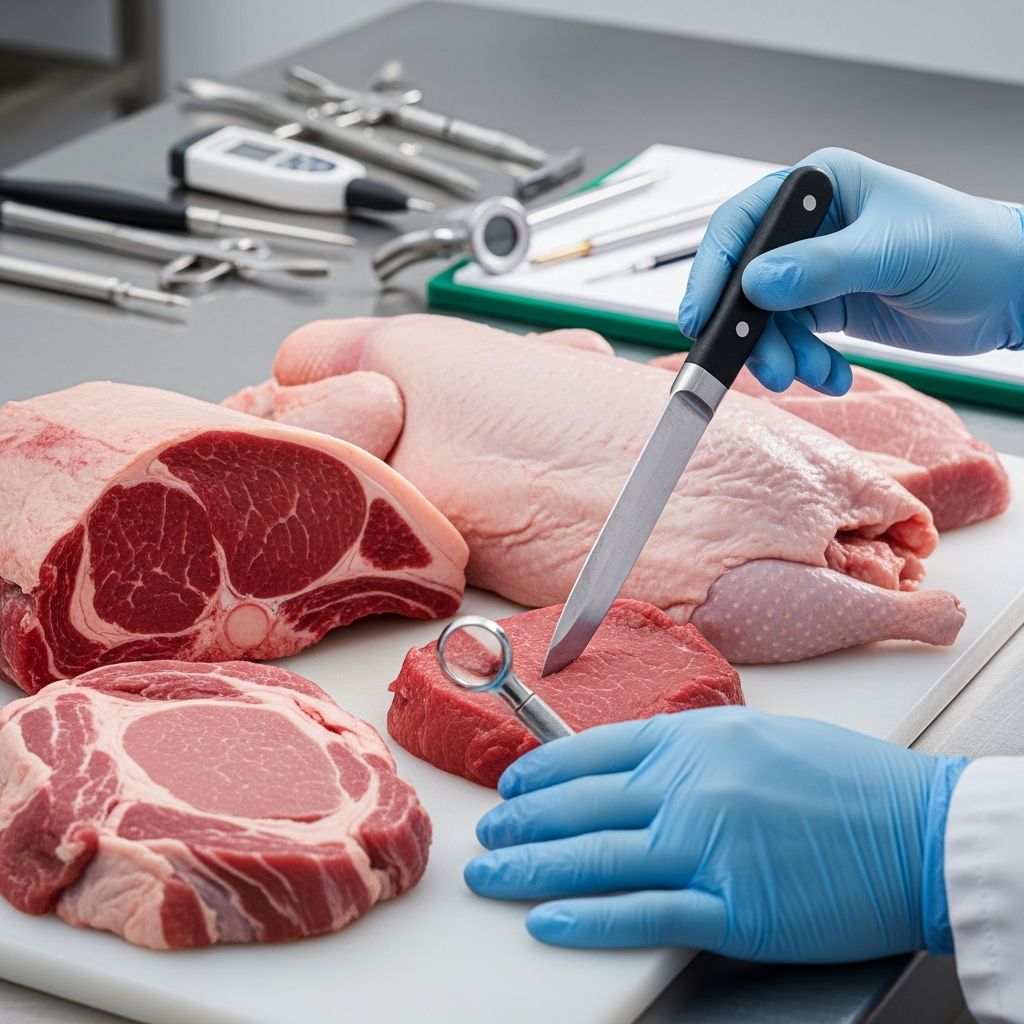
Postmortem inspection serves as a critical safeguard in the meat production chain, involving meticulous evaluation of animal carcasses after slaughter to identify pathological conditions, contaminants, or abnormalities that could pose risks to human health. Conducted by qualified veterinarians or inspectors, this process ensures only safe, wholesome meat enters the food supply.
Importance of Postmortem Evaluation in Food Safety
The primary goal of postmortem checks is to detect diseases, parasites, and other defects invisible during live animal assessments. By examining organs, tissues, and lymph nodes systematically, inspectors prevent the distribution of hazardous products. Regulations from bodies like the USDA mandate thorough inspections in official slaughter facilities to verify carcasses are not adulterated.
- Identifies zoonotic diseases transmissible to humans, such as tuberculosis or brucellosis.
- Assesses carcass quality, condemning unfit portions to protect consumers.
- Supports traceability by correlating findings with antemortem records.
Performing inspections promptly after dressing maintains organ-carcass associations, enabling accurate judgments on fitness for consumption.
General Protocols for Carcass Examination
Standard procedures begin with a visual and palpation survey of the entire carcass, followed by targeted incisions into key areas. All viscera must remain linked to the carcass until fully inspected. Inspectors use knives for deep cuts, checking for discoloration, odors, textures, or lesions.
| Inspection Step | Focus Areas | Common Findings |
|---|---|---|
| External Survey | Skin, bruises, fractures | Contusions, abscesses |
| Head and Neck | Lymph nodes, tongue | Enlargements, infections |
| Thoracic Cavity | Lungs, heart | Pneumonia, pericarditis |
| Abdominal Organs | Liver, kidneys, intestines | Parasites, tumors |
Inflation of carcasses with air may aid visibility in some facilities, but only under controlled conditions.
Detailed Procedures for Bovine Carcasses
Cattle inspections demand comprehensive scrutiny due to their size and disease prevalence. Start with the head: incise cheeks, tongue, and esophagus deeply. Palpate retropharyngeal and submaxillary lymph nodes for swelling indicative of infections.
Respiratory and Circulatory Systems
Lungs are sliced longitudinally to reveal consolidations from pneumonia or granulomas from tuberculosis. Bronchial lymph nodes are incised if enlarged. The heart requires multiple lengthwise cuts from base to apex, exposing valves and myocardium for cysts like Cysticercus bovis in endemic regions.
Abdominal and Lymphatic Checks
The liver undergoes bile duct examination and slicing for flukes or abscesses. Kidneys are palpated for nephritis, spleen for splenomegaly. Mesenteric and prescapular nodes are key sites for systemic disease detection. In calves over six weeks, additional esophageal views are mandatory.
For horses, especially in glanders-prone areas, split the head medially and inspect the nasal septum thoroughly.
Swine-Specific Inspection Techniques
Pigs necessitate vigilant checks for species-unique threats like trichinellosis. Incise masseter muscles, diaphragm, and tongue root for larval cysts. Diaphragmatic pillars are stripped and sliced numerously.
Parasite and Disease Focus
Microscopic analysis of diaphragm samples confirms Trichinella spiralis. Heart inspections mirror cattle but emphasize valvular areas. In cysticercosis-risk zones, incise abdominal and masticatory muscles extensively. Mesenteric nodes are palpated for edema disease or salmonellosis signs.
- Mandibular nodes: checked for abscesses.
- Inguinal nodes: assessed for erysipelas.
- Hepatic nodes: sliced for hepatitis.
Procedures for Small Ruminants: Sheep and Goats
Sheep and goats permit streamlined yet precise exams due to smaller size. Palpate all superficial nodes, incising suspects for caseous lymphadenitis, marked by cheesy pus.
Liver and Lung Evaluations
Livers are probed for flukes common in damp grazing areas. Lungs checked for verminous pneumonia. Prefemoral and prescapular nodes receive palpation; renal nodes only if pathology suspected. Carcasses showing cachexia or jaundice are condemned.
Game animals like antelope follow similar protocols, emphasizing lymph node palpation.
Poultry and Avian Postmortem Methods
Birds are inspected post-evisceration while suspended. Visual exam of carcass, viscera (liver, heart, spleen, intestines), and cloaca detects airsacculitis, tumors, or salpingitis. Heads are checked for pox or fowl cholera.
Ostrich and Ratite Considerations
For ostriches, identify head, pluck, tract, genitalia, and carcass separately. Examine intestines for enteritis or tapeworms, reproductive organs for prolapses. Lacking lymph nodes, rely on generalized lesion hunts.
| Avian Species | Key Viscera Checks | Suspension Points |
|---|---|---|
| Chickens/Turkeys | Liver, spleen, heart | 2-3 points |
| Ostriches | Intestines, genitals | Separate presentation |
Advanced Tools and Innovations
Traditional methods persist, but ultrasound detects hidden abscesses, while rapid pathogen tests expedite judgments. Imaging enhances cyst or tumor identification, boosting efficiency without compromising standards.
Regulatory Framework and Dispositions
U.S. Code of Federal Regulations (9 CFR Part 310) requires careful postmortem exams in official plants. Inspectors determine wholesomeness, passing, condemning, or restricting carcasses. Suspects from antemortem are segregated and re-evaluated.
- Passed: Fit for distribution.
- Condemned: Total or partial removal.
- Restricted: Further processing needed.
Common Pathologies and Judgment Criteria
Inspectors encounter bruises (trimmed if minor), emphysema, or neoplasms. Parasites like flukes lead to organ condemnation. Systemic diseases like septicemia result in full carcass rejection. Bruising extent dictates disposition: extensive cases require total condemnation.
Best Practices for Inspectors
Maintain hygiene, use sharp tools, and document findings. Correlate with antemortem data, including disease history. Training ensures consistency in detecting subtle lesions.
Frequently Asked Questions (FAQs)
What is the difference between antemortem and postmortem inspection?
Antemortem evaluates live animals for clinical signs within 24 hours pre-slaughter; postmortem dissects carcasses for hidden pathologies.
Why incise lymph nodes during inspection?
Lymph nodes sentinel systemic infections; incisions reveal abscesses or granulomas early.
How is trichinella detected in pigs?
Diaphragm samples undergo microscopy for encysted larvae, invisible macroscopically.
Can technology replace visual inspection?
No, it supplements; hands-on palpation remains essential for accuracy.
What happens to condemned carcasses?
They are destroyed or denatured to prevent human or animal feed use.
References
- Step-by-Step Guide to Postmortem Examination of Various Meat Animals — Agriculture Institute. 2023. https://agriculture.institute/meat-animals-abattoir-practices/step-by-step-guide-postmortem-examination-meat-animals/
- Guidelines for Minimum Postmortem Inspection Requirements — Food and Agriculture Organization (FAO). 2004-01-01. https://www.fao.org/4/t0756e/t0756e01.htm
- MSA Directive 6100.6 Rev. 1 Post-Mortem Dispositions — Texas Department of State Health Services (DSHS). 2022. https://www.dshs.texas.gov/sites/default/files/meat/PDF/Directives/6000-Series/MSA%20Directive%206100.6%20Rev.%201%20Post-Mortem%20Dispositions%20for%20Veterinarian%20Circuit%20Managers.pdf
- 9 CFR Part 310 — Post-Mortem Inspection — Electronic Code of Federal Regulations (eCFR), USDA. 2026-02-01. https://www.ecfr.gov/current/title-9/chapter-III/subchapter-A/part-310
- Post-Mortem Inspection Guidelines — GovInfo, USDA. 2012. https://www.govinfo.gov/content/pkg/CFR-2012-title9-vol2/pdf/CFR-2012-title9-vol2-part310.pdf
Similar Articles








Read full bio of medha deb


