

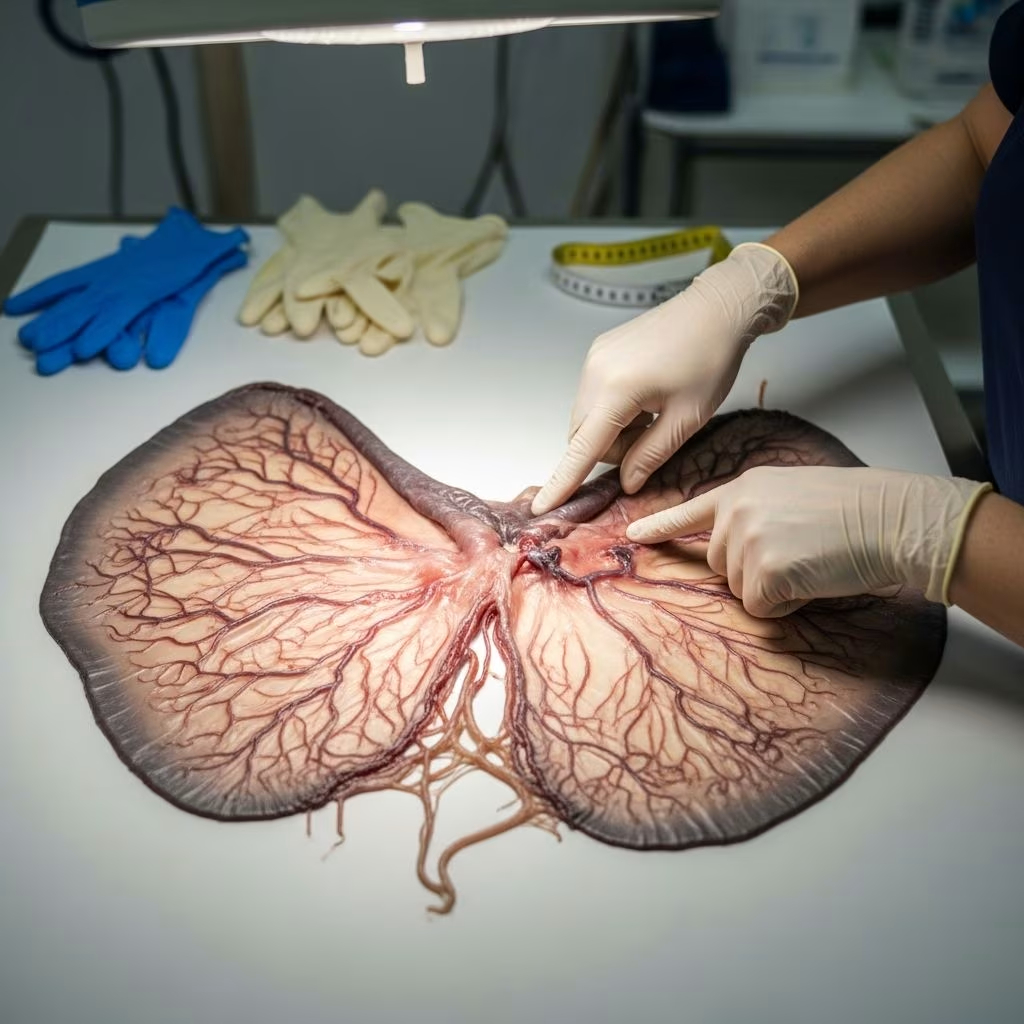
Understanding Equine Fetal Membranes and Their Clinical Importance
The fetal membranes in horses represent a critical interface between maternal and fetal tissues, playing an essential role in nutrient exchange, waste removal, and fetal protection throughout gestation. Following foaling, thorough examination of these structures provides valuable diagnostic information about the pregnancy and serves as an early warning system for complications affecting both the newborn foal and the postpartum mare. The weight of normal fetal membranes typically comprises 10–11% of the foal’s body weight, though pathological conditions such as placentitis or placental edema can significantly increase this proportion, warranting immediate veterinary attention.
The structural composition of equine placentation differs substantially from many other species. Horses possess a diffuse microcotyledonary, epitheliochorial, nondeciduate placenta, which means the chorionic villi distribute across nearly the entire uterine surface and directly contact maternal endometrial tissue without a decidualized layer. This anatomical arrangement creates an intimate maternal-fetal connection but also establishes numerous sites where pathological processes can originate and progress. Understanding this unique placental architecture is fundamental to recognizing abnormal findings during postpartum membrane examination.
Systematic Inspection Protocol for Fetal Membranes
Initial Assessment and Membrane Identification
Proper examination of expelled fetal membranes begins immediately after parturition and should follow a standardized approach to ensure complete evaluation. Veterinarians and experienced handlers should carefully inspect the entire membrane mass while it remains intact when possible, as this facilitates identification of each component and detection of missing portions that may indicate incomplete expulsion or retained fragments.
The normal foaling sequence typically results in membrane rupture at the avillous cervical star region, the area where the placenta attaches least firmly to the uterine wall. Once delivery concludes, two primary tissue layers should be identifiable: the chorion, which presents a red to brownish-red velvety appearance characteristic of healthy placental tissue, and the allantois, displaying a distinctive shiny surface with prominent blood vessel branching. These tissue appearances serve as baseline reference points for distinguishing normal postpartum membranes from those affected by disease.
Structural Integrity and Completeness Evaluation
A complete fetal membrane mass should include both the gravid horn tip, which appears edematous and swollen from supporting fetal development, and the nongravid horn tip, which exhibits a characteristic puckered or wrinkled appearance due to reduced vascularization during pregnancy. Absence of the expected puckered nongravid horn tip strongly suggests incomplete membrane expulsion and warrants investigation for retained fetal membranes.
Careful visual inspection should assess the following structural elements:
- Presence and condition of both uterine horn tips
- Continuity of the chorionic surface across the membrane mass
- Integrity of the allantoic membrane
- Identification of the umbilical cord attachment site
- Assessment of overall membrane elasticity and consistency
Identifying Pathological Changes and Abnormal Findings
Placentitis Indicators
Ascending placentitis, a serious condition characterized by bacterial colonization moving from the cervical region toward the gravid horn, produces distinctive pathological changes visible during membrane examination. Patches of discolored, thickened chorioallantois covered with exudate typically appear at the cervical star—the natural rupture site—or between the two uterine horns. These affected areas often present darker pigmentation, increased thickness, and adherent inflammatory material that contrasts sharply with healthy velvety chorion.
Focal placentitis confined to specific regions between the uterine horns may indicate localized infection without systemic involvement, though any inflammatory changes warrant further investigation into potential causative organisms and consideration of treatment protocols to protect both mare and foal health.
Weight and Edema Assessment
Quantifying membrane weight provides objective data about placental pathology. Normal postpartum membranes should weigh approximately 10–11% of the foal’s birth weight. Increases in membrane weight frequently indicate edema—excessive fluid accumulation within placental tissues—which compromises placental function and may precede or accompany pathological changes.
Edema may develop as a response to placental stress, reduced placental blood flow, or inflammatory processes. During ultrasonic examination in late gestation, placental edema often appears in the dorsal uterine wall and may be considered a normal finding during the final weeks before parturition; however, postpartum edema affecting a large membrane mass suggests underlying compromise of placental function.
Retained Fetal Membranes: Recognition and Clinical Significance
Defining Retention and Time-Dependent Complications
Fetal membranes remaining within the uterus beyond 3 hours after foaling constitute retained fetal membranes, representing one of the most common postpartum complications in mares. Retention may occur as a complete process affecting the entire membrane mass, or more commonly as partial retention affecting predominantly the nongravid horn.
The clinical urgency of retained membranes escalates significantly with increasing duration. While membranes retained for fewer than 8 hours may respond to conservative management techniques, retention persisting beyond 8–10 hours carries substantial risk for serious maternal complications including uterine infection (metritis), systemic endotoxemia from bacterial toxins, and secondary laminitis—potentially fatal inflammation of the sensitive laminae in hooves.
Weight-Based Tension Theory and Physical Management
When membranes remain partially expelled and hang from the mare’s vulva, veterinarians typically advise against immediately removing or cutting the amnion and umbilical cord. This conservative approach reflects understanding that the weight of dependent membranes creates tension believed to enhance natural mechanical separation of placental microcotyledons from endometrial crypts. Removal of this weight prematurely may eliminate a natural stimulus for continued placental separation.
Diagnostic Tools for Placental Evaluation
Ultrasonographic Assessment During Late Gestation
Ultrasonography provides non-invasive evaluation of placental structure and thickness during pregnancy, offering predictive information about placental health and foaling risk. Transabdominal ultrasonography becomes reliably interpretable after 90 days of gestation, when the uterus descends over the pelvic brim and becomes accessible to transducer placement.
Evaluation of placental thickness employs the combined thickness of uterus and placenta (CTUP) measurement, obtained using 5.0 to 7.5 MHz transducers. Normal CTUP ranges from 7.1±1.6 mm to 11.5±2.4 mm when measured in four quadrants (right cranial, right caudal, left cranial, and left caudal). Transducer selection requires consideration of mare size, fetal position, and imaging depth—larger mares may necessitate lower-frequency transducers (2.5–3.5 MHz) to penetrate adequate depth for fetal cardiac imaging.
Transrectal Ultrasonography for Detailed Placental Imaging
While transabdominal ultrasonography provides excellent evaluation of most placental regions, the caudal allantochorion near the cervical star remains difficult to visualize through this approach. Transrectal ultrasonography, performed with a 5 MHz linear transducer positioned 1–2 inches cranial of the cervical-placental junction, provides superior imaging of the ventral uterine body and caudal placenta.
This technique proves particularly valuable for early detection of ascending placentitis, which characteristically begins at the cervical attachment and may progress upward toward the gravid horn. Proper technique requires visualization of the middle branch of the uterine artery as a landmark, with CTUP measurement performed between this arterial structure and the allantoic fluid. Care must be taken to avoid artifactual CTUP elevation from amniotic membrane proximity to the allantochorion.
Management Approaches for Retained Membranes
Conservative and Pharmacological Interventions
For retained membranes identified early in the postpartum period, conservative management often succeeds. Allowing membranes to remain partially expelled maintains tension without excessive traction, and providing environmental comfort may facilitate continued natural expulsion through oxytocin release and uterine contractions. Mares should be offered water, food, and opportunity to lie down and stand as desired during early postpartum periods.
Pharmacological approaches may enhance natural expulsion mechanisms. Oxytocin administration, delivered intravenously or intramuscularly, stimulates uterine contractions that promote placental separation. For membranes retained fewer than 8 hours without systemic complications, pharmacological stimulation of contractions may prove sufficient for resolution.
Mechanical Distention Techniques
When membranes remain undispelled beyond a reasonable period despite pharmacological intervention, mechanical distention techniques increase chorioallantoic vascular pressure to facilitate microcotyledon detachment. The Burns technique employs dilute povidone-iodine or saline solution introduced into the placental vasculature, maintaining distention for 15–30 minutes to enhance membrane separation.
An alternative approach involves catheterizing an exposed umbilical vessel with a small-foal-sized stomach tube following a small incision in the vessel wall. Clean water pumped through the catheter distends the placental vasculature; vessels should remain distended for approximately 5 minutes, after which gentle traction may facilitate membrane expulsion.
For complete membrane retention requiring more aggressive intervention, manual removal requires exceptional care and expertise. Approximately 10 liters of warm sterile saline introduced into the chorioallantoic membrane stretches the uterine wall and stimulates endogenous oxytocin release, potentially facilitating separation without forceful removal that risks uterine trauma.
Antimicrobial and Anti-Inflammatory Therapy
Mares retaining membranes beyond 8 hours require broad-spectrum antimicrobial therapy regardless of systemic signs, as pathogenic bacteria colonize nonviable retained tissues and produce endotoxins entering the maternal circulation. Recommended regimens include potassium penicillin (22,000–44,000 IU/kg IV four times daily), gentamicin sulfate (6.6–10 mg/kg IV once daily depending on organism sensitivity), or flunixin meglumine for anti-inflammatory support (0.25–0.5 mg/kg IV three times daily).
Early institution of antimicrobial therapy prevents progression to life-threatening complications and significantly improves prognosis for both foal nursing capacity and mare reproductive health in future seasons.
Postpartum Evaluation Outcomes
Comprehensive fetal membrane examination following foaling serves multiple critical functions: confirming complete expulsion, identifying placental pathology indicating maternal or fetal compromise, establishing baseline information for health monitoring, and guiding treatment decisions for retained membranes or other complications. Thorough documentation of membrane appearance, structure, weight, and any abnormalities creates medical records essential for managing the individual mare’s reproductive care and identifying herd-level disease patterns.
Prompt recognition of abnormal findings allows immediate veterinary intervention before complications develop, significantly improving outcomes for both newborn foals and postpartum mares. Retained membranes, placentitis, placental edema, and other pathological conditions identified during membrane examination require evidence-based management approaches to prevent potentially fatal secondary complications affecting mare health and jeopardizing future reproductive function.
References
- Fetal/Placental Evaluation in the Mare — International Veterinary Information Service (IVIS). Accessed 2026-02-24. https://www.ivis.org/library/recent-advances-equine-reproduction/fetal/placental-evaluation-mare
- Examination of the Fetal Membranes in Horses — Merck Manual Veterinary, MSD Animal Health. Accessed 2026-02-24. https://www.msdvetmanual.com/management-and-nutrition/management-of-reproduction-horses/examination-of-the-fetal-membranes-in-horses
- Retained Fetal Membranes in Mares — Reproductive System — Merck Manual Veterinary, MSD Animal Health. Accessed 2026-02-24. https://www.merckvetmanual.com/reproductive-system/retained-fetal-membranes-in-large-animals-retained-placenta/retained-fetal-membranes-in-mares
- Equine placenta – Veterinary Extension — University of Florida College of Veterinary Medicine. 2013-01-29. https://extension.vetmed.ufl.edu/files/2013/01/Equine-placenta-marvelous-organ-and-a-lethal-weapon-updated-on-Jan-29-2.pdf
- Examining the mare’s placenta and keeping foaling records — Ontario.ca. Accessed 2026-02-24. http://www.ontario.ca/page/examining-mares-placenta-and-keeping-foaling-records



