

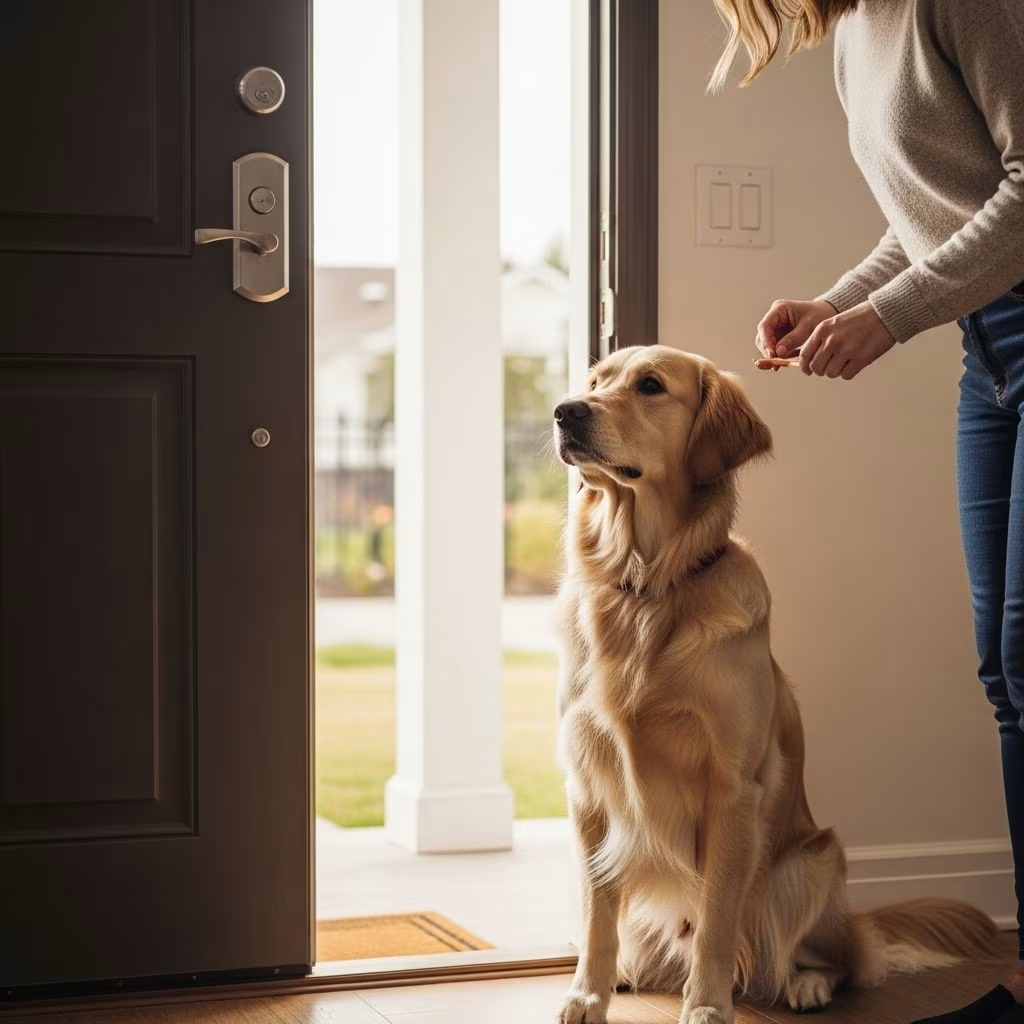
Why Dogs Bark at the Doorbell: Understanding the Root Cause
One of the most common behavioral challenges dog owners face is excessive barking when the doorbell rings. This behavior often stems from a combination of excitement, territorial instincts, and anxiety. When your dog hears the doorbell, they interpret it as an alert that someone is approaching their home, triggering their natural protective instincts. Additionally, some dogs may bark at the doorbell due to fear or uncertainty about what the sound means.
Understanding why your dog barks at the doorbell is the first step toward addressing the behavior effectively. Unlike punishment-based methods that rely on fear and correction, positive reinforcement training focuses on rewarding the behaviors you want to see instead. This approach not only reduces barking but also helps your dog feel more confident and secure in their environment.
The key to success lies in recognizing that barking at the doorbell is a learned behavior that can be unlearned through consistent, patient training using reward-based techniques.
The Fundamentals of Positive Reinforcement Training
Positive reinforcement training is a scientifically-backed approach that has revolutionized modern dog training. Unlike traditional methods that rely on punishment or correction, positive reinforcement focuses on rewarding desired behaviors to encourage their repetition.
What Is Positive Reinforcement?
Positive reinforcement means you avoid disciplining your dog when bad behaviors occur, and instead reward positive behaviors when they happen. The “positive” in positive reinforcement refers to adding something desirable, while “reinforcement” means strengthening a behavior so it’s more likely to occur again in the future. When you reward your dog immediately following a desired behavior, you create a clear association between their action and the positive outcome.
Dogs are eager to please their owners, and positive reinforcement lets them know their behavior was good and gives them a solid indication of how to keep making you happy. This approach leads to an eager dog that is easy to teach and wants to listen, knowing the correct behavior means a happy owner and a treat or activity they enjoy.
Why Positive Reinforcement Works Better Than Punishment
Research consistently shows that dogs respond better to positive reinforcement over punishment. Dogs trained with positive reinforcement develop stronger communication with their owners and exhibit fewer behavioral problems. When you use punishment or yelling, you risk creating fear and anxiety in your dog, which can actually worsen behavioral issues like doorbell barking. Positive reinforcement, on the other hand, establishes a relationship built on trust and mutual understanding rather than fear.
Benefits of Positive Reinforcement for Doorbell Training
Training your dog not to bark at the doorbell using positive reinforcement offers numerous advantages beyond simply solving the barking problem:
Strengthens Your Bond
Positive reinforcement training helps reinforce the bond between you and your dog by providing them with confidence and trust. When your dog learns that good behavior results in rewards and praise from you, they become more motivated to repeat those behaviors. This creates a strong relationship built on positive interactions rather than correction or fear.
Reduces Anxiety and Stress
Dogs that are trained through positive reinforcement experience less anxiety because they’re not afraid of punishment. When the doorbell rings, your dog won’t feel the stress of anticipating a negative consequence; instead, they’ll look forward to the opportunity to earn a reward for calm behavior.
Provides Mental Stimulation
Training sessions keep your dog engaged and mentally active, which helps prevent boredom-related behavioral issues. Daily training that works on their doorbell anxiety and results in play sessions, walks, and cuddles burns off energy and keeps them occupied. This mental stimulation is beneficial for your dog’s overall well-being and happiness.
Creates Clear Communication
Positive reinforcement establishes effective communication between you and your dog. Dogs learn to understand what behaviors you want and what actions lead to rewards. This clear communication makes it easier to teach additional commands and tricks in the future.
Step-by-Step Guide to Training Your Dog Not to Bark at the Doorbell
Successfully training your dog not to bark at the doorbell requires patience, consistency, and a clear training plan. Follow these proven steps to achieve results:
Step 1: Choose Your Rewards Wisely
The foundation of positive reinforcement training is selecting rewards that your dog genuinely loves. Remember, your dog decides what is reinforcing and what is not. Some dogs are highly motivated by treats, while others prefer playtime, praise, or a favorite toy. Positive reinforcements can include excited praise, treats or kibble your dog enjoys, spontaneous playtime, long walks, or even car rides. During training sessions, use something you know will be satisfying to your dog. Consider having high-value treats reserved specifically for doorbell training to make the reward extra special.
Step 2: Establish a Quiet Command
Before you can reward your dog for not barking at the doorbell, you need to teach them a specific behavior to replace the barking. Start by teaching your dog commands like “sit” or “down” in a quiet environment with minimal distractions. Once your dog reliably responds to these commands, you can use them as an alternative behavior when the doorbell rings. The goal is to give your dog something to do besides bark.
Step 3: Practice with a Partner
Begin training in a controlled environment where you can manage the doorbell stimulus. Ask a friend or family member to ring the doorbell while you’re inside with your dog. When the doorbell rings, immediately give your dog a command like “sit” or “down.” The moment they comply, provide a treat and enthusiastic verbal praise. This teaches your dog that the sound of the doorbell is a cue to perform a specific behavior rather than to bark.
Step 4: Gradually Increase Difficulty
Once your dog consistently responds to commands when the doorbell rings in controlled practice sessions, gradually increase the difficulty. Practice at different times of day, with different people ringing the doorbell, and in different locations within your home. This helps your dog generalize the behavior and respond appropriately regardless of the circumstances.
Step 5: Maintain Consistency Across All Family Members
Consistency is crucial for successful doorbell training. Ensure that everyone in your household uses the same commands, rewards the same behaviors, and never accidentally reinforces barking by giving attention when your dog barks at the doorbell. If one person rewards calm behavior while another punishes barking, you’ll only confuse your dog and undermine your training progress.
Advanced Techniques for Doorbell Training
Beyond the basic steps, several advanced techniques can enhance your doorbell training success:
Clicker Training
Clicker training is an exceptionally effective method when combined with positive reinforcement training. A training clicker produces a distinct sound that marks the exact moment your dog displays the behavior you want. The clicking sound is more distinct for your dog and faster to deliver than verbal cues. When the doorbell rings and your dog sits quietly instead of barking, click immediately and then give a treat. This creates a clear connection between the behavior and the reward. Training clickers are available online or at pet stores and are relatively inexpensive.
Behavior Shaping
Behavior shaping involves teaching complex behaviors in small, manageable steps and rewarding each step along the way until your dog has learned the entire behavior. For doorbell training, you might start by rewarding your dog simply for looking away from the door when the bell rings, then gradually require longer periods of calm behavior before providing the reward.
Using Short, Direct Commands
Dogs aren’t able to understand full sentences the way we do, so it’s important to use short, direct commands when training. Instead of saying “Please sit down and be quiet when someone comes to the door,” simply use commands like “Sit,” “Down,” or “Watch” (which means eyes on you). This clarity helps your dog understand exactly what behavior you’re rewarding.
Creating an Effective Training Schedule
Consistency and regular practice are essential for successful doorbell training. Here’s how to structure your training:
Session Length and Frequency
Keep training sessions short and fun. Select one skill, work on it for about 5 minutes, add verbal praise to your primary reinforcer, take breaks, and end the session while your dog is still enjoying it. Most importantly, have fun! Short, positive sessions are more effective than long, tedious ones. Aim for multiple 5-10 minute sessions throughout the day if possible.
Training Environments
When practicing a new behavior with your dog, ensure there is very little distraction. Start in a quiet room where your dog can focus on learning. Once they’ve mastered the behavior in this controlled environment, gradually move to more stimulating locations like the entryway where the doorbell actually sounds.
Track Your Progress
Keep track of your training so you know that what you’re working on is actually improving. When you ask your dog to sit in response to the doorbell, are they doing it immediately every time you ask? Are they sitting more reliably, more frequently, or faster? Tracking progress helps you identify what’s working and where you might need to adjust your approach.
Common Mistakes to Avoid in Doorbell Training
While positive reinforcement training is highly effective, certain mistakes can slow progress or even undermine your efforts:
Inconsistent Rewards
One of the most common mistakes is not actually achieving positive reinforcement because the behavior doesn’t happen consistently over a period of time. Ensure you’re rewarding every instance of calm behavior at the doorbell until the behavior becomes automatic. Also, don’t just stick to one kind of reward. Mix it up with treats, praise, or playtime to keep your pet engaged.
Delayed Rewards
Animals associate rewards with their most recent action. If you reward your dog several seconds after they’ve stopped barking, they may associate the reward with the barking itself rather than the calm behavior. Always offer the treat or praise immediately after the desired behavior occurs.
Lack of Household Consistency
If you live in a household with multiple people, it’s important to make sure everyone is on the same page with training cues and methods. If one person rewards your dog for staying calm at the doorbell but another person yells at them for barking, you’re sending confusing mixed messages that undermine training progress.
Rewarding Unwanted Behaviors
Never accidentally reinforce barking by giving your dog attention (even negative attention like scolding) when they bark at the doorbell. Ignoring unwanted behaviors and demands for attention is crucial. If your puppy can sit, get them to stop the unwanted behavior by having them sit; then reward them for responding to your command.
Combining Doorbell Training with Other Commands
Once your dog is trained not to bark at the doorbell, you can build on this foundation by combining it with other commands. For example, you might train your dog to run to their mat when the doorbell rings, or to go to their crate. These compound behaviors provide additional mental stimulation and create a more comprehensive solution for doorbell-related excitement.
When to Seek Professional Help
Most dogs respond well to positive reinforcement doorbell training with patience and consistency. However, if your dog’s barking is severe, accompanied by aggression, or if you’re not seeing improvement after several weeks of consistent training, consider consulting with a professional dog trainer or veterinary behaviorist. They can assess your individual situation and provide specialized guidance.
Frequently Asked Questions
Q: How long does it take to train a dog not to bark at the doorbell?
A: The timeline varies depending on your dog’s age, temperament, and previous training experience. Most dogs show significant improvement within 2-4 weeks of consistent training. However, some dogs may take longer. The key is maintaining consistency and patience throughout the process.
Q: What if my dog knows other commands but still barks at the doorbell?
A: This is common because doorbell barking may be an instinctive or highly ingrained behavior. You’ll need to specifically practice the doorbell scenario with your existing commands. Start with controlled practice sessions where you have someone ring the doorbell while you’re inside, then redirect your dog to the appropriate command and reward compliance.
Q: Can puppies be trained not to bark at the doorbell?
A: Yes, puppies can be trained not to bark at the doorbell, and starting early is beneficial. Young puppies are more adaptable and haven’t yet developed strong barking habits. Use the same positive reinforcement techniques with puppies, keeping training sessions very short and rewards frequent.
Q: Should I punish my dog for barking at the doorbell?
A: No. Punishment-based methods are less effective and can create fear and anxiety. Dogs respond better to positive reinforcement, which focuses on rewarding desired behaviors rather than punishing unwanted ones. Punishment may temporarily suppress the barking but won’t address the underlying behavior or can worsen anxiety.
Q: What’s the difference between clicker training and traditional treat rewards?
A: Clicker training uses a distinct clicking sound to mark the exact moment your dog performs the desired behavior, creating a clear association between the action and the reward. This can be faster and more precise than verbal cues alone. However, both methods work well and can be combined for optimal results.
Q: What if my dog barks at other sounds besides the doorbell?
A: The same positive reinforcement training principles apply to other sounds like doorbells, phones, or alarms. Train your dog to respond with calm, alternative behaviors when these sounds occur. You may need to practice multiple scenarios, but the fundamental approach remains the same.
References
- How To Train a Dog With Positive Reinforcement — PetMD. 2024. https://www.petmd.com/dog/behavior/how-to-train-a-dog-with-positive-reinforcement
- The Secret to Dog Training: Why Positive Reinforcement Works But Punishment Doesn’t — Rau Animal Hospital. 2024. https://www.rauanimalhospital.com/services/dogs/blog/secret-dog-training-why-positive-reinforcement-works-punishment-doesnt
- Common Dog Training Methods and Their Pros and Cons — Astro Loyalty. 2024. https://www.astroloyalty.com/common-dog-training-methods-and-their-pros-and-cons/
- Positive Reinforcement Dog Training: The Science Behind Operant Conditioning — American Kennel Club. 2024. https://www.akc.org/expert-advice/training/operant-conditioning-positive-reinforcement-dog-training/
- Puppy 101: Positive Reinforcement Dog Training — Small Door Vet. 2024. https://www.smalldoorvet.com/learning-center/puppies-kittens/positive-reinforcement-training
- ABC’s Approach to Dog Training — Animal Behavior College. 2024. https://www.animalbehaviorcollege.com/blog/pet-training/positive-reinforcement-dog-training/
- The Power of Positive Reinforcement: Training Your Pet with Kindness — WV Veterinary Hospital. 2024. https://www.wvcvet.com/blog/the-power-of-positive-reinforcement-training-your-pet-with-kindness/



