

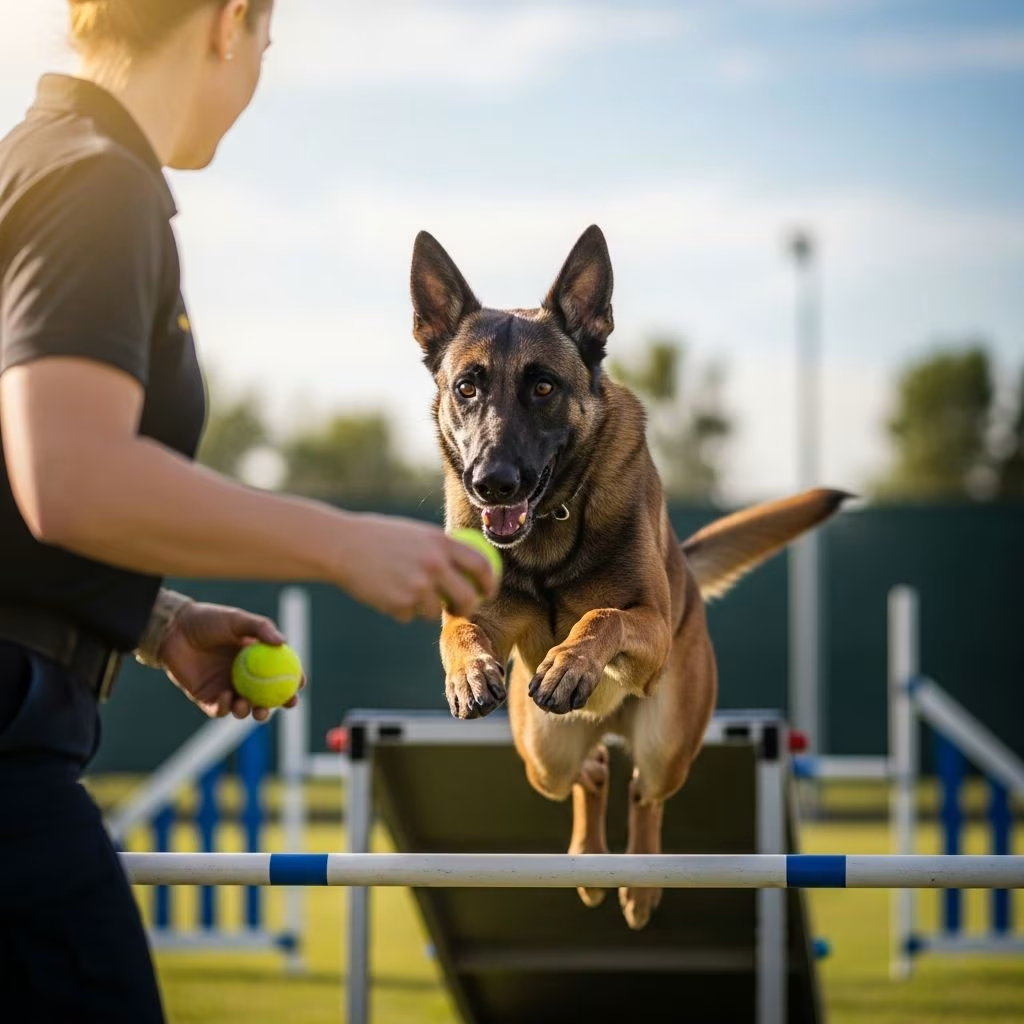
Modern approaches to preparing dogs for police and military service emphasize positive reinforcement techniques, yielding highly reliable performers with deeper handler connections. These methods prioritize voluntary compliance through rewards, contrasting traditional compulsion-based systems.
The Shift Toward Reward-Based Canine Preparation
Historically, high-stakes canine roles relied on force to enforce obedience, but evolving practices now leverage operant conditioning for sustainable results. Trainers increasingly adopt strategies where dogs actively seek rewards, leading to enthusiastic execution of complex tasks under pressure.
This transition reduces ongoing maintenance efforts. Initial intensive reward phases create self-motivated behaviors, unlike compulsion methods that demand constant enforcement to prevent evasion. Dogs trained positively internalize a mindset of maximizing payoffs through effort, enhancing long-term dependability.
Core Principles of Operant Conditioning in Service Dogs
Operant conditioning forms the backbone of these programs, focusing on consequences that shape actions. Positive reinforcement delivers desirable outcomes for correct responses, strengthening desired behaviors without physical intervention.
- Shaping: Gradually rewarding successive approximations toward target behaviors allows dogs to problem-solve independently.
- Fluency Building: Repetition across varied environments ensures commands hold in real-world chaos.
- Distraction Proofing: Introducing controlled stressors prepares dogs for operational unpredictability.
Handlers manage sessions to eliminate self-reinforcing errors, guiding discovery while preserving motivation. This fosters cognitive engagement, vital for roles demanding split-second decisions.
Building Unbreakable Obedience Foundations
Elite units start with rock-solid obedience: instant responses to verbal cues, signals, and implied commands amid distractions. Positive methods accelerate this by associating compliance with high-value rewards like toys or food.
Advanced drills include heeling through crowds, rock-steady stays near temptations, and flawless recalls from pursuits. Trainers “over-train” beyond mission needs—practicing amid remote-controlled distractions simulates dinner prep chaos or street hazards, ensuring street-level success.
| Training Element | Positive Method | Outcome |
|---|---|---|
| Stay Command | Reward increments for duration amid noise/motion | Immunity to urban distractions |
| Recall | High-drive play rewards post-return | Reliable disengagement from targets |
| Heel | Shaping precise positioning with treats | Seamless navigation in tight spaces |
Shaping vs. Alternative Positive Techniques
Shaping stands out by empowering dogs to offer behaviors incrementally, earning rewards for refinements without guidance tools. Contrast this with luring, where treats guide positions directly—effective initially but riskier for dependency.
Shaping builds problem-solving prowess, ideal for nuanced tasks like precise alerts. Early sessions reward broad efforts (e.g., any sniffing near target scent), refining to pinpoint accuracy. This autonomy translates to creative field adaptations.
Specialized Detection and Apprehension Skills
Beyond basics, dogs master scent work for narcotics, explosives, or suspects. Positive protocols pair odors with jackpots, creating fervor for searches across terrains.
Apprehension training hones controlled bites: shaping grip on sleeves evolves to suspect holds, rewarded for release on cue. This minimizes injury risks while maximizing effectiveness. Military variants add patrol, scouting, and barrier navigation under simulated fire.
Military Canine Handler Pathways
Aspiring military handlers follow structured pipelines. Post-basic training, military police schooling covers law, strategies, and animal handling—19 weeks of core plus advanced canine modules.
Certification at Lackland Air Force Base pairs handlers with dogs for joint programs: obedience, conditioning, aggression control, and tactical drills like breaching obstacles or suspect takedowns. Graduates deploy as cohesive teams.
Real-World Advantages of Positive Protocols
Adopters report dramatic shifts: one trainer flipped to 80% reinforcement/20% correction, enabling collar-free field work and zero corrections over a career. Relationships flourish sans conflict, with dogs viewing handlers as reward sources.
Supplementary activities like disc sports reinforce fetches and bonds, priming advanced roles. Maintenance eases as fluency embeds deeply.
Overcoming Traditional Training Myths
Skeptics claim compulsion alone yields “perfection,” yet data shows positive dogs match or exceed reliability with happier demeanors. Compulsion risks shutdown or handler antagonism; rewards cultivate eagerness.
Creative, fair progressions—never overwhelming—sustain momentum. Front-loaded effort pays dividends in operational longevity.
Implementing Positive Training at Home or Professionally
Pet owners can adapt these for everyday reliability. Start sessions short, reward lavishly, and vary challenges. Professional programs blend obedience, socialization, and sports for well-rounded canines.
- Observe environment to block errors.
- Mark successes instantly (clicker ideal).
- Generalize across contexts systematically.
- Fade rewards gradually for fluency.
FAQs
Can positive training produce police-level obedience?
Yes, by building intrinsic motivation and over-training for distractions, it matches compulsion reliability with stronger partnerships.
How long to shape complex behaviors?
Weeks to months, depending on increments and consistency; fluency demands ongoing practice.
Is shaping suitable for high-drive breeds?
Ideal, channeling energy into eager learning versus frustration.
What if my dog errs during shaping?
Prevent via setup; withhold rewards neutrally, resuming approximations.
Do military dogs use only positive methods?
Core foundations yes, with minimal corrections post-operant base; training includes tactical elements.
Enhancing Bonds Through Play and Sports
Incorporate nose work or agility to mimic detection/pursuit, boosting confidence. These parallel K9 sports training, reinforcing recalls and focus.
Positive frameworks transform perceptions: dogs thrive as collaborators, not coerced tools, elevating performance across spectra.
References
- Training Police Dogs and Military Dogs Using Positive Methods — Whole Dog Journal. 2018-12-26. https://www.whole-dog-journal.com/training/training-police-dogs-and-military-dogs-using-positive-methods/
- 5 Types Of K9 Training Methods — Custom Canine Unlimited. N/A. https://customcanineunlimited.com/5-types-of-k9-training-methods/
- What Police Dogs Learn from Their Trainers — Dog Trainer College. N/A. https://www.dogtrainercollege.us/what-police-dogs-learn-from-their-trainers/
- How to become a K9 Dog Handler in the Army — Garmont Tactical. N/A. https://garmonttactical.com/post/k-9-dogs.html



