

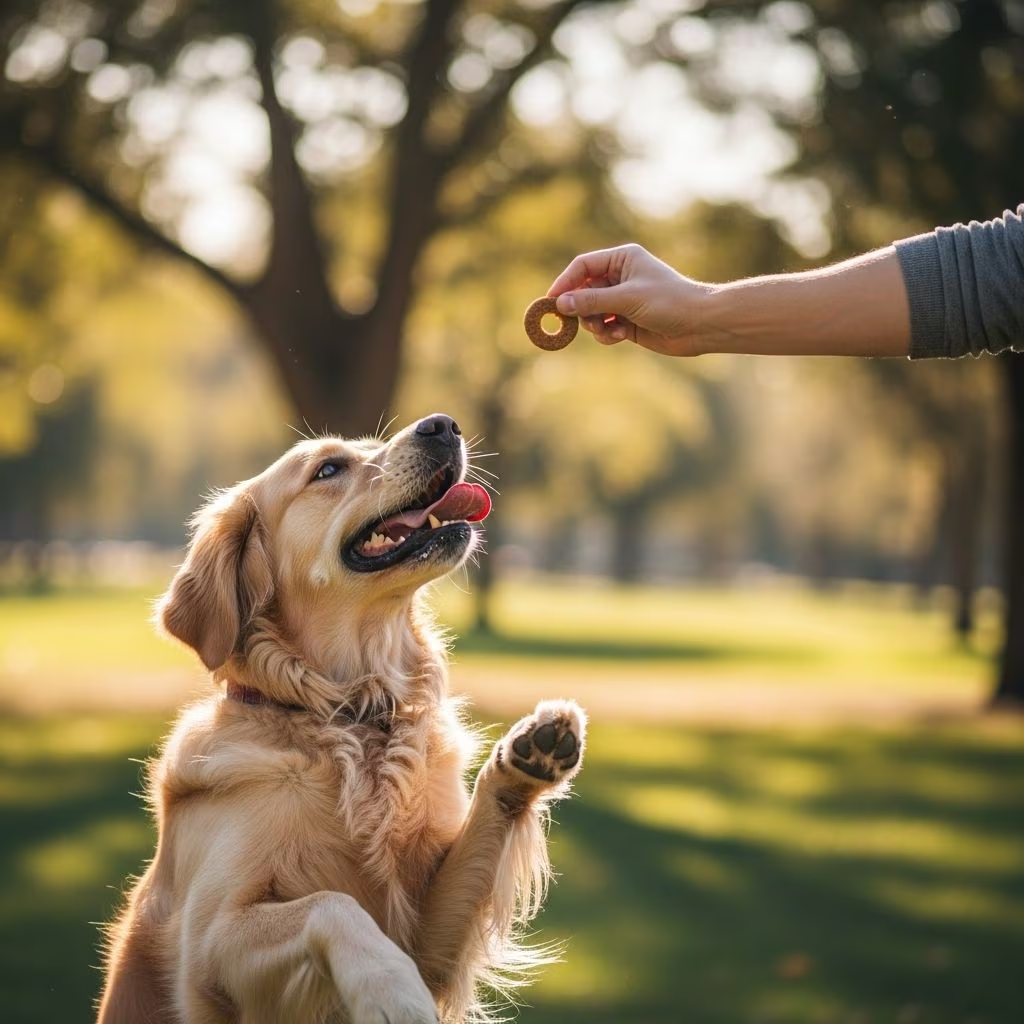
Positive reinforcement training has revolutionized how we teach dogs, focusing on rewarding desired behaviors rather than punishing mistakes. This method, rooted in behavioral science, leads to faster learning, reduced stress, and unbreakable bonds between dogs and owners. Unlike aversive techniques, it creates eager learners who associate training with joy, making it the gold standard recommended by experts worldwide.
What Is Positive Reinforcement Training?
Positive reinforcement is a cornerstone of operant conditioning, where dogs receive rewards like treats, praise, or toys immediately after performing a desired behavior. This increases the likelihood of repetition. According to the American Kennel Club (AKC), dogs naturally boost behaviors linked to pleasant outcomes while avoiding those tied to discomfort.
The core principle: identify what motivates your dog—food, play, or affection—and deliver it precisely when they succeed. This builds positive associations, turning training into a fun game rather than a chore.
- Reward timing: Deliver within 1-2 seconds of the behavior for strongest association.
- High-value rewards: Use premium treats for challenging tasks; vary to prevent boredom.
- No punishment: Ignore unwanted behaviors to avoid fear or confusion.
The Science Behind Why It Works
Operant conditioning, pioneered by B.F. Skinner, underpins positive reinforcement. Dogs learn through consequences: rewards strengthen behaviors, while lack of reward extinguishes them. A study in the Journal of Veterinary Behavior showed dogs trained positively displayed fewer stress signals like tail tucking or avoidance compared to punishment-trained peers.
Research from the University of Milan further confirms positive methods foster friendly interactions, with dogs showing more tail wagging and affection-seeking. In Applied Animal Behaviour Science, reward-trained dogs learned commands quicker and retained them longer, proving superior cognitive outcomes.
Dr. Emily Blackwell’s studies highlight fewer problem behaviors in reward-trained dogs, emphasizing emotional well-being. This science validates why professionals shun aversives: they spike cortisol levels, impairing focus and memory.
Key Benefits of Positive Reinforcement Training
Positive reinforcement delivers multifaceted advantages, transforming training from obligation to partnership.
Reduces Stress and Anxiety
Dogs trained with rewards experience lower cortisol, leading to calmer demeanors. Punishment triggers fight-or-flight responses, manifesting as yawning, lip-licking, or shutdowns. Positive methods create relaxed sessions, boosting engagement.
Builds Stronger Owner-Dog Bonds
Rewards position owners as sources of joy, fostering trust. Milan University research found reward dogs more affectionate and less avoidant. This mutual respect enhances cooperation in daily life.
Accelerates Learning and Retention
Rewards motivate repetition, speeding acquisition. Applied Animal Behaviour Science data shows faster task mastery and durability. Dogs actively experiment, gaining mental exercise.
Boosts Confidence and Reduces Aggression
Success breeds self-assurance; fearful methods erode it. Reward training minimizes aggression risks by avoiding pain associations. Confident dogs generalize behaviors across contexts.
Humane and Ethical
Free of intimidation, it’s endorsed by welfare groups for promoting welfare without fallout.
| Benefit | Positive Reinforcement | Punishment-Based |
|---|---|---|
| Stress Levels | Low (relaxed, eager) | High (fearful, avoidant) |
| Learning Speed | Fast, lasting | Slow, fragile |
| Bond Quality | Trust-based, strong | Fear-based, strained |
| Aggression Risk | Minimal | Increased |
Positive Reinforcement vs. Other Training Methods
Compare to negative reinforcement (removing aversives) or punishment: rewards outperform by avoiding side effects like anxiety suppression masking issues. Aversives may yield compliance but at mental health’s cost—reward methods ensure genuine understanding.
Long-term: punished dogs often regress under stress; rewarded ones thrive. Ethical shift favors positives, backed by veterinary behaviorists.
How to Get Started with Positive Reinforcement
- Capture Basics: Reward natural sits or eye contact to shape foundation.
- Use Markers: “Yes!” or clicker signals perfect timing.
- Short Sessions: 5-10 minutes, multiple daily.
- Vary Rewards: Mix treats, toys, life rewards like walks.
Common Commands
- Sit: Lure with treat above nose; reward butt-to-ground.
- Stay: Reward incremental durations/distances.
- Recall: Call joyfully in safe areas; jackpot rewards.
- Leash Walking: Reward loose leash moments.
Incorporate into routines: praise polite greetings or bed settles.
Real-Life Success Stories
Owners report transformations: shy rescues gain boldness; reactive dogs calm via counter-conditioning. One study noted quicker socialization. Trainers see 80% faster progress with rewards.
Common Mistakes and How to Avoid Them
- Fading Rewards Too Soon: Gradually thin to 1:3 ratio, then variable.
- Inconsistent Timing: Precision is key; practice fluency first.
- Over-Treating: Use tiny pieces; phase to praise.
- Frustration: Stay patient; end on wins.
Advanced Techniques
Shaping: Reward approximations toward complex behaviors. Chains: Link commands (sit-stay-come). Proofing: Add distractions gradually.
Frequently Asked Questions (FAQs)
Does positive reinforcement work for all dogs?
Yes, adaptable for puppies, rescues, or aggressive cases by tailoring rewards.
How long until results?
Basics in days; fluency in weeks with consistency.
What if my dog ignores commands?
Up rewards, reduce distractions, ensure motivation.
Can I stop using treats?
Yes, fade gradually to life rewards/praise.
Is it suitable for competition?
Champions use it for precision and joy.
Conclusion
Positive reinforcement isn’t just effective—it’s transformative, yielding confident, happy dogs and joyful owners. Embrace rewards for science-proven success.
References
- Scientific Benefits of Positive Reinforcement vs. Negative Reinforcement in Dog Training — Northwoods Animal Shelter. 2023. https://www.northwoodsanimalshelter.org/blog/scientific-benefits-of-positive-reinforcement-vs-negative-reinforcement-in-dog-training
- The Importance of Positive Reinforcement in Dog Training — PetVets. 2024. https://www.petvets.com/blog/training/
- Incorporating Positive Reinforcement in Dog Training — Revelation Pets. 2023. https://www.revelationpets.com/blog/incorporating-positive-reinforcement-in-dog-training
- The Benefits of Positive Reinforced Dog Training — Good Dog Dyno. 2024. https://gooddogdyno.com/the-benefits-of-positive-reinforced-dog-training/
- Positive Reinforcement Training: Why Reward Beats Punishment — K9 Connoisseur. 2023. https://k9connoisseur.com/blogs/news/positive-reinforcement-training
- Positive Reinforcement Dog Training: The Science Behind Operant Conditioning — American Kennel Club (AKC). 2024-01-15. https://www.akc.org/expert-advice/training/operant-conditioning-positive-reinforcement-dog-training/



