

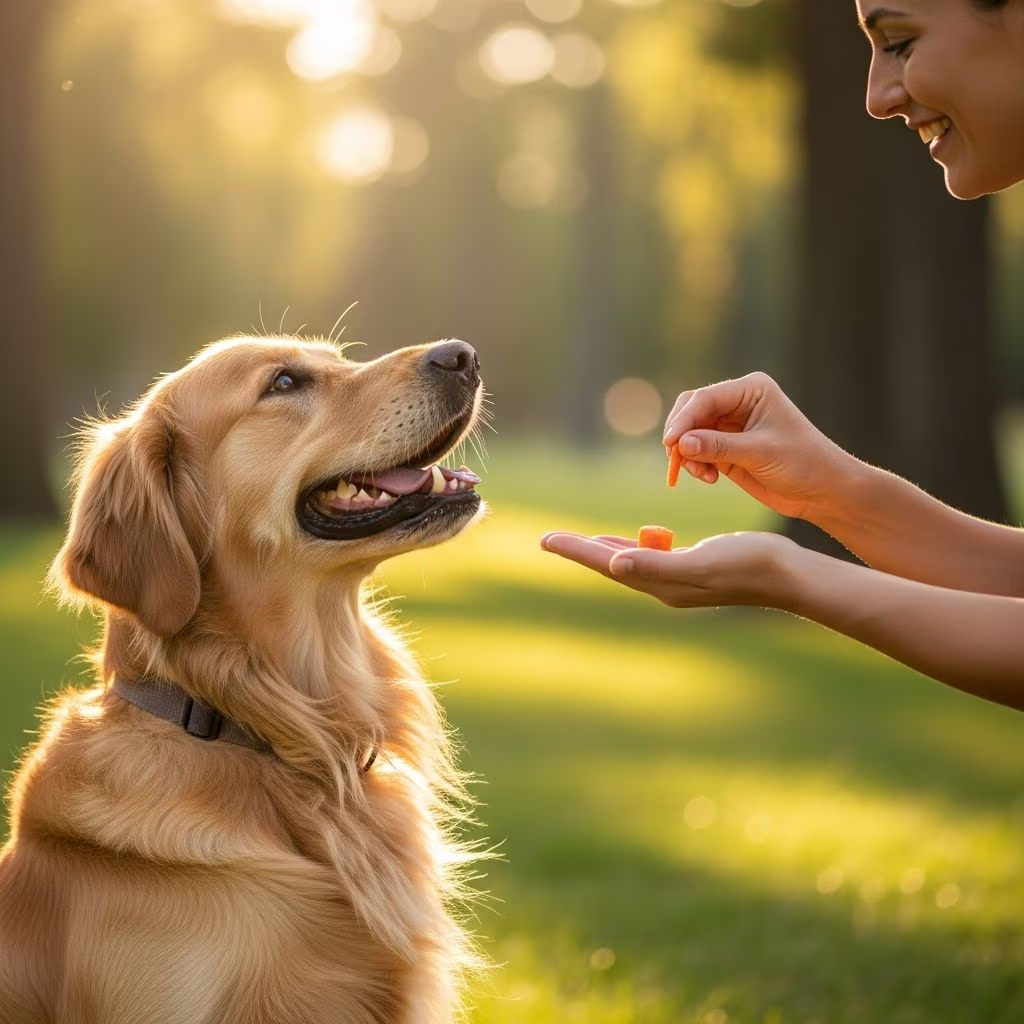
Positive Reinforcement Dog Training: Build Better Behavior Through Rewards
Positive reinforcement dog training is one of the most effective and humane approaches to teaching your dog desired behaviors. Rather than relying on punishment or fear-based methods, positive reinforcement training uses rewards—such as treats, praise, toys, and playtime—to encourage your dog to repeat good behavior. This training philosophy is built on the understanding that dogs learn best when they associate correct behavior with positive outcomes, making them eager and willing to obey.
The key principle behind positive reinforcement is simple: when your dog does something right, you reward them immediately. This immediate reward helps your dog understand exactly what behavior you want them to repeat. Over time, your dog learns that following your commands and displaying good behavior leads to things they love, creating an inherent motivation to behave well. Unlike punishment-based methods that rely on fear or discomfort, positive reinforcement builds a relationship based on trust and mutual understanding.
What Is Positive Reinforcement Training?
Positive reinforcement is a scientifically-backed training method where you add something desirable immediately after your dog displays a desired behavior, which increases the likelihood that your dog will repeat that behavior in the future. The word “positive” means to add something, while “reinforcement” means to make a behavior stronger. Together, positive reinforcement means adding something your dog loves right after they do something you want them to do.
This approach is fundamentally different from other training methods because it focuses exclusively on what your dog gets right rather than what they get wrong. Instead of punishing unwanted behavior, positive reinforcement trainers redirect their dogs to perform the correct behavior and then reward that correct behavior. For example, if your dog jumps on guests, rather than scolding them, you would teach them to sit instead, and then reward them enthusiastically when they do.
How Positive Reinforcement Differs From Other Training Methods
Understanding the difference between positive reinforcement and other training quadrants is essential for choosing the right approach for your dog. According to operant conditioning theory, there are four training quadrants: positive reinforcement, negative reinforcement, positive punishment, and negative punishment.
Positive reinforcement adds something desirable (like treats or praise) to increase a behavior. Negative reinforcement removes something undesirable (like stopping a leash correction) to increase a behavior. Positive punishment adds something unpleasant (like yelling) to decrease a behavior. Negative punishment removes something desirable (like taking away a toy) to decrease a behavior.
Professional positive reinforcement trainers focus primarily on positive reinforcement and negative punishment—dealing only with things dogs want, like treats and games. They avoid using aversive methods that can create fear or anxiety in your dog. Research consistently shows that dogs trained with positive reinforcement develop stronger bonds with their owners, display fewer behavioral problems, and learn commands more reliably than dogs trained with punishment-based methods.
The Science Behind Positive Reinforcement
Positive reinforcement works because it taps into your dog’s natural desire to please you while rewarding them for doing so. Dogs are eager-to-please animals who want to make their owners happy. When you use positive reinforcement, you’re essentially communicating with your dog in a language they understand: “When you do this, something good happens to you.”
This method creates stronger neural pathways associated with correct behavior. Each time your dog is rewarded for sitting, for example, they become more likely to sit in the future because they remember the positive outcome. Over hundreds of repetitions, the behavior becomes automatic, and your dog will perform it reliably regardless of whether a treat is present.
Additionally, positive reinforcement reduces stress hormones in your dog’s body. Dogs trained with punishment-based methods often experience elevated cortisol levels and chronic stress, which can lead to anxiety, aggression, and other behavioral problems. Positive reinforcement creates the opposite effect—it builds confidence, reduces anxiety, and creates a dog that is eager to engage with training.
Benefits of Positive Reinforcement Training
Strengthens Your Bond With Your Dog
One of the most significant advantages of positive reinforcement training is that it strengthens the relationship between you and your dog. When you consistently reward your dog for good behavior, you become the source of good things in their life. This builds trust and confidence that creates a bond based on mutual understanding and respect rather than fear.
Dogs trained with positive reinforcement view their owners as partners and friends who make life rewarding. This contrasts sharply with punishment-based training, where dogs may fear or avoid their owners. The trust developed through positive reinforcement creates a dog that is more responsive to you and more eager to spend time with you.
Establishes Clear Communication
Positive reinforcement creates a clear communication system between you and your dog. When you reward a behavior immediately after it occurs, your dog understands exactly what they did right. This clarity accelerates learning and reduces confusion. Your dog learns to associate specific commands with specific behaviors because the reward reinforces that connection every single time.
This method also avoids the mixed messages that punishment can create. When you punish a dog, they often don’t understand why they’re being punished, only that something bad happened. With positive reinforcement, the message is unmistakable: “That behavior = good outcome.”
Provides Mental Stimulation
Training sessions using positive reinforcement provide mental stimulation that keeps your dog engaged and prevents boredom. Boredom is a significant contributor to behavioral problems like excessive chewing, digging, and destructive behavior. Daily training sessions that incorporate play, treats, and praise burn off mental energy and keep your dog occupied with productive activities.
The mental engagement required during training—figuring out what you want them to do and how to earn rewards—keeps your dog’s mind sharp and active. This is especially important for intelligent breeds that require substantial mental stimulation to stay happy and well-behaved.
Creates a Fear-Free Learning Environment
Dogs trained with positive reinforcement learn in a stress-free, fear-free environment. This makes the training experience enjoyable for both you and your dog. Rather than dreading training sessions, your dog looks forward to them because they know good things happen during training. This positive association with training means your dog is more willing to learn, more attentive during sessions, and more reliable in performing commands.
Types of Positive Reinforcements
Effective positive reinforcement requires using rewards that your dog actually values. Different dogs have different preferences, so it’s important to identify what motivates your specific dog. Common types of positive reinforcement include:
- Treats: High-value treats like small pieces of chicken, cheese, or commercial training treats are among the most effective rewards. Use small treats so your dog doesn’t fill up during training sessions.
- Verbal Praise: Enthusiastic verbal praise such as “Good job!” or “Yes!” delivered with genuine excitement can be a powerful reward, especially when combined with treats.
- Physical Affection: Many dogs love petting, belly rubs, ear scratches, and other forms of physical touch. This works particularly well for dogs that bond strongly with their owners.
- Playtime: Spontaneous play sessions, games with favorite toys, or interactive play with you can serve as excellent rewards.
- Freedom and Activity: For some dogs, the reward might be a long walk, a trip to the dog park, a car ride, or freedom to do something they enjoy.
The most important principle is that the reward must be something your dog actually wants. Never assume what will motivate your dog—observe their behavior to identify what they value most. Some dogs prefer treats, while others would rather have playtime or attention from their owner.
Essential Principles for Successful Positive Reinforcement Training
Timing Is Critical
The most crucial aspect of positive reinforcement training is timing. You must deliver the reward immediately after your dog displays the desired behavior—ideally within one to two seconds. This immediacy helps your dog make the connection between their action and the reward. If you delay the reward, your dog may not associate it with the correct behavior.
This is where clicker training becomes valuable. A clicker is a small device that makes a distinct “click” sound, which serves as a marker to tell your dog they’ve done something right and a reward is coming. The click happens instantaneously when the behavior occurs, providing precise timing that’s often faster than verbal commands alone.
Consistency Is Essential
Consistency is fundamental to successful positive reinforcement training. Everyone in your household must use the same commands, reward the same behaviors, and avoid rewarding unwanted behaviors. If one family member rewards your dog for jumping on people while another discourages it, your dog becomes confused and training progress stalls.
Consistency also means rewarding the same types of desired behaviors every single time they occur during training. If you reward your dog for staying off the couch during training but later allow them on to cuddle, you send mixed messages that undermine your training efforts.
Use Clear, Short Commands
Dogs don’t understand full sentences the way humans do. They respond better to short, direct commands that are easy to understand and distinguish from normal conversation. Effective training commands include single words or very short phrases:
- Sit
- Stay
- Down
- Off
- Come
- Leave it
- Drop
- Watch (for eye contact)
- Heel
Using consistent, short commands helps your dog learn faster and respond more reliably because they can clearly distinguish your command from background noise and regular conversation.
Keep Training Sessions Short and Fun
Dogs have limited attention spans, especially puppies. Most training sessions should last only 5-10 minutes. During this time, focus on one or two specific behaviors. Keep the energy upbeat and positive, use enthusiastic praise, and always end the session while your dog is still enjoying it. This creates a positive association with training and keeps your dog eager for the next session.
Select Rewards Your Dog Actually Wants
Remember that you don’t decide what is rewarding to your dog—your dog does. What you think is a great reward might not motivate your dog at all. Pay attention to what your dog naturally seeks out and enjoys. Some dogs are food-motivated, some are toy-motivated, and others are driven by praise and affection. Choose rewards accordingly and adjust them based on your dog’s response.
How to Use Positive Reinforcement: Step-by-Step Process
Using positive reinforcement involves a straightforward process that can be applied to teach any behavior:
- Present a cue: Give a clear verbal or physical prompt for the behavior you want. For example, say “Sit” while holding a treat near your dog’s nose.
- Wait for the behavior: Give your dog time to complete the behavior. You may need to gently guide them into the correct position initially.
- Mark the behavior: The instant your dog performs the desired behavior, mark it with a click or enthusiastic “Yes!” to tell them they’ve done the right thing.
- Deliver the reward: Immediately give your dog the reward—whether it’s a treat, praise, or playtime.
- Repeat: Practice this sequence multiple times during short training sessions.
- Assess progress: Track whether your dog is performing the behavior more reliably, more frequently, or faster in response to your cue.
Common Positive Reinforcement Behaviors to Train
Positive reinforcement works for teaching virtually any behavior. Some of the most commonly trained behaviors include:
- Sit: One of the most basic and useful commands. Many other behaviors build from a sit.
- Stay: Teaching your dog to remain in one spot until released.
- Come: A critical behavior for safety that allows your dog off-leash freedom.
- Leave it: Essential for preventing your dog from picking up dangerous items.
- Drop: Teaches your dog to release objects from their mouth on command.
- Heel: Walking politely on a leash without pulling.
- Down: A relaxation position that’s useful in many situations.
- Potty training: Rewarding outdoor elimination establishes proper bathroom habits.
Addressing Unwanted Behaviors
Positive reinforcement doesn’t mean ignoring unwanted behaviors. Instead of punishing bad behavior, positive reinforcement trainers redirect their dogs to perform an incompatible, desirable behavior instead. For example:
- Jumping on people: Instead of scolding, teach your dog to sit when greeting guests, then reward the sit.
- Excessive barking: Teach a “quiet” command and reward silence, or teach an alternative behavior like going to a mat.
- Chewing inappropriate items: Redirect to appropriate chew toys and reward chewing on those items.
- Pulling on the leash: Reward walking with a loose leash and stop moving when your dog pulls.
This approach is more effective than punishment because it teaches your dog what you want them to do rather than just what you don’t want them to do. Ignored unwanted behaviors should never be rewarded, even accidentally, as this can reinforce them.
Using Clicker Training With Positive Reinforcement
Clicker training pairs perfectly with positive reinforcement methodology. A clicker is an inexpensive training tool that makes a distinct “click” sound. The clicker serves as a secondary reinforcer—it marks the exact moment your dog performs the desired behavior and promises that a reward is coming.
To use a clicker:
- Introduce the clicker by clicking and immediately giving a treat, repeatedly, until your dog understands that the click means a treat is coming.
- During training, click at the exact moment your dog performs the desired behavior.
- Immediately follow the click with a treat.
- The distinct sound of the clicker is clearer and faster than verbal cues, making learning faster.
Clicker training is particularly effective because the timing precision helps your dog understand exactly which behavior earned the reward.
Positive Reinforcement for Puppies vs. Adult Dogs
Positive reinforcement works for dogs of all ages, but puppies and adult dogs may have different training needs. Puppies have shorter attention spans and tire more quickly, so training sessions should be very brief—even shorter than for adult dogs. Puppies are also naturally curious and energetic, which makes them excellent candidates for positive reinforcement training because they’re actively seeking rewards.
Adult dogs may have existing behavioral issues that need to be unlearned. Positive reinforcement can still work effectively, but it may take longer if the dog has been reinforced for unwanted behaviors in the past. Patience and consistency are especially important when retraining adult dogs.
Building Patience and Consistency in Your Household
Dogs thrive on consistency and routine. Positive reinforcement requires that all household members use the same training approach and reward the same behaviors. This means discussing your training plan with everyone who interacts with your dog and ensuring everyone follows the same protocols.
Creating written guidelines for your household can help. For example, document which behaviors get rewarded, what commands you’re using, and what the rewards are. This simple system helps everyone stay on the same page and accelerates your dog’s learning. Over time, consistent positive reinforcement will result in your dog exhibiting positive behaviors reliably with everyone in your home.
Tips for Effective Positive Reinforcement Training
- Track progress: Keep notes on which behaviors are improving and how quickly your dog is learning. This helps you assess whether your training approach is working.
- Minimize distractions: When teaching a new behavior, practice in a quiet, low-distraction environment. Once your dog reliably performs the behavior, gradually introduce distractions.
- Vary your rewards: Mixing different types of rewards (treats, praise, playtime) keeps your dog engaged and prevents boredom with the same reward every time.
- Practice regularly: Short daily training sessions are more effective than occasional longer sessions.
- Be patient: Some behaviors take time to learn. Remain patient and celebrate small progress.
- Make it fun: Your attitude and energy during training affect your dog’s enthusiasm. Keep training sessions upbeat and enjoyable.
Frequently Asked Questions About Positive Reinforcement Dog Training
Q: Is positive reinforcement training effective for stubborn dogs?
A: Yes, positive reinforcement works for all dogs, including stubborn breeds. The key is finding what highly motivates your dog and using that as the reward. Some dogs require higher-value treats or greater levels of enthusiasm from their owners, but all dogs respond to positive reinforcement when the reward is valuable to them.
Q: How long does it take to see results with positive reinforcement training?
A: Results depend on the individual dog and the behavior being taught. Simple behaviors like “sit” can be learned in days with consistent training. More complex behaviors or addressing established bad habits may take weeks or months. Consistency is more important than speed—regular, short training sessions are more effective than intensive, infrequent sessions.
Q: Can positive reinforcement be used to stop aggressive behavior?
A: Positive reinforcement can help address some forms of aggression by redirecting your dog to perform non-aggressive behaviors and rewarding those instead. However, serious aggression issues should be addressed with a certified professional dog trainer or veterinary behaviorist, as safety is paramount.
Q: What if my dog doesn’t respond to any rewards?
A: Every dog is motivated by something. You may need to experiment to find the right reward. Try different types of treats, different levels of enthusiasm in your praise, or different playtime activities. You can also try training when your dog is mildly hungry so food rewards are more valuable.
Q: Is it ever too late to start positive reinforcement training?
A: No, it’s never too late. Dogs of any age can learn with positive reinforcement. Senior dogs may learn slightly more slowly, but positive reinforcement is just as effective and beneficial for them as for puppies and younger dogs.
Q: Can I use positive reinforcement training alongside other training methods?
A: While positive reinforcement can be combined with negative punishment (removing something the dog wants), it should not be mixed with aversive methods like positive punishment or negative reinforcement. Mixing fear-based and reward-based methods creates confusion and can undermine the benefits of positive reinforcement.
References
- Positive Reinforcement Dog Training: The Science Behind Operant Conditioning — American Kennel Club (AKC). https://www.akc.org/expert-advice/training/operant-conditioning-positive-reinforcement-dog-training/
- How To Train a Dog With Positive Reinforcement — PetMD. https://www.petmd.com/dog/behavior/how-to-train-a-dog-with-positive-reinforcement
- The Secret to Dog Training: Why Positive Reinforcement Works But Punishment Doesn’t — Rau Animal Hospital. https://www.rauanimalhospital.com/services/dogs/blog/secret-dog-training-why-positive-reinforcement-works-punishment-doesnt
- Puppy 101: Positive Reinforcement Dog Training — Small Door Vet. https://www.smalldoorvet.com/learning-center/puppies-kittens/positive-reinforcement-training
- Common Dog Training Methods and Their Pros and Cons — Astro Loyalty. https://www.astroloyalty.com/common-dog-training-methods-and-their-pros-and-cons/
- The Power of Positive Reinforcement: Training Your Pet with Kindness — West Virginia Veterinary Medical Association. https://www.wvcvet.com/blog/the-power-of-positive-reinforcement-training-your-pet-with-kindness/



