

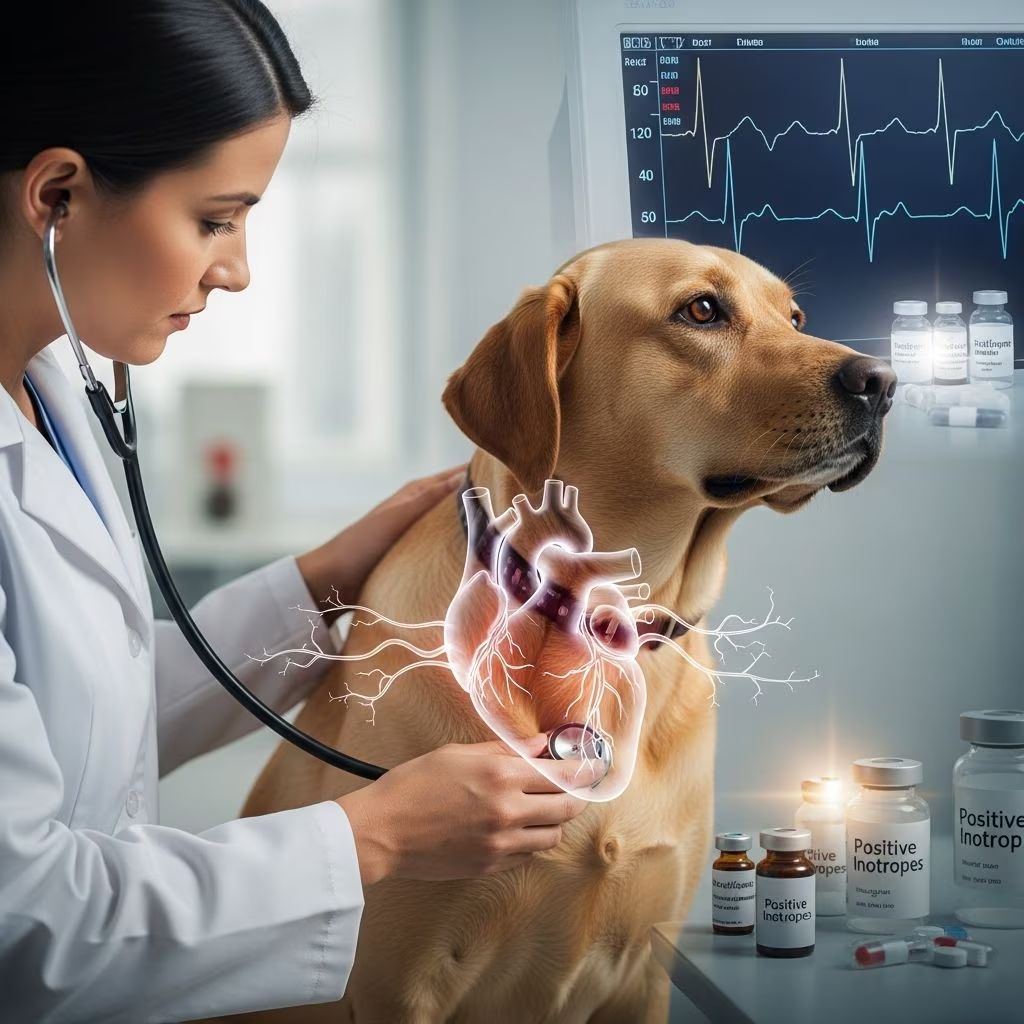
Positive inotropes play a crucial role in veterinary medicine by enhancing the contractile force of the heart muscle, which is essential for managing various cardiac disorders in animals. These medications increase myocardial contractility, helping to improve cardiac output in conditions such as congestive heart failure, cardiogenic shock, and low-output states commonly seen in dogs, cats, horses, and other species.
Understanding Cardiac Contractility and the Need for Inotropic Support
The heart’s ability to pump blood effectively relies on the strength of its contractions, known as contractility or inotropy. In healthy animals, sympathetic stimulation naturally boosts this through catecholamines like norepinephrine. However, in diseased states, the heart often fails to generate sufficient force, leading to reduced perfusion of vital organs. Positive inotropes mimic or amplify these natural mechanisms, primarily by elevating intracellular calcium levels in cardiomyocytes, which binds to troponin C and facilitates actin-myosin cross-bridging for stronger contractions.
Calcium dynamics are central: these drugs either promote calcium influx via L-type or T-type channels or trigger release from the sarcoplasmic reticulum. This sustains action potentials longer, enhancing stroke volume without necessarily increasing heart rate excessively. In veterinary patients, such support is vital during anesthesia, post-surgical recovery, or acute decompensation where fluid therapy alone proves insufficient.
Mechanisms of Action: How Positive Inotropes Work
Different classes of positive inotropes operate through distinct pathways, allowing tailored therapy based on the animal’s needs. Catecholamines like dobutamine and dopamine act on adrenergic receptors, while phosphodiesterase inhibitors and cardiac glycosides target intracellular signaling or ion exchanges.
- Adrenergic Agonists: These bind to β1-receptors, activating adenylate cyclase to raise cyclic AMP (cAMP), which phosphorylates calcium channels and phospholamban, boosting calcium handling.
- Phosphodiesterase III Inhibitors: By preventing cAMP breakdown, they amplify inotropy, chronotropy, and vasodilation, beneficial in right heart failure.
- Cardiac Glycosides: Inhibit Na+/K+-ATPase, raising intracellular sodium, which reverses Na+/Ca2+ exchange to increase calcium stores.
This diversity enables veterinarians to select agents that balance inotropy with effects on vascular tone and rhythm.
Key Positive Inotropes Used in Animal Patients
Several agents stand out for their efficacy and safety profiles in veterinary practice. Dobutamine remains a cornerstone for short-term support due to its potent β1 effects with minimal arrhythmias at therapeutic doses.
| Drug | Primary Mechanism | Common Species | Dose Range (μg/kg/min CRI) |
|---|---|---|---|
| Dobutamine | β1-agonist | Dogs, Cats, Horses | 5-20 |
| Dopamine | Dose-dependent dopaminergic/β/α | Dogs, Foals | 5-20 |
| Digoxin | Na+/K+-ATPase inhibitor | Dogs, Cats | PO: 0.005-0.01 mg/kg BID |
| Milrinone | PDE III inhibitor | Horses, Foals | 0.5-1 bolus, then 0.5-1 CRI |
Dobutamine excels in increasing cardiac index by 30-40% in failing hearts, outperforming digoxin in acute settings. Dopamine provides renal perfusion at low doses (1-5 μg/kg/min) and inotropy at moderate levels, transitioning to vasoconstriction higher up. Digoxin offers sustained benefits, including neurohormonal modulation by sensitizing baroreceptors and curbing sympathetic overdrive. Milrinone is prized for pulmonary vasodilation in pulmonary hypertension.
Clinical Applications in Common Veterinary Scenarios
In small animal practice, positive inotropes are indispensable for dilated cardiomyopathy in dogs or hypertrophic cardiomyopathy in cats, where systolic dysfunction predominates. Continuous rate infusions (CRI) of dobutamine stabilize patients en route to definitive care.
Large animals like horses benefit from these drugs during colic surgery or endotoxemia, where myocardial depression occurs. Foals with septic shock respond well to dopamine combined with fluids. In anesthesia, hypotension unresponsive to crystalloids warrants dobutamine CRI starting at 5 μg/kg/min, titrated to effect.
Positive inotropes also bridge to advanced therapies like pimobendan, an inodilator that combines inotropy with vasodilation for chronic management.
Dosing Guidelines and Administration Protocols
Precise dosing is critical to avoid toxicity. Most are administered as CRIs to maintain steady-state levels, diluted in saline or D5W. Monitoring includes blood pressure, lactate, and echocardiography for contractility.
- Dobutamine: Initiate at 5 μg/kg/min IV CRI; max 20 μg/kg/min. No loading dose needed. Taper over 24-48 hours.
- Dopamine: Low dose 1-5 for renal; 5-10 for inotropy; avoid >20 due to α-effects. Compatible with most fluids.
- Digoxin: Loading: 0.022 mg/kg PO/IV divided over 24h; maintenance 0.005-0.01 mg/kg PO BID. Monitor trough levels (1-2 ng/mL).
Adjust for species: cats require lower digoxin doses due to slower clearance; horses tolerate higher dobutamine rates.
Adverse Effects and Safety Considerations
While beneficial, these drugs carry risks. Arrhythmias are common with catecholamines, especially in hypokalemic or acidotic patients. Digoxin toxicity manifests as vomiting, bradycardia, or AV block, exacerbated by azotemia.
Tachyphylaxis develops with prolonged catecholamine use due to receptor downregulation. Vasopressors like high-dose dopamine cause peripheral vasoconstriction, potentially worsening afterload. Electrolyte imbalances, particularly hypokalemia, potentiate toxicity across classes.
Contraindications include hypertrophic cardiomyopathy (risk of obstruction), outflow tract obstructions, and ventricular tachycardia. Always correct electrolytes and acid-base status first.
Monitoring and Therapeutic Drug Management
Success hinges on vigilant monitoring. Echocardiography assesses fractional shortening pre- and post-infusion. Invasive hemodynamics via Swan-Ganz catheter in critical cases measure cardiac index (>2.5 L/min/m² goal).
Serial lactates guide titration; normalization indicates adequate perfusion. ECGs detect arrhythmias; serum digoxin levels ensure safety. Wean infusions gradually to prevent rebound decompensation.
Comparative Efficacy: Inotropes vs. Other Cardiac Therapies
Positive inotropes shine acutely but complement other modalities. Vasodilators like ACE inhibitors reduce afterload long-term, while diuretics manage congestion. Inodilators offer dual benefits.
Studies show dobutamine superior to digoxin acutely (34% vs. 24% cardiac index rise), but digoxin’s neuroendocrine effects favor chronic use. PDE inhibitors excel in pulmonary cases.
Future Directions in Veterinary Inotropic Therapy
Emerging agents like levosimendan, a calcium sensitizer with vasodilatory properties, show promise in refractory cases with fewer arrhythmias. Gene therapies targeting calcium handling are on the horizon, potentially revolutionizing care.
Frequently Asked Questions (FAQs)
What are positive inotropes used for in animals?
They treat heart failure, shock, and low cardiac output by strengthening heart contractions.
Is dobutamine safe for cats?
Yes, at low doses (2-10 μg/kg/min), but monitor for tachycardia.
How does digoxin differ from synthetic catecholamines?
Digoxin provides longer-term effects via ion pump inhibition, less arrhythmogenic chronically.
Can positive inotropes cure heart disease?
No, they support acutely; address underlying causes with lifestyle and other meds.
What monitoring is essential during CRI?
ECG, blood pressure, lactate, and echo parameters.
References
- Inotrope – Wikipedia — Wikipedia contributors. 2023-10-15. https://en.wikipedia.org/wiki/Inotrope
- Use of inotropes and vasopressor agents in critically ill patients – PMC — Overgaard CB, Dzavik V. 2012-07-26. https://pmc.ncbi.nlm.nih.gov/articles/PMC3413841/
- Digitalis, Positive Inotropes, and Vasodilators | Veterian Key — Atkins CE, Ames MK. 2016-12-01. https://veteriankey.com/digitalis-positive-inotropes-and-vasodilators/
- Inotropes: Types, Purpose and Side Effects – Cleveland Clinic — Cleveland Clinic. 2023-05-10. https://my.clevelandclinic.org/health/treatments/23032-inotropes
- Using inotropes and vasopressors in anesthesia (Proceedings) — dvm360. 2011-01-01. https://www.dvm360.com/view/using-inotropes-and-vasopressors-anesthesia-proceedings



