

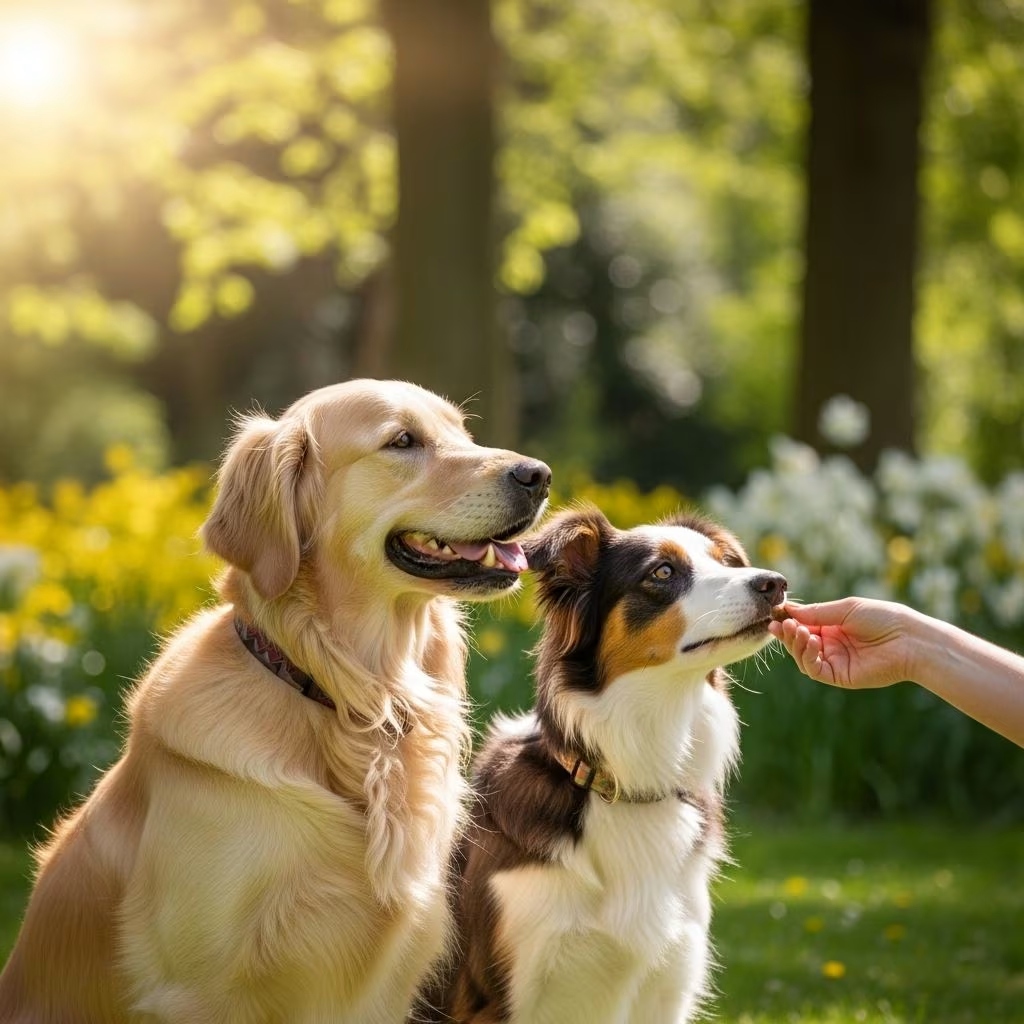
Positive reinforcement stands as the cornerstone of modern dog training, emphasizing rewards to encourage desired behaviors rather than punishment for mistakes. This approach, rooted in operant conditioning, helps dogs associate good actions with pleasant outcomes, leading to faster learning and a happier relationship between pet and owner.
Core Principles of Reward-Based Dog Training
At its heart, positive reinforcement involves adding something rewarding—like treats, praise, or play—right after a dog performs a wanted behavior, making that action more likely to repeat. Unlike punishment-focused methods, it builds enthusiasm for learning without instilling fear.
- Timing Precision: Deliver the reward within one second of the behavior to create a clear link in the dog’s mind.
- Consistency Across Sessions: Everyone in the household must use the same cues and rewards to avoid confusion.
- Clear Cues: Pair simple verbal commands like “sit” or “stay” with enthusiastic tones to guide the dog effectively.
- Reward Variety: Alternate between food, toys, petting, or access to fun activities to maintain engagement.
- Patience in Progress: Allow time for repetition, gradually fading rewards as skills solidify.
These principles ensure training sessions remain short, fun, and productive, typically lasting just 5 minutes to keep dogs motivated.
Scientific Foundations: Operant Conditioning Explained
Dog training leverages operant conditioning, a learning theory where behaviors are shaped by consequences. Positive reinforcement occupies the top-right quadrant: adding a positive stimulus to increase behavior frequency. For instance, offering a treat after a “sit” command makes sitting happen more often.
Trainers prioritize this quadrant alongside negative punishment—withholding rewards for unwanted actions—avoiding aversives that can heighten stress or aggression. Research shows dogs trained positively develop problem-solving skills, reduced anxiety, and enduring obedience.
| Quadrant | Description | Example in Dog Training | Impact |
|---|---|---|---|
| Positive Reinforcement | Add reward to increase behavior | Treat for sitting | Boosts repetition |
| Negative Punishment | Remove reward to decrease behavior | End play for jumping | Reduces unwanted actions gently |
| Positive Punishment | Add aversive to decrease behavior | Leash jerk for pulling | Risks fear; avoid |
| Negative Reinforcement | Remove aversive to increase behavior | Release pressure for heeling | Can build stress; minimize |
This table illustrates why focusing on the first two quadrants yields safer, more effective results.
Practical Techniques for Everyday Commands
Start in low-distraction environments, using high-value rewards your dog adores—soft treats or favorite toys work best. Mark the exact moment of success with a clicker or word like “yes!” paired previously with rewards.
Mastering Basic Sit and Stay
For “sit,” hold a treat above the dog’s nose, moving it back until their rear drops; reward instantly. Progress to “stay” by adding distance and duration gradually, praising throughout.
Loose Leash Walking
Reward for checking in or walking without tension. If pulling occurs, stop moving until slack returns, then proceed with praise.
Recall in Distractions
Call your dog enthusiastically in a safe area, rewarding heavily for returns. Practice with increasing distractions to build reliability.
Track progress: Does the behavior improve in speed and consistency? If not, refine your timing or reinforcer value.
Benefits That Transform Dog Ownership
Positive methods excel in building mutual trust, as dogs view owners as sources of good things rather than threats. Owners report stronger bonds, with pets eagerly participating in sessions.
- Reduces fear and anxiety, promoting confident problem-solvers.
- Versatile for all ages, breeds, and issues, from puppies to rescues.
- Long-term retention: Rewarded behaviors stick due to joyful associations.
- Enhances safety by teaching incompatible alternatives, like sitting instead of jumping.
Studies affirm its superiority, with positively trained dogs showing better obedience and welfare.
Navigating Challenges and Mistakes
Even committed trainers face hurdles. Common pitfalls include inconsistent rewards, poor timing, or frustration leading to mixed signals.
Solution Strategies:
- Begin distraction-free, building up slowly.
- End sessions on successes to preserve fun.
- If regression hits, return to basics with higher rewards.
- Family training: Hold meetings to align methods.
Frustration in dogs often stems from unclear expectations; positive training counters this by providing clear, rewarding paths.
Tools and Resources to Elevate Your Training
Clickers bridge timing gaps, acting as precise markers when paired with treats. High-quality, pea-sized treats ensure quick consumption without overfeeding. Apps track sessions, logging successes for data-driven tweaks.
For advanced learners, explore shaping: Reward successive approximations toward complex behaviors like scent detection.
Real-World Applications: From Home to Public Spaces
Apply positives beyond basics—counter-condition fears by pairing triggers with rewards, turning vet visits into treat fests. In multi-dog homes, train individually to prevent rivalry.
Public success relies on generalization: Practice commands in parks, stores, and streets, rewarding heavily amid distractions.
FAQs: Answering Common Positive Training Questions
Q: Does positive training work for stubborn dogs?
A: Yes, it motivates even challenging personalities by using irresistible rewards tailored to their preferences.
Q: How do I fade treats without losing progress?
A: Randomize rewards while maintaining praise; behaviors persist due to variable reinforcement schedules.
Q: What if my dog ignores commands in exciting situations?
A: Increase reward value and practice proofing with controlled distractions, starting low.
Q: Is positive reinforcement scientifically proven?
A: Absolutely; behavioral science confirms its efficacy and welfare benefits over aversive methods.
Q: Can puppies as young as 8 weeks start?
A: Early and often—short sessions build lifelong foundations.
Building a Lifetime of Positive Partnership
Embracing positive reinforcement reshapes training into collaborative adventures. Dogs thrive, offering loyalty earned through joy, not fear. Consistency transforms novices into confident handlers, yielding obedient, happy companions ready for any adventure.
Commit to this path, and watch your dog flourish—proof lies in their wagging tail and eager eyes.
References
- The Power of Positive Reinforcement: 5 Effective Dog Training Tips — 3 Dog Ranch. Accessed 2026. https://www.3dogranchmt.com/post/positive-reinforcement-tips
- How To Train a Dog With Positive Reinforcement — PetMD (Erika Lessa, CBST, CDBT, CDBC, CPDT-KA). Accessed 2026. https://www.petmd.com/dog/behavior/how-to-train-a-dog-with-positive-reinforcement
- Positive Reinforcement Dog Training: Understanding Operant Conditioning — American Kennel Club (AKC). Accessed 2026. https://www.akc.org/expert-advice/training/operant-conditioning-positive-reinforcement-dog-training/
- Philosophy of Positive Training — Positively.com. Accessed 2026. https://positively.com/dog-training/article/philosophy-positive-training
- The Power of Positive Reinforcement: Training Your Pet with Kindness — WVC Vet. Accessed 2026. https://www.wvcvet.com/blog/the-power-of-positive-reinforcement-training-your-pet-with-kindness/



