

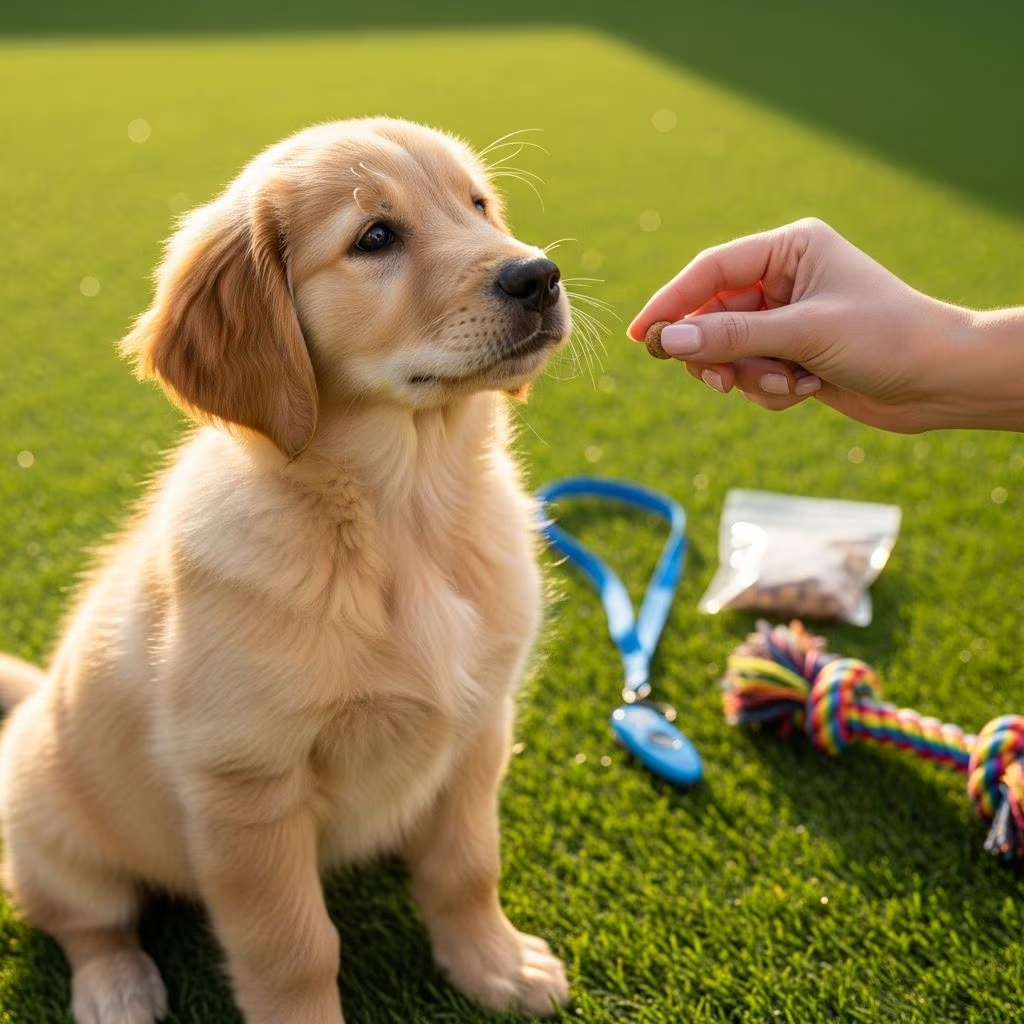
Positive reinforcement stands as the cornerstone of modern dog training, emphasizing rewards to encourage desired behaviors rather than punishment for mistakes. This approach leverages operant conditioning principles, where adding a pleasant stimulus immediately after a good action increases its likelihood of repetition.
Core Principles of Reward-Based Training
At its heart, positive dog training relies on a few fundamental concepts that ensure effectiveness and enjoyment for both dog and owner. Timing plays a critical role: deliver rewards the instant the behavior occurs to create a clear link in the dog’s mind. Consistency across family members reinforces expectations, preventing confusion.
- Immediate Feedback: Offer treats, praise, or play right after success to solidify associations.
- Clear Cues: Use simple, upbeat verbal commands paired with gestures for better understanding.
- Reward Variety: Alternate between food, toys, and affection to maintain motivation.
- Patience: Progress takes repetition; avoid frustration by celebrating small wins.
These elements form the foundation, allowing dogs to learn willingly without fear.
How Dogs Learn Through Operant Conditioning
Operant conditioning, pioneered by B.F. Skinner, explains dog learning via four quadrants, but positive reinforcement—adding rewards to boost behavior—proves most humane and efficient. For instance, when a dog sits on cue and receives a treat, the sitting frequency rises. Negative punishment, like withdrawing attention for jumping, complements this by removing rewards for unwanted actions without harm.
Unlike dominance methods relying on intimidation, reward training promotes active participation, turning sessions into fun games. Dogs associate owners with positivity, deepening bonds.
| Quadrant | Description | Example in Dog Training |
|---|---|---|
| Positive Reinforcement | Add reward to increase behavior | Treat for sitting |
| Negative Punishment | Remove reward to decrease behavior | Turn away from jumping dog |
| Positive Punishment | Add aversive to decrease behavior | Yell or leash jerk (avoid) |
| Negative Reinforcement | Remove aversive to increase behavior | Release pressure when dog complies (avoid) |
This table illustrates why focusing on the top two quadrants yields better results.
Practical Techniques for Everyday Commands
Start with basics like sit, stay, and come using luring or capturing. For sit, hold a treat above the nose and move it back; mark and reward as the rear drops. Advance to stays by rewarding longer durations gradually.
Markers like clickers pinpoint exact moments of success. Press the clicker as the butt hits the ground, then treat—precision accelerates learning. Sessions last 5 minutes max, ending on highs to keep enthusiasm high.
- Potty Training: Reward outdoors immediately post-elimination to shift habits.
- Leash Walking: Treat for loose leads, ignore pulling.
- Recall: Call in low-distraction areas, reward heavily, fade treats over time.
Shaping builds complex skills: reward approximations toward goals, like paw lifts progressing to shakes.
Choosing the Right Rewards
Dogs dictate reinforcer value—what excites a foodie lab may bore a toy-driven border collie. High-value treats (e.g., chicken bits) suit challenging environments; praise suffices for easy tasks.
Test preferences: offer choices and note selections. Vary to prevent satiation, ensuring sustained engagement.
Benefits for Dogs and Owners
Reward methods reduce fear and anxiety, fostering confident learners. Obedience improves long-term as positive links endure. Bonds strengthen through mutual enjoyment, unlike aversive tactics risking aggression.
- Versatile for all ages, breeds, sizes.
- Enhances problem-solving.
- Promotes mental stimulation.
Studies from veterinary behaviorists affirm lower stress hormones in reward-trained dogs.
Training Across Life Stages
Puppies absorb cues rapidly; use play to match energy. Adults refine skills; seniors benefit from gentle reviews reducing cognitive decline. Rescue dogs heal traumas via trust-building rewards.
Family involvement ensures uniformity: brief all on protocols.
Overcoming Common Obstacles
Distractions derail progress—start indoors, progress outdoors. Inconsistent rewards confuse; track sessions to verify improvements. Lure fading prevents dependency: transition to verbal cues only.
Myth: Positive means permissive. Pair with management (crates, leashes) and negative punishment for balance.
Advanced Applications
Trick training captivates: chain behaviors like spin-rollover. Agility or therapy work thrives on rewards, emphasizing handler focus.
Group classes amplify socialization; professional guidance accelerates tricky cases.
Tools and Resources
Clickers, treat pouches, and high-value foods equip trainers. Apps track progress; books by certified pros (CPDT-KA) guide further.
Frequently Asked Questions
What if my dog ignores commands?
Increase reward value or reduce distractions; recommit to basics.
Can I train without treats?
Yes, use toys or life rewards like walks, but food often motivates best.
How long until results?
Basics in days with consistency; complex skills weeks.
Is it suitable for aggressive dogs?
Yes, under professional supervision to address roots humanely.
Positive vs. balanced training?
Positive prioritizes rewards; balanced adds tools judiciously—choose based on philosophy.
References
- The Power of Positive Reinforcement: 5 Effective Dog Training Tips — 3 Dog Ranch. 2023. https://www.3dogranchmt.com/post/positive-reinforcement-tips
- How To Train a Dog With Positive Reinforcement — PetMD (Erika Lessa, CBST, CDBT, CDBC, CPDT-KA). 2023-10-15. https://www.petmd.com/dog/behavior/how-to-train-a-dog-with-positive-reinforcement
- Positive Reinforcement Dog Training: Understanding Operant Conditioning — American Kennel Club. 2024. https://www.akc.org/expert-advice/training/operant-conditioning-positive-reinforcement-dog-training/
- Dog Training Methods: Positive Reinforcement vs. Dominance Training — Blackwood Canine. 2023. https://www.blackwoodcanine.com/blog/dog-training-methods-positive-reinforcement-vs-dominance-training
- How to Reward Dogs With Positive Reinforcement Training — Humane World. 2024. https://www.humaneworld.org/en/resources/positive-reinforcement-training
- The Power of Positive Reinforcement: Training Your Pet with Kindness — WVC Vet. 2023-05-20. https://www.wvcvet.com/blog/the-power-of-positive-reinforcement-training-your-pet-with-kindness/



