

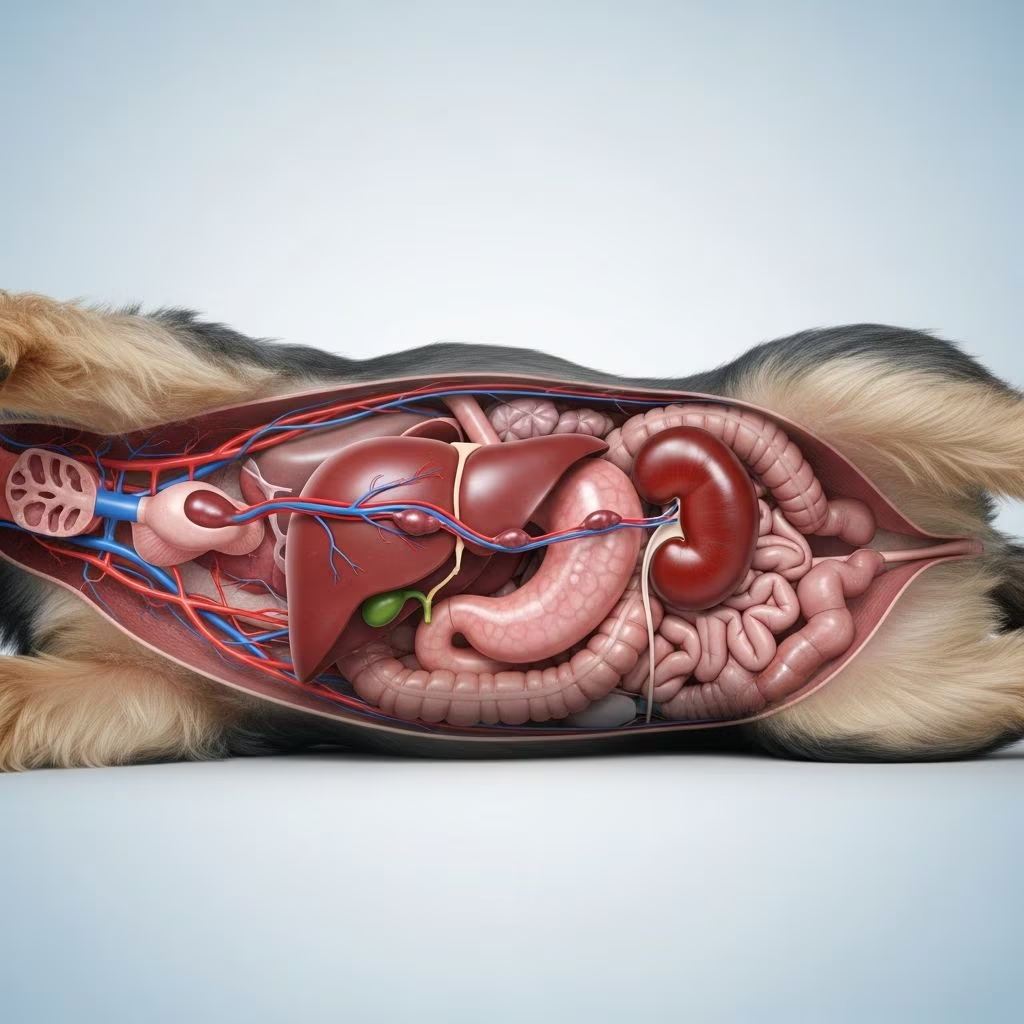
Portosystemic shunts (PSS) represent a critical vascular anomaly in dogs and cats where blood from the digestive organs bypasses the liver, leading to toxin buildup and impaired growth. This condition demands prompt veterinary intervention to mitigate severe health consequences.
The Liver’s Vital Role and How Shunts Disrupt It
The liver serves as the body’s primary detoxification center, processing nutrients, hormones, and toxins from portal blood delivered via the portal vein. In pets with PSS, an abnormal vessel diverts this blood directly into systemic circulation, starving the liver of essential flow and allowing harmful substances to circulate freely. This results in hepatic encephalopathy, characterized by neurological symptoms due to ammonia accumulation, and overall liver hypoplasia from reduced blood supply.
Congenital PSS form during fetal development, often when the ductus venosus—a normal fetal shunt—fails to close after birth or when extra vessels persist abnormally. Acquired shunts, conversely, develop later due to liver disease-induced portal hypertension, forming multiple compensatory pathways that cannot be surgically closed.
Common Breeds and Risk Profiles
Small and toy breed dogs, such as Yorkshire Terriers, Cairn Terriers, and Maltese, frequently suffer from single extrahepatic shunts located outside the liver. Larger breeds like German Shepherds and Labrador Retrievers are prone to intrahepatic shunts within the liver parenchyma. Cats predominantly experience extrahepatic shunts, with the left gastric vein commonly involved. Acquired shunts affect any breed and arise secondary to chronic liver conditions.
Recognizing the Signs: Symptoms Across Life Stages
- Stunted growth and poor body condition: Puppies and kittens fail to thrive, appearing smaller than littermates with pot-bellied appearances.
- Neurological disturbances: Head pressing, disorientation, seizures, or ataxia, often worsening after meals rich in protein.
- Urinary and thirst changes: Increased urination and water intake due to toxin overload affecting kidney function.
- Gastrointestinal issues: Vomiting, diarrhea, or hypersalivation from ammonia buildup.
- Behavioral oddities: Aimless wandering, depression, or fly-biting episodes mimicking neurological disorders.
These signs often emerge between 4-12 months in congenital cases, though subtle symptoms may appear earlier or later. Acquired shunts manifest with ascites and jaundice tied to underlying liver pathology.
Diagnostic Approaches: Confirming the Shunt
Veterinarians employ a multi-modal strategy to diagnose PSS accurately. Initial bloodwork reveals low blood urea nitrogen (BUN), elevated liver enzymes, and hypoalbuminemia, alongside bile acid tests showing post-prandial spikes.
| Method | Description | Advantages |
|---|---|---|
| Ultrasound | Visualizes abnormal vessels and liver size | Non-invasive, widely available |
| Per-rectal Scintigraphy | Radioisotope enema tracks portal blood flow | Gold standard for confirming shunting |
| CT Angiography | Contrast-enhanced scans map shunt anatomy | Precise for intrahepatic shunts |
| Portography | Dye injection highlights portal system | Intraoperative use for confirmation |
Nuclear scintigraphy, using 99m Technetium Pertechnetate, remains the definitive non-invasive test, quantifying shunt fraction via colonic administration. Advanced imaging like CT aids surgical planning, especially for complex intrahepatic cases.
Surgical Interventions: Restoring Normal Blood Flow
For single congenital shunts, surgery offers the best prognosis, performed by board-certified veterinary surgeons. Complete ligation risks acute portal hypertension, causing abdominal distension, shock, and fatality in 15-20% of cases. Gradual attenuation methods prevail:
- Ameroid Constrictor: A casein-filled stainless steel ring swells over 4-8 weeks, slowly occluding the shunt while the liver adapts.
- Cellophane Banding: Induces fibrosis for progressive closure, minimizing hypertension risks.
- Transvenous Coiling: Minimally invasive for intrahepatic shunts; coils and stents deployed via jugular access promote thrombosis.
Intraoperative portal pressure monitoring guides feasibility; pressures exceeding 20-25 cmH2O contraindicate full closure. If no shunt is found, portography localizes it. Success rates exceed 80-90% with proper technique, normalizing bloodwork within months.
Potential Complications and Their Management
Post-surgical challenges include:
- Persistent shunting from recanalization or undiagnosed secondary vessels.
- Portal hypertension leading to ascites, ileus, or endotoxic shock.
- Acquired shunts developing from liver fibrosis.
Monitoring involves serial bile acids, ultrasound, and scintigraphy. Medical support includes low-protein diets, lactulose for ammonia reduction, and antibiotics like metronidazole to curb bacterial overgrowth.
Medical Management for Inoperable Cases
Multiple acquired shunts or high-risk patients rely on conservative therapy. Key elements:
- Protein-restricted diets to limit ammonia production.
- Lactulose to acidify the gut and trap ammonia.
- Neomycin or metronidazole to reduce enteric bacteria.
- Supplements like SAMe for hepatic support.
While not curative, this stabilizes symptoms, extending quality life.
Long-Term Prognosis and Owner Expectations
Successfully attenuated congenital shunts yield excellent outcomes: 85-95% survival with normalized growth and activity. Intrahepatic repairs carry slightly higher recurrence risks but benefit from interventional radiology. Lifelong monitoring ensures early detection of issues. Owners should anticipate restricted diets initially and regular vet visits.
Costs range from $2,500-$7,000 for surgery, influenced by imaging and expertise. Pet insurance often covers diagnostics and procedures, underscoring early screening value.
Frequently Asked Questions (FAQs)
What breeds are most susceptible to PSS?
Toy breeds like Yorkies for extrahepatic; large breeds like Labs for intrahepatic; cats commonly affected.
Can PSS be prevented?
Congenital forms are genetic/developmental; no prevention. Early screening in at-risk breeds advised.
Is surgery always necessary?
For single congenital shunts, yes for cure. Medical management suits multiples or acquired.
What is recovery like post-surgery?
Hospital stay 2-5 days; gradual improvement over weeks. Monitor for swelling or lethargy.
Does PSS affect lifespan?
Untreated, poor prognosis. Surgical success normalizes life expectancy.
Preventive Screening and Early Detection Tips
At-risk puppies warrant bile acid testing at 8-16 weeks. Symptoms like failure to thrive prompt immediate evaluation. Genetic counseling aids breeders in reducing incidence.
References
- Portosystemic shunt in dogs and cats (Proceedings) — DVM360. 2023. https://www.dvm360.com/view/portosystemic-shunt-dogs-and-cats-proceedings
- Portosystemic Shunt — Southpaws Specialty & Referral Vet. 2024. https://www.southpaws.com.au/portosystemic-shunt/
- Portosystemic Shunts — UF Small Animal Hospital. 2024. https://smallanimal.vethospital.ufl.edu/clinical-services/orthopedic-surgery/portosystemic-shunts/
- Portosystemic Shunt in Dogs — VCA Animal Hospitals. 2024. https://vcahospitals.com/know-your-pet/portosystemic-shunt-in-dogs
- Congenital Portosystemic Shunts in Dogs and Cats — PubMed/NCBI. 2023-02-28. https://pubmed.ncbi.nlm.nih.gov/36851464/
- Portosystemic Shunts — American College of Veterinary Surgeons (ACVS). 2024. https://www.acvs.org/small-animal/portosystemic-shunts/



