

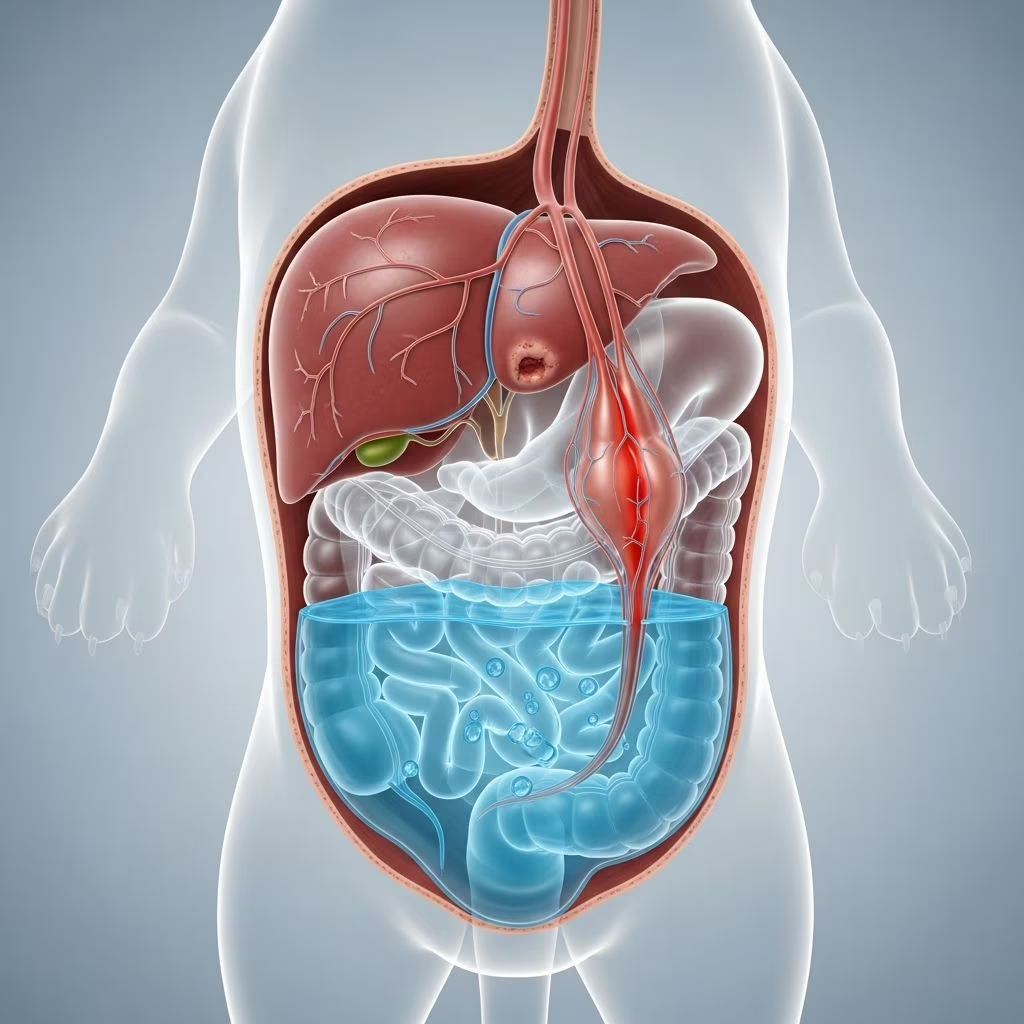
Portal hypertension represents a significant clinical challenge in small animal veterinary medicine, characterized by elevated blood pressure within the portal venous system that supplies the liver. When this condition develops, it frequently triggers a cascade of physiological changes, including the accumulation of fluid within the abdominal cavity—a condition known as ascites. Together, these conditions represent serious hepatic complications that require prompt recognition and appropriate management to preserve quality of life and prevent life-threatening consequences.
The Fundamentals of Portal Circulation and Pressure Dynamics
The portal venous system functions as a specialized vascular network responsible for transporting nutrient-rich blood from the gastrointestinal tract and spleen directly to the liver for processing and metabolism. Under normal physiological conditions, blood flow through this system occurs at relatively low pressure, allowing efficient nutrient absorption and detoxification. However, when resistance increases within the portal circulation or when blood flow becomes excessive, pressure within the portal vein rises substantially, exceeding normal parameters and creating a pathological state.
Portal hypertension develops through distinct mechanisms. Increased vascular resistance represents the most common pathway, occurring when structural or functional changes within the portal vasculature impede normal blood flow. Alternatively, elevated blood flow rates through normal vessels can generate excessive pressure, though this mechanism occurs less frequently in clinical patients. Many affected animals experience a combination of both increased resistance and elevated flow rates, compounding the severity of their condition.
Identifying Primary and Secondary Causes
The etiology of portal hypertension in small animals spans a broad spectrum of hepatic and vascular disorders. Understanding the underlying cause proves essential for selecting appropriate therapeutic strategies and predicting long-term outcomes.
Congenital Vascular Anomalies
Congenital portal vein hypoplasia, also referred to as congenital portal vein hypoplasia without portal hypertension, represents a developmental disorder where the portal vein fails to develop normally, resulting in markedly reduced vessel diameter and abnormal blood flow patterns. This condition typically manifests in small breed dogs, though affected animals may initially remain asymptomatic. When symptoms emerge, they often include clinical evidence of portosystemic shunting. Distinguishing this condition from macroscopic portosystemic shunts requires advanced imaging, particularly computed tomography, combined with histopathological evaluation. Serum protein C activity measurement offers a useful diagnostic adjunct, as deficiency (less than 70% of normal) occurs frequently in true portosystemic shunt cases but rarely in portal vein hypoplasia.
Macroscopic congenital portosystemic shunts represent another significant vascular anomaly, where abnormal vessels allow blood to bypass the liver entirely, depriving hepatic tissue of essential nutrients and contributing to hepatic insufficiency. These shunts vary in anatomical configuration and may involve single or multiple aberrant vessels.
Acquired Hepatic Disease
Chronic liver disease and progressive hepatic fibrosis constitute major causes of acquired portal hypertension. As hepatic parenchyma undergoes degenerative changes and fibrotic remodeling, the structural integrity of the liver becomes compromised. This architectural distortion dramatically increases vascular resistance within the hepatic sinusoids, where blood normally flows freely through specialized capillaries lined with highly permeable endothelium. Advanced fibrosis and cirrhosis create tortuous pathways through damaged tissue, substantially elevating the pressure gradient across hepatic vasculature.
Thrombotic Complications
Portal vein thrombosis, whether partial or complete, obstructs normal blood flow and generates significant pressure elevation proximal to the occlusion. This condition may develop secondary to inflammatory processes, malignancy, or hypercoagulable states, creating additional complications beyond the simple elevation of portal pressure.
Cardiac-Related Causes
Right-sided cardiac disease resulting in elevated venous pressure can transmit backward through the portal circulation, increasing portal pressure indirectly. This mechanism demonstrates the interconnectedness of systemic and splanchnic hemodynamics, where cardiac dysfunction has repercussions extending well beyond the heart itself.
Pathophysiological Consequences of Elevated Portal Pressure
The development of portal hypertension triggers a complex series of compensatory mechanisms and pathological responses that gradually worsen the animal’s clinical status. When portal pressure exceeds 12 millimeters of mercury above normal levels, significant complications emerge, including gastrointestinal variceal bleeding and progressive ascites formation.
Mechanisms Underlying Ascites Development
Ascites formation in portal hypertension involves fundamental disturbances in fluid dynamics across the hepatic sinusoidal endothelium. The elevated hydrostatic pressure within splanchnic and hepatic vessels forces plasma fluid and proteins through the highly permeable sinusoidal capillary walls into the hepatic interstitium. Once proteins accumulate within the interstitial space of Disse, only the thin hepatic capsule separates these molecules from the peritoneal cavity. Progressive accumulation of fluid and plasma proteins eventually exceeds the reabsorptive capacity of peritoneal lymphatics, resulting in gross fluid accumulation within the abdominal cavity.
Contributing to this process, portal hypertension induces relative splanchnic vasodilation through excessive nitric oxide production. This decreased peripheral vascular resistance reduces effective circulating blood volume despite absolute expansion of total fluid volume. The body interprets this as hypovolemia, triggering activation of neurohormonal systems including the renin-angiotensin-aldosterone axis. These regulatory mechanisms promote sodium and fluid retention by the kidneys, perpetuating and exacerbating ascites accumulation through a self-perpetuating cycle.
Clinical Recognition and Diagnostic Evaluation
Animals presenting with portal hypertension and ascites demonstrate a spectrum of clinical manifestations ranging from subtle signs to profound systemic illness. Early recognition enables prompt intervention before severe complications develop.
Observable Clinical Signs
- Progressive abdominal distension with a characteristic pear-shaped or pendulous appearance
- Reluctance to move or engage in normal activities due to abdominal discomfort
- Reduced appetite or complete anorexia
- Vomiting or regurgitation, sometimes containing blood
- Pale mucous membranes indicating anemia from chronic bleeding
- Icterus or yellow discoloration of tissue when hepatic dysfunction becomes severe
- Neurological abnormalities including lethargy, disorientation, or seizures in advanced cases
- Polyuria and polydipsia reflecting altered fluid and electrolyte balance
Physical Examination Findings
Abdominal palpation reveals fluid accumulation producing a characteristic fluid wave upon percussion, with sharp rebound of the abdominal wall on the opposite side when the abdomen is gently tapped. Hepatomegaly may be detected in some cases, though advanced cirrhosis occasionally causes hepatic atrophy. Splenomegaly commonly accompanies portal hypertension as splenic congestion develops secondary to increased splanchnic pressure.
Laboratory and Imaging Diagnosis
Comprehensive blood evaluation typically reveals hypoproteinemia, particularly hypoalbuminemia, reflecting ongoing loss of plasma proteins into the peritoneal space. Mild to moderate anemia frequently develops from chronic gastrointestinal bleeding or underlying bone marrow suppression. Biochemical analysis may demonstrate elevated liver enzymes, hyperbilirubinemia, and prolonged coagulation times in advanced hepatic disease.
Abdominal ultrasound provides crucial diagnostic information, including visualization of ascites, hepatic size and echotexture, portal vein diameter, and blood flow patterns. Doppler ultrasound measurement of portal vein velocity offers particular diagnostic value—normal portal blood flow exceeds 10 centimeters per second, while portal hypertension typically produces reduced velocities or even reversed (hepatofugal) flow. Multiple acquired portosystemic shunts appear as tortuous small vessels, characteristically located in the left dorsal perirenal region as a plexus of splenic to renal communications.
Computed tomography provides superior detail for evaluating portal vein anatomy, identifying thrombi, and excluding neoplastic disease. Advanced imaging enables measurement of portal vein to aortic diameter ratios, with ratios exceeding 0.8 effectively excluding congenital portosystemic shunts while ratios below 0.65 support this diagnosis.
Abdominal paracentesis with analysis of ascitic fluid aids in determining ascites etiology. Fluid from portal hypertension characteristically demonstrates elevated protein concentration (exudate) with predominant albumin, reflecting the filtration mechanism responsible for ascites formation.
Treatment Strategies and Management Approaches
Management of portal hypertension and ascites in small animals requires a multifaceted approach tailored to the underlying cause and severity of clinical disease.
Dietary Interventions
Protein restriction constitutes a cornerstone of medical management, particularly in animals with evidence of hepatic encephalopathy or hepatic dysfunction. While complete protein elimination proves counterproductive, reducing protein quantity while ensuring high biological value protein sources minimizes production of nitrogen metabolites that accumulate in hepatic encephalopathy. Sodium restriction proves equally important, as excessive sodium promotes fluid retention and perpetuates ascites accumulation. Limiting dietary sodium to less than one percent of dry matter substantially reduces fluid retention in responsive animals.
Pharmacological Management
Diuretic therapy forms the foundation of symptomatic ascites management. Furosemide, a loop diuretic, promotes urinary sodium and fluid excretion at relatively high doses (0.5 to 1 milligram per kilogram twice daily or higher). Spironolactone, a potassium-sparing aldosterone antagonist, addresses the neurohormonal component of ascites by blocking aldosterone-mediated sodium retention while preserving serum potassium concentrations. Combination therapy using both agents frequently produces superior results compared to monotherapy. Careful monitoring of electrolytes and renal function remains essential, as excessive diuresis can precipitate acute kidney injury or dangerous electrolyte derangements.
Gastrointestinal protectants including histamine-2 receptor antagonists or proton pump inhibitors reduce the risk of stress-related gastrointestinal ulceration, particularly important in animals with portal hypertension who face increased bleeding risk.
Lactulose and antibiotics specifically target hepatic encephalopathy when neurological signs develop. Lactulose promotes colonic acidification and osmotic diarrhea, reducing ammonia absorption, while oral antibiotics such as neomycin reduce ammonia-producing bacteria within the intestinal tract.
Surgical Intervention
While medical management remains the standard approach for portal hypertension, emerging evidence suggests that surgical intervention may benefit select cases. Splenectomy has been reported as a novel surgical approach in dogs with portal vein hypoplasia-induced portal hypertension and refractory ascites unresponsive to medical management. In one documented case, a miniature poodle with severe portal hypertension experienced complete resolution of ascites following splenectomy, with normalization of portal vein velocity from profoundly reduced levels (5 to 6.6 centimeters per second) to normal ranges (17 to 18 centimeters per second). The mechanism underlying this improvement likely involves removal of the congested spleen as a source of excessive splanchnic blood flow, thereby reducing the volume and pressure within the portal circulation. However, splenectomy remains an uncommon procedure for this indication and should be reserved for carefully selected cases with refractory ascites where medical management has proven inadequate.
Long-Term Prognosis and Follow-Up Considerations
The prognosis for animals with portal hypertension depends substantially on the underlying etiology. Animals with correctable causes, such as isolated portosystemic shunts amenable to surgical closure, may achieve complete resolution with appropriate intervention. Conversely, animals with progressive hepatic cirrhosis face a more guarded long-term outlook, with management focused on optimizing quality of life and preventing acute decompensation.
Regular monitoring through physical examination, serial abdominal ultrasound, and laboratory analysis helps assess treatment efficacy and identify emerging complications. Weight loss following initiation of diuretic therapy indicates effective ascites reduction. Progressive worsening of hepatic synthetic function, increasing hypoproteinemia, or development of hepatic encephalopathy signals disease progression despite medical management.
Frequently Asked Questions
Can portal hypertension be cured?
The curability of portal hypertension depends on its underlying cause. Congenital portosystemic shunts can be surgically corrected, potentially resolving portal hypertension entirely. Acquired causes resulting from hepatic cirrhosis cannot be reversed, though management strategies can control symptoms and slow disease progression.
How quickly does ascites develop?
Ascites development varies widely depending on the severity of portal pressure elevation and individual compensatory mechanisms. Some animals accumulate fluid gradually over weeks, while others develop dramatic abdominal distension within days. Once threshold pressure is exceeded, rapid fluid accumulation can occur despite initiating treatment.
What complications should owners anticipate?
The most serious complication is gastrointestinal hemorrhage from variceal bleeding, which can be life-threatening and requires emergency management. Hepatic encephalopathy develops when the liver fails to adequately detoxify nitrogenous wastes, causing neurological signs. Bacterial peritonitis can develop secondary to ascites accumulation. Electrolyte abnormalities, particularly hypokalemia and hyponatremia, frequently emerge during diuretic therapy.
References
- Portal Hypertension: Pathophysiology, Diagnosis, and Treatment — Journal of Veterinary Internal Medicine. 2011. https://doi.org/10.1111/j.1939-1676.2011.00691.x
- Case Report: Successful surgical intervention for portal vein hypoplasia-induced portal hypertension — Frontiers in Veterinary Science. 2025. https://doi.org/10.3389/fvets.2025.1582290
- Canine Ascites — Iowa State University Digital Repository. https://dr.lib.iastate.edu/handle/20.500.12876/28823
- Diagnostic approach to liver disease — Vet Times. https://www.vettimes.com/news/vets/small-animal-vets/diagnostic-approach-to-liver-disease
- Ascites in Dogs — PetMD. https://www.petmd.com/dog/conditions/cardiovascular/ascites-dogs



