

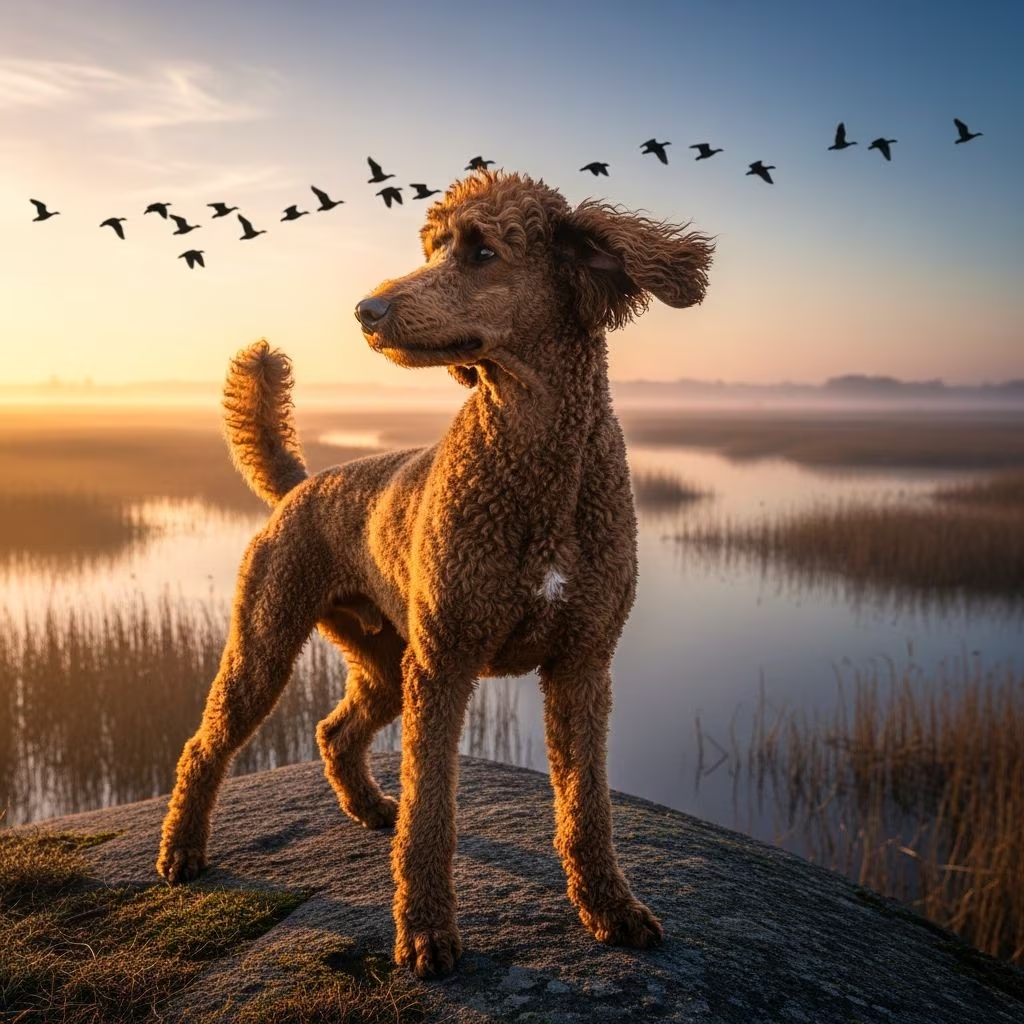
The Poodle breed carries a distinguished legacy as a working hunting dog, though many modern owners view them primarily as elegant companion animals or show dogs. Understanding the breed’s original purpose reveals fascinating insights into their physical characteristics, intelligence, and trainability. Poodles were systematically developed across Europe with a specific function in mind: retrieving waterfowl from challenging aquatic environments. This heritage continues to influence their behavior and capabilities today, even as the breed has diversified into multiple size varieties and purposes.
The European Origins of Water Retrievers
Poodle ancestry traces back to ancient water dog breeds that thrived throughout Europe, particularly in Germany and France. The breed’s name itself provides a linguistic clue to its original function—derived from the German word “pudel,” which references water or splashing. Most historians agree that the Standard Poodle originated in Germany, though the breed developed its distinctive character and refinement in France during subsequent centuries.
The earliest Poodle ancestors were the Barbet and Hungarian Water Hound, breeds specifically selected for their swimming prowess and natural affinity for aquatic environments. German hunters recognized the potential in these intelligent water dogs and systematically bred them to enhance specific traits needed for retrieving game. These ancestral dogs became known as “Pudelhund,” or “splashing dogs,” a name that accurately captured their primary function in hunting operations across European waterways.
The transition from Germany to France marked a pivotal moment in breed development. French nobility and hunting enthusiasts embraced the breed with enthusiasm, refining their appearance while maintaining the working qualities that made them exceptional hunting companions. This European development period established the foundation for the Poodle’s reputation as a reliable, intelligent, and adaptable working dog.
Physical Adaptations for Water Hunting
Poodles possess several distinctive physical characteristics that perfectly suit them for water-based hunting activities. These adaptations were not accidental but rather the result of deliberate selective breeding by hunters and breeders who understood the demands of their intended work.
- Dense, Curly Coat: The Poodle’s signature curly coat provides exceptional insulation against cold water, allowing extended periods of submersion without risking hypothermia. This dense hair structure traps warm air and prevents water from reaching the skin, a critical adaptation for hunters who deployed their dogs in frigid lakes, marshes, and ponds throughout European winters.
- Webbed Paws: Inherited from their water dog ancestors, Poodles possess webbing between their toes that functions like swimming fins. This anatomical feature enables efficient propulsion through water and precise maneuvering in challenging aquatic conditions, essential qualities for locating and retrieving fallen waterfowl.
- Athleticism and Build: Poodles developed a lean yet muscular frame suited for swimming and retrieving. Their size allowed them to navigate shallow marshes and deep lakes with equal competence, making them versatile across different hunting environments.
- Keen Sensory Abilities: The breed possesses an exceptional sense of smell and keen eyesight, capabilities that hunters valued for locating game and tracking fallen birds across varied terrain.
The Working Intelligence Behind the Breed
Beyond physical attributes, Poodles were selected for exceptional intelligence and trainability. Successful hunting dogs required more than swimming ability; they needed to comprehend complex commands, work independently while remaining responsive to their handlers, and demonstrate the judgment to retrieve game efficiently without causing damage to the prey.
Poodles excelled in all these dimensions. Their eagerness to please their handlers combined with their capacity to learn intricate sequences of commands made them invaluable to hunters. A well-trained Poodle could locate shot-down birds, navigate back through water, and deliver game to its handler with a gentle mouth—all critical requirements for successful hunting operations. This intelligence also contributed to their later adoption as military working dogs, circus performers, and eventually, service animals.
The breed’s psychological profile made them particularly suitable for hunting roles that demanded focus and reliability. Unlike some working dogs that relied primarily on instinct, Poodles combined instinctive hunting drive with calculated intelligence, creating hunting companions that hunters could trust in unpredictable field conditions.
Specialized Roles Across Different Poodle Sizes
The development of three distinct Poodle sizes—Standard, Miniature, and Toy—reflected different hunting and working purposes across European regions. This specialization demonstrates how breeders adapted the core Poodle traits for specific applications.
| Poodle Size | Original Purpose | Geographic Focus | Modern Role |
|---|---|---|---|
| Standard | Duck hunting and waterfowl retrieval | Germany and France | Service dogs, hunting trials, agility |
| Miniature | Truffle hunting in forests | France | Companion dogs, agility competitions |
| Toy | Companion to nobility | France and across Europe | Companion dogs, show dogs |
The Standard Poodle remained the primary hunting variant, deployed by German and French hunters for serious waterfowl operations in lakes and rivers. Miniature Poodles, meanwhile, served a specialized function in French forests, using their keen sense of smell to locate truffles beneath the forest floor. The Toy Poodle evolved into a luxury companion breed, gaining particular favor among European nobility. Renaissance-era wealthy owners famously carried Toy Poodles in their large shirtsleeves, leading to the affectionate designation “sleeve dogs.”
Hunting Requirements and Behavioral Traits
Successful hunting dogs required specific behavioral characteristics that breeders deliberately cultivated across generations. These traits extended beyond intelligence and physical capability to encompass psychological resilience and social adaptability.
Poodles selected for hunting had to demonstrate no fear of unfamiliar environments, gunshots, or strangers. A hunting dog that startled at gunfire or hesitated in new terrain compromised the entire hunting operation. Similarly, these dogs required soft mouths—the ability to carry retrieved birds gently without damaging them through biting—and an intense, almost compulsive desire to retrieve. This combination of fearlessness, controlled aggression, and retrieval drive created dogs that hunters could rely upon across diverse conditions.
The breed also needed to be manageable at a distance through commanding voice alone. Hunters needed dogs that would respond reliably to verbal commands across water and through dense vegetation where visual contact became difficult. This requirement for responsiveness to human direction reinforced the selection for intelligence and cooperation that became hallmarks of the breed.
Evolution from Hunting to Entertainment
While Poodles maintained their hunting functions throughout the 18th and 19th centuries, they simultaneously gained recognition for other capabilities that made them valuable in non-hunting contexts. Their intelligence, adaptability, and striking appearance made them natural performers, and circus trainers discovered that Poodles excelled at learning complex tricks and routines.
The performing Poodle phenomenon revealed additional psychological traits valuable for entertainment: the breed’s willingness to habituate quickly to unfamiliar environments, their calmness between performance segments, and their strong capacity to bond with trainers. Traveling circus Poodles had to remain calm in noisy, crowded environments while remaining responsive when called to perform. Their easily styled coat, frequently trimmed into distinctive patterns matching performers’ attire, added visual appeal that made them irresistible attractions.
This entertainment phase didn’t eliminate hunting capability but rather demonstrated the versatility that careful breeding had instilled. A Poodle could be a serious hunting companion one season and a celebrated circus performer the next, reflecting the adaptable intelligence that defined the breed.
Military Service and Working Dog Heritage
Poodles entered military service as early as the 17th century, their hunting background proving unexpectedly valuable in wartime contexts. Military commanders recognized that the breed’s ability to ignore gunfire, maintain focus despite chaos, and respond reliably to commands translated well to battlefield conditions. The intelligent, trainable nature that made them exceptional hunters transformed them into reliable military working dogs.
Historical accounts provide vivid illustrations of Poodle military service. During the English Civil War, Prince Rupert of the Rhine famously rode into battle accompanied by his hunting Poodle. Napoleon Bonaparte himself documented the faithfulness of a grenadier’s Poodle who remained with his master’s body at the Battle of Marengo. These weren’t anomalies but rather examples of a broader pattern of Poodle military deployment across European conflicts.
Military Poodles performed various functions beyond direct combat support: delivering messages between units, providing comfort and companionship to soldiers during difficult periods, assisting in search and rescue operations, and acting as sentries to alert troops of approaching dangers. Their combination of intelligence, trainability, and physical capability made them among the most versatile military animals of their era.
Modern Revival of Hunting Poodles
Over the past century, selective breeding of Poodles has progressively moved away from hunting functionality, emphasizing instead the traits that make them excellent companion animals—calmness, adaptability, and sociability. Modern Poodle breeding has largely abandoned the working instincts that characterized their ancestors, instead cultivating dogs that fit seamlessly into family environments.
However, since the late 1980s, some breeders in the United States and Canada have deliberately reversed this trend, selecting specifically for drive toward birds and hunting capability. These revivalist breeders seek to restore the breed’s original function and prove that Poodles can still perform at the highest levels in hunting trials and field tests. This modern hunting revival has met with measurable success, demonstrating that despite generations of selective breeding away from hunting traits, the fundamental capabilities remain genetically accessible in the breed.
Companion Dogs and Service Animal Evolution
The transition of Poodles from working hunters to companion animals represents one of the most dramatic shifts in breed purpose across dog history. This transformation occurred not through loss of capability but through deliberate strategic breeding emphasizing different traits.
Good companion dog breeding emphasizes social traits over survival instincts. While hunting dogs maintain territorial behavior, predatory drive, and wariness of strangers, companion dogs require calmness, adaptability, cooperation, and communicativeness. Poodles adapted remarkably well to this reprioritization, though remnants of their hunting heritage persist—their intelligence, trainability, and need for substantial physical and mental stimulation reflect their working ancestry.
Interestingly, many of the same traits that made Poodles exceptional hunting dogs prepared them perfectly for service work. Their intelligence, eagerness to please, adaptability to new environments, and responsiveness to training made them among the most popular service dog breeds. Guide dogs, therapy dogs, and assistance dogs frequently include Poodles precisely because their psychological profile combines the focused determination of a working dog with the social compatibility that companion animals require.
Understanding Modern Poodle Behavior Through Their Heritage
Contemporary Poodle owners who encounter behavioral challenges—excessive barking, restlessness, or difficulty settling—often find answers in the breed’s hunting heritage. Poodles remain active, lively, and highly intelligent animals that require substantial daily physical and mental stimulation. These characteristics reflect their origins as working dogs that spent entire days engaged in focused retrieval activities across demanding terrain.
Poodles that lack adequate exercise and mental engagement frequently develop undesirable habits precisely because their minds and bodies expect the demanding work for which their ancestors were selected. A bored Poodle represents a working dog without a job—a situation contrary to the breed’s fundamental nature. Understanding this connection between hunting heritage and modern behavioral needs allows owners to better meet their Poodles’ requirements and maintain the well-adjusted companion animals they intend to be.
Physical Characteristics Reflecting Hunting Requirements
Every significant physical characteristic of the Poodle breed—from coat texture to body structure to facial features—carries direct connection to hunting functionality. Even contemporary show dogs, bred primarily for appearance, retain these ancestral physical adaptations.
The Poodle’s distinctive clip—where specific body areas remain fully coated while others are shaved—actually originated from practical hunting considerations. The dense coat on the chest, neck, and vital organs provided crucial insulation in cold water, while shaved areas reduced water absorption and improved swimming efficiency. Over time, this functional adaptation became stylized into the elegant show clips seen today, but its origins remain firmly rooted in hunting practicality.
Frequently Asked Questions
Are Poodles still used for hunting today?
While most modern Poodles function as companion animals, some breeders since the 1980s have actively revived the breed for hunting purposes. These hunting Poodles participate in field tests and hunting trials, demonstrating that the breed retains full hunting capability despite decades of breeding away from working traits.
Which Poodle size was the primary hunting dog?
The Standard Poodle was the original hunting variant, developed specifically for waterfowl retrieval in German and French waterways. Miniature and Toy Poodles were adapted for different purposes—truffle hunting and companionship, respectively.
What hunting tasks were Poodles bred to perform?
Poodles were primarily developed to retrieve waterfowl from various water bodies including ponds, lakes, and marshes. They needed to locate shot-down birds, retrieve them intact, and return them to their handlers.
Why did Poodles transition from hunting to companion dogs?
As hunting became less central to human survival and as Poodle breeders increasingly emphasized traits suitable for domestic life, the breed’s selection criteria shifted toward sociability, calmness, and adaptability. This deliberate breeding strategy transformed them into excellent companion animals.
Do modern Poodles retain hunting instincts?
Yes, modern Poodles retain many traits rooted in their hunting heritage, particularly their intelligence, need for substantial physical activity, and responsiveness to training. These characteristics remain apparent in their behavior even in non-hunting contexts.
References
- The Versatile Poodle Breed: What were poodles bred for? — Mid Michigan Poodle Club. Accessed January 2026. https://midmichiganpoodleclub.com/what-were-poodles-bred-for/
- Historical Poodle Function — Canine Horizons. Accessed January 2026. http://www.caninehorizons.com/Historical_Poodle_Function.html
- Poodle Dog Breed Guide: Characteristics, History & Care — Pawlicy. Accessed January 2026. https://www.pawlicy.com/blog/poodle-dog-breed/
- Poodle — Wikipedia. Accessed January 2026. https://en.wikipedia.org/wiki/Poodle
- Standard Poodle History — Poodle Mojo. Accessed January 2026. https://poodlemojo.com/history/



