

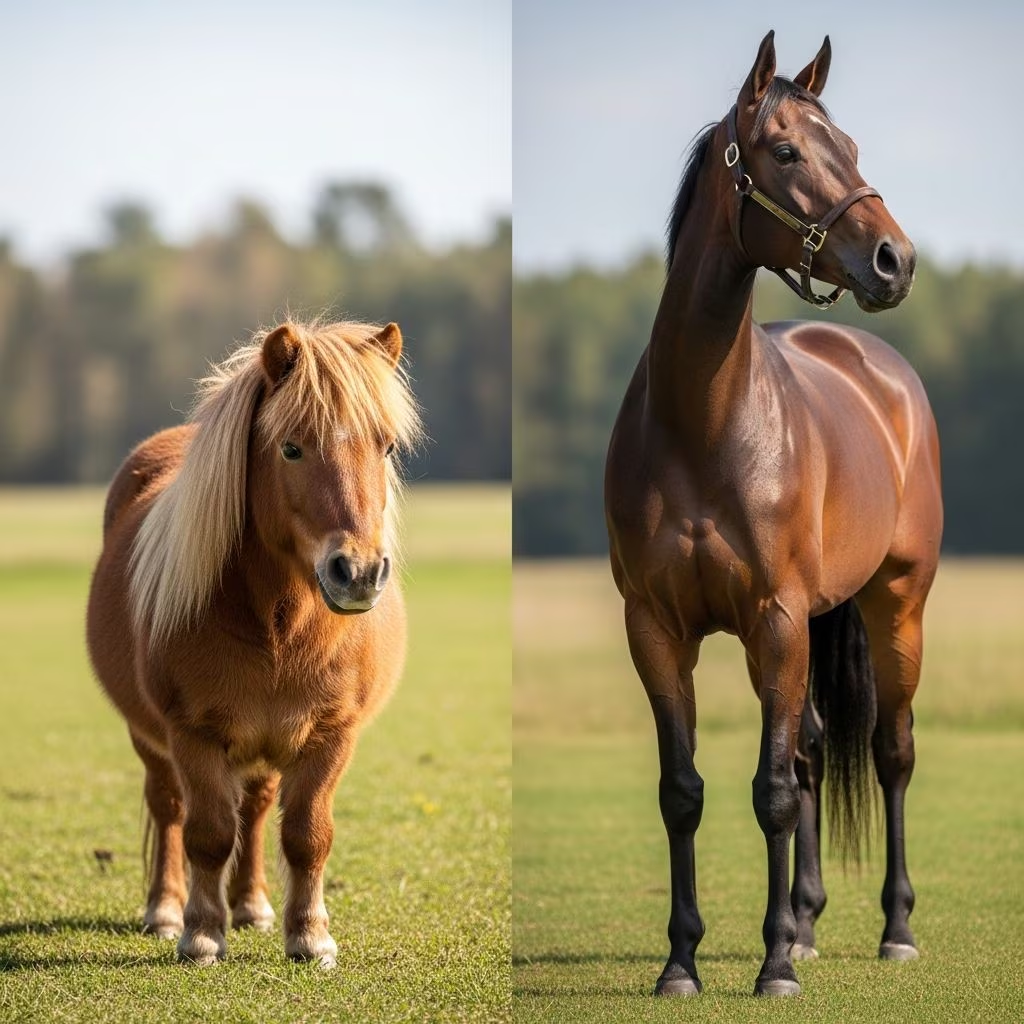
Pony vs Horse: Understanding the Key Differences
When it comes to equine companions, many people wonder whether ponies and horses are simply different sizes of the same animal or if they represent distinct types altogether. The truth is that while horses and ponies share a common ancestry and belong to the same species (Equus caballus), they possess several important differences that go far beyond just their height. Understanding these distinctions is crucial for anyone involved in equine care, riding, or competition. Whether you’re considering which equine to bring home or simply want to expand your knowledge of these magnificent animals, learning about the differences between ponies and horses will help you appreciate their unique qualities.
Height and Size: The Primary Distinction
The most obvious and widely recognized difference between horses and ponies is their height. According to breed registries and equine standards, a pony is defined as an equine that stands at 14.2 hands high or under when measured at the withers (the highest point of the shoulder). A horse, conversely, measures 14.3 hands high or taller. For those unfamiliar with equine measurements, one hand equals four inches, making the dividing line between a pony and a horse approximately 56 inches (142 centimeters) for ponies and 57 inches (149 centimeters) for horses.
However, it’s important to note that height alone cannot always determine whether an equine is a pony or a horse. Young horses, particularly those under five to seven years of age, may still be growing and could be mistaken for ponies due to their smaller stature. Additionally, certain breeds defy these conventional height classifications. For example, a polo pony is always referred to as a pony regardless of whether it exceeds the standard height measurement, while Arab horses are consistently called horses even if they fall below the typical height threshold.
Physical Characteristics and Appearance
Beyond height, horses and ponies display distinct physical features that set them apart from one another.
Body Structure
Ponies typically have longer backs relative to their height compared to horses, whose backs are more proportional to their leg length. This structural difference contributes to how each animal moves and performs. Ponies generally have straighter shoulders, which are responsible for their characteristic choppy trot, whereas horses possess more sloped shoulders that allow for smoother, more fluid movement.
In terms of leg structure, ponies have proportionally shorter legs and shorter cannon bones—the section of the lower leg directly below the knee—compared to horses. Additionally, ponies possess wider barrels, heavier bone density, thicker necks, and shorter heads than their larger counterparts. Their hooves are typically smaller and often tougher and more heavily secured than those of horses.
Coat and Hair
Ponies are known for growing thicker coats, manes, and tails compared to larger horses. During winter months, a pony’s coat becomes noticeably dense and full, providing exceptional insulation against cold weather. Interestingly, ponies typically do not shed their thick winter coats until the hottest days of summer arrive, and they begin growing new thick coats again as daylight shortens in preparation for the colder months ahead.
Temperament and Behavioral Differences
One of the most significant differences between ponies and horses lies in their temperament and behavior patterns. Contrary to popular belief, ponies are generally more self-controlled and intelligent than horses. This intelligence can work both in their favor and to their detriment, depending on their training and handling.
Intelligence and Trainability
Ponies are remarkably clever animals that excel at problem-solving and can find creative ways to avoid work or navigate challenging situations. This trait means that finding a calm, reliable horse is often easier than locating a pony with similarly dependable characteristics. Ponies trained by inexperienced handlers or ridden primarily by beginners can become spoiled and develop behavioral issues, as their riders may lack the experience necessary to correct bad habits. Conversely, properly trained ponies make excellent mounts for children learning to ride, as their smaller size and strength relative to their weight make them ideal for young riders.
Personality Traits
Horses, particularly larger breeds, tend to have more laid-back, easy-going temperaments. The larger horse breeds are often described as gentle giants with calm, predictable dispositions. However, just as with ponies, individual horses display unique personalities, and breed characteristics also influence behavior based on what the breed was originally developed to do. It’s entirely possible to encounter a pony with an angelic demeanor or a horse with a cheeky, mischievous streak.
Strength and Work Capability
Despite their smaller size, ponies are remarkably strong and capable animals. Pound for pound, ponies can pull and carry significantly more weight than horses. Ponies are exceptional at performing manual labor and farm work, demonstrating strength that defies their compact stature. Draft-type ponies can pull loads considerably greater than their own weight, with larger ponies capable of pulling loads comparable to those managed by full-sized draft horses. Even very small ponies can pull approximately 450 percent of their own body weight.
The strength advantage of ponies relates to their stockier build, shorter legs, and denser bone structure, which provides a lower center of gravity and enhanced leverage for pulling and carrying tasks. Horses, while certainly capable of carrying riders and performing various work, rely more on their stamina and endurance rather than sheer pound-for-pound strength.
Environmental Hardiness and Resilience
Ponies have historically developed in cold and harsh climates where hardy, sturdy working animals were essential, which has shaped their remarkable resilience. They are capable of withstanding higher temperature ranges than horses and demonstrate superior survival skills in challenging environments. When grazing in poorly maintained pastures, a pony’s intelligence and foraging ability allow it to find adequate nutrition where a horse might struggle to locate sufficient food.
This natural hardiness makes ponies particularly well-suited for outdoor living and working in demanding conditions, though their exceptional capability to survive on limited resources creates a management challenge for their owners.
Nutritional Needs and Management
One of the most important aspects of pony ownership involves understanding their dietary requirements, which differ from those of horses. While all equines require substantial amounts of forage, larger horses require significantly more food than smaller ponies due to their greater body mass.
A critical concern with pony ownership is the tendency to overfeed these animals. Ponies are prone to becoming overweight, and excess weight places them at higher risk for serious health conditions including laminitis, founder, and equine metabolic syndrome (EMS). Additionally, overweight ponies are more susceptible to breathing difficulties and other respiratory issues.
The reason ponies require less food relates to their smaller stomachs and typically lighter workloads compared to horses. However, it’s worth noting that some ponies work extremely hard—such as carriage driving ponies—and some horses may have very light workloads, receiving only occasional recreational riding. Individual workload and metabolic needs should guide feeding decisions rather than assuming all ponies require minimal nutrition.
Lifespan and Longevity
Ponies generally live longer than horses, and it is not unusual for a pony to live well past thirty years of age. Many of the world record holders for oldest equines are ponies, highlighting their exceptional longevity. Many ponies continue working into their late twenties, demonstrating the durability and resilience of these animals. This extended lifespan should be considered when deciding to bring a pony into your life, as the commitment may span several decades.
Show and Competition Considerations
The distinction between horses and ponies carries practical implications in competitive settings. The height classifications help ensure fair competition by preventing smaller ponies or very small horses from competing against much larger animals that might possess a size-based advantage in certain events. Additionally, safety considerations play a role in these divisions, as it is generally not advisable to place small children riding small ponies in the same competition ring as larger horses, where size differences could create safety concerns.
Comparing Horses and Ponies: A Quick Reference
| Characteristic | Pony | Horse |
|---|---|---|
| Height | 14.2 hands or under (≤56 inches) | 14.3 hands or taller (≥57 inches) |
| Back Length | Longer relative to height | Proportional to leg length |
| Shoulders | Straighter (choppy trot) | More sloped (smooth movement) |
| Legs | Proportionally shorter | Proportionally longer |
| Coat Thickness | Thicker manes, tails, and winter coat | Thinner relative coat |
| Temperament | Intelligent, self-controlled, sometimes stubborn | Typically calm, laid-back (especially larger breeds) |
| Strength (pound for pound) | Exceptionally strong | Adequate but less relative strength |
| Food Requirements | Less food needed; prone to overeating problems | More food required; less overeating risk |
| Lifespan | Often exceed 30 years | Typically 25-30 years |
| Maturation | Mature quickly, stay small | Grow slowly until 6-7 years old |
Frequently Asked Questions
Q: Is a pony just a young horse?
A: No. A pony is not a young horse. Ponies are a distinct type of equine with their own breed characteristics. While young horses may be small, a pony is defined by its breed and physical characteristics, not merely by age or current size. Ponies mature more quickly than horses but retain their smaller stature throughout their lives.
Q: Can ponies carry adult riders?
A: Yes, larger ponies can carry adult riders. Ponies are remarkably strong for their size, and certain pony breeds are specifically recognized for their ability to carry full-sized adult riders. Breeds like the Connemara pony are particularly known for this capability.
Q: Why are ponies prone to laminitis?
A: Ponies are prone to laminitis and founder primarily due to their tendency toward obesity when overfed. Ponies have smaller stomachs and typically require less food than horses, but their intelligence and food-seeking behavior often leads owners to provide excessive feed, resulting in weight gain and associated metabolic issues.
Q: Do all small equines under 14.2 hands qualify as ponies?
A: Not always. While height is the primary classification criterion, certain breeds are designated as horses or ponies regardless of their actual height measurement. Polo ponies are always called ponies even when exceeding standard height limits, while Arab horses are consistently called horses despite potentially small stature.
Q: Which is easier to care for, a horse or a pony?
A: This depends on individual circumstances. Ponies require less food and space but can be more challenging behaviorally and require careful weight management. Horses generally have more straightforward temperaments but require greater food quantities and more space for exercise.
References
- The Similarities and Differences Between Horses and Ponies — Hilltopper News. 2022-05-31. https://hhsjournalism.com/hilltopper-news/current-events/2022/05/31/the-similarities-and-differences-between-horses-and-ponies/
- Horse vs Pony – What’s the Difference? — Animal Friends Insurance. 2024. https://www.animalfriends.co.uk/horse-and-rider/horse-advice/buying-a-horse/horse-vs-pony—whats-the-difference/
- Pony — Wikimedia Foundation. 2024. https://en.wikipedia.org/wiki/Pony
- Pony vs Horse: How to Tell the Difference — SaddleBox. 2021. https://www.youtube.com/watch?v=fjOu0CPv2u8
- Pony vs Horse: What’s the Difference? — Discover Wildlife. 2024. https://www.discoverwildlife.com/animal-facts/mammals/pony-vs-horse-whats-the-difference



