

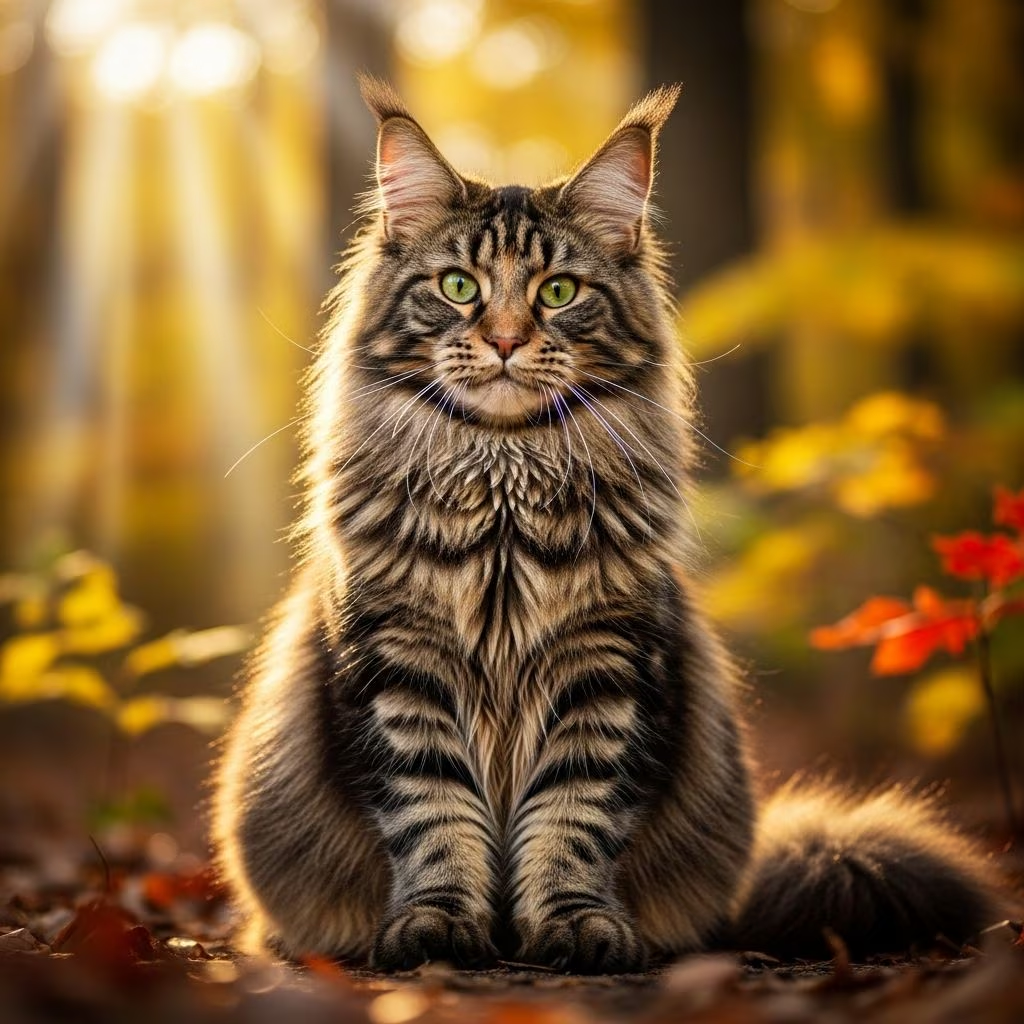
Polydactyl Maine Coon cats stand out in the feline world due to their distinctive extra toes, a trait that adds to their already impressive size and rugged charm. These cats, often called “double-pawed” or “snowshoe” Maine Coons, inherit a dominant genetic mutation granting them up to seven toes per paw, far exceeding the standard five front and four rear toes found in most cats.
The Genetic Basis of Extra Toes
Polydactyly, derived from Greek words meaning “many fingers,” results from a dominant autosomal gene that requires inheritance from just one parent to manifest. Unlike recessive traits, this mutation expresses fully without needing both parents to carry it, making it a straightforward hereditary feature in Maine Coons. Research on Maine Coon cats reveals broad phenotypic diversity in how this trait appears, affecting not only toe count but also paw conformation, carpus (wrist), and tarsus (ankle) structures.
Studies using radiographs show variations such as mitten-paw types with shorter extra digits separated from others, or patty-foot styles with broader, fused appearances. Forepaws often feature one or two extra complete digits, while hindpaws may have symmetrical additions. Some lines exhibit incomplete digits fused to dewclaws, and changes like missing radial sesamoid bones or extra carpal bones occur without impacting overall limb size compared to non-polydactyl counterparts. Importantly, no evidence links polydactyly to larger bones; claims of oversized limbs stem from breeding misconceptions rather than genetics.
Historical Significance in New England
Polydactyl Maine Coons trace their roots to early 19th-century New England, where up to 40% of the working cat population in Maine displayed this trait. Natural selection favored their wide paws, which acted like snowshoes, aiding traversal of deep snow and grip on icy barn surfaces during harsh winters. These rugged felines served as farm mousers, their enhanced dexterity helping them hunt prey effectively in snowy conditions.
Over centuries, polydactylism persisted in native Maine Coon lines, embodying the breed’s adaptation to Northeast climates. By the late 1800s, they gained fame in cat shows, with legends tying them to seafaring captains who spread the trait along trade routes. Though modern breeding refined standards, the polydactyl gene endures, symbolizing the breed’s hardy heritage.
Recognized Standards and Variations
The International Cat Association (TICA) officially recognizes Polydactyl Maine Coons as a distinct category, holding them to the same structural ideals as standard Maine Coons except for toe count. They must have straight legs, a rectangular body, and no conformational faults like turned-in hind legs, which arise from poor breeding, not the polydactyl gene itself. In contrast, the Cat Fanciers’ Association (CFA) does not accept them in competitions, highlighting ongoing debates in the fancy.
| Aspect | Standard Maine Coon | Polydactyl Maine Coon |
|---|---|---|
| Toes per Paw | 5 front, 4 rear | Up to 7 front, 6 rear |
| Gene Type | Normal | Dominant polydactyly |
| TICA Status | Accepted | Accepted as variant |
| CFA Status | Accepted | Not accepted |
This table illustrates key differences, emphasizing that polydactyls match the breed in size, coat, and temperament.
Physical Traits and Adaptations
Beyond toes, Polydactyl Maine Coons boast massive frames, reaching 3-5 years to full maturity at 15-25 pounds. Their semi-long, water-repellent coat features a ruff, britches, and bushy tail suited to cold weather. Paws are notably broad, enhancing balance and climbing ability, traits amplified by extra toes for superior traction.
- Broad paws: Act as natural snowshoes, distributing weight evenly.
- Extra toe beans: Provide additional grip points for hunting and play.
- Symmetrical expressions: Often mirror-image on left/right limbs within lines.
Phenotypic studies confirm diversity: Canadian lines show six toes all around, U.S. lines mix complete/incomplete digits, yet all maintain welfare without joint issues.
Temperament and Daily Life
These gentle giants exude dog-like sociability, chirping softly rather than meowing. Playful and patient, they excel with families, dogs, and other cats, preferring ground chases and fetch over high jumps. Their kittenish demeanor lasts lifelong, making them affectionate companions.
In homes, polydactyl paws shine during interactive games, clutching toys adeptly. They adapt well to apartments if exercised, thriving on puzzle feeders that leverage their dexterity.
Care Essentials for Optimal Health
Grooming involves weekly brushing to manage their shaggy coat, preventing mats. Dental care, nail trims (challenging with extras), and annual vet checks are vital. Their size demands high-protein diets supporting slow growth to avoid skeletal stress.
Polydactyly poses no health risks; studies find no welfare impacts from paw or joint variations, even in aging cats. Monitor for breed-common issues like hip dysplasia independently of toe count.
Bringing Home a Polydactyl Kitten
Ethical breeders test for HCM and prioritize temperament. Kittens may notation like “7/7/6/6” for max toes. Expect a friendly, adaptable pet whose paws demand extra litter scooping but reward with endless charm.
FAQs
Are Polydactyl Maine Coons healthy?
Yes, polydactyly has no deleterious effects on welfare, per clinical studies.
Can any Maine Coon be polydactyl?
No, it’s a specific dominant trait, more common in certain lines.
How many extra toes do they have?
Typically 1-2 per paw, totaling up to 28 toes.
Do they make good pets for kids?
Absolutely, their gentle, playful nature suits families.
Is polydactyly allowed in shows?
TICA yes, CFA no.
Polydactyl Maine Coons blend history, genetics, and personality into captivating pets, their extra toes a testament to evolutionary prowess.
References
- Everything To Know About Polydactyl Maine Coons — Greek Garden Maine Coons. 2023. https://greekgardenmainecoons.com/polydactyl-maine-coons/
- Clinical characterisation of polydactyly in Maine Coon cats — PMC (NCBI). 2024-05-15. https://pmc.ncbi.nlm.nih.gov/articles/PMC11119636/
- The History of the Polydactyl Maine Coon — Maine-CoonCat.com. N/A. http://maine-cooncat.com/poly_mc.html
- Maine Coon Polydactyl — TICA. 2024. https://tica.org/breed/maine-coon-polydactyl/
- Polydactyl Maine Coon Cat | Extra Toe Beans For The Win — Sassy Koonz. 2023. https://sassykoonz.com/polydactyl-maine-coon/



