

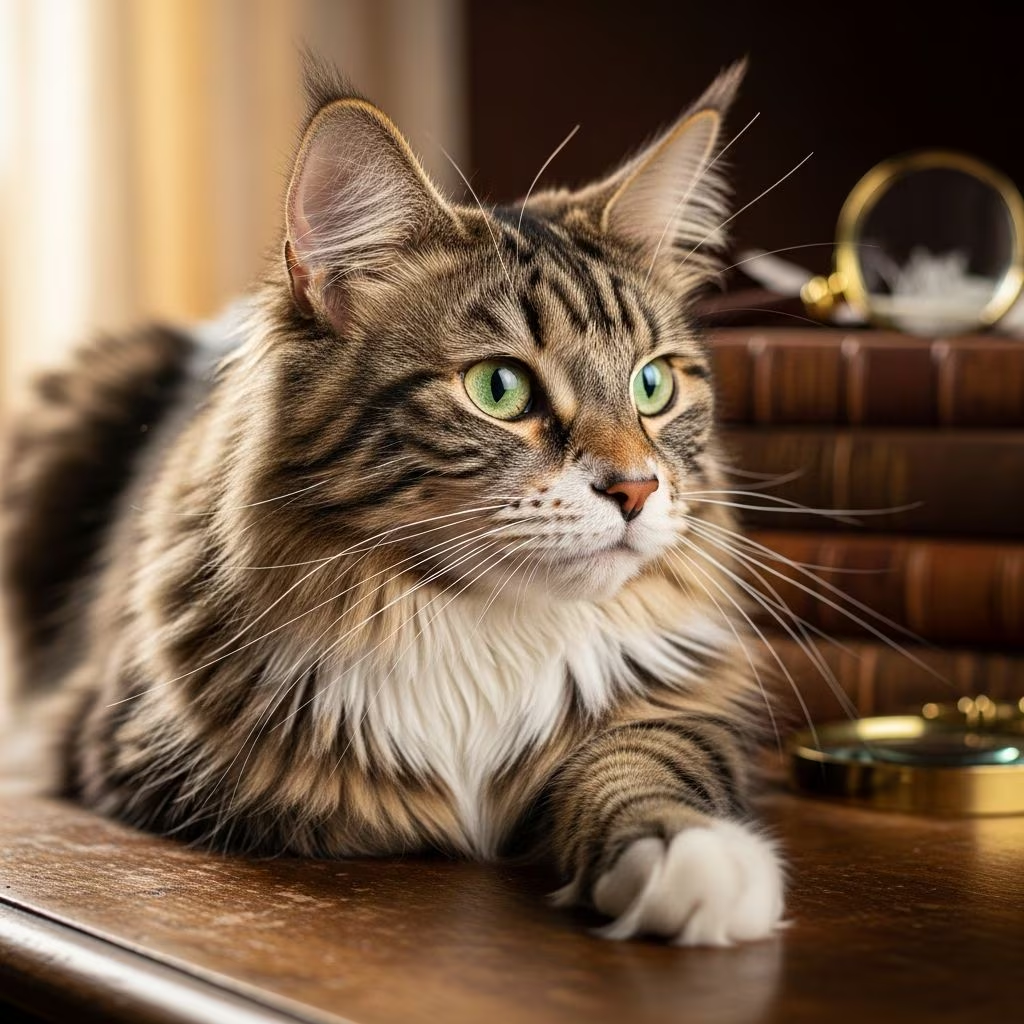
Polydactyl cats captivate pet lovers with their distinctive feature: more toes than the standard feline count. These charming animals, often dubbed ‘Hemingway cats’ or ‘cats with thumbs,’ possess a congenital trait known as polydactyly, leading to paws equipped with additional digits. Typically, cats have 18 toes—five on each front paw and four on each hind paw—but polydactyl individuals can boast anywhere from 20 to 28 or more, creating mitten-like or broad paws that enhance their agility and grip.
The Genetic Blueprint Behind Extra Digits
At the heart of polydactyly lies genetics. This condition arises from a spontaneous mutation, primarily an autosomal dominant trait, meaning a single copy of the gene from one parent suffices to pass it on. Offspring of a polydactyl cat and a normal-toed mate have a 50% chance of inheriting the trait, while both parents carrying it boosts the odds significantly. The mutation involves ectopic expression of the Sonic Hedgehog (SHH) gene, normally active in the zone of polarizing activity on the limb’s posterior side. In polydactyl cats, this expression mirrors on the anterior side, prompting extra digit formation complete with nerves, vessels, muscles, and ligaments.
Research on breeds like the Maine Coon reveals broad phenotypic diversity. Studies show variations not just in toe count but in carpal and tarsal structures, including extra bones or fusions, without impacting overall limb size or welfare. Preaxial polydactyly, adding digits on the medial paw side, dominates, often yielding ‘mitten-paw’ or ‘patty-foot’ morphologies. Mitten-paws feature a shorter, separated extra digit, while patty-feet display broader, flattened pads with multiple additions.
Geographic Hotspots and Historical Presence
Polydactyl cats cluster in specific regions, notably the U.S. East Coast, southwest England, and Wales. Their prevalence in places like Key West, Florida, ties to maritime history, where sailors valued their superior balance and mousing prowess on ships. Ernest Hemingway received a six-toed kitten named Snow White in the 1930s, sparking a colony at his former home now preserving over 50 descendants.
These cats likely spread via trading vessels from Europe, where the trait persists endemically. In North America, higher incidences occur in coastal areas, contrasting inland rarity. Breeders note lines like Canadian Maine Coons often exhibit symmetrical six-toed paws on all limbs, underscoring regional genetic pools.
Variations in Paw Configurations
Polydactyly manifests diversely. Most common: one or two extra front-paw toes resembling opposable thumbs, aiding climbing and grasping. Hind-paw extras are rarer, and all-four-paw involvement even scarcer. Record holders like Jake (27 toes) or Paws (28 toes) exemplify extremes, though typical cases add just a few.
| Paw Type | Normal Toes | Polydactyl Range | Common Extra Digits |
|---|---|---|---|
| Front Paws | 5 each | 6-8 each | 1-3 |
| Hind Paws | 4 each | 5-7 each | 1-2 (less common) |
In Maine Coons, Canadian lines favor complete extra digits (symmetrical, six per paw), while U.S. lines show incomplete or fused ones, sometimes altering dewclaws. Symmetry between left and right limbs appears in many cases, though heterogeneity exists.
Health Implications and Longevity
Does polydactyly harm cats? Evidence suggests no. Studies find no differences in radius bone size between polydactyl and normal kittens or adults, debunking myths of oversized limbs. Altered carpus/tarsus—lost sesamoids, extra bones—pose no welfare issues. Extra toes develop fully functional, supporting claims of enhanced prowess: better balance, jumping, and hunting.
Potential concerns include overgrown nails, risking ingrown issues if neglected. Arthritis may arise in older cats from broader joints, but no data links polydactyly directly to reduced lifespan. Vets recommend routine checks, especially for breeds like Maine Coon, permitted by CFA if symmetrically preaxial.
- Nail Trimming: More toes mean more maintenance; trim every 2-4 weeks.
- Joint Monitoring: Watch for stiffness in seniors.
- Obesity Prevention: Extra toes don’t increase weight, but activity sustains paw health.
Caring for Your Multi-Toed Companion
Polydactyl cats demand standard care with tweaks. Prioritize nail care: use cat-specific clippers, avoiding quick injury. Provide scratching posts to naturally wear claws. Diet mirrors normal cats—high-protein, balanced nutrition supports active lifestyles.
Exercise leverages their strengths: vertical spaces, puzzle toys exploit grip. Environmentally enrich with shelves, trees. Grooming focuses on paw pads; check for debris in broader spaces. Vet visits ensure no conformational anomalies affect mobility.
Polydactyly in Pedigree Breeds
Breeds embrace the trait. Maine Coon polydactyly, once disqualified, gained CFA approval for specific forms. Pixie Bobs and American Polydactyls standardize mitten-paws. Breeders select for welfare, avoiding extremes. International Cat Care notes occurrences across pedigrees and domestics.
Inheritance complexities—variable penetrance—challenge breeding. Dominant yet incompletely expressed, it yields surprises. Ethical breeders screen, prioritizing health over novelty.
Debunking Myths and Fun Facts
- Myth: Polydactyl cats are smarter. No evidence; toe count doesn’t correlate with cognition.
- Myth: They suffer pain. Fully formed digits function well.
- Fact: World record – 28 toes on one cat!
- Fact: Ship cats – Extra toes aided stormy seas navigation.
Famous Polydactyl Icons
Beyond Hemingway’s Snow White progeny, internet stars like Paws of Houston hold Guinness records. Museums in Key West showcase polydactyl skeletons, highlighting anatomy. These felines symbolize resilience, blending rarity with everyday charm.
FAQs on Polydactyl Cats
Are polydactyl cats healthy?
Yes, generally. No inherent health detriments; monitor nails and joints.
Can I breed polydactyl cats?
Possible, but consult standards. 50% inheritance risk from one parent.
Why front paws mostly?
Genetic expression favors forelimbs; hind rarer.
Do extra toes hurt?
No, they develop completely functional.
How to spot early?
Visible at birth; confirm via paw count.
Adopting a Polydactyl Cat
Shelters often house them; no special adoption needs. Their engaging paws make instant bonds. Verify lineage if breeding intent. Celebrate uniqueness—polydactyls offer snowshoe-like traction in snow, playful mittens for batting toys.
References
- Polydactyl cat – Wikipedia — Wikipedia. 2023-10-01. https://en.wikipedia.org/wiki/Polydactyl_cat
- Clinical characterisation of polydactyly in Maine Coon cats – PMC — National Center for Biotechnology Information. 2024-05-15. https://pmc.ncbi.nlm.nih.gov/articles/PMC11119636/
- Polydactyl Cats: What To Know About Cats With ‘Thumbs’ | PetMD — PetMD. 2024-08-20. https://www.petmd.com/cat/general-health/polydactyl-cats
- What is a Polydactyl Cat? – YouTube — YouTube. 2022-11-10. https://www.youtube.com/watch?v=ba4bd6K5y-Q
- 7 Incredible Facts about Polydactyl Cats – PD Insurance — PD Insurance. 2023-03-05. https://www.pdinsurance.co.nz/blogs/incredible-facts-about-polydactyl-cats/
- Polydactyl cats – International Cat Care — International Cat Care. 2024-01-12. https://icatcare.org/articles/polydactyl-cats



