

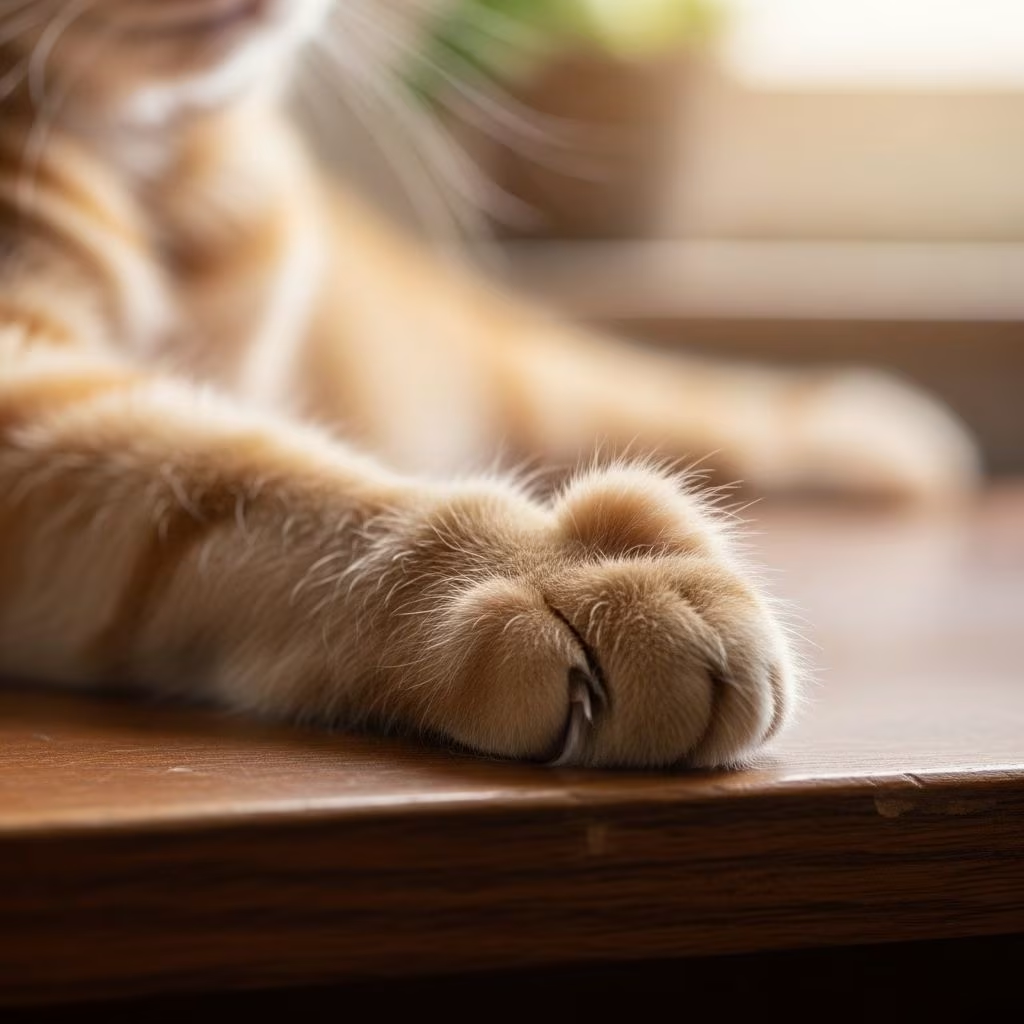
Polydactyl cats captivate with their unusual paws featuring extra toes, often resembling thumbs or mittens. These felines carry a genetic trait that sets them apart from standard cats, which typically have 18 toes—five on each front paw and four on each hind paw.
The Genetic Roots of Extra Toes
The condition known as polydactyly stems from a genetic mutation classified as an autosomal dominant trait. This means a single parent carrying the gene can pass it to offspring, giving each kitten roughly a 50% chance of inheriting the extra toes.
Genetic complexity arises from incomplete penetrance and variable expression, leading to diverse toe counts and placements. Extra digits usually develop on the inner side of the paw near the dewclaw, which acts like a rudimentary thumb elevated on the leg.
How Many Toes Can They Have?
Polydactyl cats might sport one to several additional toes per paw, pushing totals beyond 18. The record belongs to Jake from Canada with 28 toes—seven on each front paw and six on each back.
- Common: One or two extra toes on front paws only.
- Uncommon: Extra on hind paws or all four paws.
- Rare extremes: Up to 10 extra toes total, fully formed with claws and pads or partially developed.
These variations make each polydactyl cat’s paws uniquely wide and padded, sometimes aiding grip.
Prevalence and Distribution
Far from rare, polydactyly appears across cat populations, especially in the Northeastern U.S., possibly due to historical shipping practices. Sailors prized these cats for rodent control, valuing their broad paws for balance on ships.
No specific breed exclusivity exists; mixed breeds and purebreds alike show the trait. Maine Coons and Pixie Bobs frequently exhibit it, with the latter allowed in shows.
Historical Legends and Famous Polydactyls
Ernest Hemingway received a polydactyl kitten named Snowball in 1935 from a ship captain, sparking a colony at his Key West home. Today, about 50 descendants roam the grounds, preserved by the Hemingway Home and Museum.
Other notables include Paws from Norway with 28 toes, tying Jake’s record. These stories highlight how polydactyly endeared cats to humans through folklore and celebrity ties.
Behavioral Traits and Abilities
Owners report polydactyl cats excelling in climbing and grasping, using extra toes like opposable digits for toys or levers. Their wider paws enhance stability on uneven surfaces.
| Trait | Standard Cats | Polydactyl Cats |
|---|---|---|
| Paw Width | Narrower | Wider, mitten-like |
| Grip Strength | Standard | Enhanced grasping |
| Climbing | Good | Often superior |
| Agility | Balanced | Variable, some clumsy |
Personality-wise, no universal differences emerge; they span playful to aloof like any cat.
Health Considerations for Extra-Toed Cats
Generally healthy, polydactylism rarely causes issues. Extra toes don’t impair mobility unless malformed.
- Nail Trimming: More claws demand frequent care to prevent overgrowth.
- Injuries: Wider paws raise snag risks; monitor for limping.
- Dewclaw Checks: Ensure no ingrown issues.
- Surgery: Remove problematic digits if needed.
Distinguish from radial hypoplasia, a deformity mimicking polydactyly with twisted limbs—not true extra toes.
Caring for Your Polydactyl Companion
Daily routines mirror standard cats, with paw-focused attention.
- Inspect paws weekly for cuts or overgrown nails.
- Provide scratching posts to maintain claw health.
- Encourage play with toys testing grip skills.
- Vet visits: Highlight polydactyly for tailored exams.
Diet, vaccination, and litter needs remain unchanged. Their resilience suits indoor-outdoor life, echoing sailor cat heritage.
Breed Connections and Variations
While random in most, certain breeds show higher rates:
- Maine Coon: Often polydactyl, prized for size and toe bonus.
- Pixie Bob: Show-eligible with extras.
- American Polydactyl: Rare recognized category by CFA for non-breed-specific cats.
Colors, sexes, coats vary freely; no links to patterns or gender.
Myths Debunked About Extra Toes
Myth 1: Only Hemingway cats exist. Reality: Global phenomenon predating him.
Myth 2: Always thumbs. Reality: Usually inner extras, rarely true thumbs.
Myth 3: Health hazards inevitable. Reality: Mostly benign.
Bringing Home a Polydactyl Kitten
Adopt from shelters or breeders noting the trait. Expect 50% polydactyl littermates if one parent carries it.
Prepare with wide litter boxes and durable toys. Their charm lies in quirky paws and boundless curiosity.
Frequently Asked Questions
Do polydactyl cats feel pain from extra toes?
No, they adapt seamlessly unless complications arise.
Can I breed for polydactyly?
Yes, but disclose to buyers; it’s dominant.
Are they better mousers?
Legend says yes, due to paw prowess on ships.
How to trim their nails safely?
Gently restrain, clip tips only, reward heavily.
Is surgery common?
Rare, only for painful or infected extras.
References
- 9 Things You Probably Didn’t Know About Polydactyl Cats — Cats.com. 2023-10-15. https://cats.com/polydactyl-cats
- Polydactyl Cats: What To Know About Cats With ‘Thumbs’ — PetMD. 2024-05-20. https://www.petmd.com/cat/general-health/polydactyl-cats
- What is a Polydactyl Cat? — YouTube (Vet educational video). 2022-08-10. https://www.youtube.com/watch?v=ba4bd6K5y-Q



