

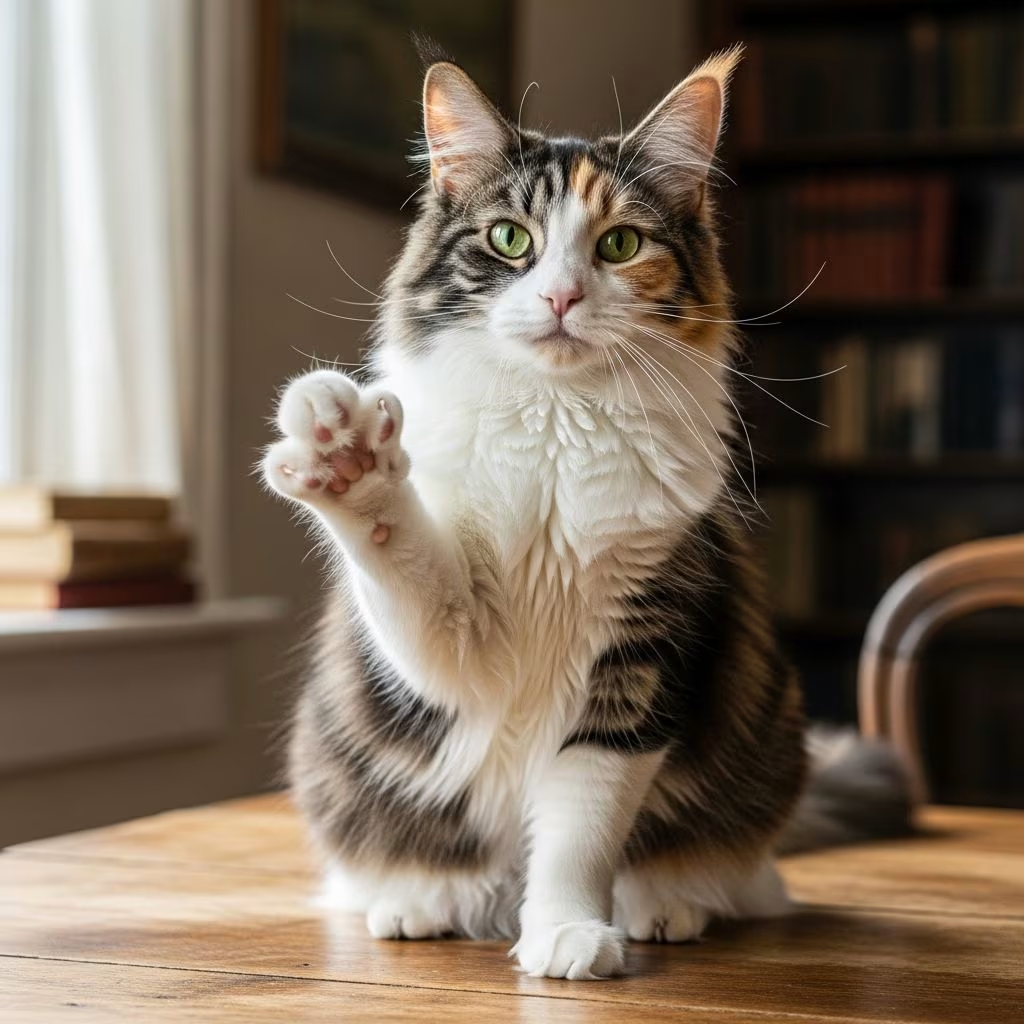
Polydactyl cats, celebrated for their extra toes that often resemble thumbs or mittens, captivate cat enthusiasts worldwide. Far from being a result of harmful inbreeding, this trait stems from specific genetic mutations that occur naturally and dominantly in feline populations. These cats typically boast more than the standard 18 toes, with variations appearing on front or hind paws, and they generally lead healthy lives without increased health risks tied to their unique paws.
The Science of Extra Toes in Cats
At the heart of polydactyly lies a fascinating genetic mechanism involving mutations in regulatory sequences that control limb development. The primary culprits are variants in the ZRS (zone of polarizing activity regulatory sequence), a non-coding region that influences the sonic hedgehog (SHH) gene crucial for digit formation. This gene acts as a signaling molecule, guiding proper limb and digit patterning during embryonic growth.
Three well-documented mutations drive most cases: Hw (Hemingway variant) prevalent in North American cats, and UK1 and UK2 found in UK outbred populations. These are all autosomal dominant, meaning a single copy from one parent suffices to potentially express the trait. However, incomplete penetrance means not every carrier shows extra toes, and variable expressivity explains why some cats have just one extra digit while others have several.
- Autosomal Dominant Inheritance: Only one mutated allele needed for expression.
- Incomplete Penetrance: Some carriers lack visible extra toes, yet pass the trait on.
- Variable Expressivity: Number and location of extra toes differ widely among affected cats.
Research confirms that even homozygous cats (two copies) do not exhibit more severe phenotypes, debunking fears of extreme outcomes from breeding two polydactyls.
Genetic Diversity Across Feline Populations
Polydactyly appears globally but clusters in regions like the East Coast of North America and Southwest England. In the U.S., it’s linked to seafaring cats carried by ships, earning fame through Ernest Hemingway’s colony on Key West, where over half the cats carry the Hw mutation.
Unlike uniform inheritance in many traits, polydactyly shows genetic heterogeneity—multiple mutations cause similar outcomes. Studies genotyping diverse cats reveal not all polydactyls carry known variants, hinting at undiscovered mutations.
| Mutation | Origin | Typical Effect | Prevalence |
|---|---|---|---|
| Hw | North America (Hemingway cats) | Extra forepaw digits, sometimes hind | Common in U.S. polydactyls |
| UK1 | UK outbred cats | Preaxial extra toes | Regional in Europe |
| UK2 | UK outbred cats | Similar to UK1, variable | Regional in Europe |
This table summarizes key mutations, highlighting their regional ties and effects on paw morphology.
Polydactyly in Popular Breeds: Focus on Maine Coons
Maine Coon cats, known for their large size and sociable nature, sometimes exhibit polydactyly, sparking questions about breed standards and health. The Cat Fanciers’ Association disqualifies polydactyl Maine Coons from show competitions, viewing it as an undesirable trait, while other registries may allow it.
Genetic studies on 75 Maine Coons from Europe, Canada, and the U.S. found the Hw allele in some polydactyls but not all. Notably, Canadian-origin cats lacked any of the three known mutations yet showed extra toes, underscoring heterogeneity. Even Hw carriers displayed incomplete penetrance: two heterozygous cats without extra toes (confirmed radiographically) produced polydactyl kittens.
Breeding implications are clear—Maine Coon enthusiasts must test for known variants and consider pedigree to avoid unintended propagation, but the trait itself poses no inherent health detriment.
Health Implications and Daily Life for Polydactyl Cats
Extra toes enhance these cats’ prowess rather than hinder it. The additional digits often function like opposable thumbs, aiding in climbing, gripping, and balance—advantages in wild or exploratory settings.
Health-wise, polydactyly is non-syndromic, meaning no associated defects like heart issues or skeletal disorders common in inbred populations. Owners report no elevated risks for arthritis, mobility problems, or infections, provided nails are trimmed regularly. Routine care mirrors that of typical cats: monitor for overgrown claws that could snag or cause discomfort.
- Advantages: Better grip for toys, food bowls; superior jumping ability.
- Care Tips: Frequent nail trims; check paw pads for debris.
- Vet Checks: X-rays if mobility issues arise, though rare.
Contrary to inbreeding myths, polydactyl cats thrive in diverse genetic backgrounds, with no evidence linking the trait to reduced lifespan or fertility.
Breeding and Inheritance Probabilities
Understanding odds empowers responsible breeding. When a polydactyl mates with a normal-toed cat, offspring have a 50% chance of inheriting the trait. Both parents polydactyl? Probability rises to 75%.
Genetic testing via labs like Langford Vets identifies heterozygous (one copy) or homozygous (two copies) status for Hw, UK1, or UK2. A “normal” result excludes these but not other unknown variants. Breeders of Maine Coons or Pixie Bobs should prioritize testing to inform pairings.
| Parental Genotypes | Offspring Polydactyl Chance | Notes |
|---|---|---|
| Polydactyl x Normal | 50% | Autosomal dominant assumption |
| Polydactyl x Polydactyl | 75% | Includes homozygous potential |
| Normal x Normal | 0% (for known mutations) | Unless hidden heterogeneity |
This inheritance table aids breeders in planning litters.
Debunking the Inbreeding Myth
Inbreeding implies close relative matings leading to harmful recessive traits and reduced genetic diversity. Polydactyly, however, is a dominant, spontaneous mutation arising independently across populations—not a byproduct of poor breeding practices.
Historical spread via maritime cats demonstrates natural selection favoring agile polydactyls for shipboard life. Modern cases in purebreds like Maine Coons result from lineage introduction, not deliberate incest. Genetic heterogeneity further proves robustness, as multiple pathways yield the trait without inbreeding depression.
Caring for Your Polydactyl Companion
Adopting a polydactyl cat? Embrace their uniqueness with tailored care:
- Provide scratching posts suited for extra claws.
- Engage in play that leverages their grip strength.
- Schedule annual vet exams to monitor paw health.
- Consider genetic testing if breeding is planned.
These cats often excel as pets, their quirky paws adding charm without complicating care.
Frequently Asked Questions (FAQs)
Are polydactyl cats unhealthy?
No, they face no specific health risks from extra toes; they are as robust as standard cats.
Can I breed two polydactyl cats?
Yes, but test for mutations first, especially in breeds like Maine Coons, to manage trait prevalence.
Why do some polydactyl cats have no extra toes?
Incomplete penetrance: carriers may not express the trait visibly.
Is polydactyly painful for cats?
Not typically; extra toes are functional and well-formed.
How common are polydactyl cats?
Not rare, especially in certain regions; one polydactyl parent gives kittens 50% odds.
References
- Genetic heterogeneity of polydactyly in Maine Coon cats — Hamelin et al., PubMed. 2020-02-20. https://pubmed.ncbi.nlm.nih.gov/32067556/
- Polydactyly Genetic Test — Langford Vets. Accessed 2026. https://www.langfordvets.co.uk/diagnostic-laboratories/cat-genetic-testing/genetic-disease-and-trait-tests/polydactyly/
- Polydactyl Cats: What To Know About Cats With ‘Thumbs’ — PetMD. Recent update. https://www.petmd.com/cat/general-health/polydactyl-cats
- Polydactyl cats: an explanation on extra toes — Wisdom Panel. Recent. https://www.wisdompanel.com/en-us/blog/polydactyl-cats-an-explanation-on-extra-toes
- Polydactyl cat — Wikipedia (primary sources referenced). Ongoing. https://en.wikipedia.org/wiki/Polydactyl_cat



