

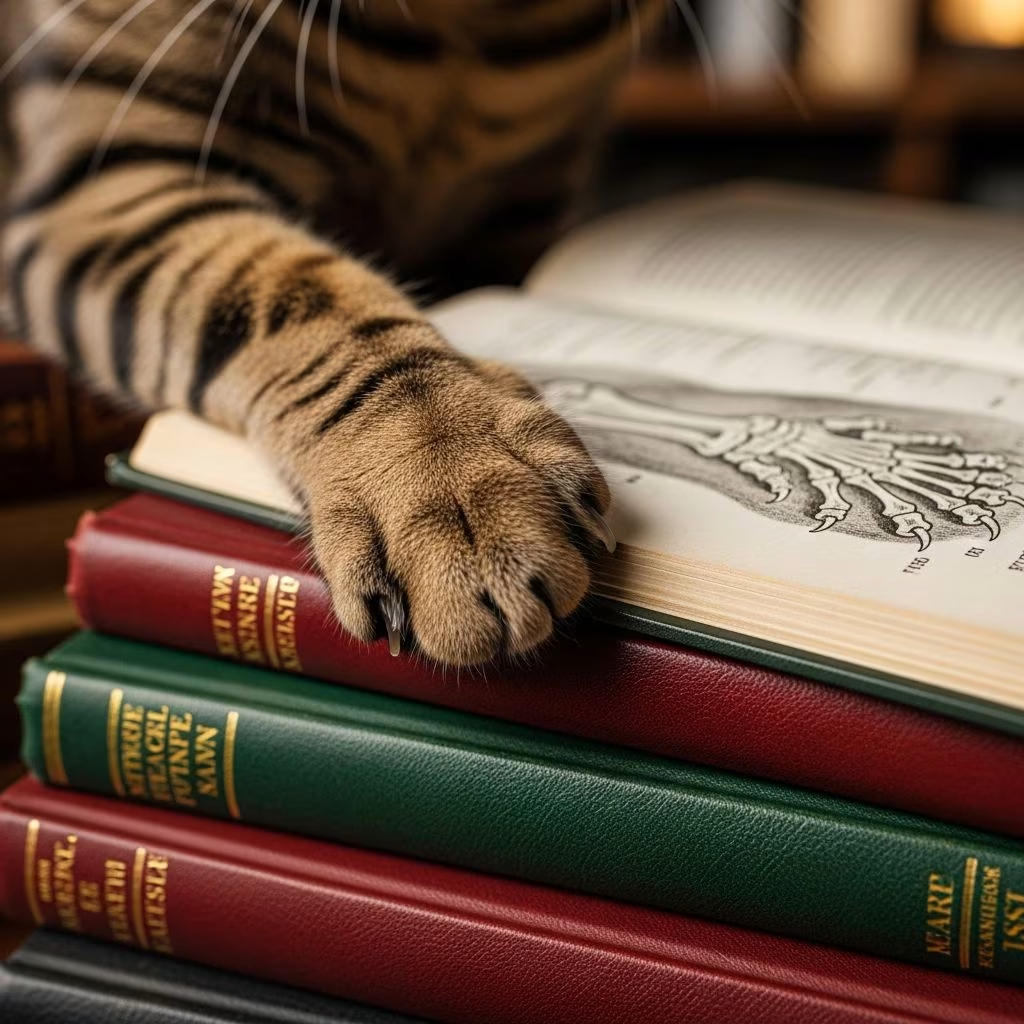
Polydactyl cats possess more than the typical five toes on front paws or four on hind paws, creating a distinctive paw appearance often likened to thumbs. This congenital trait, known as polydactyly, results from specific genetic variations and appears harmless in most cases, offering potential advantages like enhanced balance.
The Science Behind Extra Digits in Felines
Polydactyly arises from mutations in regulatory DNA sequences that control limb development, particularly the ZRS (zone of polarizing activity regulatory sequence), which governs the sonic hedgehog (SHH) gene responsible for digit formation. Unlike direct gene mutations, these are point changes in non-coding regions, leading to ectopic SHH expression that prompts additional cell proliferation and digit growth.
Three main ZRS variants cause feline polydactyly: UK1 and UK2 in outbred UK cats, and Hw in Hemingway cats from the USA. In Maine Coons, the Hw allele appears in some polydactyl individuals, but genetic heterogeneity means other variants or mechanisms contribute, resulting in autosomal dominant inheritance with incomplete penetrance and variable expressivity. This explains why not all carriers show extra toes, and expressions range from one additional digit to multiple per paw.
Studies on Maine Coons confirm broad phenotypic diversity, affecting digit count, conformation, carpus, and tarsus structures without impacting overall size, mortality, or welfare. Radiographic analyses of 70 cats revealed no differences in radius size between polydactyl and normal cats, underscoring the trait’s benign nature.
Types of Polydactyly Observed in Cats
Extra toes manifest in pre-axial (inner paw, thumb-like) or post-axial (outer paw) forms. Pre-axial polydactyly, common in Maine Coons and Hemingway cats, adds digits medially, enhancing grip resemblance. Post-axial types add lateral toes, less frequent but equally variable.
- Pre-axial: Extra toes on the dewclaw side, mimicking thumbs; prevalent in East Coast US cats.
- Post-axial: Additional outer toes; seen in diverse populations.
- Mixed: Combinations affecting multiple paws variably.
Phenotypic variation follows a discontinuous distribution, not uniform, due to threshold effects in cell states rather than the mutation alone.
Genetic Inheritance Patterns
As an autosomal dominant trait, a single mutated allele from either parent suffices for expression, though incomplete penetrance means 50% offspring risk per carrier, with variable outcomes. Homozygous cats (two copies) show higher likelihood and severity of extra toes.
| Genotype | Inheritance Risk | Expression Likelihood |
|---|---|---|
| Heterozygous (one copy) | 50% to kittens | Variable, incomplete penetrance |
| Homozygous (two copies) | 100% to kittens | Higher severity |
| Normal (no copies) | 0% | None |
Maine Coon breeders note genetic distinctions between Hw-positive and Hw-free polydactyls, advising tailored breeding to manage diversity.
Breeds and Regions Prone to Polydactyly
Maine Coons prominently feature polydactyly, historically disqualified in shows but now accepted by some registries like CFA for naturally occurring forms. Hemingway cats, descendants of Ernest Hemingway’s polydactyl tom gifted in 1935, cluster at his Key West estate.
The trait thrives along the US East Coast, Canada, Southwest England, and Wales due to founder effects and shipping routes carrying cats. Pixie-Bobs and American Polydactyls also carry it, though not all cases trace to these.
Health Implications and Veterinary Perspectives
Empirical data show no elevated risks in growth, perinatal survival, or malformations for polydactyl Maine Coons. Extra toes provide broader paw surfaces, potentially aiding balance on boats or snow, as with Hemingway’s cats or Maine working felines.
Rare complications include nail overgrowth or injury susceptibility, necessitating regular trims and monitoring. Radiographs confirm normal bone structure, ruling out inherent skeletal issues. Vets classify it as a harmless variance, not requiring intervention unless mobility-affected.
Caring for Cats with Extra Toes
Owners should prioritize paw health: inspect weekly for debris, trim nails monthly (extra toes grow faster), and use litter that minimizes sticking.
- Schedule annual vet exams for joint assessments.
- Provide scratching posts to maintain nail shape.
- Monitor for limping, indicating potential ingrown nails.
- Adapt toys for grip advantages, like wider climbing surfaces.
Breeding programs test for Hw via DNA to predict outcomes, ensuring ethical practices.
Famous Polydactyl Felines in History
Ernest Hemingway’s Snow White sired dozens of polydactyl kittens, inspiring Key West’s cat sanctuary with ~50 descendants today. These cats symbolize the trait’s seafaring utility, as extra toes allegedly improved balance on ships.
Urban legends tie polydactyly to luck, boosting its cultural appeal in coastal communities.
Debunking Myths About Multi-Toed Cats
- Myth: All polydactyls descend from Hemingway’s cats. False; multiple mutations exist globally.
- Myth: Extra toes cause pain. Untrue; studies show no welfare detriment.
- Myth: It’s always thumbs. Only pre-axial mimics thumbs; others differ.
Frequently Asked Questions
Do polydactyl cats feel pain from extra toes?
No, research confirms no health threats or discomfort.
Can I breed two polydactyl cats?
Yes, but expect 100% carrier kittens with variable expression; genetic testing advised.
Is polydactyly covered by pet insurance?
Typically as congenital, check policies; routine care usually included.
How many extra toes can a cat have?
Up to seven per paw in extremes, averaging 1-2.
Should I declaw a polydactyl cat?
Never recommended; extra toes heighten risks, and it’s banned in many areas.
Advancements in Feline Genetics Research
Ongoing studies expand ZRS mutation catalogs, linking feline polydactyly to human/mouse models for broader insights. Maine Coon data supports purely aesthetic, dominant transmission with no morphological concerns. Future genotyping could standardize breeding, preserving the trait safely.
Population analyses reveal Hw vs. non-Hw clusters, guiding breed management. This genetic heterogeneity underscores polydactyly’s complexity beyond single mutations.
References
- Research – MCPolydactyl — Maine Coon Polydactyl. Accessed 2026. https://mcpolydactyl.com/research
- Genetic heterogeneity of polydactyly in Maine Coon cats — PubMed/NCBI. 2020-02-18. https://pubmed.ncbi.nlm.nih.gov/32067556/
- Polydactyl cat — Wikipedia (references primary studies). Accessed 2026. https://en.wikipedia.org/wiki/Polydactyl_cat
- Polydactyl cats: an explanation on extra toes — Wisdom Panel. Accessed 2026. https://www.wisdompanel.com/en-us/blog/polydactyl-cats-an-explanation-on-extra-toes
- 7 Incredible Facts about Polydactyl Cats — PD Insurance NZ. Accessed 2026. https://www.pdinsurance.co.nz/blogs/incredible-facts-about-polydactyl-cats/



