

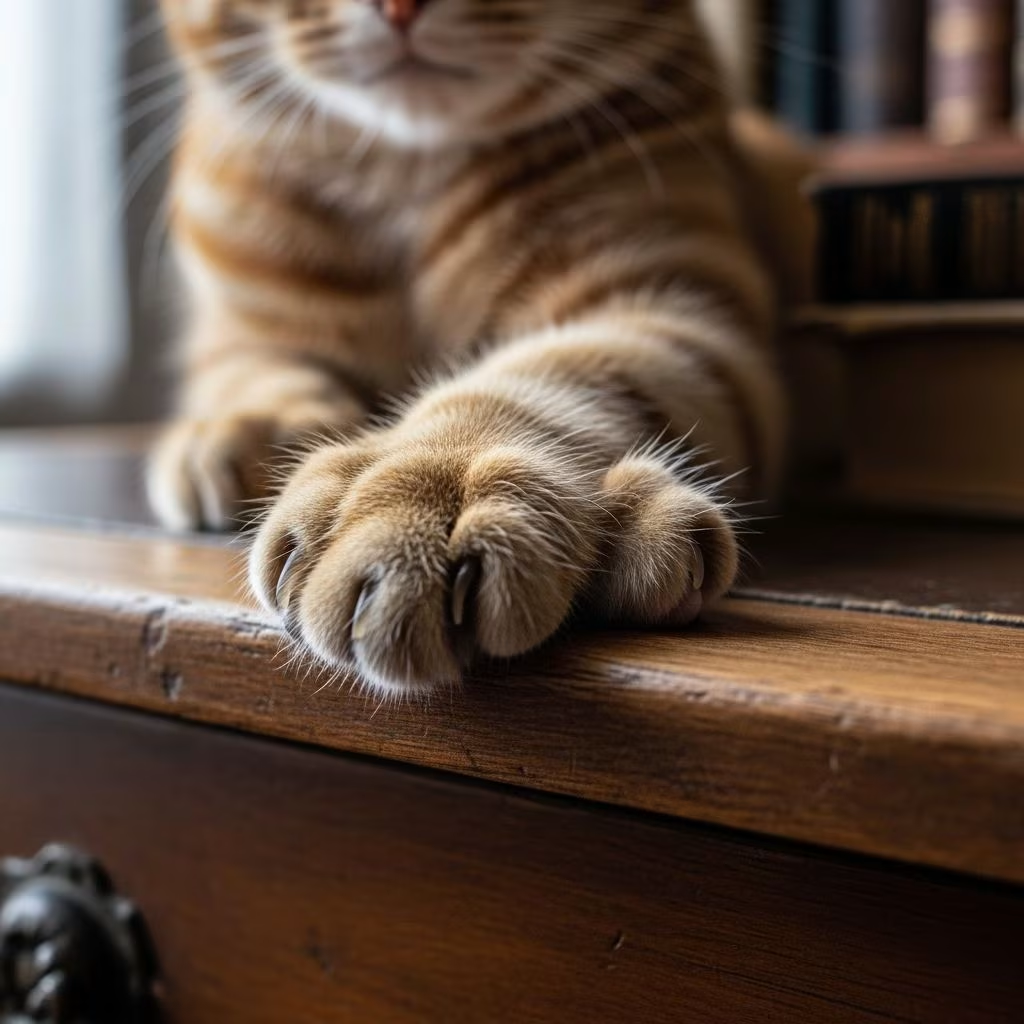
Polydactyl cats captivate owners with their unusual paw structure, featuring more toes than the standard five on front paws and four on hind paws.Polydactyly results from a genetic variation allowing up to seven or more toes per paw, often resembling thumbs or mittens.
The Science Behind Extra Toes in Cats
Normal cats possess 18 toes total: five per front paw (including dewclaws) and four per hind paw. Polydactyl individuals exceed this due to a dominant mutation in the sonic hedgehog gene, which governs limb development. This autosomal dominant trait means kittens from a carrier parent have a 50% inheritance chance.
Expression varies; some cats gain one extra toe, others multiple across paws. Front paws commonly show changes, with rear involvement rarer. The mutation’s incomplete penetrance explains diverse presentations, from subtle additions to extreme cases like world-record holders with over 28 toes.
- Dominant inheritance: One parent carrier suffices for trait passage.
- Variable expression: Toe count and position differ widely.
- Gene role: Regulates digit formation during embryonic growth.
Health Implications of Polydactyl Paws
Most polydactyl cats thrive without complications from extra toes. They run, jump, and climb effectively, often gaining enhanced balance from broader paws.
Primary concerns involve nail management. Smaller extra toes bear less weight, so claws grow longer and curve inward, risking ingrown nails, infections, or snags.
| Potential Issue | Description | Prevalence |
|---|---|---|
| Ingrown Nails | Claws pierce paw pads | Common if untended |
| Infections | Bacterial entry from breaks | Moderate |
| Snags/Tears | Claws catch on objects | Occasional |
| Mobility Problems | Rare severe formations | Uncommon |
Life expectancy matches typical cats at 12-15 years, with no inherent shortened lifespan. Veterinary checks confirm no links to systemic diseases.
Daily Care Routines for Polydactyl Felines
Care mirrors standard cats but emphasizes paws. Weekly inspections detect overgrowth early.
- Nail Trimming: Use cat-specific clippers; trim every 10-14 days. Focus on hidden extra nails.
- Paw Cleaning: Wipe pads to remove litter/debris from toe crevices.
- Monitoring: Watch for limping, swelling, or reluctance to jump.
- Tools: Recommend precise clippers avoiding quick injury.
In severe cases, surgical removal of problematic toes occurs as a last resort, post-failed conservative measures. Most cats adapt seamlessly without intervention.
Genetic Inheritance and Breeding Considerations
Breeding polydactyl cats propagates the trait predictably. A polydactyl mated to a normal cat yields 50% polydactyl kittens; two polydactyl parents raise odds higher.
Responsible breeding prioritizes health screening. While benign, breeders inform buyers of grooming needs. Mixed litters display varied toe counts, aiding genetic diversity studies.
Breeding Outcomes Table:
| Parents | Polydactyl Kittens Probability |
|---|---|
| One polydactyl, one normal | 50% |
| Both polydactyl | 75%+ |
| Both normal | 0% |
Historical and Cultural Fame of Extra-Toed Cats
Polydactyl cats gained lore in maritime history. Sailors valued their supposed superior climbing and mousing from wider paws, dubbing them “ship cats.” Ernest Hemingway popularized them on Key West, where his six-toed cat Snow White founded a colony of over 50 descendants at his museum.
- Hemingway Connection: Gifted polydactyl kittens; museum preserves lineage.
- Superstitions: Seen as lucky in New England, West Indies.
- Records: Maine Coon variants like Jake hold Guinness toe counts.
Today, they appear in media, boosting appeal among fanciers.
Common Myths and Misconceptions
Myths persist despite facts:
- Myth: Extra toes cause pain. Fact: Harmless unless nails neglected.
- Myth: Grants superpowers. Fact: Improves grip minimally.
- Myth: Shortens life. Fact: No impact.
- Myth: Only certain breeds. Fact: Any cat.
Frequently Asked Questions (FAQs)
Are polydactyl cats rare?
Not particularly; common in areas like Key West. Front paw thumbs most frequent.
Do extra toes affect jumping ability?
No, many excel due to stability.
Can I breed my polydactyl cat safely?
Yes, with vet oversight on health.
How often trim nails?
Biweekly minimum; inspect weekly.
Is surgery ever needed?
Rarely, for ingrown or interfering toes.
Adopting and Living with a Polydactyl Cat
Adopt from shelters; many purebreds share the trait unknowingly. Prepare scratching posts for natural wear, though trims remain essential. Their quirky paws endear them, fostering strong bonds.
Owners report easier handling during grooming once accustomed. Enrich environments with climbing trees leveraging paw advantages.
References
- Polydactyl Cats: What You Need to Know About These Extra-Toed Felines — Oakville Vets. 2023. https://www.oakvillevets.com/blog/1297201-polydactyl-cats-what-you-need-to-know-about-these-extra-toed-felines
- Cat Polydactyly: The Extra Toe Gene — PrettyLitter. 2024. https://www.prettylitter.com/blog/cat-polydactyly-the-extra-toe-gene
- Let’s Give a Big Hand to Our Polydactyl Friends — Glan Vet. 2023. https://www.glanvet.com/lets-give-a-big-hand-to-our-polydactyl-friends
- Polydactyl Cats: Origins, Care Tips & Fun Facts — Purina US. 2024-02-17. https://www.purina.com/articles/cat/behavior/understanding-cats/polydactyl-cats
- Polydactyl Cats: 7 Facts About Cats With Thumbs — Chewy. 2024. https://www.chewy.com/education/cat/health-and-wellness/polydactyl-cats
- Polydactyl Cats: What To Know About Cats With ‘Thumbs’ — PetMD. 2024-01-15. https://www.petmd.com/cat/general-health/polydactyl-cats



