

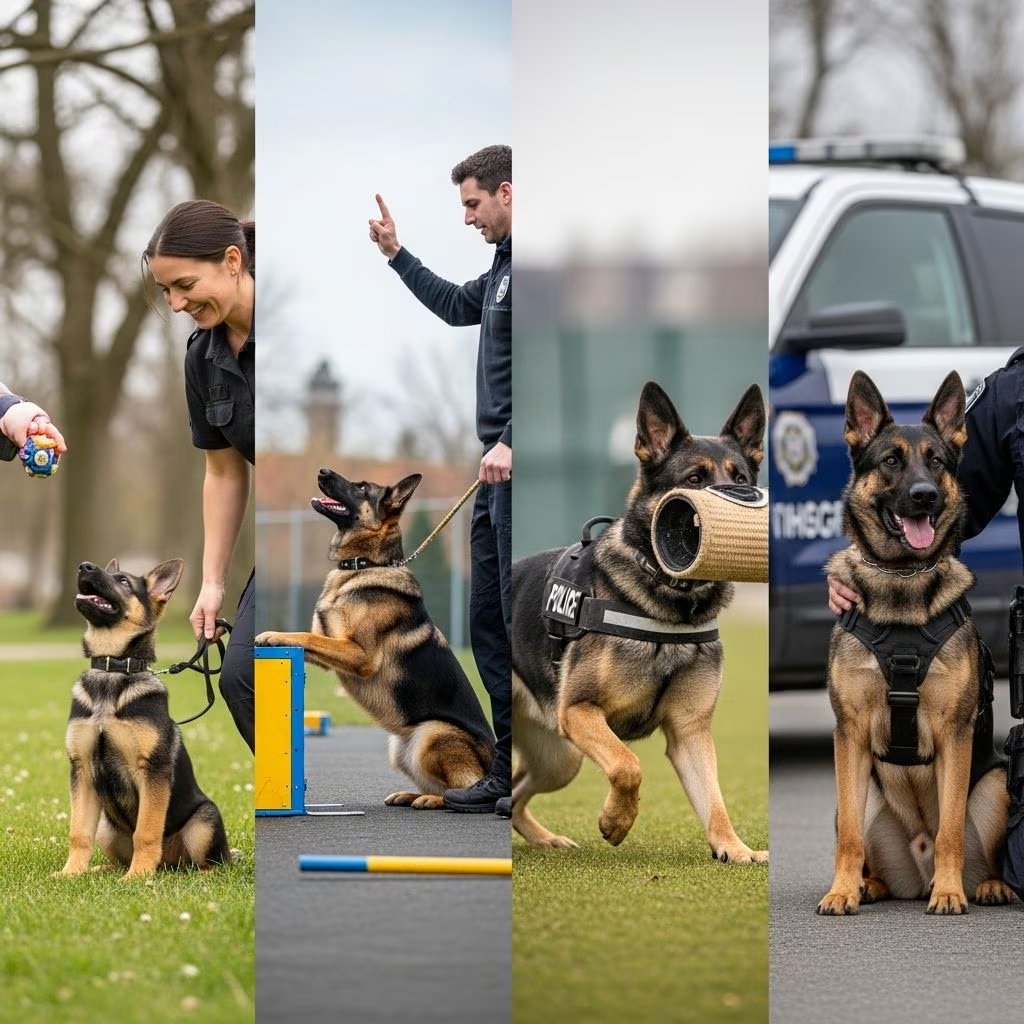
Training a police dog involves a structured progression that transforms high-potential puppies into reliable law enforcement assets. Typically, foundational skills take 4-6 months, while full operational readiness spans 1-3 years depending on specialization and individual aptitude.
Selecting the Right Candidates for Service
The journey begins with meticulous evaluation of puppies as early as 8 weeks old. Breeders and trainers assess litters for traits like high drive, intelligence, and physical robustness essential for demanding roles. Common breeds such as German Shepherds, Belgian Malinois, and Labrador Retrievers dominate due to their proven temperaments.
During this phase, evaluators observe play behavior, response to stimuli, and social interactions. Puppies showing fearlessness, focus, and eagerness to engage are flagged for potential. This early screening ensures only dogs with innate suitability advance, minimizing later failures.
- Key Traits Evaluated: Boldness in new environments, prey drive for tracking, and stable temperament under stress.
- Age Window: 8-10 weeks ideal for initial assessments to capitalize on developmental plasticity.
- Rejection Rate: High; only about 10-20% of litters typically qualify for police programs.
Building Core Foundations in Early Development
Once selected, puppies enter basic obedience and socialization from 8-12 weeks. This period focuses on imprinting commands, leash manners, and exposure to diverse stimuli like crowds, vehicles, and noises to prevent future reactivity.
Trainers employ positive reinforcement, turning lessons into rewarding games. Daily sessions build confidence through ‘shaping’—gradually guiding behaviors without punishment for errors. By 4-6 months, pups master sit, stay, heel, and recall with near-perfect reliability.
| Phase | Duration | Focus Areas |
|---|---|---|
| Puppy Socialization | 8 weeks – 4 months | Exposure, basic commands, confidence building |
| Obedience Foundation | 4-6 months | Off-leash control, distraction proofing |
Specialized Skill Development for Operational Roles
After basics, dogs are assigned roles like detection (narcotics, explosives), patrol/apprehension, or dual-purpose combining both. Single-purpose training wraps in 12-18 months, while multi-role dogs require 2-3 years due to complexity.
Detection work imprints scents via repeated pairing with rewards, progressing to ‘final response’ indications like sits or barks. Patrol dogs learn article searches, trailing, and controlled bites on suited decoys, emphasizing handler safety.
Intensification around 12 months sharpens precision; obedience must hit 100% compliance. Handler pairing occurs here, fostering team synergy through joint exercises.
Detection vs. Patrol: Training Demands Compared
| Role Type | Avg. Timeline | Core Skills | Challenges |
|---|---|---|---|
| Single-Purpose Detection | 12-16 weeks (adult start) | Scent imprinting, indication response | Odor specificity, false positives |
| Patrol/Apprehension | 16-24 weeks | Bite work, trailing, obedience | Controlled aggression, handler sync |
| Dual-Purpose | 2-3 years | All above combined | Skill integration, endurance |
Factors Influencing Training Duration
No two dogs progress identically; variables dictate timelines. A dog’s age at start matters—puppies from 8 weeks allow gradual building, while adults with drive can certify faster at 16 weeks.
- Breed Genetics: Malinois often excel quicker in agility tasks; Labs in scent work.
- Individual Aptitude: High-drive dogs grasp concepts rapidly; others need extended repetition.
- Task Complexity: Multi-skills extend timelines versus focused roles.
- Trainer Investment: Consistent, daily sessions accelerate mastery.
Departments recommend 8-16 hours biweekly post-certification, plus 24 annual hours for legal and skill refreshers.
Handler Integration and Certification Milestones
Handlers undergo parallel 6-week courses learning care, commands, and tactics. Certification tests both as a unit: obedience trials, scent searches, apprehension scenarios. Success demands seamless communication.
Full teams deploy after 2 years average, but maintenance persists lifelong—retirement around 8-10 years.
Lifelong Maintenance and Career Longevity
Training evolves in service: weekly drills sustain edge. Annual in-services cover updates on laws, health, and tactics. This ensures adaptability to threats like new synthetics in detection.
Retired K9s often thrive as pets, their skills honed for life.
Common Misconceptions About K9 Readiness
Myth: All police dogs train identically. Reality: Timelines vary by role and dog.
Myth: Training ends at certification. Reality: Ongoing practice is crucial.
FAQs
What is the fastest timeline for a police dog?
Adult single-purpose dogs can certify in 16 weeks with ideal traits.
Can any breed become a police dog?
No; only high-drive working breeds like Shepherds and Malinois typically succeed.
How often do working K9s train after deployment?
4-16 hours weekly, plus 24 annual hours.
What age do police dogs retire?
Usually 8-10 years, based on health and performance.
Do handlers train with the dog from day one?
No; dogs build skills first, then pair with handlers for 6-week integration.
References
- How Long Does It Take to Train a Police Dog? Age & … — Dogster. 2023. https://www.dogster.com/dog-training/how-long-does-it-take-to-train-police-dog
- How Long Does It Take To Train A Police Dog? — Tactical Police K9 Training. 2023. https://tacticalpolicek9training.com/how-long-does-it-take-to-train-a-police-dog/
- How Long Does K9 Training Take? – Law Enforcement Insider — YouTube (Law Enforcement Insider). 2025-08-03. https://www.youtube.com/watch?v=y3eCV59jlSc
- What to Expect in a Quality Basic K-9 Handler Course — Leerburg. 2023. https://leerburg.com/k9-course-expectations.php
- Training Programs For Working Dogs — Custom Canine Unlimited. 2023. https://customcanineunlimited.com/locations/georgia/gainesville/training-programs/



