
Poicephalus Parrots: Personality, Food & Care
Discover the calm, intelligent Poicephalus parrot—perfect for quieter homes seeking a loyal, independent companion.
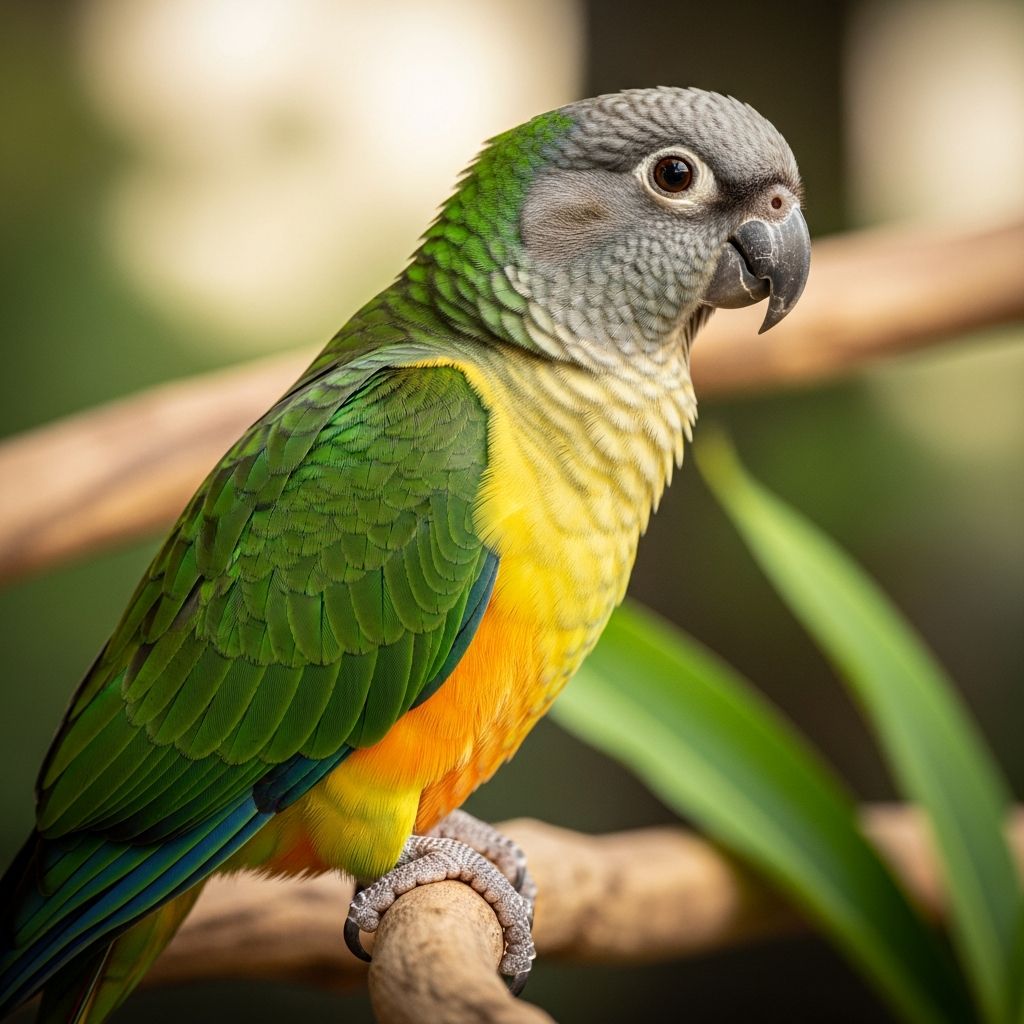
Poicephalus parrots represent a fascinating genus of African birds that have gained significant popularity as pet companions over recent decades. These medium-sized parrots are known for their distinctive appearance, calm demeanor, and manageable noise levels, making them an excellent choice for bird enthusiasts seeking a less demanding companion than many other parrot species. Whether you are a first-time bird owner or an experienced aviculturist, understanding the unique characteristics, care requirements, and behavioral traits of Poicephalus parrots is essential to providing them with an enriching and healthy life in captivity.
What Is A Poicephalus?
Poicephalus parrots are often described as “big boned” birds with a distinctly stockier build compared to other parrot species. These compact creatures possess several defining physical characteristics that make them easily recognizable among the parrot world. The Poicephalus genus comprises nine species of small to medium-sized parrots native to sub-Saharan Africa, with their natural habitats characterized by open woodlands and savannas. All species within this genus are arboreal, spending considerable time in trees and nesting in tree hollows found throughout their native ranges.
One of the most distinctive features of Poicephalus parrots is their blunt, broad tail feathers combined with proportionally large heads and beaks relative to their body size. This unusual body proportion contributes to their unique appearance and sets them apart from other hookbills. Their stocky frames and short tails give them a somewhat compact and sturdy appearance, which many bird enthusiasts find endearing. Common species kept in captivity include the Senegal, red-bellied, Meyer’s, and brown-headed Poicephalus parrots, each offering its own subtle variations in coloration and personality traits.
Physical Characteristics & Size
Poicephalus parrots typically range from small to medium in size, making them manageable companions for many households. The Senegal parrot, one of the most popular species, measures approximately 20-25 centimeters in length. These birds come in various colors, including brown, green, and red plumage, with specific coloration patterns depending on the individual species. The Senegal parrot, for instance, displays a distinctive gray head and beak, green wings and back, and a characteristic green “v” shape on the breast that resembles a vest, with the underside ranging from bright yellow to orange.
Their eye color is particularly noteworthy in younger birds, starting as gray and gradually transitioning to yellow in mature adults. Many Poicephalus parrots, particularly the smaller species such as Senegal and Meyer’s parrots, have vibrant colored irises that make it easy to observe eye pinning—a behavioral indicator of emotional arousal. Some species, like the Cape parrot, are famous for having a permanent “smile” resulting from their beak shape, which many parrot lovers find particularly charming.
Personality & Behavior
Social Nature and Temperament
While Poicephalus parrots generally do not have a reputation for being as cuddly as some other parrot species, they can be remarkably affectionate, playful, and outgoing once properly socialized. These birds genuinely appreciate having their heads and necks scratched and can form deep bonds with their human caregivers. What distinguishes Poicephalus parrots from many other species is their calm, easy-going nature and their preference for quieter home environments. Many owners appreciate that these birds are often more self-reliant than other parrot species and require less supervision and constant interaction.
Poicephalus parrots are often described as having big personalities similar to lovebirds, yet their movements tend to be more slow and deliberate compared to their close relatives. The smaller species, such as Senegal and Meyer’s parrots, are faster moving and more inclined to participate in boisterous play activities, while larger species like the Cape parrot display more measured, deliberate movements. Given proper socialization from an early age, Poicephalus parrots can bond to entire households and make excellent pets and loyal friends.
Communication & Vocalizations
Poicephalus parrots are notably quiet compared to many other parrot species, making them well-suited to apartment living and environments where noise is a concern. Their calls are generally high-pitched whistles and squawks along with mimics, yet they lack the loud, piercing screams characteristic of many larger parrot species. In the wild, Poicephalus senegalus use a series of short screeches and whistling noises, which can become quite loud and piercing when the bird is alarmed, but in captive settings with proper care, these vocalizations remain manageable.
These intelligent birds are capable of learning to talk and performing tricks, making them engaging companions for those interested in interactive bird ownership. Their vocal abilities, while present, are considerably less demanding than those of African Grey parrots, Amazons, or macaws, making them ideal for owners seeking a bird that can communicate without excessive noise pollution.
Behavioral Challenges
Despite their generally calm demeanor, Poicephalus parrots can develop challenging behaviors if not properly managed. As they reach sexual maturity at two or three years of age, they often become increasingly independent and aggressive in the years following that maturity, which catches many of their keepers off guard. Poicephalus parrots can be extremely aggressive about protecting their personal or nesting space, and a Poicephalus that has identified a territory or nest site can present significant behavioral challenges.
When defending territory, these birds may fluff up their feathers, pin their eyes, and march or climb around their cage when an undesired person enters their space. Persistent invasion of the territory can lead to painful bites, so understanding and respecting a Poicephalus parrot’s boundaries is crucial. Additionally, Poicephalus can be shy and/or phobic, so interactions should always be positive and respectful to prevent the bird from resorting to biting as its primary means of communication.
Housing & Environment
Providing appropriate housing for a Poicephalus parrot is essential to its physical and psychological well-being. These birds thrive in environments that respect their independent nature while providing adequate space for movement and activity. A well-designed cage should accommodate the bird’s stocky build and allow for natural behaviors such as climbing, foraging, and exploring.
In captivity, Poicephalus parrots are often housed in pairs in sheltered aviaries that protect them from harsh weather while providing ample space for flight and social interaction. The cage should include multiple perches of varying diameters, plenty of toys for mental stimulation and enrichment, and adequate space for the bird to spread its wings fully. Because these birds are good at entertaining themselves when provided with proper enrichment and lots of toys to chew, they require less constant supervision than some other parrot species, though regular interaction remains important for their emotional health.
Diet & Nutrition
Understanding the dietary needs of Poicephalus parrots is crucial for maintaining their long-term health and vitality. In their natural habitats, all Poicephalus species are arboreal and eat mostly fruits, nuts, and leaves, which provides insight into their nutritional requirements in captivity. Their diet consists of fruits, leaf buds, and seeds, reflecting their omnivorous nature as wild foragers. Interestingly, Poicephalus parrots are considered agricultural pests in their native ranges due to their fondness for corn and millet crops, demonstrating their natural preference for grains and seeds.
In captive settings, Poicephalus parrots should be provided with a balanced diet that includes high-quality pellets as a staple, supplemented with fresh fruits, vegetables, nuts, and seeds. A varied diet ensures that these birds receive all necessary vitamins, minerals, and nutrients to support their immune system, feather health, and overall vitality. Fresh water should always be available, and any uneaten fresh foods should be removed daily to prevent spoilage and bacterial growth.
Lifespan & Longevity
Poicephalus parrots are relatively long-lived companions, with lifespans exceeding 30 years in captivity. This extended lifespan means that adopting a Poicephalus parrot represents a significant, long-term commitment spanning multiple decades. Proper care, nutrition, veterinary attention, and environmental enrichment all contribute to maximizing the health and longevity of these birds. Many Poicephalus parrots kept in optimal conditions can live well into their fourth or fifth decade, providing decades of companionship to dedicated owners.
Reproduction & Breeding
For those interested in breeding Poicephalus parrots, understanding their reproductive characteristics is essential. Poicephalus senegalus females reach sexual maturity around two years of age, while males typically mature at three years, although they may not breed until much later, sometimes not until six or seven years of age. This delayed breeding maturity reflects the species’ natural reproductive strategies developed over thousands of years of evolution.
During breeding season, pairs typically lay between two and four eggs at a time. The female is responsible for incubation, with the incubation period lasting approximately 25-28 days. Young birds begin to venture out of the nest at about nine weeks old but remain dependent on their parents for care and feeding. Full independence is typically achieved around twelve weeks of age, after which juveniles can be separated from their parents and either acclimated to captive life or returned to social groups.
Why Poicephalus Parrots Make Excellent Pets
Poicephalus parrots have earned recognition as outstanding pet companions for several compelling reasons. Their calm, easy-going nature makes them particularly suitable for first-time bird owners seeking a less demanding species. Unlike more vocal and high-energy parrot species, Poicephalus birds thrive in quieter home environments where noise levels are a concern. Their intelligence, combined with their ability to learn words and perform tricks, provides engaging interactive opportunities for owners interested in mental stimulation activities.
The independence of these birds is another significant advantage—they are excellent at entertaining themselves when provided with appropriate toys and enrichment, making them suitable for owners with busier schedules compared to other parrot species. Their loyalty and capacity for affection, though sometimes expressed differently than in more overtly cuddly species, create meaningful bonds with their human companions. Finally, their stockier build and manageable size make them less intimidating for new bird owners while still maintaining the intelligence and personality that make parrot ownership rewarding.
Frequently Asked Questions About Poicephalus Parrots
Q: Are Poicephalus parrots good for beginners?
A: Yes, Poicephalus parrots, particularly Senegal parrots, are often recommended for first-time bird owners due to their calm, easy-going nature, lower noise levels, and relative independence compared to other parrot species.
Q: How loud are Poicephalus parrots?
A: Poicephalus parrots are considered quiet compared to most other parrot species. While they do vocalize with whistles and squawks, they lack the loud screams characteristic of African Greys, Amazons, or macaws.
Q: How long do Poicephalus parrots live?
A: With proper care, Poicephalus parrots typically live 30+ years, making them a significant long-term commitment for potential owners.
Q: Can Poicephalus parrots learn to talk?
A: Yes, Poicephalus parrots are intelligent and capable of learning to talk and performing tricks, though their vocal abilities are more limited compared to larger parrot species.
Q: What size cage do Poicephalus parrots need?
A: While specific dimensions vary by individual bird and local regulations, Poicephalus parrots need sufficiently spacious cages that allow them to spread their wings fully, climb, and move about freely while being housed in pairs in aviaries when possible.
Q: Are Poicephalus parrots social birds?
A: Yes, Poicephalus parrots are social birds that bond with their owners and can integrate into households. However, they also value independence and do not require constant interaction like some other parrot species.
References
- Poicephalus senegalus (Senegal parrot) — Animal Diversity Web, University of Michigan. Accessed 2025-11-28. https://animaldiversity.org/accounts/Poicephalus_senegalus/
- Your Poicephalus and You — Mickaboo Companion Bird Rescue. https://mickaboo.org/newsletter/apr11/art4.html
- Poicephalus Parrots — Parrot Fun Zone. https://www.parrotfunzone.com/learn-about-parrots/parrot-species/poicephalus
- Parrot Behavior Problems | Poicephalus — Good Bird Inc. https://www.goodbirdinc.com/parrot-profiles-poicephalus.html
- Poicephalus Parrots: Calm, Affectionate Companions — myBird. https://myrightbird.com/birds/poicephalus-senegal
- Poicephalus Personality, Food & Care — Lafeber Co. Pet Birds. https://lafeber.com/pet-birds/species/poicephalus/
- Poicephalus Parrot – Specialized Care for Avian & Exotic Pets — Buffalo Bird Nerd. https://www.buffalobirdnerd.com/storage/app/media/PSPPoicephalus.pdf
Similar Articles








Read full bio of Sneha Tete


