

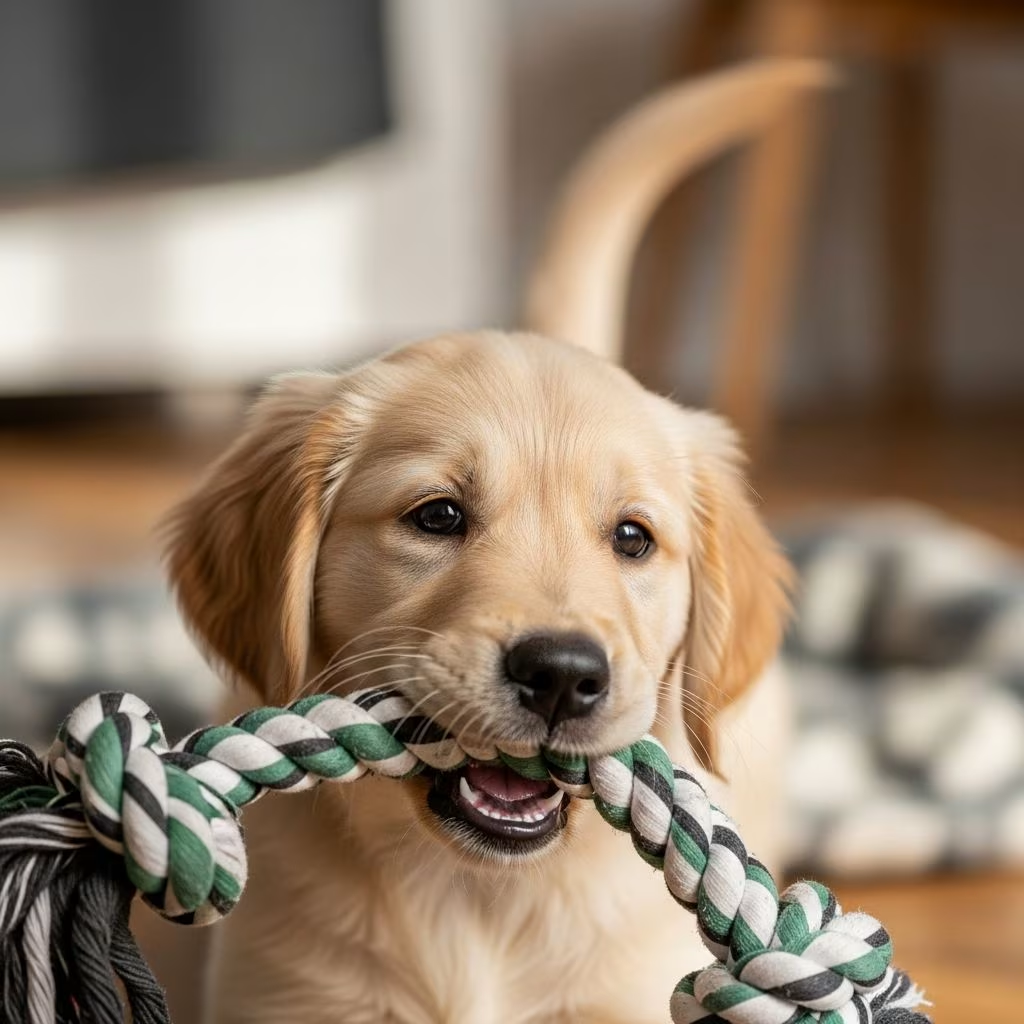
Play Biting in Puppies: A Normal Part of Development
Puppies explore their world with their mouths, and play biting is a natural and normal behavior that most new puppy owners encounter. While often mistaken for teething, nipping, mouthing, and biting in young dogs is generally a form of social play rather than a response to erupting teeth. Understanding this distinction is crucial for developing appropriate training strategies.
Teething is more likely to involve gnawing or chewing on household objects, whereas play biting is directed at family members and occurs during interactive moments. Recognizing this difference helps owners respond appropriately and prevent the behavior from escalating into problematic biting patterns as the puppy matures.
Why Is My Puppy Nipping and Biting Family Members?
When puppies nip and bite family members, they are attempting to engage in social play using the same methods they would use with littermates. This behavior stems from their natural canine development and communication style. Puppies do not understand that human skin is delicate or that their bites can cause pain. To them, mouthing and nipping are normal ways to interact and explore their environment.
The foundation for managing this behavior begins with establishing a regular daily routine that includes ample opportunities for appropriate play and exercise. Puppies that receive insufficient mental stimulation or physical activity are more likely to engage in excessive play biting as an outlet for their energy and social needs.
A common misconception is that play biting indicates dominance or aggressive tendencies. This is a misunderstanding of normal puppy behavior. Play-motivated bites still hurt and should be addressed, but they stem from a puppy’s desire to interact and play, not from an attempt to establish dominance or control over family members.
How Puppies Learn Bite Inhibition Through Play
Bite inhibition refers to a dog’s ability to control the force of their mouthing and is one of the most important lessons a puppy can learn. When puppies play with littermates, they develop this critical skill through natural consequences and feedback.
The Natural Learning Process
When puppies play together, if one puppy bites another too hard, the bitten puppy will yelp loudly and may stop playing or leave the situation entirely. This immediate feedback teaches the offending puppy that bites that are too hard result in the end of play. Through repeated interactions with multiple littermates, puppies learn to calibrate the pressure they apply with their teeth.
Sometimes one puppy bites another so hard that it causes genuine pain and screaming. This startles the offending puppy and serves as a powerful teaching moment. These lessons are essential for a puppy’s development, and people should typically not intervene in most littermate puppy-to-puppy interactions, as this natural learning process is invaluable.
The Role of Multiple Play Partners
Some puppies learn bite inhibition through a single interaction, while others require multiple play sessions with various puppies to fully understand appropriate bite pressure. Variation in learning speed is normal among different puppies and breeds. After puppies are adopted into their new homes, it can be extremely beneficial to arrange regular interactive social play periods with other dogs or puppies in the home or neighborhood, continuing this important learning process.
How Is This Lesson Taught to Family Members?
The challenge for puppy owners is replicating the natural feedback that littermates provide. When a puppy bites too hard during play with humans, most people do not adequately communicate the message that the bite was painful and unacceptable. In the beginning, some owners might allow their puppies to chew and bite on them without reprimands, and the puppy quickly assumes that this behavior is acceptable.
Sending Clear Messages Through Immediate Cessation of Play
The most effective approach is to send a clear and immediate message that mouthing and chewing on human skin is inappropriate. Remember that any contact with the skin should lead to an immediate cessation of play and attention. This sends the unmistakable message to the puppy that the bites are painful and that biting will cause the end of all positive interaction.
When your puppy bites, stop all activity immediately. You can use a sharp verbal cue such as “yip,” “ouch,” “off,” or “enough” to interrupt the behavior and indicate that play and attention will now cease. Following the verbal cue, quickly back away from the puppy or, if necessary, leave the room entirely. This teaches the puppy that biting results in isolation and loss of social interaction.
Consistency is Key
For this training approach to be effective, all family members must be consistent in their responses. If some family members allow biting while others punish it, the puppy becomes confused and the training process becomes much less effective. When all family members consistently respond the same way, the puppy should quickly learn that play biting actually leads to inattention rather than continued play.
Special Considerations for Children
Children appear to be most vulnerable to ongoing play biting because their attempts at stopping the behavior may not be properly timed or sufficiently abrupt to interrupt the puppy. In fact, a child’s response is often seen by the puppy as an invitation to increase its level of chase and play, actually escalating the behavior rather than discouraging it. Adult supervision or a head halter for training should help ensure more immediate success and protect children from injury.
Strategies for Managing Play Biting
Redirecting Play to Appropriate Activities
The goal should be to play with your puppy when it is not attention-seeking, nipping, or biting. In fact, all forms of play and attention-soliciting behavior initiated by the puppy (such as pawing, jumping, barking, or mouthing) should be ignored, as these might escalate into more intense biting.
Instead, teach your puppy to sit or lie quietly before each play session. You should soon have your puppy trained that these calm behaviors, and not play biting, will be rewarded with a play session. This “Learn to Earn” approach gives the puppy control over when play happens while establishing that calm behavior is the path to positive interaction.
Providing Appropriate Play Outlets
Different breeds and individual puppies have varying energy levels and play preferences. Providing outlets that match your puppy’s natural instincts can help redirect mouthy behavior:
– Retrieval games: Fetching exercises engage puppies physically while directing their focus away from human skin
– Hide and seek: This mentally stimulating game provides cognitive challenges alongside physical activity
– Agility and flyball: These structured activities provide intense physical engagement and mental stimulation
– Tug games with toys: Tug-of-war played with appropriate toys channels the puppy’s natural desire to use their mouth
– Nose work: Hounds and other scent-driven breeds may enjoy games in which they use their nose to find interesting treats or explore with their nose to the ground
Managing Attention-Seeking Behavior
If you allow your puppy to initiate all play and attention sessions with pawing, barking, jumping up, or mouthing, these behaviors may escalate into more intense attention-soliciting or play biting if you subsequently try to ignore the behavior. Instead, be certain that you are initiating attention and play often enough to meet your dog’s needs, providing an outlet before the puppy feels compelled to demand interaction.
Avoiding Problematic Play Patterns
Never entice the puppy to play with human hands by wrestling with the puppy, as this teaches the puppy that hands are appropriate play objects. When petting your puppy, always offer a chew toy in one hand while you pet with the other. If the puppy tries to mouth your hand during petting, immediately stop all interaction, walk away, and try again in a few minutes.
Keep track of which types of play seem to get the puppy too excited and these should be avoided to help prevent biting behavior. Each puppy and each breed has a different level of intensity or a slightly different form in which play is exhibited, so try to match the length and type of play to the needs of the specific puppy.
Although it is tempting to pick the puppy up and take it out of the room when it’s biting, your puppy may interpret this interaction as additional play and the biting may continue as you carry the puppy to a confinement location.
What About Punishment?
Various harsh discipline techniques are sometimes suggested for play biting, including slapping the puppy under the chin or forcefully holding the mouth closed. These methods are not recommended because they often backfire and create additional behavioral problems.
Physical punishment can cause pain, which may cause aggression and cause the puppy to become anxious, fearful, or perhaps more excited. These harsh techniques also require that you grab an excited puppy, which is not an easy task to accomplish. Some puppies may even misinterpret the owner’s attempts at punishment as rough play, which in turn might lead to an increase in the behavior. Slapping or hitting puppies for playful mouthing can cause them to bite harder, as they usually react by playing more aggressively.
Positive reinforcement and consistent feedback are far more effective than punishment-based approaches. By rewarding calm behavior and consistently withdrawing attention when biting occurs, you achieve lasting behavior modification without creating fear or anxiety in your puppy.
The Importance of Adequate Exercise and Play
Be assured that your puppy is not trying to dominate or control you. Your puppy needs adequate play, and each puppy has different needs based on breed, size, age, and individual temperament. If you are providing consistent training responses but still experiencing excessive play biting, the issue may be that your puppy is not receiving enough appropriate physical activity and social interaction.
Be sure to provide enough appropriate outlets for energetic puppies. If you aren’t meeting your puppy’s social, exploratory, and energy needs, then the training strategies discussed above will not work effectively. A puppy that is bored, under-exercised, or socially isolated will find outlets for their energy and social needs, including excessive mouthing and play biting.
Understanding Your Puppy’s Play Style
Remember that play biting is a component of play behavior in puppies. Play is a form of social interaction, and your puppy is practicing his social and communication skills. Your puppy is trying to play with you, even though the behavior is rough. Realize that while play-motivated bites still hurt, they come from a place of wanting interaction rather than aggression or dominance.
Often littermates play very rough and may even seem loud and aggressive. This is normal dog play behavior. Understanding this helps you distinguish between normal play biting and true aggression, allowing you to respond appropriately with training rather than punishment.
Frequently Asked Questions
Q: Is play biting a sign that my puppy will be aggressive as an adult?
A: No. Play biting is a normal developmental behavior in puppies and does not indicate future aggression. With proper training and consistent feedback on bite inhibition, most puppies outgrow this behavior as they mature and learn appropriate interaction with humans.
Q: At what age do puppies typically stop play biting?
A: Puppies usually learn bite inhibition during play with other puppies by 4.5 to 5 months of age when they have their adult teeth. However, if not properly trained during early socialization, mouthy behavior may continue into adolescence and require more intensive intervention.
Q: My puppy seems to bite harder during certain types of play. Should I stop those games?
A: Keep track of which types of play seem to get your puppy too excited and these should be avoided to help prevent biting behavior. You can reintroduce these games gradually once your puppy has better bite inhibition and impulse control.
Q: What if my puppy continues play biting after consistent training?
A: First, ensure your puppy is receiving adequate play, attention, and exercise. Each puppy has different needs, and under-stimulated puppies are more likely to engage in excessive mouthing. If the behavior persists despite adequate exercise and consistent training, consult a professional dog trainer or veterinary behaviorist.
Q: Is it okay for my puppy to bite during tug-of-war games?
A: Tug games with toys are an appropriate outlet for the puppy’s natural desire to use their mouth and can actually redirect play-biting behavior away from human skin. Tug-of-war played with toys (not hands) and appropriate toys encourages play that should not lead to mouthing of the owners.
References
- Play Biting in Puppies — VCA Animal Hospitals. Accessed 2025. https://vcahospitals.com/know-your-pet/play-biting-in-puppies
- How To Stop a Puppy From Biting — PetMD. Accessed 2025. https://www.petmd.com/dog/training/puppy-biting
- Mouthing, Nipping and Biting in Puppies — ASPCA. Accessed 2025. https://www.aspca.org/pet-care/dog-care/common-dog-behavior-issues/mouthing-nipping-and-biting-puppies
- Play Biting and Mouthing — Nebraska Humane Society. Accessed 2025. https://nehumanesociety.org/services/pet-tips-behavior-help-and-resources/play-biting-and-mouthing/
- Puppy Play Biting and Mouthing — San Francisco SPCA. Accessed 2025. https://www.sfspca.org/resource/puppy-play-biting-and-mouthing/



