

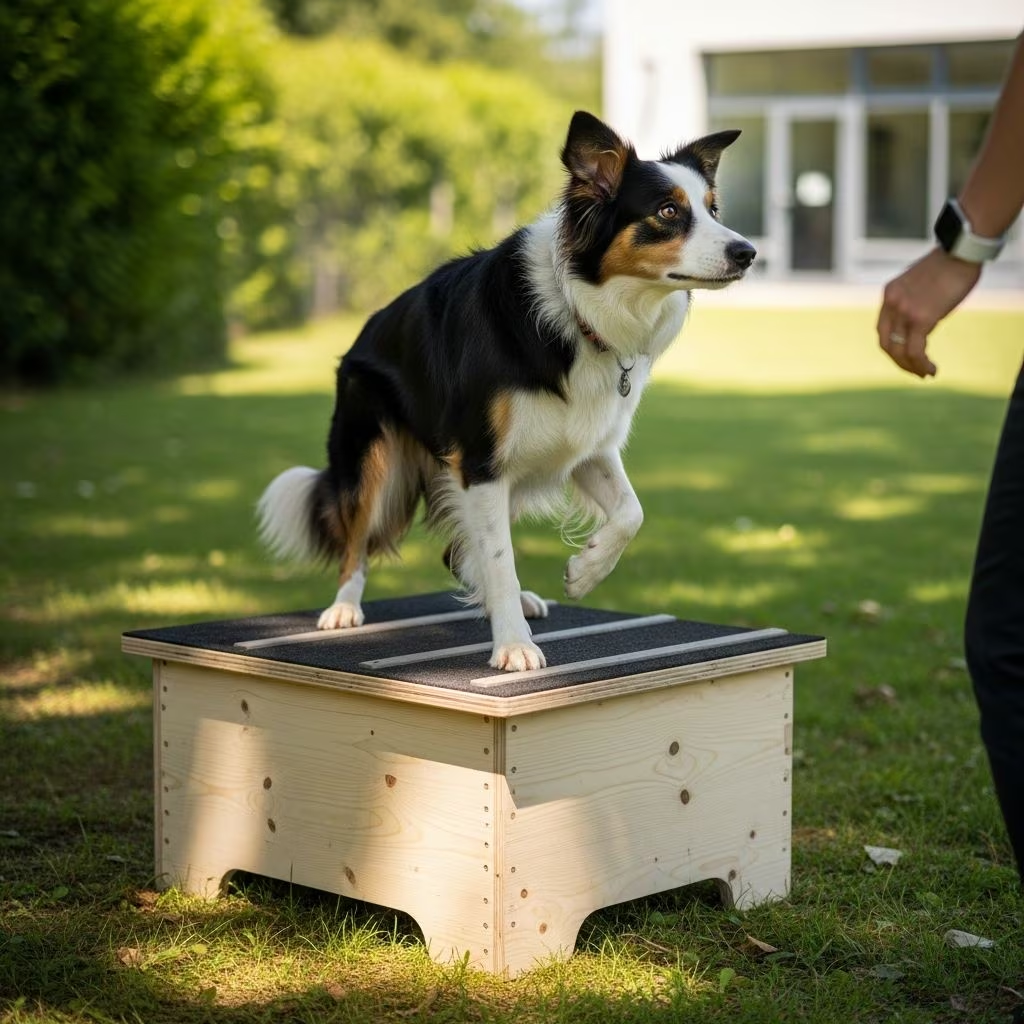
Platform dog training, also known as stationing, empowers dogs to stay calmly in a designated spot like a mat, bed, or raised platform on cue. This versatile method, favored by professional trainers, builds essential skills such as attention, patience, and impulse control, making everyday scenarios like vet visits or dinner time smoother for you and your dog.
Whether you’re managing a high-energy puppy or refining behaviors in an adult dog, platform training creates a reliable ‘go-to’ place that provides comfort and structure. It transforms chaotic moments into opportunities for success, fostering a stronger bond through positive reinforcement. As certified animal behaviorist Karen B. London explains, this technique is a game-changer for both novice and expert handlers.
What is platform dog training?
Platform dog training involves cueing your dog to position themselves—sitting, standing, or lying down—in a specific location, such as an elevated platform, training mat, or dog bed. This ‘stationing’ skill allows you to direct your dog with a simple verbal command or hand signal, promoting stillness and focus.
The beauty of this method lies in its simplicity and adaptability. You can use a sturdy raised platform for agility-like training, a familiar bed for home relaxation, or even a blanket in public spaces. Basic obedience commands like ‘sit,’ ‘stay,’ and ‘down’ integrate seamlessly, but the star cue is often ‘attention’—teaching your dog to stand squarely in front of you, eyes locked on yours, ready for instruction.
Attention is the foundation of all training. Without it, progress stalls; with it, you unlock endless possibilities. On the platform, reward this focused state with high-value treats delivered at a high frequency. Though it may appear passive, maintaining calm eye contact and readiness demands significant self-control, making it worthy of enthusiastic praise.
Professionals often start here because a attentive dog is primed for learning. Overlook this, and sessions become frustrating; nurture it, and your dog enters a eager ‘training mode’ every time they step onto their station.
What are the benefits of platform dog training?
Stationing offers multifaceted advantages, from enhancing focus to providing a mental reset. It creates a controlled training environment where dogs learn patience, reducing unwanted behaviors like jumping or wandering. Trainers prize it for its ability to contain energy, separate multiple dogs, and recover from mishaps seamlessly.
Focus
The cornerstone benefit is sharpened focus. Dogs associate platforms with work, snapping into attention upon mounting. The elevation naturally limits distractions—no ground sniffing or aimless pacing—keeping their gaze fixed on you. This containment mimics a ‘training bubble,’ ideal for teaching complex sequences or proofing against real-world temptations.
In group settings or busy homes, platforms ensure singular attention. Dogs become eager workers, anticipating cues and rewards, which accelerates learning across all behaviors. Studies from animal behavior experts affirm that location-specific cues trigger reliable responses, turning platforms into focus amplifiers.
Calm
Platforms instill calm amid chaos, especially with multiple dogs. Assign each a station to prevent squabbles, allowing safe introductions at a distance. Overwhelmed pups relax in their secure spot, observing without pressure. This separation fosters positive associations, easing social dynamics over time.
For solo dogs, it promotes relaxation during high-traffic moments, like guest arrivals or meals. Requesting ‘place’ sends them to bed, curbing excitement-driven antics. In public, a portable mat becomes a sanctuary, reducing stress at parks or events. Calm stationing builds emotional resilience, benefiting shy or reactive dogs immensely.
Reset
Mistakes happen—misheard cues, mistimed rewards, or distractions derail sessions. Platforms serve as an instant reset, erasing confusion with a return to station. This ‘fresh start’ rebuilds confidence, preventing frustration spirals. Pros frequently use it mid-session, signaling ‘let’s try again’ without dwelling on errors.
This technique mirrors positive reinforcement principles, emphasizing success over failure. Dogs quickly learn stations equal opportunity, maintaining motivation. Long-term, it teaches resilience, helping dogs bounce back from real-life setbacks like startling noises or failed recalls.
How to train your dog with platform training: A step-by-step guide
Begin with short, fun sessions using positive reinforcement. Select a quiet space, high-value treats, and a stable platform (12-24 inches high, non-slip surface). Consistency is key—use the same cue like ‘place’ or ‘station.’
- Lure to the platform: Hold a treat above the platform to guide your dog on. Mark success with a clicker or ‘yes!’ and reward immediately. Repeat 5-10 times until they step on willingly.
- Add the cue: Say ‘place’ just before luring. Fade the lure gradually, rewarding only prompted entries. Practice until they respond to voice alone.
- Build duration: Once on, reward for staying. Start with 1-2 seconds, extending to 30+ seconds. Use a release cue like ‘free’ to end stays.
- Introduce positions: Cue ‘sit,’ ‘down,’ or ‘stand’ on platform, rewarding each. For attention, step back slightly, rewarding eye contact.
- Proof and distance: Add distractions, increase distance, and vary locations. Randomize rewards per variable ratio schedules for reliability.
- Generalize: Transition to mats/beds, practicing in new environments. Aim for fluent response everywhere.
Tips: Sessions last 5-10 minutes, twice daily. End on successes. If errors occur, reset to platform without correction. Patience yields pros.
Choosing the right platform for your dog
Select based on size, breed, and purpose. Puppies start low (6 inches); large breeds need wider, sturdier bases. Materials: rubberized wood or foam for grip/safety. Portable mats suit travel; elevated ones enhance focus.
| Type | Best For | Pros | Cons |
|---|---|---|---|
| Elevated Platform | Active breeds, pros | Superior focus, containment | Bulkier, costlier |
| Dog Bed/Mat | Home, travel | Comfortable, portable | Less containment |
| Blanket | Beginners, public | Cheap, easy | Minimal structure |
Common mistakes and how to avoid them
- Over-rewarding: Taper treats via variable schedules to prevent luring dependency.
- Rushing duration: Build slowly to avoid frustration.
- Inconsistent cues: Use one word/signal always.
- Ignoring body language: Watch for stress; regress if needed.
- No generalization: Practice variably for real-world fluency.
Advanced platform training techniques
Once basics master, layer heeling (circle platform), sends from distance, or multi-dog stations. Integrate with recalls: station post-return. Use for grooming/nail trims, rewarding tolerance. Competition trainers employ for rally/obedience precision.
Frequently Asked Questions
What age can I start platform training?
Puppies as young as 8 weeks thrive; adults learn quickly too. Tailor duration to attention span.
How long until my dog masters it?
Basics in 1-2 weeks with daily practice; fluency in 4-6 weeks.
Can reactive dogs use platforms?
Yes, it builds calm; start distraction-free, progress gradually.
What if my dog jumps off?
Ignore, reset calmly without reward. Consistency rebuilds habit.
Do I need a clicker?
Helpful for precision marking, but verbal ‘yes’ works.
By Karen B. London, PhD, CAAB, CPDT-KA: Certified applied animal behaviorist specializing in aggression and behavior issues.
References
- American Veterinary Society of Animal Behavior Position Statement on Humane Dog Training — AVSAB. 2021-07-11. https://avsab.org/wp-content/uploads/2018/03/Humane_Dog_Training_Position_Statement_download-10-3-14.pdf
- Platform Training and Stationing for Dogs — Karen B. London, Kinship. 2023. https://www.kinship.com/dog-behavior/platform-dog-training
- Positive Reinforcement Training Guidelines — Association of Professional Dog Trainers. 2024. https://apdt.com/resource-center/positive-reinforcement/
- Effects of Location Cues on Canine Behavior — Journal of Veterinary Behavior (peer-reviewed). 2022-05. https://doi.org/10.1016/j.jveb.2022.03.005
- Certified Animal Behaviorist Guidelines — Animal Behavior Society. 2023-09. https://www.animalbehaviorsociety.org/animal-behavior-training-statements



