

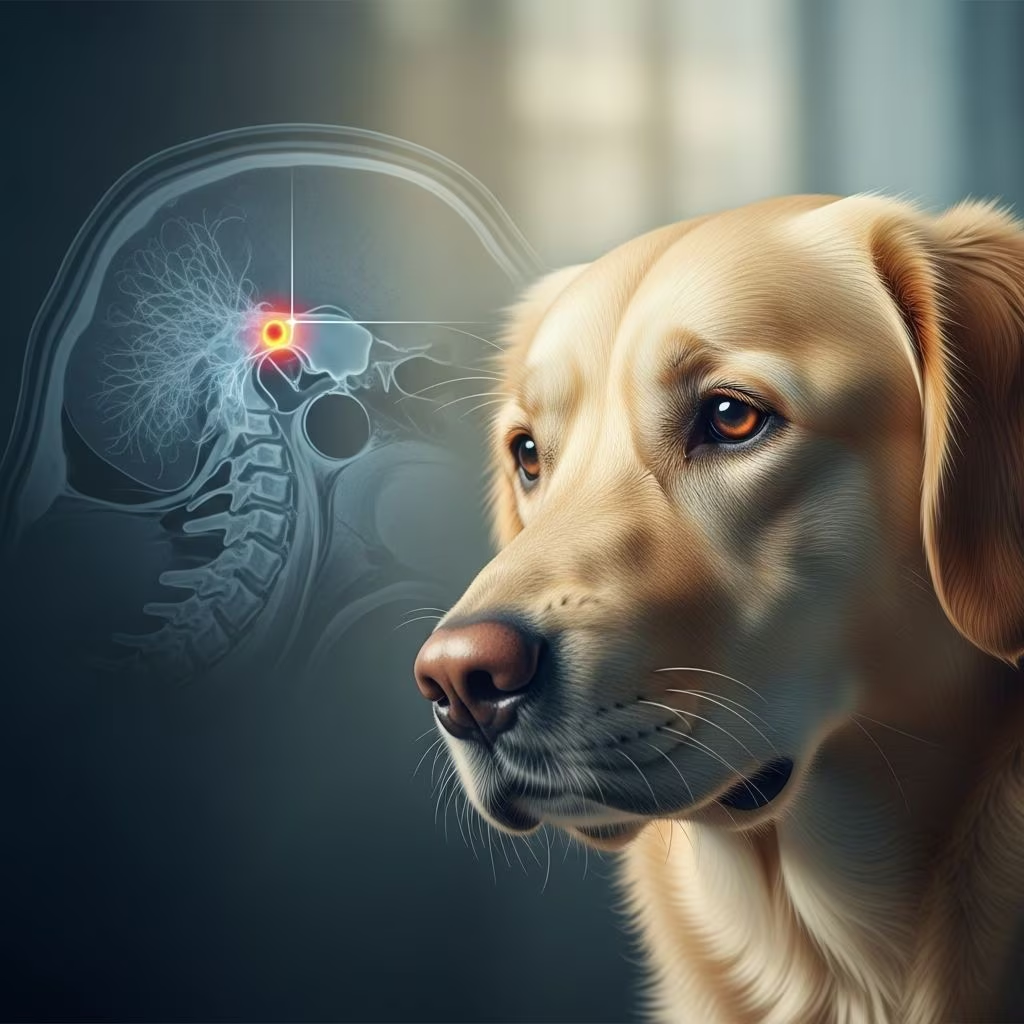
Understanding Pituitary Tumors in Dogs
The pituitary gland is a small but crucial endocrine gland located at the base of the brain in dogs. This gland produces hormones that regulate numerous bodily functions, including growth, metabolism, and reproduction. When tumors develop in the pituitary gland, they can disrupt these vital hormonal processes and cause significant health problems. Pituitary tumors are relatively common in dogs, particularly in older and smaller breed dogs. Understanding the nature of these tumors, their symptoms, and available treatment options is essential for dog owners facing this diagnosis.
Most pituitary tumors in dogs are benign adenomas rather than malignant cancers. These tumors can be categorized as either functional or non-functional based on whether they produce excess hormones. Functional tumors actively secrete hormones and cause clinical signs related to hormone excess, while non-functional tumors typically cause problems due to their size and the pressure they exert on surrounding brain tissue.
Types of Pituitary Tumors
Pituitary tumors in dogs are classified based on their hormone-producing characteristics and size. Understanding these classifications helps veterinarians determine the most appropriate treatment approach for your dog.
Functional Tumors
Functional pituitary tumors actively produce hormones that cause clinical disease. The most common functional pituitary tumor in dogs produces excessive ACTH (adrenocorticotropic hormone), leading to pituitary-dependent Cushing’s disease. These tumors cause symptoms related to elevated cortisol levels in the bloodstream. Other functional tumors may produce growth hormone or other hormones, though these are less common in canines.
Non-Functional Tumors
Non-functional pituitary tumors do not produce excess hormones but still cause problems due to their size. These tumors can grow large enough to compress surrounding brain tissue, the optic nerves, and the hypothalamus. As they enlarge, they create increased intracranial pressure that leads to neurological symptoms.
Clinical Signs and Symptoms
The symptoms of pituitary tumors in dogs vary depending on whether the tumor is functional or non-functional and which hormones are affected. Early recognition of these signs is important for timely diagnosis and treatment.
Signs of Functional Pituitary Tumors
Dogs with functional pituitary tumors, particularly those producing ACTH, typically display symptoms related to Cushing’s disease. These clinical signs develop gradually and may include:
- Excessive thirst and increased urination
- Increased appetite
- Hair loss or thinning coat
- Skin changes and infections
- Lethargy and weakness
- Excessive panting
- Abdominal distension (pot-belly appearance)
- Weight gain or loss
- Muscle weakness
Signs of Non-Functional and Large Pituitary Tumors
As non-functional tumors grow larger, they create mass effects within the brain. Dogs may exhibit neurological symptoms including:
- Behavioral changes such as depression, lethargy, or aimless wandering
- Disorientation and confusion
- Seizures
- Head pressing or tilting
- Circling or loss of coordination
- Vision problems or blindness
- Difficulty with balance and proprioception
- Decreased menace response
- Signs of increased intracranial pressure including anisocoria (unequal pupils)
Acute Presentations
In some cases, dogs may experience pituitary apoplexy, which occurs when hemorrhage develops within the tumor. This causes an acute and severe neurological crisis with sudden onset of altered mental status, stupor, and forebrain signs. Dogs experiencing pituitary apoplexy require emergency veterinary care.
Diagnosis of Pituitary Tumors
Accurate diagnosis of pituitary tumors involves a combination of clinical assessment, laboratory testing, and advanced imaging techniques. Your veterinarian will take a thorough history and perform a physical examination before recommending diagnostic procedures.
Laboratory Tests
Blood and urine tests help identify hormonal abnormalities. For suspected Cushing’s disease, your veterinarian may perform a low-dose dexamethasone suppression test or measure baseline cortisol and ACTH levels. These tests can indicate whether excessive cortisol production is present and help determine if the source is the pituitary gland or adrenal glands.
Advanced Imaging
Definitive diagnosis of pituitary tumors requires advanced imaging techniques. Magnetic Resonance Imaging (MRI) is the gold standard for visualizing pituitary tumors, as it provides detailed images of the pituitary gland and surrounding brain tissue. MRI is particularly effective at identifying smaller tumors. Computed Tomography (CT) scanning is another imaging option that can detect pituitary masses, though it may be less sensitive for smaller tumors than MRI.
Research indicates that approximately 15 to 20 percent of dogs diagnosed with pituitary tumors may develop clinical neurological signs during the first two to three years after initial diagnosis. Early diagnosis through imaging is crucial for implementing treatment before the tumor becomes large enough to cause severe neurological complications.
Treatment Options for Pituitary Tumors
Treatment strategies for pituitary tumors depend on whether the tumor is functional or non-functional, the size of the tumor, the severity of clinical signs, and your dog’s overall health status. Multiple treatment modalities are available, and your veterinarian will recommend the most appropriate approach for your individual dog.
Medical Management
Medical therapy is an effective first-line treatment for functional pituitary tumors, particularly those producing excess ACTH. Two medications have demonstrated efficacy in managing pituitary-dependent Cushing’s disease in dogs:
Mitotane works by destroying portions of the adrenal cortex, thereby reducing cortisol production. This medication requires careful monitoring and dose adjustments based on blood cortisol levels.
Trilostane inhibits enzymes involved in cortisol synthesis, effectively reducing cortisol production. The FDA has approved trilostane as the only medication specifically approved for treating both pituitary-dependent and adrenal-dependent Cushing’s disease in dogs. Many veterinarians prefer trilostane due to potentially fewer adverse effects compared to mitotane.
Both medications require regular blood monitoring to ensure cortisol levels remain in the therapeutic range. Your veterinarian will need to evaluate blood work periodically and monitor your dog’s drinking, urination, appetite, and energy levels. Many dogs with pituitary-dependent Cushing’s disease can live normal, healthy lives with well-managed medical therapy, with typical survival times of approximately two years.
Radiation Therapy
Radiation therapy represents the most effective treatment for non-functional pituitary tumors and is also an excellent option for functional tumors, particularly when medical management is insufficient or when dogs develop severe neurological signs.
How Radiation Works: External beam radiation therapy specifically targets the enlarged pituitary gland while minimizing exposure to surrounding healthy brain tissue. New radiation techniques have proven highly effective with minimal side effects.
Effectiveness: Radiation therapy reduces tumor size and produces improvement in neurological signs in dogs with pituitary tumors. Studies demonstrate median overall survival ranging from 11.7 to 24.8 months following radiation, with some dogs surviving considerably longer. Dogs presenting with severe neurological signs such as stupor or inability to ambulate at the time of treatment have a poorer prognosis, emphasizing the importance of early diagnosis and intervention.
Post-Radiation Management: Important to note, radiation therapy does not rapidly control hormone excess. Dogs with Cushing’s disease often require continued medical management for several months following radiation treatment. Serial hormone and electrolyte evaluations remain necessary. Some dogs show temporary improvement in clinical signs before relapsing, while others show minimal improvement in endocrine symptoms despite radiotherapy.
Side Effects: Radiation therapy produces remarkably few side effects. Mild skin erythema and hair loss are common. During the second week of treatment, mild injection and mucositis affecting limited portions of the pharynx may occur, requiring pain medication and soft food. Mild otitis externa may develop during the third week of treatment, manageable with topical ear medications containing corticosteroids. Transient lethargy and somnolence can occur during treatment. Acute side effects typically resolve within two to three weeks after treatment completion. Rarely, neurological signs may temporarily reappear two weeks to three months after treatment, but these delayed effects usually resolve spontaneously, though steroids may be prescribed in some cases.
Surgical Treatment
Surgical removal of pituitary tumors (hypophysectomy) is being studied and shows promise, but surgery is not yet widely available or routinely recommended due to the complexity and technical challenges of accessing the pituitary gland within the brain. While surgical techniques continue to be refined, medical and radiation therapies remain the primary treatment options available to most dog owners.
Prognosis and Survival
The prognosis for dogs with pituitary tumors varies based on several factors including the type of tumor, severity of clinical signs at diagnosis, and chosen treatment modality. Dogs with pituitary-dependent Cushing’s disease managed with medication typically survive approximately two years. Dogs treated with radiation therapy may survive two to five years, with one, two, and three-year survival rates reported at 93, 87, and 55 percent respectively. Early diagnosis and prompt treatment significantly improve outcomes and quality of life.
Monitoring and Follow-Up Care
Dogs diagnosed with pituitary tumors require ongoing monitoring and follow-up care. If your dog receives medical therapy, regular blood work is essential to monitor cortisol, ACTH, and electrolyte levels. Your veterinarian will adjust medication doses based on these results. Home monitoring of drinking, urination, appetite, and energy levels helps identify any changes requiring veterinary attention. Dogs receiving radiation therapy need follow-up imaging and endocrinologic evaluations to assess treatment response.
Frequently Asked Questions
Q: What exactly is the pituitary gland and why is it important?
A: The pituitary gland is a small endocrine gland located at the base of the brain that produces hormones regulating growth, metabolism, reproduction, and stress responses. Tumors in this gland disrupt these critical functions.
Q: Can pituitary tumors in dogs be cured?
A: While not always curable, pituitary tumors can be effectively managed with medication or radiation therapy. Many dogs live normal, comfortable lives with appropriate treatment and monitoring.
Q: How often does my dog need blood tests if treated with medication?
A: Your veterinarian will recommend a blood testing schedule based on your dog’s specific condition. Initial testing is more frequent, typically every 7-14 days after starting medication, then gradually spacing out to every few months once stable.
Q: Is radiation therapy painful for dogs?
A: Radiation therapy itself is painless. Dogs are sedated or anesthetized during treatment sessions. Some mild side effects like skin irritation may cause minor discomfort, but serious pain is uncommon.
Q: Can my dog live a normal life with a pituitary tumor?
A: Yes, many dogs with well-managed pituitary tumors live normal, happy lives. The key is early diagnosis, appropriate treatment selection, and consistent monitoring by your veterinarian.
Q: What should I do if I notice symptoms of a pituitary problem in my dog?
A: Contact your veterinarian promptly. Clinical signs like increased thirst, excessive urination, behavioral changes, or neurological symptoms warrant professional evaluation and may require advanced imaging for diagnosis.
References
- Pituitary Tumors — VCA Animal Hospitals. Accessed November 2025. https://vcahospitals.com/know-your-pet/pituitary-tumors
- Radiation therapy for pituitary tumors in the dog and cat — National Center for Biotechnology Information (NCBI). NIH. https://pmc.ncbi.nlm.nih.gov/articles/PMC1800960/
- Disorders of the Pituitary Gland in Dogs — Merck Veterinary Manual. 2024. https://www.merckvetmanual.com/dog-owners/hormonal-disorders-of-dogs/disorders-of-the-pituitary-gland-in-dogs
- Treating Cushing’s Disease in Dogs — U.S. Food and Drug Administration (FDA). 2024. https://www.fda.gov/consumers/consumer-updates/treating-cushings-disease-dogs
- Pituitary-Dependent Cushing’s Disease Treatments — University of Missouri Veterinary Health Center. 2024. https://vhc.missouri.edu/small-animal-hospital/small-animal-internal-medicine/diseases-and-treatments/pituitary-dependent-cushings-disease-treatments/



