

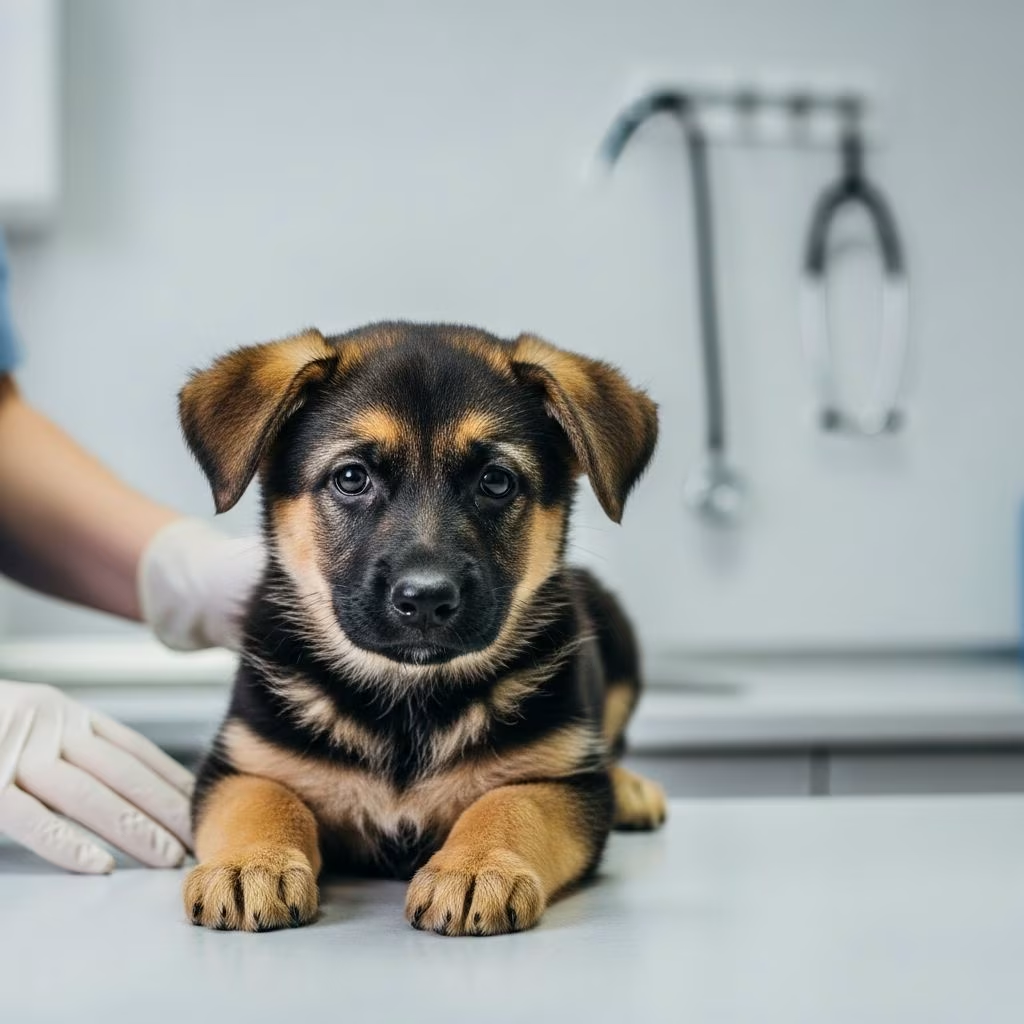
Pituitary dwarfism is a rare endocrine condition in dogs characterized by insufficient production of growth hormone from the pituitary gland, leading to impaired physical development and secondary health complications. This disorder primarily affects young puppies, resulting in a distinctive appearance and ongoing medical needs that require vigilant veterinary oversight.
Understanding the Pituitary Gland’s Role in Canine Growth
The pituitary gland, a small structure at the base of the brain, acts as the body’s master endocrine organ, secreting hormones that regulate growth, metabolism, and reproduction. In dogs with pituitary dwarfism, dysfunction in this gland—often due to genetic mutations or developmental anomalies—prevents adequate release of growth hormone (GH), thyroid-stimulating hormone (TSH), and other essential hormones. This leads to panhypopituitarism, where multiple hormone deficiencies compound the effects, stunting skeletal maturation and organ development.
Breeds such as German Shepherds, Weimaraners, Dachshunds, Corgis, and certain wolfdog hybrids show higher susceptibility, with hereditary forms linked to specific genetic deletions causing pituitary hypoplasia or cysts. Unlike skeletal dwarfism from bone disorders, pituitary dwarfism proportionally affects the entire body, though secondary issues like weakened immunity arise over time.
Recognizing Early Physical Manifestations
Puppies with this condition often appear normal at birth but diverge from littermates by 8-12 weeks, exhibiting markedly smaller size disproportionate to their age. Key physical signs include:
- Shortened limbs paired with a relatively longer torso, creating a puppy-like body structure.
- Bulging eyes due to underdeveloped facial bones, sometimes accompanied by a protruding tongue.
- Retained puppy bark that remains high-pitched into adulthood.
- Swollen abdomen from poor muscle tone and fat distribution irregularities.
These traits stem directly from halted epiphyseal closure in long bones, where growth plates fail to fuse properly without sufficient GH. Owners may initially mistake affected pups for runts, but persistent lack of growth prompts further investigation.
Skin and Coat Abnormalities: Hallmark Indicators
One of the most noticeable features is progressive alopecia, starting symmetrically on the trunk and flanks around 4-6 months. The coat transitions to a soft, lanugo-like texture lacking guard hairs, becoming brittle and prone to breakage. Skin hyperpigmentation, thinning, and scaling follow, with increased susceptibility to infections due to impaired immune function.
These dermatological changes result from combined GH and thyroid hormone shortages, which disrupt keratin production and skin barrier integrity. In advanced cases, complete hairlessness except for the head and legs occurs, often resembling adult-onset endocrinopathies.
Developmental and Dental Delays
Dental eruption is significantly postponed, with adult teeth emerging months later than normal or remaining absent, leading to malocclusion and misalignment. This stems from deficient somatotropin influencing tooth bud maturation.
Reproductive organs also underdevelop: males show small, immature testicles and infertility, while females fail to enter estrus cycles. These signs underscore the broad hormonal deficits characteristic of the disorder.
Secondary Health Complications
Beyond growth failure, pituitary dwarfism predisposes dogs to:
- Hypothyroidism, causing lethargy, weight gain, and further coat loss.
- Musculoskeletal issues like hip dysplasia, patellar luxation, and atlanto-axial instability.
- Eye disorders including cataracts and retinal atrophy.
- Recurrent infections from immunosuppression.
- Respiratory challenges such as snoring and dyspnea from anatomical distortions.
Without intervention, progressive pituitary degeneration leads to emaciation, renal failure, and death by 3-5 years. Early detection is crucial to mitigate these risks.
Diagnostic Approaches for Confirmation
Veterinarians diagnose pituitary dwarfism through a multi-faceted process combining history, physical exams, and specialized tests. Initial assessments note breed predisposition, growth charts, and clinical signs like alopecia and proportionate dwarfism.
| Test Type | Purpose | Key Findings |
|---|---|---|
| Genetic Testing | Detects mutations (e.g., LHX3/ PROP1 deletions) | Confirms hereditary form in susceptible breeds |
| Stimulation Tests | Measures GH, TSH, ACTH response to releasing hormones | Blunted or absent hormone peaks |
| Baseline Bloodwork | Assesses IGF-1, T4 levels | Low insulin-like growth factor-1 (IGF-1), hypothyroidism |
| Imaging (MRI/CT) | Visualizes pituitary structure | Hypoplasia, cysts, or tumors |
Endocrine profiling differentiates it from hypothyroidism or nutritional deficits, ensuring accurate prognosis.
Management and Treatment Strategies
No cure exists, but treatments aim to supplement deficiencies and support quality of life. Primary options include:
- Growth Hormone Therapy: Porcine GH injections (limited availability) stimulate growth if initiated early; monitor IGF-1 to avoid excesses causing diabetes.
- Progestin Therapy: Medroxyprogesterone acetate (2.5-5 mg/kg every 3-6 weeks) induces endogenous GH production via mammary glands.
- Thyroid Supplementation: Levothyroxine for secondary hypothyroidism.
- Supportive Care: Balanced nutrition, infection prophylaxis, exercise, and dermatologic treatments.
Treatment extends lifespan to 5-7 years, though complications persist. Owners must commit to lifelong monitoring.
Breeds at Risk and Genetic Considerations
Hereditary pituitary dwarfism predominates in:
- German Shepherds (most common, via aberrant splicing mutation).
- Weimaraners, Spitz breeds.
- Corgis, Dachshunds, Basset Hounds.
- Saarloos and Czechoslovakian Wolfdogs.
Genetic screening is recommended for breeding stock in these lines to prevent propagation.
Living with a Dwarfed Dog: Daily Care Tips
Provide a high-quality, protein-rich diet tailored to small breeds, avoiding obesity from metabolic slowdown. Regular grooming combats skin issues, while low-impact exercise maintains muscle without joint strain. Vaccinations and parasite control are vital given infection risks. Monitor for behavioral shifts like lethargy, signaling thyroid flares.
Prognosis and Lifespan Expectations
Untreated dogs rarely exceed 3-5 years due to multi-organ failure. With aggressive therapy, many reach 5-7 years, enjoying good comfort if secondary conditions are managed. Prognosis improves with early intervention before irreversible damage.
Frequently Asked Questions (FAQs)
Can pituitary dwarfism be prevented?
Genetic testing and responsible breeding in at-risk breeds reduce incidence, but sporadic cases from birth trauma or infections occur.
Is surgery an option for dwarfed dogs?
No, as it’s hormonal, not structural; hormone therapy is the mainstay.
Do dwarf dogs suffer pain?
Not inherently, but untreated secondary issues like dysplasia can cause discomfort; pain management addresses this.
Can affected dogs breed?
Rarely, due to infertility from gonadotropin deficiency.
How do I know if my puppy has it?
Consult a vet if growth lags post-weaning with skin/coat changes.
References
- Pituitary Dwarfism in Dogs: Diagnosis and Management — PetCareRx. 2023. https://www.petcarerx.com/article/pituitary-dwarfism-in-dogs-diagnosis-and-management/6711
- Pituitary Dwarfism in Dogs — EmbarkVet. 2024. https://embarkvet.com/products/dog-health/health-conditions/pituitary-dwarfism/
- Pituitary Dwarfism in Dogs – Symptoms, Causes, Diagnosis — WagWalking. 2024. https://wagwalking.com/condition/pituitary-dwarfism
- Canine Pituitary Dwarfism — Mississippi State University College of Veterinary Medicine. 2018-01-26. https://www.vetmed.msstate.edu/sites/www.vetmed.msstate.edu/files/presentations/1.26.18%20Canine%20Pituitary%20Dwarfism%20(Ashley%20Plover).pdf
- What to Know About Dwarfism in Dogs — American Kennel Club (AKC). 2024. https://www.akc.org/expert-advice/health/dwarfism-in-dogs/



