

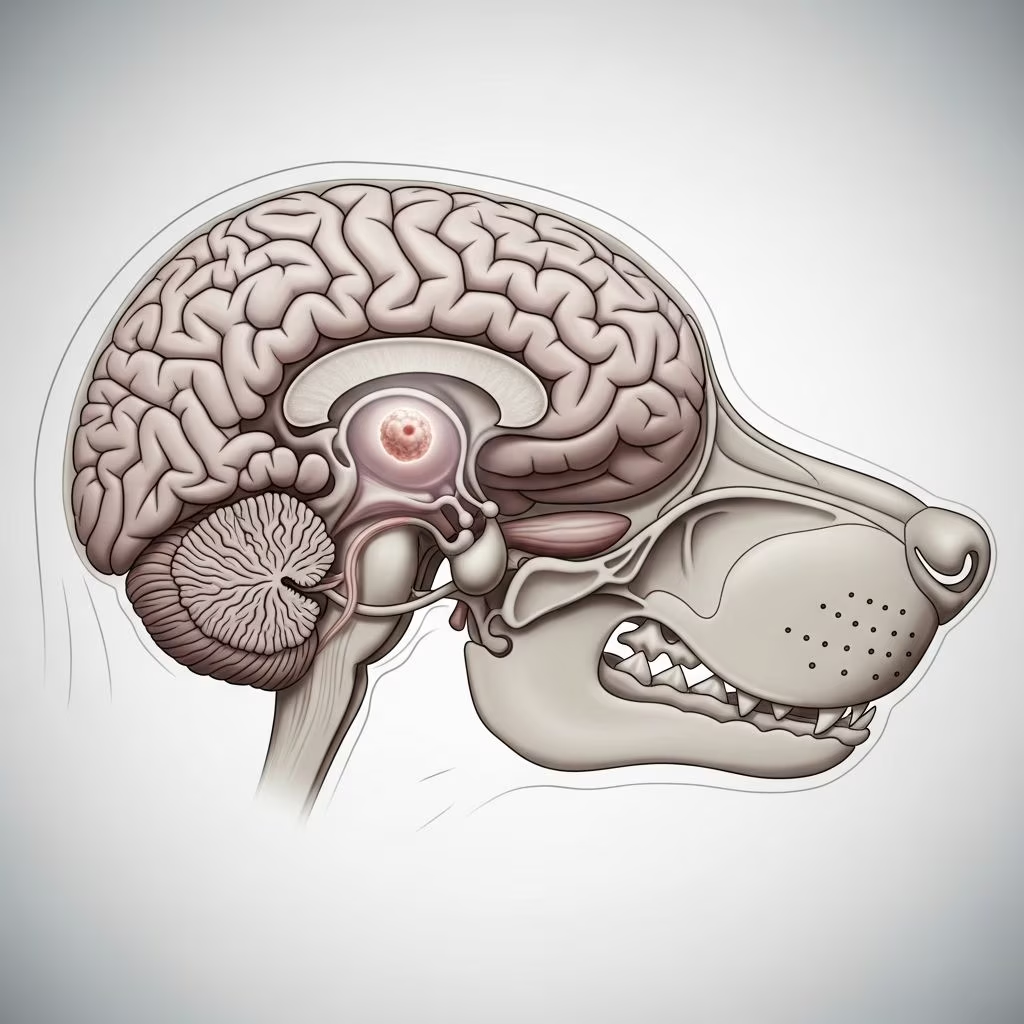
Pituitary-dependent hyperadrenocorticism, commonly known as Cushing’s disease, arises from a benign tumor in the pituitary gland that overstimulates cortisol production in the adrenal glands. This condition primarily impacts middle-aged to older dogs, representing about 85% of all hyperadrenocorticism cases in canines.
Understanding the Hormonal Imbalance
The pituitary gland, located at the brain’s base, regulates various hormones, including adrenocorticotropic hormone (ACTH). In pituitary Cushing’s, a microadenoma or macroadenoma secretes excessive ACTH, prompting the adrenal glands to produce too much cortisol. This stress hormone, vital in moderation, becomes detrimental when elevated chronically, weakening immunity, altering metabolism, and causing multisystemic issues.
Dogs aged 7-12 years are most susceptible, with breeds like Poodles, Dachshunds, Terriers, and Beagles showing higher incidence. Cats experience it rarely, often alongside diabetes mellitus, where polyuria stems from concurrent conditions rather than direct cortisol effects.
Recognizing Early Warning Signs
Symptoms develop gradually, often dismissed as aging. Key indicators include:
- Excessive thirst (polydipsia) and urination (polyuria), leading to frequent potty breaks and household accidents.
- Increased appetite (polyphagia), resulting in begging or food scavenging.
- Pot-bellied appearance from muscle wasting and fat redistribution to the abdomen.
- Skin changes: thinning, fragility, poor healing, and symmetrical hair loss starting on flanks and trunk.
- Panting, lethargy, and reduced exercise tolerance.
In advanced stages, complications like urinary tract infections, hypertension, and diabetes emerge due to cortisol’s immunosuppressive and gluconeogenic effects. Cats may exhibit fragile skin more prominently than dogs.
Diagnostic Pathways for Confirmation
Diagnosis requires ruling out mimics like diabetes or hypothyroidism. Vets start with history, physical exam noting pot belly and alopecia, then bloodwork showing elevated alkaline phosphatase, stress leukogram, and diluted urine specific gravity.
Core screening tests include:
| Test | Purpose | Advantages | Limitations |
|---|---|---|---|
| Urine Cortisol-to-Creatinine Ratio (UCCR) | Initial screen | Owner-collected at home; sensitive | Low specificity; confirm with others |
| Low-Dose Dexamethasone Suppression Test (LDDST) | Screening and differentiation | High sensitivity (>95%) | False positives in sick dogs (>50% non-adrenal illness) |
| ACTH Stimulation Test | Confirms hypercortisolemia | Specific; monitors treatment | Less sensitive for mild cases |
For differentiation, high-dose dexamethasone suppression test (HDDST) or endogenous ACTH levels help distinguish pituitary (85%) from adrenal (15%) forms. Advanced imaging like MRI assesses pituitary tumor size, crucial for macroadenomas causing neurological signs.
Management Strategies: Medical Approaches
Treatment focuses on cortisol reduction since pituitary tumors are rarely malignant. The FDA-approved trilostane (Vetoryl) is first-line, inhibiting 3-beta-hydroxysteroid dehydrogenase to block cortisol synthesis. Start at 1-3 mg/kg PO every 12 hours with food; monitor via ACTH stim tests 10-14 days post-initiation, then every 3-6 months.
Alternative mitotane (Lysodren) destroys adrenocortical cells but requires careful loading and lifelong monitoring due to Addisonian crisis risk. Both demand frequent vet visits initially.
Contraindications for trilostane: kidney/liver disease, pregnancy, certain cardiac meds. Success rates: 80-90% clinical improvement within weeks, though hair regrowth takes months.
Surgical and Radiation Interventions
Surgery suits select cases. Adrenalectomy cures adrenal-dependent forms if benign and resectable, but pituitary hypophysectomy is specialized, offering rapid remission (80% success) with risks like diabetes insipidus requiring hormone replacement.
Radiation targets pituitary macroadenomas (>10mm), shrinking tumors in 40-50% cases, often combined with medical therapy. Not widely available.
For iatrogenic Cushing’s from steroid overuse, taper gradually to avoid original disease flare. Cats respond poorly to meds; bilateral adrenalectomy is preferred.
Monitoring and Long-Term Care
Lifelong management involves quarterly ACTH stims, bloodwork, and dose tweaks. Owners track water intake, appetite, and activity. Costs: diagnosis $500-2000, monthly meds $50-150 (weight-dependent), surgery $3000-6000.
Prognosis: median survival 2-3 years post-diagnosis with treatment; untreated, 6-12 months due to complications like thromboembolism. Early intervention enhances quality of life.
Preventive Measures and Owner Education
No prevention exists, but annual senior wellness exams aid early detection. Educate on steroid risks and symptom vigilance. Nutrition: low-fat diets combat pancreatitis risk; exercise maintains muscle.
Frequently Asked Questions (FAQs)
What breeds are prone to pituitary Cushing’s?
Poodles, Dachshunds, Boston Terriers, Boxers, and Beagles show predisposition.
Can Cushing’s be cured in dogs?
Pituitary form is managed lifelong medically; cure possible via hypophysectomy or adrenalectomy for adrenal tumors.
How often should blood tests be done?
Every 1-3 months initially, then 3-6 months once stable.
Is trilostane safe long-term?
Yes, with monitoring; avoid in liver/kidney compromised pets.
Do cats get Cushing’s like dogs?
Rarely; treatment differs, favoring surgery.
Holistic support includes stress reduction, omega-3 supplements for skin, and infection vigilance. Collaborate with endocrinologists for complex cases.
References
- Cushing’s Disease in Dogs: Signs and Treatment — MedVet. 2023. https://www.medvet.com/cushings-disease-in-dogs/
- Treatment for Cushing’s Disease in Dogs — Badger Veterinary Hospital. 2024-04-15. https://www.badgervet.com/site/blog/2024/04/15/treatment-cushings-disease-dogs
- Cushing Disease in Animals: Hyperadrenocorticism — MSD Veterinary Manual. 2023. https://www.msdvetmanual.com/endocrine-system/the-pituitary-gland/cushing-disease-pituitary-dependent-hyperadrenocorticism-in-animals
- Treating Cushing’s Disease in Dogs — U.S. Food and Drug Administration (FDA). 2023. https://www.fda.gov/consumers/consumer-updates/treating-cushings-disease-dogs
- Cushing’s Syndrome — Cornell University College of Veterinary Medicine. 2023. https://www.vet.cornell.edu/departments-centers-and-institutes/riney-canine-health-center/canine-health-information/cushings-syndrome
- Canine Hypercortisolism (Cushing’s Syndrome) — American Animal Hospital Association (AAHA). 2023. https://www.aaha.org/resources/2023-aaha-selected-endocrinopathies-of-dogs-and-cats-guidelines/canine-hypercortisolism-cushings-syndrome/



