

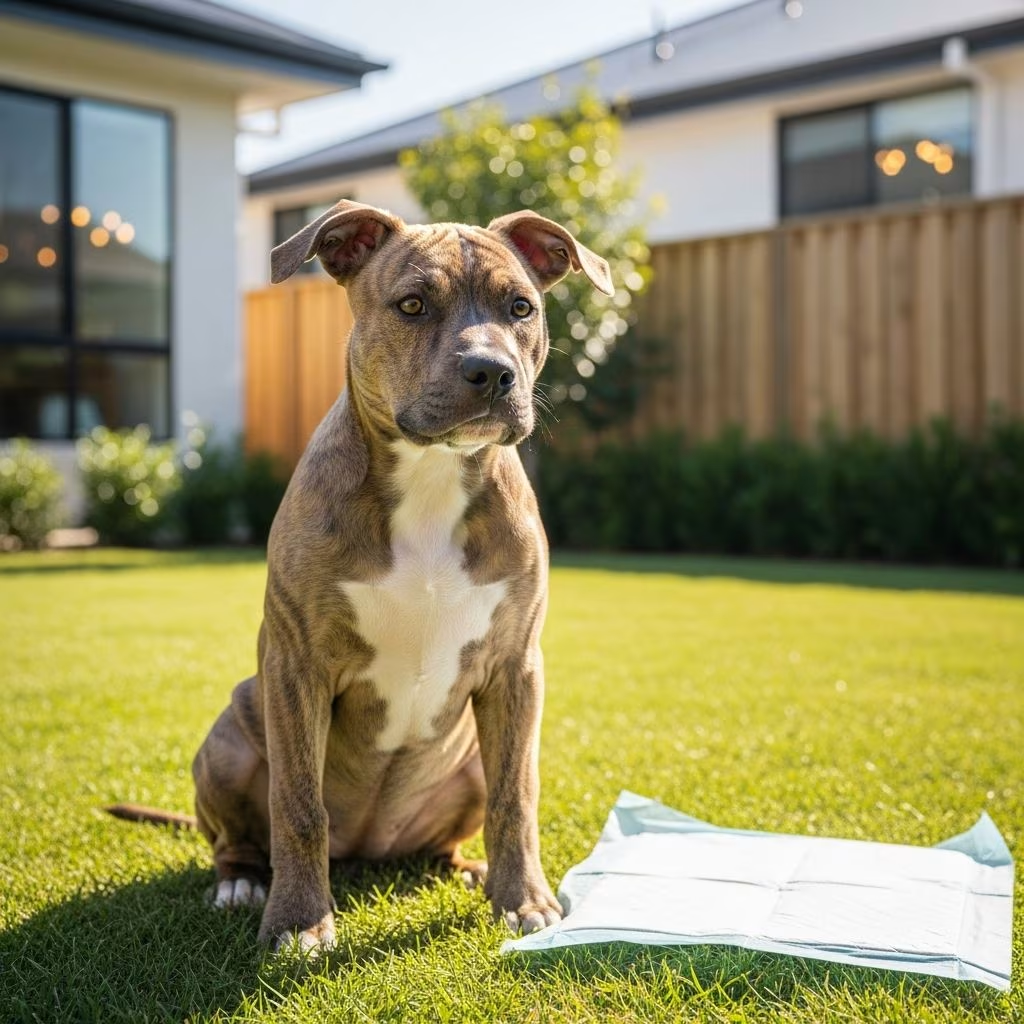
Bringing a new Pitbull puppy into your home is an exciting experience, but one of the most critical challenges new owners face is housebreaking. Unlike many other dog breeds, Pitbulls are naturally intelligent and eager to please their owners, making them surprisingly responsive to proper training techniques. However, success depends on understanding their developmental needs, implementing consistent strategies, and maintaining patience throughout the process. This comprehensive guide provides evidence-based approaches to transform your Pitbull puppy from a constant source of indoor accidents into a reliably housetrained companion.
Understanding Your Pitbull’s Training Timeline
The foundation of successful housebreaking begins with realistic expectations about your puppy’s developmental stage. Pitbull puppies typically reach the ideal housebreaking age between 8 to 16 weeks old. At this developmental window, puppies have enough bladder control to begin learning appropriate elimination behaviors, yet they remain young enough to absorb new routines without ingrained bad habits. Starting too early—before 8 weeks—proves frustrating because puppies lack sufficient physiological control over their bladder and bowel muscles. Conversely, delaying training beyond 16 weeks allows puppies extended time to practice inappropriate elimination indoors, making the retraining process considerably more challenging and time-consuming.
Understanding that complete housebreaking typically requires several months helps owners maintain realistic timelines. Your Pitbull puppy will gradually demonstrate improved bladder and bowel control as neurological development continues, but this process cannot be rushed. Consistency during these formative weeks establishes neural pathways that support lifelong appropriate elimination habits.
The Critical Role of Positive Reinforcement
Positive reinforcement stands as the cornerstone of effective housebreaking, directly addressing how Pitbulls’ temperament naturally responds to encouragement rather than punishment. When your puppy eliminates in the appropriate location, immediately deliver enthusiastic verbal praise combined with high-value treats. This approach leverages the Pitbull breed’s inherent desire to please their owners, creating a powerful motivational framework that encourages repeated appropriate behavior.
Conversely, yelling at, hitting, or displaying anger when accidents occur creates fear and anxiety that actually undermines housebreaking progress. These negative responses teach puppies to fear the act of elimination itself or to avoid eliminating in front of their owners—not to eliminate in appropriate locations. Frightened puppies may hide to have accidents, making supervision and correction even more difficult. The key distinction involves rewarding successful outdoor elimination rather than punishing indoor mistakes.
Timing matters critically with positive reinforcement. Provide rewards immediately upon completion of elimination outside, not after returning indoors. This timing creates a clear mental association between the specific location and behavior and the positive consequence that follows.
Establishing Structured Feeding Schedules
A predictable feeding schedule creates predictable elimination patterns, which is fundamental to housebreaking success. When you feed your Pitbull puppy at consistent times daily, their digestive system develops a corresponding rhythm for processing food and waste elimination. This regularity allows you to anticipate when your puppy needs outdoor bathroom breaks, dramatically increasing the likelihood of catching them in the act of appropriate elimination.
Most veterinarians recommend feeding puppies three smaller meals spread throughout the day rather than one or two large meals. This approach accommodates puppies’ smaller stomach capacity while providing multiple opportunities to establish successful outdoor elimination patterns. As puppies mature—typically around 6 months—you can transition to twice-daily feeding schedules while maintaining the consistency principle.
Equally important as feeding consistency is eliminating free-feeding practices. Leaving food available throughout the day prevents you from predicting elimination timing and undermines your ability to supervise appropriately. Measure portions according to your puppy’s age and size, remove uneaten food after 15-20 minutes, and maintain strict feeding times each day.
Designating a Specific Potty Location
Dogs inherently prefer repeating learned behaviors in familiar environments, and housebreaking leverages this instinct by establishing a dedicated elimination spot. When you consistently take your puppy to the same outdoor location for bathroom breaks, they begin associating that specific area with the appropriate place for elimination. Over time, the scent markers left behind—both visual and olfactory—reinforce that location as the designated bathroom space.
Select a location that is:
- Away from primary living areas to prevent confusion about appropriate indoor versus outdoor boundaries
- Quiet and relatively free from distractions during the training phase
- Accessible year-round, including during adverse weather conditions
- Separate from areas where your puppy plays, eats, or sleeps
This designated spot prevents multiple bare patches across your yard from concentrated urine damage while creating a clear learning boundary for your puppy. If you lack a private yard, designate a specific street corner or park area that you visit consistently at predetermined times.
Implementing Frequent Outdoor Breaks
Puppies lack mature bladder control, requiring outdoor breaks approximately every 3 to 4 hours during the initial housebreaking phase. This frequency accommodates your puppy’s developmental stage while maximizing opportunities for successful outdoor elimination and positive reinforcement. Young puppies simply cannot physically hold their urine for extended periods—attempting to do so causes unnecessary stress and sets them up for failure.
Critical moments requiring immediate outdoor breaks include:
- First thing upon waking in the morning
- Immediately after eating meals
- Following active play sessions
- After waking from daytime or nighttime naps
- Before bedtime
- Before departing your home
- Upon returning home
As your puppy matures and demonstrates improved bladder control, gradually extend the intervals between breaks. By 12-16 weeks, puppies typically manage 4-5 hour intervals, and by 6 months, they may hold urine for 6+ hours, though this varies individually.
Crate Training as a Housebreaking Tool
Dogs possess an instinctive aversion to eliminating where they sleep, making crate training an invaluable housebreaking component. When confined to a properly sized crate, puppies are motivated to hold their elimination by this natural instinct. This tool allows you to prevent unsupervised accidents while establishing strong bladder control habits.
Crate selection requires careful consideration of size. The crate should be spacious enough for your puppy to stand, turn around, and lie down comfortably, but not so large that they can eliminate in one corner while sleeping in another. As Pitbulls grow rapidly, plan to use expandable crates with adjustable dividers, or upgrade to larger crates as your puppy matures.
Never use the crate as punishment or leave your puppy confined for excessive periods. Instead, create positive associations by:
- Introducing the crate gradually with favorite toys and treats
- Leaving the door open initially to allow voluntary entry
- Establishing a consistent schedule for crate time and outdoor elimination
- Immediately removing your puppy to the designated potty spot upon exiting the crate
Maximum recommended crate time varies by age: 8-week-old puppies typically manage 30-60 minutes, 12-week-old puppies 1-2 hours, and 16-week-old puppies 3-4 hours. Adult dogs may remain crated for 6-8 hours, though extending beyond this strains their physical capacity.
Using Consistent Verbal Commands
Language consistency eliminates confusion during the housebreaking process. Select a simple, distinct command—such as “Go potty,” “Do your business,” or “Outside”—and use it exclusively throughout training. Each time you take your puppy to the designated elimination spot, repeat your chosen command consistently before allowing them to explore.
This verbal association eventually allows you to prompt elimination on command, providing convenience for outdoor activities, veterinary visits, or behavioral management. However, this utility develops only through consistent repetition using the identical command across all elimination opportunities. Varying commands confuses puppies and disrupts the association-learning process.
Combine your verbal command with consistent body language and timing. Take your puppy to the designated spot, give your command, and then allow them freedom to explore. Once elimination occurs, deliver immediate praise and rewards while still at the outdoor location.
Supervision and Environmental Management
Active supervision during indoor time dramatically reduces housebreaking timeline by allowing immediate correction during inappropriate elimination attempts. This involves maintaining constant visual contact with your puppy indoors—not passive monitoring from another room, but attentive observation that allows you to recognize the behavioral precursors to elimination.
Common pre-elimination behaviors include:
- Sudden restlessness or pacing
- Sniffing or circling behaviors
- Whining or communication attempts
- Sudden departure from current activity
- Posturing changes indicating imminent elimination
When you observe these precursor behaviors, immediately interrupt gently and carry your puppy to the designated outdoor potty spot. This intervention redirects the elimination behavior to the appropriate location while reinforcing your supervision role. Simultaneously, environmental management involves restricting puppy access to areas where accidents commonly occur through strategic gate placement or closed doors.
Managing Accidents With Patience and Perspective
Accidents are not failures but normal components of puppy development. When indoor elimination occurs, resist the urge to display anger or frustration. Instead, calmly interrupt the behavior if you catch it in progress, then immediately take your puppy outside to the designated potty spot. If you discover an accident after the fact, simply clean it thoroughly with enzymatic cleaners designed for pet accidents and adjust your supervision strategy.
Punishing puppies for accidents—even through negative verbal responses—teaches them to fear elimination or hide to have accidents rather than learning appropriate bathroom locations. Some puppies develop anxiety around their owners’ presence, actually undermining housebreaking progress by creating fear associations with elimination itself.
Adapting to Individual Puppy Variations
While the housebreaking fundamentals remain consistent across Pitbull puppies, individual variations exist in learning speed, temperament, and physical development. Some puppies demonstrate reliable bladder control earlier than peers, while others require extended timelines. Factors influencing variation include genetics, digestive health, prior environmental experience, and individual personality traits.
Monitor your specific puppy’s elimination patterns and adjust your outdoor break schedule accordingly. If your puppy consistently needs breaks before the typical 3-4 hour interval, provide more frequent opportunities rather than forcing adherence to general guidelines. Conversely, as your puppy demonstrates reliable extended holding capacity, gradually increase intervals between breaks.
Frequently Asked Questions
How Long Does Pitbull Housebreaking Typically Require?
Complete housebreaking generally requires 4-6 months of consistent training, though some Pitbulls demonstrate reliability within 8-12 weeks with intensive effort. Variables affecting timeline include age at which training begins, consistency of household members implementing training methods, puppy individual learning capacity, and prior environmental exposure. Starting at 8-10 weeks with highly consistent methods produces faster results than beginning with older puppies who have practiced indoor elimination.
Can Pee Pads Support Housebreaking Success?
Pee pads create conflicting signals by designating indoor locations as appropriate elimination areas, potentially undermining the housebreaking goal of establishing exclusive outdoor elimination. While pee pads offer convenience during adverse weather or when immediate outdoor access is impossible, they delay teaching puppies that outdoor elimination is the only acceptable option. If you use pee pads temporarily, transition to exclusive outdoor elimination gradually rather than relying on pee pads long-term.
What Causes Regression in Previously Housetrained Puppies?
Regression—returning to indoor elimination after demonstrating reliable outdoor elimination—typically results from inconsistent routines, insufficient outdoor breaks due to changed schedules, medical issues affecting bladder control, stress from household changes, or punishment-based correction methods creating anxiety. Address regression by returning to fundamental housebreaking principles: increased outdoor break frequency, stricter supervision, positive reinforcement intensification, and potential veterinary consultation to rule out medical causes.
Should Nighttime Housebreaking Follow Different Strategies Than Daytime Training?
Nighttime housebreaking develops on a slightly different timeline than daytime training because it depends on physiological maturation of nighttime bladder control mechanisms. Most puppies cannot achieve reliable nighttime dryness until 5-6 months of age at minimum, with some requiring 12+ months. During this developmental period, consider using crates with puppy pads underneath for nighttime protection rather than punishing overnight accidents. Gradual nighttime improvements occur naturally as physical development allows longer urine retention during sleep.
Conclusion: Building Lasting Housebreaking Success
Successful Pitbull housebreaking depends on combining understanding of breed temperament, developmental stages, and behavioral learning principles into a cohesive training strategy. Pitbulls’ intelligence and desire to please their owners position them as relatively responsive housebreaking candidates when you implement consistent, positive-reinforcement-based methods. The process requires commitment to structured schedules, frequent outdoor opportunities, vigilant supervision, and patience through the inevitable accidents that characterize puppy development. By establishing these foundational practices early and maintaining unwavering consistency, you set your Pitbull puppy on the path toward becoming a reliably housetrained companion who respects household boundaries while developing confidence and security in their relationship with you. Remember that housebreaking represents just one component of raising a well-adjusted, behaviorally sound adult dog, and the consistency and positive reinforcement practices you establish during this critical period create lasting patterns that support your dog’s long-term behavioral development and your household harmony.
References
- How to Potty Train a Pitbull: 12 Vet-Approved Tips — Dogster. 2024. https://www.dogster.com/dog-training/how-to-potty-train-a-pitbull
- How to potty train your Pitbull puppy — The Pit Bull Doctor. 2024. https://thepitbulldoctor.com/blog/how-to-potty-train-your-pitbull-puppy
- Potty Training Pitbull Pups: Tips and Tricks to Help Your Furry Friend — Spark Paws. 2024. https://www.sparkpaws.com/blogs/community/potty-training-pitbull-pups-tips-and-tricks-to-help-your-furry-friend-go-from-mess-to-success
- How to Potty Train a Puppy: Essential Housebreaking Tips for Success — Humane World. 2024. https://www.humaneworld.org/en/resources/how-potty-train-your-dog-or-puppy



