

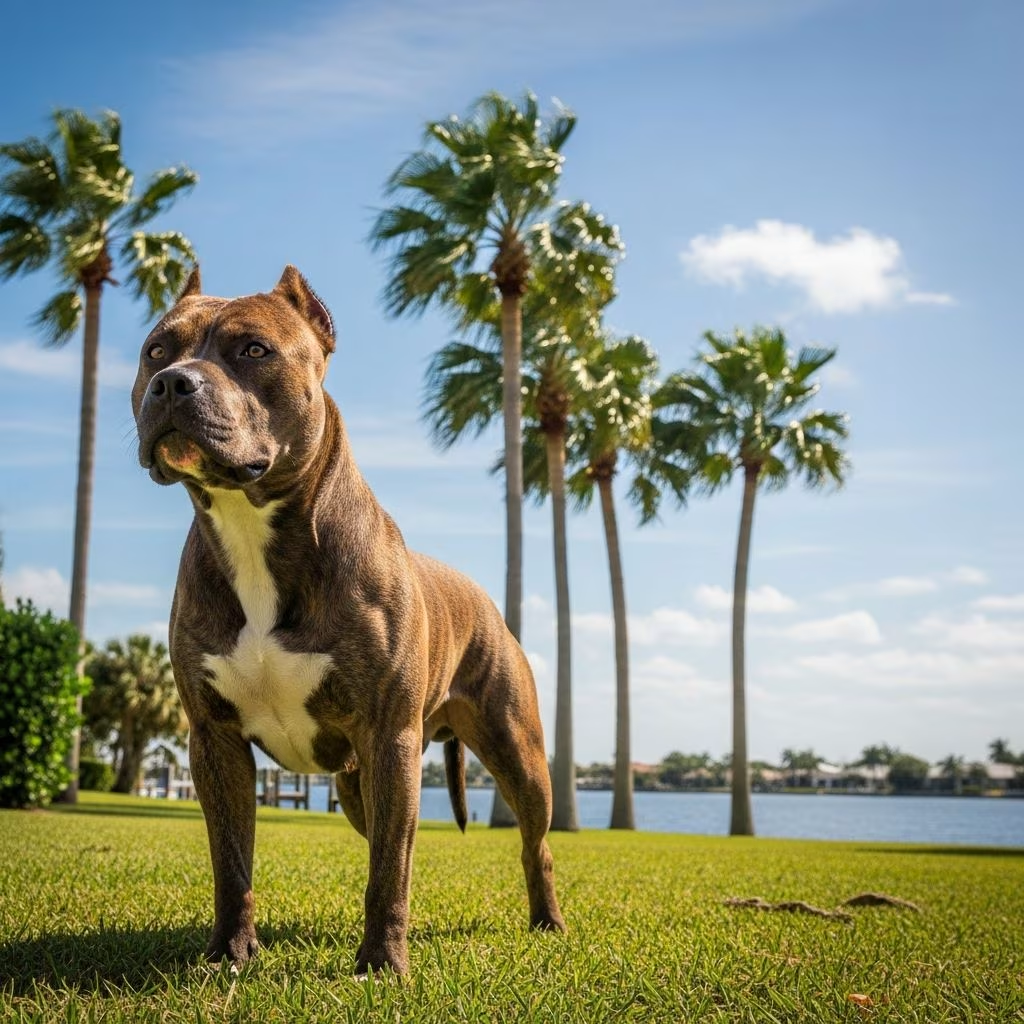
Florida law prohibits breed-specific bans on Pit Bulls across the state, allowing ownership statewide as long as owners comply with general dangerous dog regulations and local rules.
Statewide Legal Framework for Pit Bulls
Florida’s approach to dog ownership emphasizes behavior over breed. Since October 1, 2023, no local government or public housing authority can enact regulations targeting specific breeds like Pit Bulls for safety concerns related to attacks. This change eliminated provisions that previously allowed counties like Miami-Dade to maintain Pit Bull bans, marking a shift toward breed-neutral policies.
The core statutes governing dogs appear in Florida Statute Chapter 767, which outlines liability for damages caused by dogs and definitions for dangerous canines. These laws apply universally, regardless of breed, focusing on actions such as unprovoked bites or attacks that cause severe injury.
- Breed-neutral stance: Pit Bulls face no statewide prohibition, unlike some areas with historical restrictions.
- Liability rules: Owners are strictly liable for bites occurring off their property, with doubled damages if the dog has a prior bite history.
- Exemptions: Law enforcement dogs are not subject to these civilian regulations.
Defining Dangerous Dogs Under Florida Law
A dog earns “dangerous” status through its conduct, not genetics. According to recent legislation like CS/HB 593 (2025), a dangerous dog includes one that inflicts severe injury without provocation, kills another domestic animal, or repeatedly displays aggression posing an imminent threat.
This definition supports Florida’s commitment to public safety by targeting risky behaviors. Pit Bulls, often highlighted in attack statistics—accounting for a notable share of fatal incidents alongside Rottweilers from 2005-2019—fall under these rules if their actions qualify them.
| Dangerous Dog Criteria | Description |
|---|---|
| Unprovoked Attack | Bites or injures a person or animal without cause. |
| Severe Injury | Inflicts substantial harm requiring medical attention. |
| Domestic Animal Death | Kills a pet or farm animal off the owner’s property. |
| Repeated Aggression | Shows threatening behavior multiple times. |
New 2025 Dangerous Dog Law: The Pam Rock Act
Governor Ron DeSantis signed the 2025 Dangerous Dog Law, effective July 1, 2025, introducing stricter measures for owners of classified dangerous dogs. Named the Pam Rock Act, it mandates liability insurance and microchipping to enhance accountability and traceability.
Owners must securely confine such dogs at home and use leashes and muzzles in public spaces. Violations trigger fines, potential euthanasia, or criminal charges, with escalated penalties for repeat offenders. These provisions aim to reduce incidents, given Florida’s annual dog bite costs exceeding $1.2 billion.
- Insurance requirement: Covers potential injuries from the dog.
- Microchipping: Enables quick identification of ownership and history.
- Confinement standards: Prevents escapes and unsupervised interactions.
Local Ordinances and Variations
While statewide law blocks breed bans, cities and counties can enforce general leash laws, noise ordinances, and dangerous dog classifications based on behavior. For instance, historical Pit Bull restrictions in places like Miami-Dade were upheld by voters but nullified by state preemption.
Prospective owners should verify municipal codes via city websites or clerks. Some areas require permits for dangerous dogs, involving inspections and fees. Public housing follows the same breed-neutral mandate.
Homeowners Associations and Rental Properties
HOAs and condos operate under different rules. Florida Statute Section 767.14 prevents local governments from breed-specific policies but does not bind private associations. Many HOAs retain Pit Bull restrictions in their covenants, relying on past local bans now obsolete.
Renters face landlord discretion; leases often list restricted breeds. A 63% voter retention of Miami-Dade’s ban previously influenced nearby HOAs, but post-2023, associations must reference their own documents.
| Entity Type | Pit Bull Policy Control | Key Statute/Note |
|---|---|---|
| State Law | No breed bans allowed | FS 767.14 |
| Local Government | Behavior-based only | Preempted since 2023 |
| HOAs/Condos | Governing documents | Private rules apply |
| Rentals | Lease terms | Landlord discretion |
2026 Updates: Pet-Related Legislation
Effective January 1, 2026, new laws indirectly impact Pit Bull owners. HB 255 (Dexter’s Law) creates a searchable database of animal cruelty convicts, aiding shelters in preventing adoptions by repeat offenders. HB 655 establishes pet insurance standards, mandating clear disclosures on preexisting conditions and waiting periods, benefiting owners of high-risk breeds.
These changes promote transparency and responsibility without targeting breeds.
Responsibilities for Pit Bull Owners
Responsible ownership mitigates risks and ensures compliance. Key duties include socialization, training, and supervision to prevent dangerous classifications.
- Training programs: Obedience classes reduce aggression.
- Exercise routines: Daily activity prevents frustration-based behaviors.
- Veterinary care: Spaying/neutering lowers territorial instincts.
- Bite reporting: Prompt notification to authorities avoids escalated liability.
Statistics underscore urgency: Pit Bulls represent just 6% of biting dogs yet feature prominently in severe cases, emphasizing proactive care.
Public Safety and Insurance Considerations
The 2025 law requires liability insurance for dangerous dogs, protecting victims via Florida Statute 767.04 compensation rules. Annual dog bite expenses highlight the financial stakes.
Victims pursue claims through owners’ policies or civil suits. Owners benefit from umbrella coverage for comprehensive protection.
Adoption and Sourcing Pit Bulls
Rescues screen adopters rigorously, especially post-Dexter’s Law database launch. Reputable breeders provide health clearances and temperament tests. Avoid unregulated sources to sidestep cruelty histories.
Common Myths About Pit Bulls in Florida
Myths persist despite laws. Pit Bulls are not inherently vicious; environment shapes behavior. Florida’s policies reflect this, prioritizing actions over appearance.
Frequently Asked Questions
Are Pit Bulls banned anywhere in Florida?
No, state law prohibits breed-specific bans since 2023.
What if my Pit Bull is deemed dangerous?
Comply with insurance, microchip, and confinement rules or face penalties.
Can HOAs ban Pit Bulls?
Yes, if specified in governing documents.
Do I need special insurance for a Pit Bull?
Only if classified as dangerous under 2025 law.
How do I check local rules?
Consult city/county codes and HOA bylaws.
Steps to Own a Pit Bull Legally in Florida
- Review local and HOA restrictions.
- Secure appropriate insurance.
- Enroll in training.
- Microchip and vaccinate.
- Supervise at all times.
These steps ensure compliance and safety.
References
- Florida’s New Dangerous Dog Law Signed by Governor DeSantis — DontGetHitTwice.com. 2025-05. https://www.dontgethittwice.com/blog/2025/may/floridas-new-dangerous-dog-law-signed-by-governo/
- Florida’s new 2026 laws take effect, bringing changes for pet owners — LawCommentary.com. 2026-01-08. https://www.lawcommentary.com/articles/floridas-new-2026-laws-take-effect-bringing-changes-for-pet-owners-state-workers-patients-psychologists-and-condo-residents
- Breed-Specific Dog Bans — Florida Condo HOA Law Blog. 2023-07-25. https://www.floridacondohoalawblog.com/2023/07/25/breed-specific-dog-bans/
- New Florida laws in 2026 tackle animal abuse database — FOX 35 Orlando. 2026. https://www.fox35orlando.com/news/new-florida-laws-jan-2026
- The 2025 Florida Statutes (Chapter 767) — Florida Legislature. 2025. https://www.leg.state.fl.us/statutes/index.cfm?App_mode=Display_Statute&URL=0700-0799%2F0767%2F0767.html
- CS/HB 593 (2025) – Dangerous Dogs — Florida House of Representatives. 2025. https://www.flhouse.gov/Sections/Bills/billsdetail.aspx?BillId=81186



