

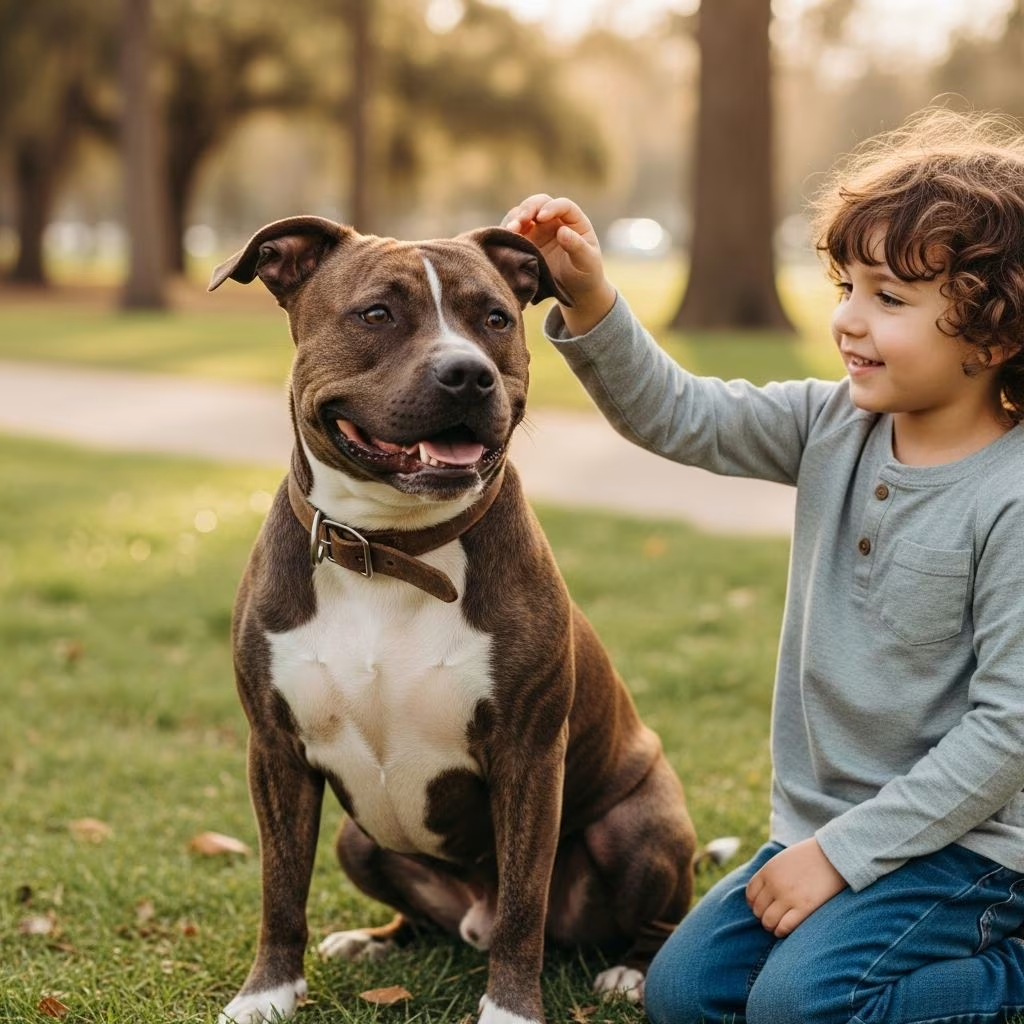
Pit bulls are not inherently aggressive dogs; their reputation stems largely from misuse, poor ownership, breed misidentification, and media sensationalism rather than genetics alone. Responsible training, socialization, and care play pivotal roles in their behavior, much like any breed.
Understanding the Pit Bull Label
The term “pit bull” does not refer to a single breed but an umbrella category encompassing American Pit Bull Terriers, American Staffordshire Terriers, Staffordshire Bull Terriers, and often mixes resembling them. This vagueness leads to frequent misidentification in attack reports, skewing perceptions. Studies indicate that up to 60% of dogs labeled as pit bulls lack the corresponding DNA, inflating statistics.
Historically, these dogs were bred for bull-baiting and later dog fighting, traits selected for strength and gameness—tenacity in tasks rather than human-directed aggression. Modern breeding by responsible owners focuses on companionship, yielding affectionate family pets.
Dog Bite Statistics: What the Numbers Really Show
Annually, dogs bite about 4.7 million Americans, with fatalities rare at around 16 per year—0.0002% of bites. Pit bulls appear overrepresented in severe incidents, but context matters.
- A 2020 DogsBite.org analysis found pit bulls linked to 66% of U.S. fatal attacks from 2005-2019 (346 of 521 deaths).
- In 2019, they accounted for 69% of fatalities, often affecting children and elderly.
- However, the American Animal Hospital Association noted 22.5% of bites across studies, not fatalities.
These figures highlight severity when attacks occur, attributed to physical power, but population size and reporting biases influence them. Pit bulls comprise a large U.S. dog population due to popularity.
| Breed Group | % Fatal Attacks (2005-2019) | Key Notes |
|---|---|---|
| Pit Bulls & Mixes | 66% | Highest in fatalities; misID common. |
| Mixed Breeds | ~20% | Pit involvement in 50% of deadly mixes. |
| Rottweilers, Shepherds | ~10% | Strong bites but lower frequency. |
Factors Driving Pit Bull Attack Reports
Several non-genetic elements explain prominence in statistics:
- Breed Misidentification: Visual labeling often errs; 60% DNA mismatch.
- Ownership Issues: Frequently owned by irresponsible handlers, including in fighting rings, leading to poor training.
- Media Bias: Sensational coverage amplifies pit bull stories, fostering fear.
- Physical Traits: Strong jaws and musculature cause graver injuries.
Research links lower nesfatin-1, serotonin, oxytocin, and higher dopamine in aggressive pit bulls, suggesting neurobiological factors, but environment triggers expression.
Breed-Specific Legislation: Does It Work?
Many areas ban or restrict pit bulls via BSL, but evidence questions efficacy. It ignores behavior’s multifactorial nature—training, socialization, neutering matter more.
- BSL shifts focus from deeds to looks, punishing good dogs.
- Studies favor owner accountability laws, reducing bites community-wide.
- No decline in attacks post-BSL in some cities; displaced issues to nearby areas.
ASPCA opposes BSL, advocating behavior assessments.
Raising a Well-Behaved Pit Bull
Any dog thrives with proper care; pit bulls excel as loyal companions when guided right.
- Early Socialization: Expose to people, dogs, environments from 8-16 weeks.
- Obedience Training: Positive reinforcement builds control; avoid punishment.
- Exercise: 60+ minutes daily prevents boredom-aggression.
- Neutering: Reduces dominance, especially males.
- Secure Containment: Fences, leashes prevent escapes.
Success stories abound: therapy pit bulls, service dogs prove potential.
Common Myths vs. Facts
| Myth | Fact | Source Insight |
|---|---|---|
| Pit bulls have locking jaws. | No anatomical lock; myth from fighting history. | AVMA debunks. |
| They snap without warning. | Warnings exist; poor owners miss cues. | Behavior experts. |
| Inherently dog-aggressive. | Toward humans? No higher risk than others. |
Health and Temperament Insights
Pit bulls score high in human affection on temperament tests. CDC notes no breed is risk-free; individual evaluation key. Children face highest risk from family dogs, regardless of breed—supervision essential.
Insurance data shows claims, but responsible owners mitigate.
Community Safety and Advocacy
Promote education over bans. Programs teaching bite prevention, owner licensing work better. Shelters see high pit intake from stigma, euthanasia rates high—adopt, don’t shop responsibly.
Frequently Asked Questions (FAQs)
Are pit bulls safe family pets?
Yes, with proper training and supervision; many families thrive with them.
Why do statistics show high attack rates?
MisID, population size, severity, bias.
Can pit bulls be trained not to bite?
Absolutely; early intervention yields gentle dogs.
Is BSL effective?
Debatable; owner-focused laws better.
How to choose a pit bull?
Meet parents, check health, commit to training.
References
- What Percentage of Dog Attacks are Pit Bulls? — Weinberg Law Offices. 2023. https://www.weinberglawoffices.com/what-percentage-of-dog-attacks-are-pit-bulls/
- What Percentage of Dog Attacks are Pit Bulls? — Phillips Law Offices. 2023. https://phillipslawoffices.com/what-percentage-of-dog-attacks-are-pit-bulls/
- Pit Bull Attacks: Must Know Facts — Texas Dog Bite Lawyer. 2023. https://texasdogbitelawyer.law/blog/pit-bull-attacks-must-know-facts/
- Statistics, Pit Bull Bites & Community Safety — Love-A-Bull. 2023. https://love-a-bull.org/resources/statistics-pit-bull-bites-community-safety/
- Position Statement on Pit Bulls — ASPCA. 2023. https://www.aspca.org/about-us/aspca-policy-and-position-statements/position-statement-pit-bulls
- The Relation between Plasma Nesfatin-1 Levels and Aggressive Behavior — PMC (NIH). 2024. https://pmc.ncbi.nlm.nih.gov/articles/PMC10886264/
- Correcting Flawed Pitbull Statistics — PitbullHero. 2023. https://www.pitbullhero.org/correcting-flawed-pit-bull-statistics



